How to Sell Digital Art Online in 2026: Full Guide
To sell digital art online, you create original art, prepare files that buyers can print or use on screen, then list them on a marketplace or your own store with a clear licence. This guide explains what kinds of art sell, how to prepare your files, where to sell, how to price your work, and how to protect it from theft.
In this guide
- What counts as digital art to sell
- What kinds of digital art sell best
- How to find your niche
- How to prepare files buyers can use
- Where to sell digital art online
- How to price downloads, prints and licences
- Licences in plain language
- How to protect your work
- Commissions as a second income stream
- How to market your art
- Getting your first sales
- What it costs and what to expect
- Common mistakes
- Risks and scams to watch for
- Frequently asked questions
What counts as digital art to sell
Digital art is original art made with digital tools, such as illustrations, patterns, wall art, wallpapers, clipart, brushes and colouring pages. It is not the same as stock photos, which are photographs sold for reuse, and it is not the same as photo presets, which are filters for editing photos. Those are separate products with their own guides, and this guide stays with original art.
Buyers want art they can use. Some buy a download to print at home and hang on a wall. Some buy a pattern to use on fabric or paper. Some buy brushes or clipart to use in their own designs. The art must be original, which means you made it yourself, and it must not copy another artist's work or include images you do not have the right to sell.
What kinds of digital art sell best
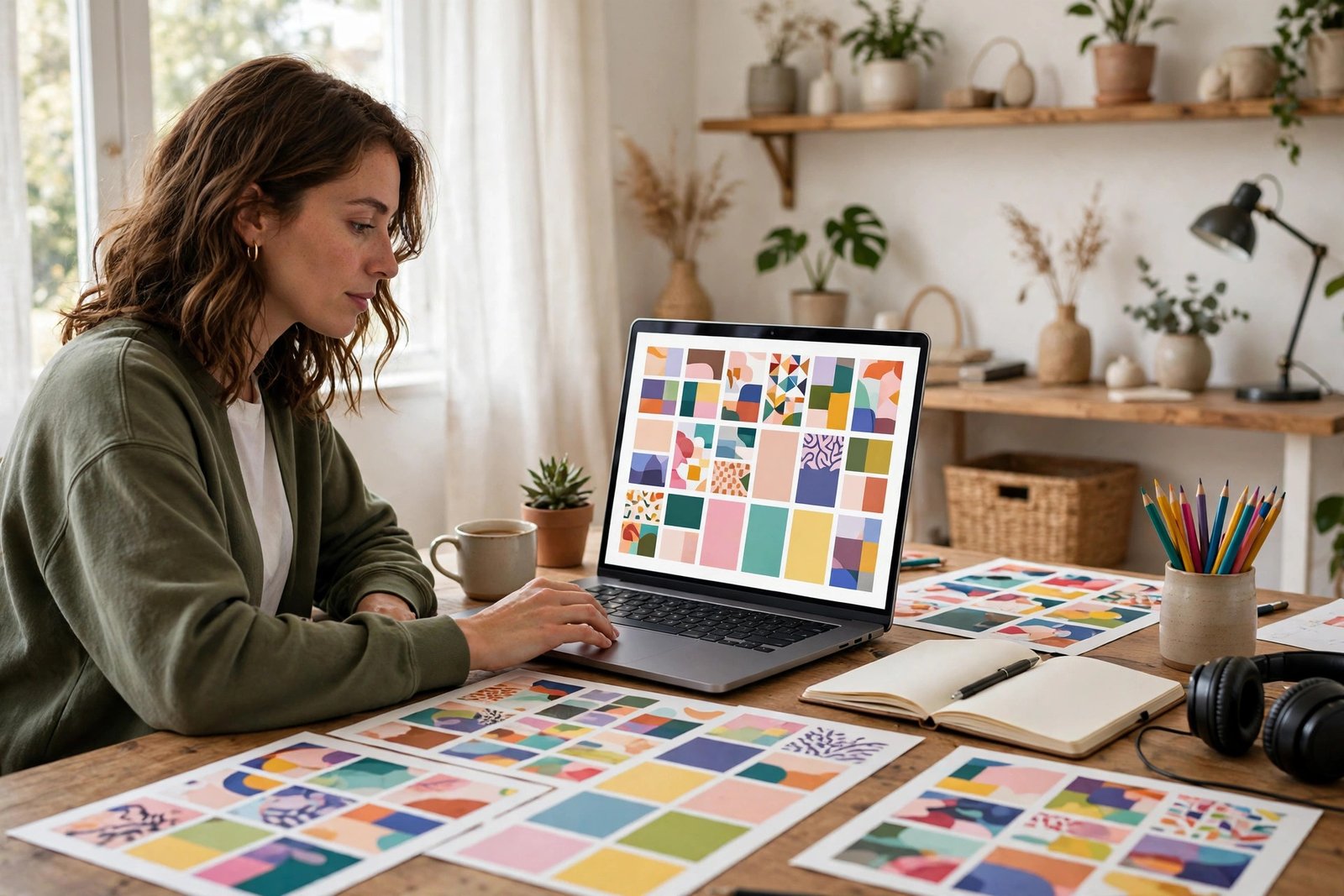
Art sells when it fits a clear use. Printable wall art is the most common first product, because buyers understand it at once. Seamless patterns sell to crafters and small businesses. Procreate and Photoshop brushes sell to other artists. Wallpapers, social media templates, stickers and colouring pages all have steady buyers too.
| Art type | Buyer | What they do with it |
|---|---|---|
| Printable wall art | Home decorators | Print and frame it at home |
| Seamless patterns | Crafters and small brands | Use it on fabric, paper and packaging |
| Clipart bundles | Designers and teachers | Add it to cards, worksheets and posts |
| Brushes | Other digital artists | Paint with it in Procreate or Photoshop |
| Wallpapers | Phone and computer users | Set it as a background |
| Colouring pages | Parents and teachers | Print for children to colour |
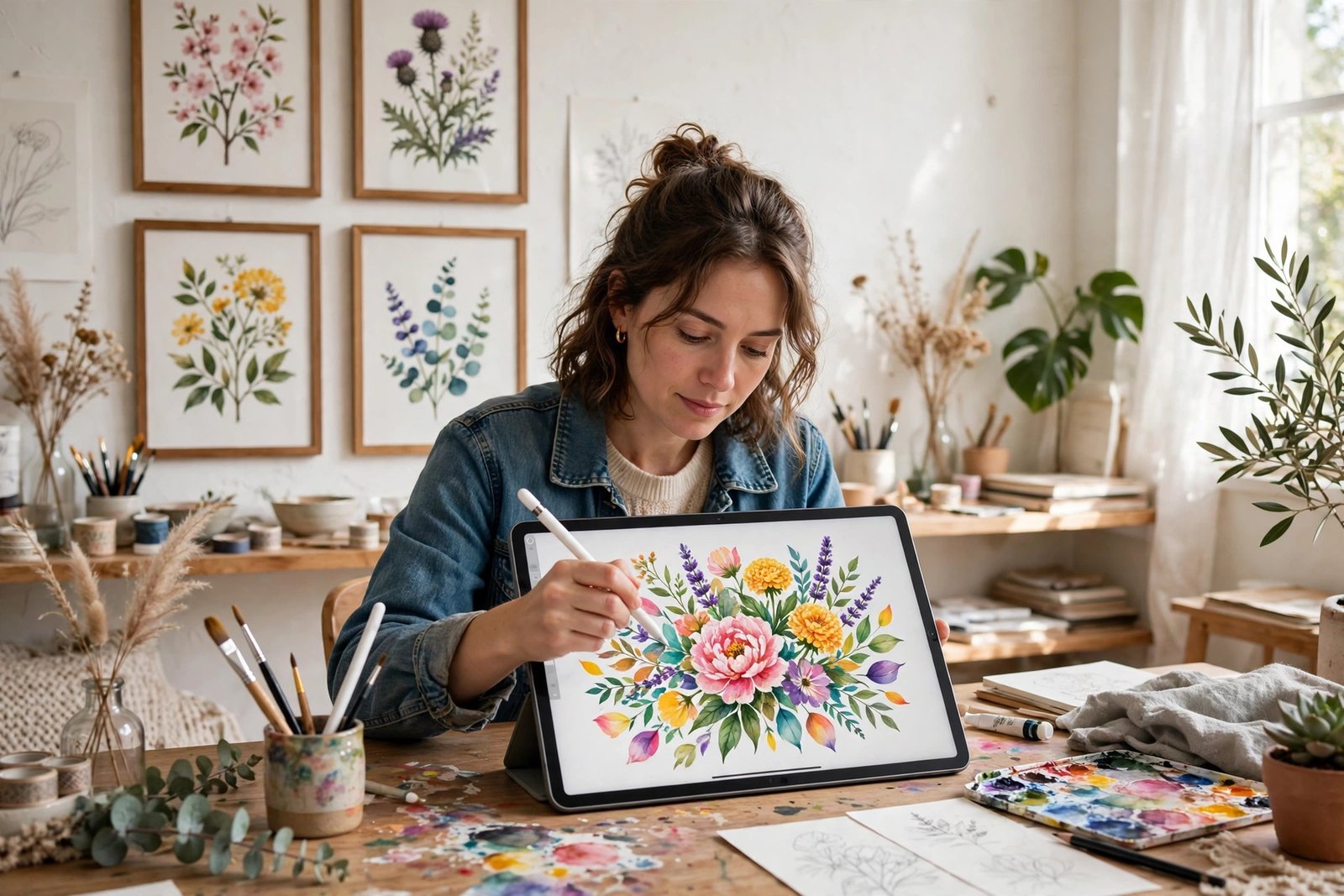
A bundle often outsells a single piece. For example, 30 watercolour flower elements at $12 can outsell a single illustration at $5, because the buyer gets more to work with. Bundles also give you more to show in the listing images, which helps buyers decide.
How to find your niche
A niche is a small, clear market where your style fits. Start with what you like to draw, then check whether buyers search for it. Look at Etsy search suggestions, Pinterest Trends and Behance, and note which styles get saved and shared. Vintage botanical prints, minimalist line art, anime landscapes, motivational quotes and pet portraits are all niches with real buyers, but each one has many sellers, so your style must stand out.
Test a niche before you commit to it. List five pieces in one style, watch which ones get views and favourites over a month, and make more of what works. A narrow niche also makes your shop easier to find, because buyers who love one style will browse your whole shop.
How to prepare files buyers can use
File preparation is where many new sellers fail, because a buyer who cannot print your art will ask for a refund. For prints, save at 300 DPI, which is the resolution printers need for a sharp image, and offer common sizes such as A4, A3, 8 by 10 inches and 12 by 16 inches. For screen use, such as wallpapers, save at 72 DPI in the right pixel size for phones and computers.
Save in the right format. PNG suits art with sharp edges and transparent backgrounds, JPEG suits photographs and soft gradients, and PDF suits printable wall art because it keeps the print size exact. Use sRGB colour, which is the colour standard screens use, so the art looks the same on the buyer's screen as it does on yours. Include a short readme file that says the sizes, the format and how to print.

Where to sell digital art online
Etsy is the most common first choice for digital art, because buyers already search there for wall art and printables. Creative Market suits polished work aimed at designers. Your own store, built with Shopify or WooCommerce, gives you control and the customer list, but you must bring your own traffic.
Print on demand is a third route. A buyer orders a poster, a canvas or a mug, and a print partner makes and ships it. You never hold stock, but you earn less per item, because the printer and the platform take their share. Print on demand suits art that looks good on physical products, while digital downloads suit art that buyers print themselves.
| Channel | Best for | What you keep |
|---|---|---|
| Etsy | Downloads and printable wall art | Sale price minus Etsy fees |
| Creative Market | Design assets and patterns | About half the sale price, as reported by other guides |
| Your own store | Repeat buyers and full control | Sale price minus payment fees |
| Print on demand | Posters, canvas and mugs | A small margin per item, often $2 to $5 |
The Creative Market commission figure is reported by other guides and was not verified on its own site in this session, so check its seller terms before you rely on it. Etsy fees were checked on etsy.com in November 2026: a $0.20 listing fee and a 6.5 percent transaction fee, plus payment processing fees that vary by country. For a full Etsy guide, read how to sell digital products on Etsy. For a related product, read how to sell stock photos online and how to sell Lightroom presets online.
How to price downloads, prints and licences
Price by what buyers pay for similar work, not by how long a piece took. Digital downloads usually sell for a few dollars each, while bundles sell for more. Printable wall art often sells for $3 to $15 as a download, and a physical print through print on demand often sells for $25 to $40, with about $10 going to production costs, according to competitor guides checked in November 2026. These are broad ranges, not quotes, so check your own niche before you set a price.
Example only: imagine you sell a set of five printable wall art pieces as a download for $12 on Etsy. The listing fee is $0.20, and the transaction fee is 6.5 percent of $12, which is $0.78, because 6.5 percent of $12 is $0.78. Add the listing fee and the Etsy fees come to $0.98 per sale, before payment processing fees, which vary by country. If 25 sets sell in a month, gross sales are 25 times $12, which is $300, and Etsy listing and transaction fees are 25 times $0.98, which is $24.50, leaving $275.50 before payment processing fees and tax. These numbers are an example only, and they are not typical results.
Tiered licences let you charge more for wider use. A personal licence, for use in the buyer's home, is the cheapest. A small commercial licence, for a small business to use on products or marketing, costs more. An extended licence, for large commercial use, costs the most. State the price of each tier in the listing, so buyers do not have to ask.
Licences in plain language
A licence is the permission you give the buyer to use your art. A personal licence means the buyer can print the art for their own home and give it as a gift, but they may not sell it or use it in a product. A small commercial licence means a small business may use the art on products or in marketing, up to a limit you set, such as 500 physical items. An extended licence covers larger use, such as a big print run or a national advert.
Royalty free means the buyer pays once and can use the art many times within the licence terms. Rights managed means the buyer pays for a specific use, for a set time and place, and must pay again to use it elsewhere. Exclusive means only one buyer may use the art, and exclusive art often costs 10 to 20 times more than non-exclusive art, because you cannot sell it to anyone else. Write the licence in plain words in every listing, and do not use legal terms you cannot explain.
How to protect your work
Show your art with a watermark on the listing images, and only send the clean file after payment. Use low resolution previews in the listing, so a thief cannot print a good copy from the preview. Sell through a platform that gives buyers an expiring download link, so the file cannot be shared freely for months. Add a clear terms of use file that says the buyer may not resell, share or claim the art as their own.
If you find your art for sale by someone else, report it to the marketplace with proof that you made it, such as the original layered file with its creation date. Keep your working files, because they are the best proof of ownership. Do not use another artist's work in your own art, even a small part, because that is the same theft you are trying to stop.
Commissions as a second income stream
Commissions are custom art made for one buyer, such as a portrait, a logo or a book cover. They pay more per piece than downloads, but they take more time and need clear terms. Ask for a deposit before you start, usually half the price, and agree the number of revisions in writing before you begin. Give the buyer a clear delivery date, and state what the price includes, such as the file formats and the licence.
Commissions also bring new buyers to your shop, because a happy client will recommend you. List a commission option in your shop with a starting price and a few examples, and reply to enquiries within a day. Turn down work that does not fit your style, because a bad commission costs more time than it earns.
How to market your art
Show your process. Short videos of you drawing, colouring or arranging a pattern do well on Instagram, Pinterest and TikTok, because buyers enjoy watching art being made. Post the finished piece next to the video, with a link to the listing. Pinterest is a strong channel for wall art, because buyers save pins to boards for their homes. For a full Pinterest plan, read how to sell digital products with Pinterest.
Build an email list with a free sample, such as one printable or one wallpaper, in exchange for an email address. Tell the list when you launch new art, and offer past buyers a small discount on a new bundle. For pricing help, read how to price digital products, and for the first steps, read how to create your first digital product.
Getting your first sales
Launch with 10 to 15 products, not one or two, because a shop with more listings gets more search traffic. Price the first listings fairly, not at the lowest price in the market, because a very low price signals low quality. Ask friends to check the listings for typos and broken links before you promote them.
Track which listings get views and which get sales. If a listing gets views but no sales, the price or the mockups may be the problem. If a listing gets no views, the title and tags may be the problem. Change one thing at a time, wait a week, and see what happens. Most sellers take three to six months to gain steady traction, so do not judge the shop in the first month.
What it costs and what to expect
You can start with tools you already have. Procreate, Photoshop and Illustrator are common choices, and free tools such as Krita and GIMP can also make art to sell. A drawing tablet helps, but a mouse or a phone can work for simple styles. Etsy charges $0.20 per listing, and you may pay a one-off shop set up fee depending on your country, so check Etsy's Fees and Payments Policy before you open a shop.
Expect a slow start. Most new art shops take three to six months to gain traction, because they have no reviews and little search history. Sales often come in waves, with quiet weeks followed by a few orders at once. Do not expect steady daily income in the first months, and do not spend money on ads until you know which listings already sell.
Common mistakes
- Listing a single piece of art and expecting steady sales, when shops with more listings get far more traffic.
- Saving print files at low resolution, so the buyer cannot print a sharp image and asks for a refund.
- Showing clean, full resolution art in the listing, which lets anyone save and use it without paying.
- Writing a vague licence, so buyers do not know whether they may use the art commercially.
- Pricing far below similar art, which signals low quality and leaves no room for discounts.
- Copying another artist's style or work, which can lead to a copyright complaint and a closed shop.
- Ignoring the readme file, so buyers do not know the sizes, formats or how to print.
Risks and scams to watch for
Be careful of buyers who ask you to send the clean files before they pay, or who ask to move the sale off the marketplace to avoid fees. Both are against marketplace rules, and you lose all protection if you agree. Keep every sale inside the marketplace until the buyer has paid.
Watch for messages that claim your art breaks a rule and ask you to click a link to fix it. These are often phishing messages. Only follow links from the official marketplace site or app. Do not pay anyone who offers to promote your shop for a fee in exchange for guaranteed sales, because no one can guarantee sales. Grow slowly with real buyers, even if it feels slow at first.
Frequently asked questions
Is selling digital art profitable?
It can be profitable over time, but earnings vary widely by niche, price, number of listings and marketing. Some artists earn a small side income, while others build a full shop over years. Most new shops take three to six months to gain steady traction, so treat it as a slow business, not as quick income.
Where can I sell my digital art?
You can sell digital art on Etsy, Creative Market, your own store, and through print on demand partners such as Printful or Printify. Etsy suits downloads and printable wall art, Creative Market suits design assets, and print on demand suits physical posters and canvas. Start with one channel that fits your art type, then expand.
What kind of digital art sells best?
Printable wall art, seamless patterns, clipart bundles, brushes, wallpapers and colouring pages all have steady buyers. Bundles often outsell single pieces, because the buyer gets more to work with. Check what sells in your niche on Etsy and Pinterest, and make more of the style that gets views and favourites.
How do I protect my digital art from theft?
Show your art with a watermark on listing images, use low resolution previews, and only send the clean file after payment. Sell through a platform that gives buyers an expiring download link, and add a clear terms of use file. Keep your working files as proof of ownership, and report stolen art to the marketplace with that proof.
Do I need a licence to sell digital art?
You do not need a licence from a government body to sell your own original art, but you do need to give each buyer a clear licence that says what they may do with it. A personal licence covers home use, a commercial licence covers business use, and an extended licence covers large commercial use. Write the licence in plain words in every listing.
Conclusion
To sell digital art online, make original art in a clear niche, prepare print ready files at 300 DPI with the right formats, list on Etsy or Creative Market with a plain language licence, and protect your work with watermarks and expiring links. Launch with at least ten products, and improve the listings that get views.
To go further, read how to sell Canva templates online for a related product in this batch, how to sell printables online for the printable market, and how to sell stock photos online to compare art with photography, then browse the full Digital Products category for more guides. Market size figures were left out of this guide on purpose, because sources disagree sharply and use different definitions. Etsy fees were checked on etsy.com on 2026-11-21.
Note for the reader: marketplace fees, licence terms and tax rules differ by country and change from time to time, so check the official pages for your country before you sell. Earning results vary; nothing on this site is financial advice.