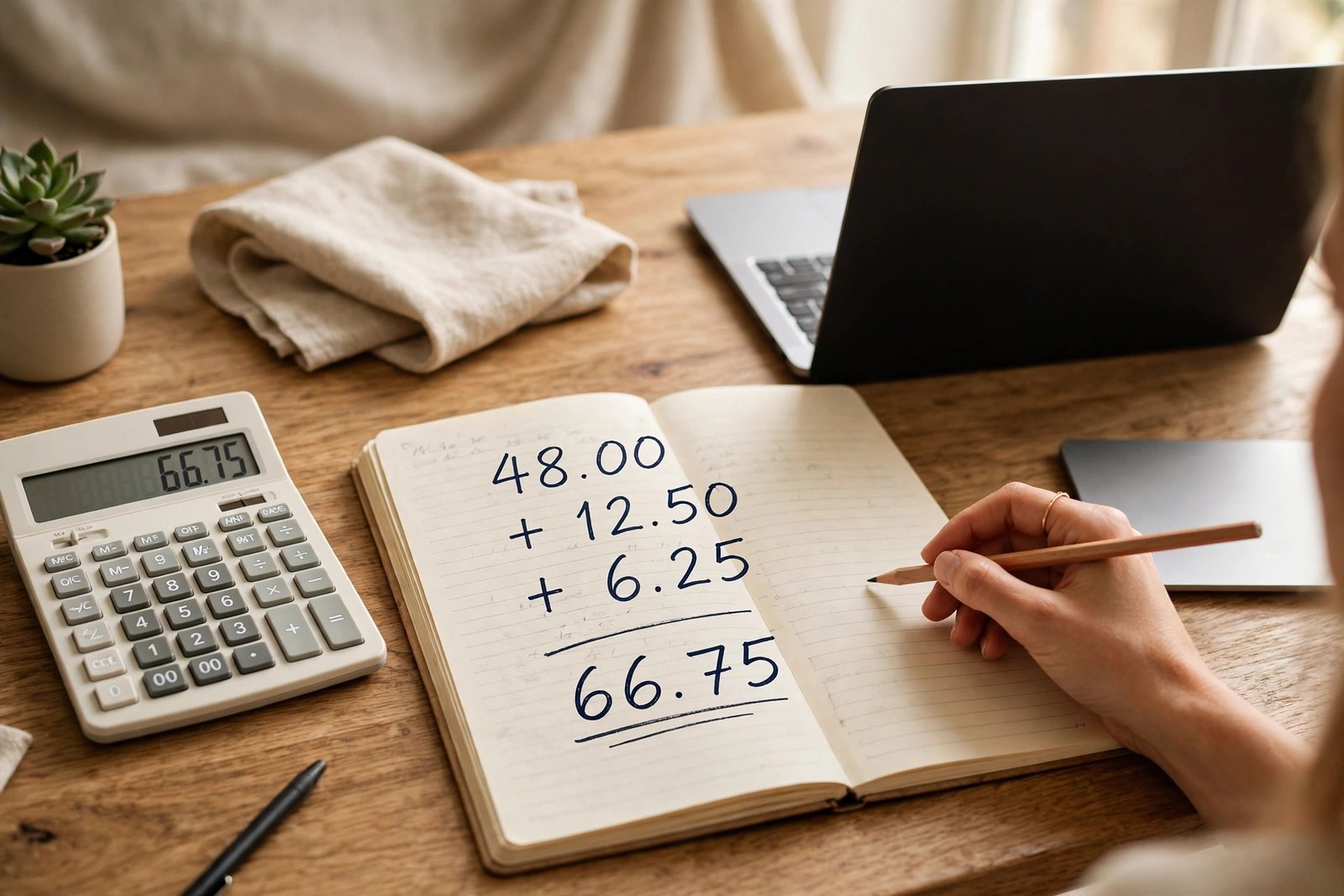
Price is the part of selling digital products that beginners get wrong most often, usually by guessing. Too low, and you work hard for little return while signalling that the product is worth little. Too high, and strangers pass by a product from a seller they do not yet trust. Pricing is not a guess you make once. It is a method: work out what you keep, what buyers will pay, and how you will test and adjust.
This guide owns pricing for every digital product type on this site. The first product, template, course, and ebook guides give starter ranges only, and they point here for the full method. Read this guide before you set a final price on any product, and revisit it when you have sales data to work with.
Start with what you keep, not what you charge
The most common pricing mistake is setting a price from the sale amount alone. What matters is what you keep after every deduction. Before you price, list your fee stack: the marketplace or platform transaction fee, the payment processing fee, any listing fee, and any tax the platform does not collect for you. Fees differ by platform and change over time, so check each platform's live fee page at the time you price, and recheck it when you change price or platform. Never treat a fee figure from a guide as a guaranteed current fact.
Use a simple formula for every price you consider:
Net per sale = Price minus platform fee minus payment processing fee minus any listing or delivery cost
Work it through with an illustrative example, using made up round numbers to show the method, not real platform rates. Suppose a platform charged a 10 percent transaction fee and payment processing of 3 percent plus a small fixed amount. On a $10 product, the transaction fee would be $1.00, processing would be about $0.30 plus the fixed amount, and you would keep roughly $8.50 before any other costs. On a $5 product with the same structure, you would keep roughly $4.00, so fees eat a larger share of a low price. That is why very low prices can be unprofitable even when they sell well. Run your own numbers with the live fees of your actual platform before you commit.
Price the result, not the size
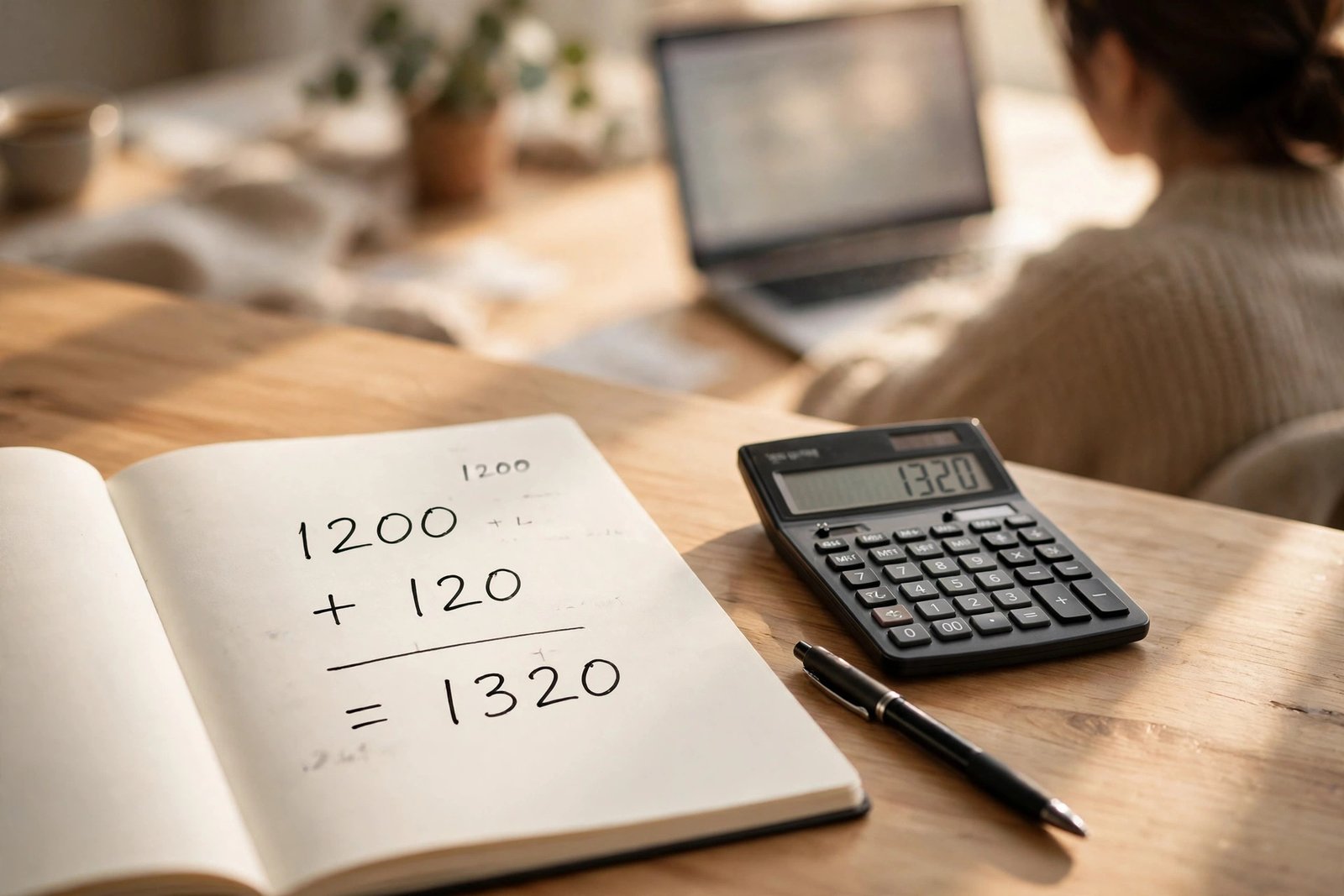
Buyers pay for results, not for page counts or video hours. A ten page template that saves a buyer an hour every week is worth more than a hundred page guide that saves nobody any time. A short course that gets a student their first client is worth more than a long course that teaches theory without action. When you price, describe the result in the buyer's terms and ask what that result is worth to them.
Three lenses help you judge value. First, the alternative cost: what does the buyer pay now, in money or time, to solve this problem? A freelancer who pays for a tool or spends three hours a week on a task will value a product that removes that cost. Second, the stakes: a product that helps a buyer earn, save, or avoid a costly mistake is worth more than one that offers mild convenience. Third, the buyer's budget: a product for students has a different sensible range than a product for established businesses, even if the content is similar. Price for your actual buyer, not for an imaginary buyer with unlimited funds.
Set a starter price with a simple ladder
A price ladder is a planned sequence of prices, not a single guess. For a first product from an unknown seller, a sensible ladder starts low, proves demand, and rises as proof grows. Start at a price a stranger can accept without much thought, gather sales and reviews, then raise the price in small steps while watching conversion. Each step tests whether the product's value supports the new price.
A practical ladder for a first product looks like this. Launch price: a low starter price for a limited period, offered to your validation list and early buyers in exchange for feedback and honest reviews. Standard price: a modest increase once you have a handful of sales and reviews, which becomes the everyday price. Established price: a further increase once you have consistent sales, strong reviews, and clear proof of the result. The exact numbers depend on your product type and buyer, and the starter ranges in the type guides give you a rough starting band. The ladder itself matters more than any single number, because it turns pricing into a test instead of a guess.
Use tiers and bundles to serve different buyers
Not every buyer wants the same thing, and a single price forces every buyer into one choice. Tiers let buyers choose their level: a basic version, a standard version with the most useful extras, and a complete version with everything. Bundles combine related products at a price lower than buying each separately, which raises the average order value and gives buyers better value.
Keep tiers simple and genuinely different. A useful structure for a template seller is: one template, a pack of related templates, and a full bundle with a guide and bonus sheets. For a course seller: the course alone, the course plus worksheets and templates, and the course plus a live session or review. Each tier should add clear value, not just more files. Name what each tier adds in one line, so a buyer can compare in seconds.

Bundles need the same discipline. Bundle products that a single buyer would actually use together, such as a budget template with an invoice template for the same freelancer audience. A bundle of unrelated products looks like a clearance sale, not a value offer. Price a bundle below the sum of its parts, but above the price of any single item in it, so both the saving and the upgrade are obvious.
Discounts: use them sparingly and on purpose
Discounts are a tool, not a habit. A launch discount rewards early buyers and creates urgency, and a seasonal discount can clear slow stock or revive an older product. But constant discounting trains buyers to wait for the next sale, and it lowers the perceived value of the product. A product that is always 50 percent off is really a product priced at the discounted amount, with a fake original price on top. Buyers notice, and marketplaces increasingly penalise misleading pricing.
Use discounts with clear rules. Give a discount a reason (launch, bundle, seasonal event), a deadline, and a limit. Announce the end date and honour it. Do not discount a product that is already selling well at full price; you are giving away revenue for no reason. Do not discount to fix a product nobody wants; fix the product, the listing, or the audience instead. And never present a discount as a saving from a price the product never actually sold at. Honest pricing builds the trust that brings repeat buyers.
When and how to raise prices
Raise prices when you have proof, not when you feel hopeful. Good reasons to raise a price include consistent sales at the current price, strong reviews that mention value, added content or features that genuinely improve the product, and rising demand that you cannot meet at the old price. Poor reasons include copying a competitor's price without their proof, raising a price to cover costs you never calculated, or raising it because a single buyer said the product was cheap.
Raise in small steps, typically 10 to 25 percent at a time, and watch conversion and revenue per visitor after each step. Tell existing buyers and your audience plainly when a price rise is coming, and honour the old price until the announced date. Existing customers who bought early should keep what they paid for, including promised updates, without surprise charges. A price rise handled openly strengthens trust; a silent rise discovered at checkout damages it.
Common pricing mistakes to avoid
First, pricing from effort instead of value. A product that took you months to build is not automatically worth a high price if it solves a small problem. Buyers pay for their result, not for your effort. Second, pricing from fear. A price set low because you doubt your work attracts bargain hunters, not loyal buyers, and it leaves no margin for fees or improvements. Third, copying a competitor's price without their context. A seller with thousands of reviews and a large audience can charge more than a first time seller with no proof, even for a similar product.
Fourth, forgetting fees, as covered above. Always run the net per sale calculation with live fee figures before launch. Fifth, offering too many options. Six tiers and three bundles confuse buyers into buying nothing. Three clear tiers beat a menu nobody reads. Sixth, never testing. A price you set once and never revisit is an untested guess, however confident it felt. Build testing into your routine, and let buyer behaviour, not opinion, settle the price.
Risks and limits
Pricing involves uncertainty, and no method guarantees sales. A well priced product can still fail if it reaches the wrong buyers, solves a weak problem, or sits in a listing that does not show its value. Market conditions change: fees rise, competitors appear, platforms change rules, and buyer budgets tighten. Treat every price as a hypothesis to test, and keep records so each test teaches you something.
Results vary with product type, niche, audience size, reviews, and promotion. Income from digital products is not guaranteed, and a pricing guide cannot promise a particular revenue. What this method guarantees is discipline: you will know what you keep per sale, you will test changes one at a time, and you will raise prices on evidence rather than hope. That discipline is what turns a first product into a sustainable small business over time.
Frequently asked questions
How do I price my first digital product?
Start with the fee-first calculation using live platform fees, choose a low starter price a stranger can accept easily, and plan a ladder that rises as sales and reviews prove value. Use the starter ranges in the type guides as a rough band, then test and adjust from real sales data.
Should I price low or high as a beginner?
Start low enough to earn first sales and reviews, but not so low that fees leave you almost nothing. A low launch price is a strategy with a planned rise, not a permanent position. Raise the price in small steps once proof exists.
How do platform fees affect my price?
Fees reduce what you keep on every sale, and they take a larger share of low prices. Always calculate net per sale with the live fee page of your platform before you set a price, and recheck fees when you change platform or price.
How do I test a price without losing sales?
Change only the price, keep it in place for a few weeks with enough visitors to judge, and compare revenue per visitor, not just sales count. A higher price with fewer sales can still earn more, and revenue per visitor shows whether the change worked.
When should I raise my prices?
Raise prices when you have consistent sales, strong reviews, improved content, or rising demand, and raise in small steps while watching conversion. Review prices quarterly, and announce rises to your audience before they take effect.
Your next step
Your next step is to run the fee-first calculation for your product today. Open the live fee page of the platform you plan to use, work out what you keep per sale at three candidate prices, and pick the lowest price that still leaves you a worthwhile net after fees. Then launch at that price, gather proof, and raise it in small steps as the evidence earns you the right to charge more.
To apply this method to your product type, read How to Create Your First Digital Product in 2026, How to Sell Templates Online in 2026, How to Create and Sell an Online Course in 2026, and How to Sell Ebooks and Guides Online in 2026. If you are still shaping the business around your products, read How to Start an Online Business as a Beginner in 2026 and How to Validate a Business Idea in 2026 Before You Spend Money.