How to Earn with Home Security Affiliate Programs in 2026
Home security affiliate programs pay you when a reader buys a camera, a video doorbell, an alarm system, or a smart lock through your tracked link. The products cost more than most affiliate items, so one sale can pay well, but slow decisions and strict rules catch many beginners. This guide shows you how to choose one home audience, compare physical security programmes fairly, and publish honest setup guides that help readers protect their homes.
This guide covers physical security systems only, including cameras, alarms, sensors, and smart locks. If you want antivirus and security software for computers, read our separate guide on how to earn with antivirus and security software affiliate programs instead.
In this guide
- What home security affiliate programmes are and who they suit
- Step 1: Choose one home audience and one security problem
- Step 2: Compare cameras, alarm systems, and smart locks
- Step 3: Apply and check market, shop, and activation rules
- Step 4: Publish setup guides and honest product tests
- Step 5: Track orders, activations, and returns
- What it costs and what to expect
- Common mistakes
- Risks and scams to watch for
- Frequently asked questions
What home security affiliate programmes are and who they suit
A home security affiliate programme pays you a share of each qualifying order your readers place inside the cookie window. The cookie is the tracking file that remembers your referral for a set number of days. Some programmes pay on the product order, while others pay only after the buyer activates a system and finishes a trial period.
Home security programmes suit you if you publish home improvement, smart home, or property content and you can test devices in a real home. They suit you less if you cannot install products or film setup steps. Readers ask detailed questions about wiring, battery life, storage fees, and privacy.
Home security programmes fall into three groups. Camera brands sell indoor and outdoor cameras and video doorbells. Alarm brands sell sensor kits with optional professional monitoring. Smart lock brands sell keypad and fingerprint locks for doors. Each group has different prices, subscription fees, and return risks.
| Programme group | How it usually pays | Best first content | Main watch point |
|---|---|---|---|
| Security cameras | Percentage per order | Placement and setup guides | Storage plans add monthly cost |
| Alarm systems | Percentage or flat fee per system | Room by room checklists | Activation and trial rules |
| Smart locks | Percentage per order | Door fitting and access guides | Door thickness and fitting limits |
If affiliate marketing is new to you, read how to start affiliate marketing first. It explains tracking and disclosure in the right order.
Step 1: Choose one home audience and one security problem
Pick one audience, such as renters in flats, new homeowners, or families who want a doorbell camera. Then pick one problem, such as watching a front door, covering a back garden, or letting a cleaner in without a spare key.
Test devices in your own home before you review them. Note installation time, app setup, battery life, and night picture quality. Readers trust setup claims only when you installed the device yourself.
Check market fit early. Many security programmes sell through country specific stores. A guide written for readers in one country earns nothing from a store that only ships to another country. State the store country in every guide.
Step 2: Compare cameras, alarm systems, and smart locks
Compare programmes on commission, cookie length, eligible products, and validation rules. The payout threshold is the minimum balance you must reach before payment. In home security, also check whether commission pays on the order, on activation, or after a trial period.
As of November 2026, Arlo's official affiliate page for Australia states partners earn up to 7 percent commission on qualifying products with a 30 day referral period, with tracking and payment through Commission Factory. Arlo runs separate programmes by country, so you must confirm the rate and store for your audience's country in your own account. You can read the current Australian terms on Arlo's official affiliate page.
Other home security programmes report different models. Camera brands often report percentages in the single figures to the teens. Alarm brands sometimes report flat fees per activated system. List articles report wide ranges, so treat every figure as a reported range until you confirm it on the programme page for your market.
| Term to check | Home security question | What to record |
|---|---|---|
| Commission | Percentage, flat fee, or tiered by volume? | Rate by product and date checked |
| Cookie | How many days after the click? | Window length and last click rule |
| Qualifying event | Order, activation, or trial completion? | Event definition in writing |
| Eligible products | Shop items only or full systems too? | Product and store limits |
| Returns | How long can buyers return devices? | Validation period and reversal rules |
Shortlist one camera programme and one alarm or lock programme for the same audience and country. Our guide to the best affiliate programs for beginners shows how to judge approval and payout rules before you apply.
Worked example
Example only: these numbers are not typical results.
Imagine your doorbell camera guide gets 2,500 visits in a month. Of those visitors, 250 click a camera brand link, which is a 10 percent click rate. Of those 250 clicks, 10 readers buy inside the cookie window, which is a 4 percent conversion rate. Each order is worth 150 US dollars, so total sales are 10 times 150, which is 1,500 US dollars. At a 7 percent commission, you earn 1,500 times 0.07, which is 105 US dollars before returns.
Now imagine 2 buyers return their cameras and the programme reverses those commissions. You keep 8 times 150 times 0.07, which is 84 US dollars. If the same guide instead promoted an alarm system that pays a flat 50 US dollars per activated system and 3 readers activate, you earn 3 times 50, which is 150 US dollars, but payment waits until activation and the trial period end. Recalculate with your own click, conversion, return, and activation rates before you choose.
Step 3: Apply and check market, shop, and activation rules
Apply with the website, channel, or social account where you will place the links. Security brands review your content for fit and accuracy. A small smart home site with real setup photos often passes more easily than a large general site.
Read the rules before you post. Many programmes forbid bidding on the brand name in paid ads. Some pay only on orders from a specific online shop, not on every plan the brand sells. Others require the buyer to activate the system and finish a trial before commission validates. Write these rules in your notes.
Disclose every affiliate link clearly. The Federal Trade Commission says you must disclose a material connection, which includes affiliate commission, in a way that is hard to miss. Read the plain language rules in the FTC guide on disclosures for social media influencers and place your disclosure before the first link.
Step 4: Publish setup guides and honest product tests
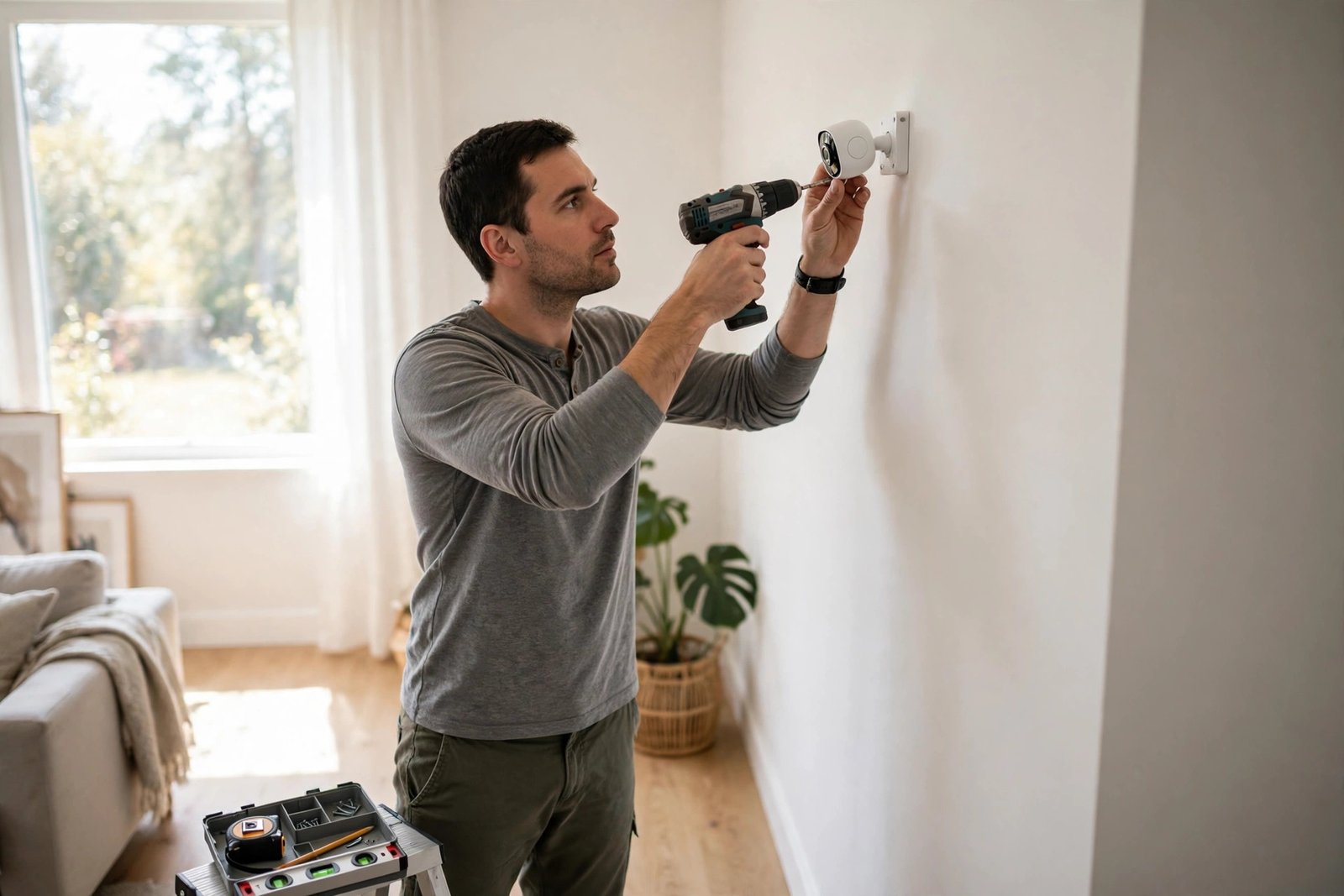
Build each post around one setup task. Show the unboxing, the fitting steps, the app setup, and the final view. State the tools you needed, the time the job took, and the problems you met.
State running costs in every review. Many cameras need a monthly plan for cloud storage and smart alerts. Alarm systems often charge for professional monitoring. Readers need the full monthly cost, not only the device price.
Include downsides. Note weak night pictures, short battery life, missing local storage, or locks that do not fit thick doors. Readers trust tests that warn them before a costly mistake.
Link your guides together. If you cover property topics, read how to earn with real estate affiliate programs for related offers.
Update prices and plan fees often. Camera models change, storage plans change, and monitoring prices change. Add the date you last checked each product and remove links to discontinued models.
Step 5: Track orders, activations, and returns
Check your dashboard every week. Record clicks, orders, commission, and reversals by post. A reversal happens when a buyer returns a device or cancels a system and the programme takes the commission back.
Watch the gap between clicks and orders. Many clicks with few orders often mean the price is too high, the store country is wrong, or readers need more setup detail. Few clicks with steady orders often mean the guide deserves more internal links.
Keep a simple programme record. Note the rate, cookie, qualifying event, and the date you checked the terms. A short weekly check of clicks, orders, and reversals keeps your programme record accurate.
What it costs and what to expect
Joining home security programmes is usually free. Your costs are devices you buy to test, basic tools, and your time. Security devices cost more than most affiliate products, so testing takes a larger budget. Many beginners spend more on devices in the first months than they earn.
Expect slow decisions. Homeowners compare cameras, read reviews, and wait for sales events. Your first orders often come from readers who already follow your home content. Results vary with your audience, device prices, cookie length, and return rates.
Payment timing varies. Some programmes validate orders for 30 to 45 days to allow for returns and trials. Read the validation period before you spend pending commission.
| Cost or delay | Why it happens | How to plan |
|---|---|---|
| Test devices | You must install before you review | Test one device at a time |
| Monthly plans | Storage and monitoring cost extra | State full monthly costs |
| Slow decisions | Buyers compare for weeks | Favour longer cookies where possible |
| Validation delay | Networks wait for returns and trials | Do not spend pending commission |
Common mistakes
Many beginners promote a programme that sells only in another country. Check the store country before you publish and state it in the guide.
Some creators quote a headline rate that applies only to one shop or one product group. Read the eligible product list and link only to qualifying items.
Other creators hide monthly storage and monitoring fees. State the device price and the monthly plan price in every review.
A common error is promising that a camera will prevent crime. Describe features and limits only and never promise safety outcomes.
Many posts hide the disclosure after the setup steps. Place the disclosure before the first affiliate link.
Risks and scams to watch for
Avoid programmes that charge a joining fee or promise guaranteed income. Legitimate programmes are free to join and pay after a qualifying order or activation.
Check that each brand lists full prices, plan fees, warranty terms, and a returns policy. Avoid no name devices with no privacy policy or no security updates. Promoting unsafe devices can harm readers and end your accounts.
Respect privacy and the law. Tell readers to check local rules on recording neighbours and shared spaces, and to secure accounts with strong passwords and two factor sign in. Never share your own home address or live camera views in content.
Frequently asked questions
How much do home security affiliate programmes pay?
Home security programmes pay in different ways, so there is no single rate. Camera brands often pay a percentage per order, while alarm brands sometimes pay a flat fee per activated system. Check the current rate, cookie, and qualifying event in your account as of November 2026 before you rely on any figure.
Do I need to install devices to review them?
Yes, you should install and use each device before you review it. Readers need true setup time, picture quality, and battery results. If you cannot install a device, do not present the post as a tested review.
Can I promote home security programmes without a website?
Yes, many programmes accept video creators and social creators with a public audience. You must disclose every affiliate link clearly on each post. Check the rules for your platform and for paid ads before you post.
Why did my home security commission get reversed?
Commission usually reverses when a buyer returns a device, cancels a system during a trial, or buys an excluded product. Check the validation period and eligible product list in your dashboard. Improve fit guidance, such as door thickness for locks, to reduce returns.
Should I start with cameras or alarm systems?
Start with the product your audience already wants. Cameras suit readers who want to watch a door or garden. Alarm systems suit readers who want sensors for the whole home. Many creators test one camera first because setup is simpler and returns are easier to explain.
Conclusion
Earn with home security affiliate programmes by choosing one home audience and one security problem, comparing programmes by market and qualifying event, installing every device yourself, and stating full monthly costs. Your next step is to shortlist one camera programme and one alarm or lock programme today and read their full terms. Then read how to promote affiliate products, how to make your first affiliate sale, and our guide to how to earn with pet affiliate programs if you also publish home lifestyle content. Browse all guides on the Affiliate Marketing category page.
Earning results vary; nothing on this site is financial advice.