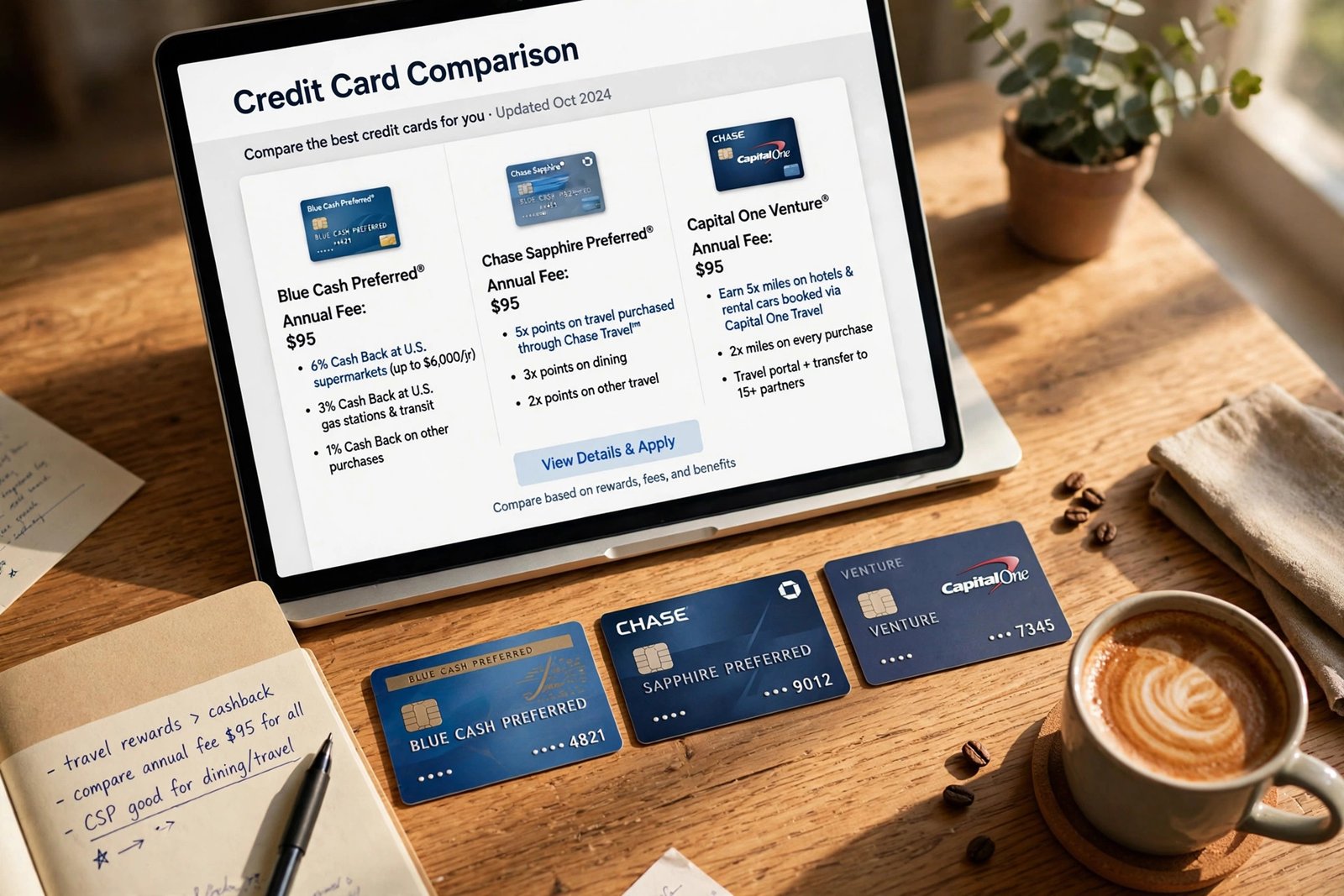
How to Earn with Credit Card Affiliate Programs in 2026
Credit card affiliate programs pay you a one-time bounty each time someone applies through your link and gets approved for a card. This bounty is called a cost per acquisition, or CPA. It is a single payment, not a monthly income, so your earnings depend on a steady flow of new approved applications.
This guide explains how credit card affiliate programs work, what the main programs report as commission, how long their cookies last, which networks run them, and how to apply. It is written for bloggers, comparison site owners and creators who already reach people who are choosing a card.
Disclosure: this article discusses affiliate links. If you apply for a card through a link in this article, EarnQuill may earn a commission at no extra cost to you. Read our full affiliate disclosure for details. Card issuers pay for approved applications only, and no one can promise that your application will be approved.
In this guide
- How credit card affiliate programs work
- Credit card affiliate programs compared
- Payout thresholds and payment timing
- The programs worth knowing
- How to choose the right program for your audience
- How to apply, step by step
- Example only: what the maths looks like
- What it costs and what to expect
- Common mistakes
- Risks and scams to watch for
- Frequently asked questions
How credit card affiliate programs work
A credit card affiliate program is an agreement between you and a card issuer, a comparison site, or a network. You place a special link on your site, in a video description, or in a social media post. When a reader clicks the link and applies for a card, the network tracks the click. If the issuer approves the application, you earn the bounty.
Four terms decide what you actually earn. The CPA is the bounty paid per approved application, and it is usually a flat dollar amount. The cookie is the tracking window, which is the number of days after the click during which an approved application still counts as yours. The network is the platform that tracks clicks and pays you, and the main ones are CJ Affiliate, Rakuten Advertising, Impact and ShareASale. The payout threshold is the minimum balance you must reach before the network sends your money.
Most credit card programs pay only for approved applications. They do not pay for clicks, and they do not pay a recurring commission when the cardholder keeps the card for a second year. That matters, because a headline rate of 150 dollars sounds large, but it is paid once per approved card, and many applications are refused.
Credit card affiliate programs compared
The table below shows the programs that appear across the guides reviewed for this article. The figures are ranges reported by those guides in November 2026, and the guides disagree on several rates. Check the live rate on the network listing before you apply, because rates change and some depend on the card.
| Program | Reported commission per approved card | Reported cookie | Network reported | Best for |
|---|---|---|---|---|
| American Express | 50 to 200 dollars | 30 days | American Express direct, Rakuten Advertising | Premium travel and rewards cards |
| Chase | 50 to 200 dollars | 30 days | Chase direct, Impact | Travel and cashback cards |
| Capital One | 50 to 150 dollars | 30 days | Capital One direct, CJ Affiliate | Cashback and travel cards |
| Discover | 40 to 110 dollars | 30 to 45 days | Discover direct, CJ Affiliate | Cashback cards for new users |
| Credit Karma | A few dollars to about 40 dollars | 30 days | Credit Karma direct | Beginners checking their credit score |
| CreditCards.com | 25 to 100 dollars | 45 days | CJ Affiliate | Card comparisons for a broad audience |
| Bankrate | 25 to 100 dollars | 45 days | CJ Affiliate, FlexOffers | Comparisons and rate roundups |
| The Points Guy | 50 to 200 dollars | Not publicly disclosed | Invite only | Travel rewards readers |
| Luxury Card | 100 to 405 dollars | 30 days | Luxury Card direct | High spenders and metal card fans |
| OpenSky secured card | 25 to 50 dollars | 30 days | ShareASale | Readers building or rebuilding credit |
| Petal | 25 to 75 dollars | 30 days | Petal direct | Young adults with a thin credit file |
Cookie windows are mostly 30 days. Discover is reported at 30 to 45 days, and CreditCards.com and Bankrate at 45 days. A longer cookie helps when readers compare cards for a few weeks before they apply, which is common for travel cards.
Payout thresholds and payment timing
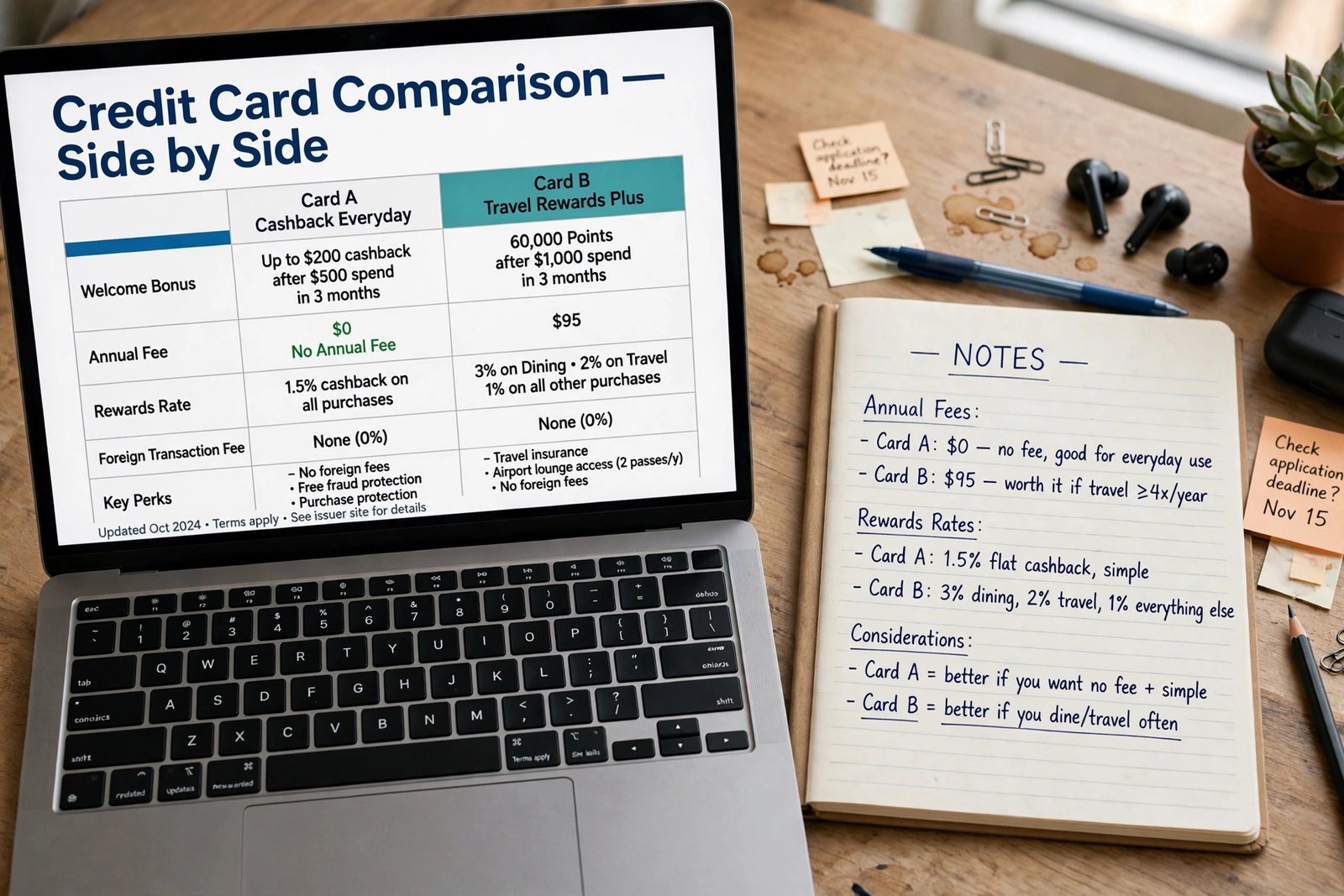
Getting approved for a program is only the first step. You also need to reach the payout threshold, which is the minimum balance the network pays out. The table below shows the thresholds and timing reported by the guides reviewed in November 2026.
| Network | Payout threshold reported | Payment timing reported | Payment methods reported |
|---|---|---|---|
| CJ Affiliate | 50 dollars | Monthly, after a validation period | Direct deposit, check |
| Rakuten Advertising | 50 dollars | Monthly | Direct deposit, check |
| Impact | 10 dollars | Monthly, after the advertiser approves the sale | Direct deposit, PayPal |
| ShareASale | 50 dollars | Monthly | Direct deposit, check |
Impact has the lowest reported threshold, at 10 dollars, which suits beginners who earn slowly. Most networks hold your commission for a validation period while the issuer confirms the approval, so your first payout often arrives two to three months after your first approved application. Read our guide on how to track affiliate earnings so you can tell reported commission apart from money that has actually been paid.
The programs worth knowing
Issuer-direct programs
American Express, Chase, Capital One and Discover run their own programs or run them through a network with their own terms. These pay the highest bounties, but they are also the hardest to join. They usually want a site with real traffic, finance content, and a clean compliance record. The exact rate depends on the card, and premium travel cards pay at the top of the range.
Comparison platforms
CreditCards.com and Bankrate are comparison sites that run their own affiliate programs. They pay less per approval than the issuers, reported at about 25 to 100 dollars, but they accept more publishers and cover every card type in one place.
CreditCards.com and Bankrate both report a 45-day cookie, which is longer than the 30 days most issuers offer. These platforms suit content that compares cards side by side rather than promoting one card.
Beginner-friendly programs
Credit Karma, OpenSky and Petal suit new affiliates and new audiences. Credit Karma pays a small bounty per signup, reported from a few dollars to about 40 dollars, because the reader only signs up for a free credit check. That sounds low, but Credit Karma converts well, because the signup is free and takes minutes.
OpenSky is a secured card, which means the cardholder pays a deposit that sets the credit limit. It suits readers who are building or rebuilding credit, and it is reported to pay 25 to 50 dollars per approved card. Petal suits young adults with a thin credit file, which means they have little credit history, and it is reported to pay 25 to 75 dollars. The Points Guy is reported to pay 50 to 200 dollars, but it is invite only.
How to choose the right program for your audience
Audience match comes first, and the rate comes second. A 200 dollar bounty is worth nothing if your readers never apply for that card.
Match the card to the reader's credit profile. Premium travel cards suit readers with good credit and high spending. Cashback cards suit everyday spenders. Secured cards suit readers who are building credit.
Check three things before you choose. First, check the cookie, because a 45-day cookie beats a 30-day cookie when readers take time to decide. Second, check the payout threshold, because a 10 dollar threshold pays you sooner than a 50 dollar threshold. Third, check the network, because joining one network that runs several programs saves you from managing five separate logins. Our guide to finance affiliate programs covers the wider finance niche, and our guide to travel affiliate programs covers travel cards in more depth.
Someone choosing a card often needs insurance or a mortgage next, so our guides to insurance affiliate programs and mortgage affiliate programs can help you plan a wider finance content hub.
How to apply, step by step
Step 1: Build at least five useful pages on your site before you apply. Issuers want to see real content, not an empty site.
Step 2: Join the network that runs the program you want. Most credit card programs run on CJ Affiliate, Rakuten Advertising, Impact or ShareASale. Create a free publisher account, add your site, and describe your audience in plain words.
Step 3: Search the network for the program, read its terms, and apply. The terms list the commission, the cookie, the payout threshold, and the rules. Read the rules before you click apply, because some programs ban brand bidding, which means you may not bid on the brand name in paid search ads. The CJ Affiliate site and the Impact site both explain how publisher accounts work.
Step 4: Wait for the decision. Most programs reply within a few days to two weeks. Answer honestly and quickly if they ask for more information.
Step 5: If you are accepted, place your links and add your disclosure near the top of the page, before the first affiliate link.
Step 6: If you are rejected, improve the site first, add more content and build some traffic, then reapply in one to three months and mention what has changed. Some programs also accept you through a comparison platform such as CreditCards.com while you build the traffic that an issuer-direct program wants.
Example only: what the maths looks like
This example uses made up numbers. It shows the maths, not what you will earn. Example only.
Suppose a small card comparison site gets 10,000 visits a month. Suppose 3 percent of visitors click an affiliate link. That is 10,000 times 0.03, which is 300 clicks. Suppose 10 percent of those clickers apply for a card. That is 300 times 0.10, which is 30 applications. Suppose 20 percent of applications are approved. That is 30 times 0.20, which is 6 approved cards. Suppose the average bounty is 100 dollars. That is 6 times 100, which is 600 dollars a month.
Now change one number. If the approval rate falls to 10 percent, the same traffic gives 3 approved cards and 300 dollars. The approval rate and the bounty matter as much as the traffic. Most new sites get far fewer than 10,000 visits a month, so their first months earn little or nothing. That is normal.

What it costs and what to expect
| Item | Typical cost | Notes |
|---|---|---|
| Domain and hosting | 50 to 150 dollars per year | Needed for a site you own |
| Network accounts | Free | CJ Affiliate, Impact, Rakuten Advertising and ShareASale are free to join |
| Content writing | Your time, or 50 to 200 dollars per article if you hire a writer | Comparison content takes the most time |
| Compliance review | Your time | Check each program's rules before you publish |
| First payout | Two to three months after your first approved application | Validation periods delay payment |
Expect a slow start. Most new affiliates earn nothing in the first month, because they need traffic before they get applications, and applications before they get approvals. A realistic timeline is three to six months of steady content before the first payout, and longer before the income is regular.
You do not need a finance degree to start, but you do need to read the terms of every card you promote. Annual fees, interest rates, and reward rules change, so check the issuer's own page each time you update a comparison.
Common mistakes
- Do not promote premium travel cards to readers who are building credit, because most of those applications will be refused and your approval rate will fall.
- Do not quote a headline rate as if every approval pays that rate, because the bounty depends on the card and the network.
- Do not ignore the cookie window, because a reader who applies after 31 days earns you nothing on a 30-day cookie.
- Do not hide your disclosure at the bottom of the page, because readers must see it before they click.
- Do not promise readers that they will be approved, because no affiliate can promise that and issuers ban that claim.
- Do not forget to track which links earn and which do not, because that data tells you which cards your audience actually wants.
Risks and scams to watch for
Credit card affiliate marketing has real rules, and breaking them can end your account. The US Federal Trade Commission requires a clear disclosure when you earn a commission from a recommendation, and the disclosure must be easy to notice. The FTC Endorsement Guides explain what counts as a clear disclosure. Put it near the top of the page, before the first affiliate link.
The CARD Act, which is the US law that governs credit card marketing, limits some of the language you can use, and issuers add their own rules on top. Most programs ban claims such as "guaranteed approval" and "everyone qualifies", and most ban bidding on their brand name in paid search ads. Read the program terms before you publish, and read them again when you update a page.
Watch for scams that target new affiliates. No real program charges you a fee to join, and no real program asks you to pay for a starter kit or a list of high paying programs before you can apply. Be careful with any site that promises a fixed monthly income from credit card links, because no one can promise that. If a program is not listed on a known network such as CJ Affiliate, Impact, Rakuten Advertising or ShareASale, and you cannot find its official terms, do not promote it.
Affiliate income is income, and you must report it under the tax rules of your country. Keep records of every payout, and check your local tax authority or a qualified accountant if you are unsure.
Frequently asked questions
How much do credit card affiliates earn per approval?
Reported bounties range from a few dollars for a free credit check signup to about 100 to 405 dollars for a premium or luxury card approval. Most mainstream cards are reported at 40 to 200 dollars per approved application, but your actual earnings depend on your traffic and your approval rate.
Do credit card affiliate programs pay recurring commissions?
No, not in the programs reviewed for this guide. Credit card programs pay a one-time bounty per approved application, and you do not earn a monthly commission while the cardholder keeps the card.
How do I get approved for credit card affiliate programs?
Build a real site with several useful finance pages, add a clear disclosure, then apply through the network that runs the program. Issuer-direct programs are stricter than comparison platforms, so many beginners start with CreditCards.com or Bankrate and apply to issuers later.
What is the highest paying credit card affiliate program?
Luxury Card reports the highest single bounty, from 100 to 405 dollars per approved card, but its audience is small and its cards carry high annual fees. For most affiliates, American Express and Chase pay the most in practice, because their cards match a wider audience.
Do I need a finance blog to promote credit cards?
A blog or comparison site is the most common route, because issuers want to see written content they can check. YouTube channels and social media accounts can also be accepted if they publish finance content and show real engagement.
How long is the cookie window for credit card affiliate programs?
Most programs report a 30-day cookie, which means an approved application counts as yours if the reader applies within 30 days of clicking your link. CreditCards.com and Bankrate report a 45-day cookie, and Discover is reported at 30 to 45 days.
Conclusion
Credit card affiliate programs pay a one-time bounty per approved application, and the best program for you is the one whose cards match your readers. Start with a comparison platform if your site is new, add an issuer-direct program once you have traffic, and check the live rate and cookie on the network before you apply. Keep your disclosures clear and never promise approval.
To go further, read our guide to investing and trading affiliate programs if your readers also invest, our guide to travel affiliate programs for travel card content, and our guide to insurance affiliate programs to widen your finance hub, then browse the full Affiliate Marketing category for more guides.
How facts were checked: commission and cookie figures in this guide are ranges reported by AffiliateMarketingGirl, AffTank and Strackr in November 2026, and the guides disagree on several rates, so each figure is labelled as reported and the live rate should be checked on the network listing. The CJ Affiliate, Impact and FTC pages linked here were opened and read on 2026-11-22. No rate was verified on an official issuer page.
Note for the reader: card offers, annual fees and approval rules differ by country, and most programs in this guide are US focused. Check the issuer's own page for your country before you apply. Earning results vary; nothing on this site is financial advice.