You want to earn from recommending products, but you have no audience, no website, and no clear first step. That is a normal starting point, and it is also where most beginners go wrong. They join ten programmes, publish links everywhere, and wonder why nothing happens. Affiliate marketing works in a slower, narrower way. You help a specific group of people solve a specific problem, you recommend a product you can explain honestly, and you earn a commission when a reader buys through your tracked link. This guide shows how to start affiliate marketing in 2026 in that order, with one niche, one channel, and one clear plan for the first 30 days. It covers the start roadmap only. Niche choice, programme comparison, promotion channels, and the first sale each have their own detailed guides, linked where they matter as a next step.
In this guide
- Step 1: Understand how affiliate marketing works
- Step 2: Choose a narrow niche you can serve
- Step 3: Choose one channel first
- Step 4: Apply to programmes you can explain
- Step 5: Create helpful content before you sell
- Step 6: Build trust and an audience slowly
- Step 7: Disclose links and track results
- Worked example, costs and expectations, common mistakes, risks and scams
- Frequently asked questions
Step 1: Understand how affiliate marketing works
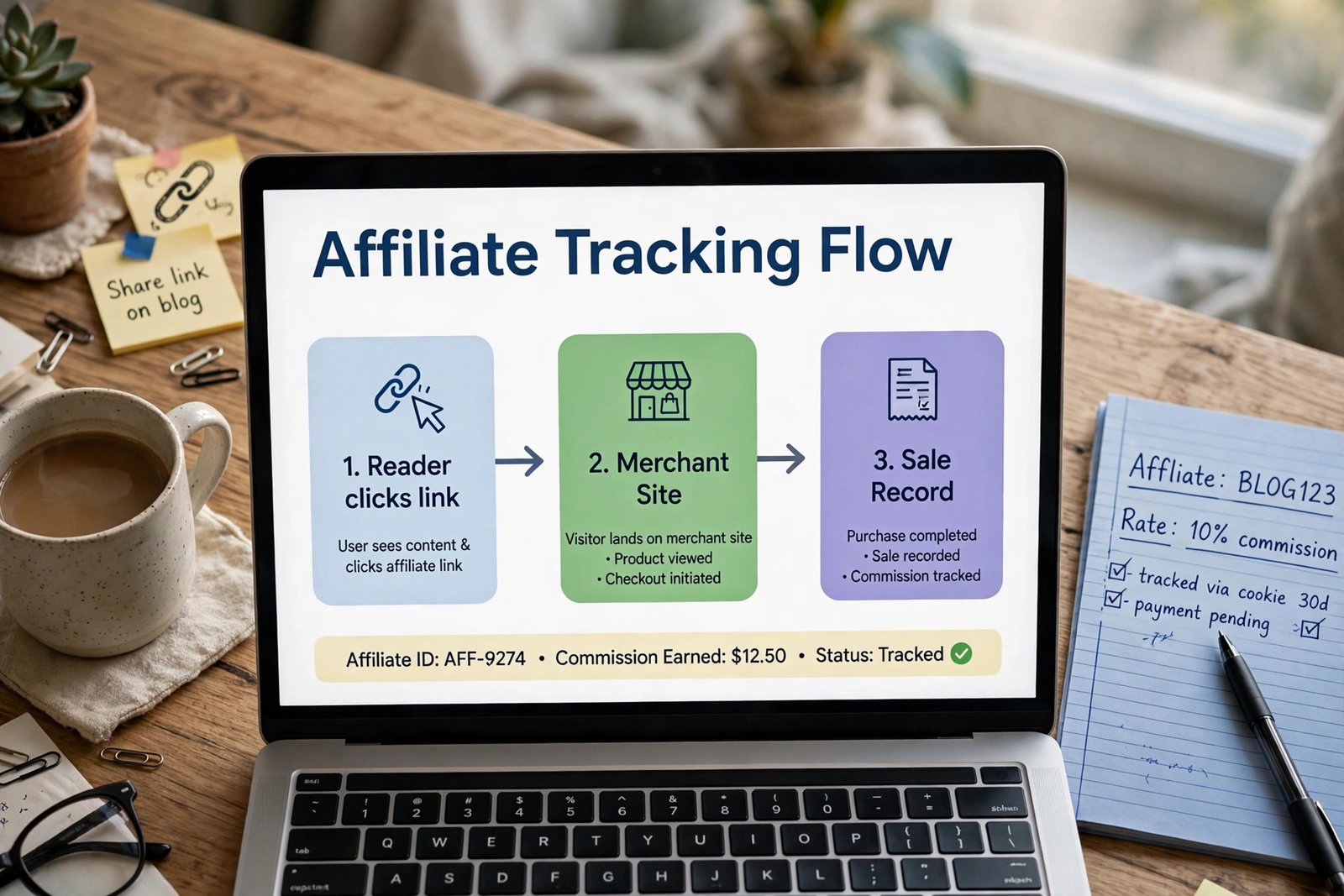
Affiliate marketing is a referral arrangement. A merchant is a company that sells a product or service. An affiliate is a person who recommends that product. A network is a platform that connects many merchants and affiliates in one place. When you join a programme, you receive a unique tracking link. When a reader clicks that link and completes a qualifying action, such as a purchase or a free trial sign-up, the sale is recorded against your link and you may earn a commission. A commission is a payment for a completed sale or action, set by the merchant. Earnings depend on four numbers working together: visitors, click rate, conversion rate, and commission. Visitors are people who see your content. Click rate is the share who click your link. Conversion rate is the share of clickers who buy. Commission is what you earn per qualifying sale. If any one of those numbers is near zero, earnings stay near zero, even if the other numbers look good. This simple maths explains why traffic alone does not guarantee income, and why a small, trusting audience can outperform a large, uninterested one.
| Term | Plain meaning | Why it matters to a beginner | | Tracking link | Your unique link that records clicks and sales | Without it, the merchant cannot credit you | | Cookie window | How long after a click a sale still counts | A short window needs high intent traffic | | Payout threshold | Minimum balance before payment | You may wait months to reach a first payment | | Refund rule | When a returned sale removes commission | It affects what you actually keep |
Step 2: Choose a narrow niche you can serve
A niche is a focused topic and audience, not a whole industry. "Technology" is too broad. "Email tools for newsletter writers" is a niche, because the audience, the problem, and the products are clear. A narrow niche helps in three ways. First, you can learn the products well enough to explain them. Second, readers can tell quickly whether your content is for them. Third, search engines and social platforms can match your content to people who already want it.
Step 3: Choose one channel first
A channel is where readers find you. Common beginner channels are a blog, a YouTube channel, an email newsletter, a Pinterest account, or a social media account. Each channel has different strengths. A blog suits writing and search traffic. Video suits demonstrations and tutorials. Email suits regular readers who already trust you. Social media suits short tips and community building. No channel is best for everyone. The best first channel is the one you will actually use every week.
Step 4: Apply to programmes you can explain
Apply to two or three programmes at most in the beginning. More programmes mean more terms to learn, more dashboards to check, and more products you cannot explain well. Choose programmes that fit your niche and your channel. Check five things before you apply: what commission type is paid, how long the cookie window lasts, what the payout threshold and payment method are, whether your country and channel are accepted, and what promotion rules apply. Some programmes ban paid ads on their brand name, ban direct linking in certain places, or require a website review. Read the terms page, not just a summary article, because terms change. For official terms, start with Amazon Associates programme help and Impact.
Step 5: Create helpful content before you sell
Content comes before selling, because trust comes before clicks. A reader who finds a genuinely helpful guide is far more likely to click a link than a reader who finds a page full of links and little advice. Plan your first ten content ideas around questions your niche audience already asks. Useful formats include a single product review based on real use or careful research, a comparison of two or three products, a tutorial that shows how to use a product, a best-of list for a clear use case, and a guide that answers a problem without requiring a purchase. If you use artificial intelligence tools to draft or edit, check the facts yourself, rewrite in your own voice, and disclose where a platform requires it. AI tools can help you outline or summarise, but they can also invent features, prices, and claims. The final responsibility for accuracy stays with you.
Step 6: Build trust and an audience slowly
An audience is a group of people who return because your content helped them before. You build it by publishing consistently, answering comments honestly, and recommending only products you can defend. Publish on a schedule you can keep, such as one helpful piece per week. A burst of ten rushed posts followed by silence helps less than ten steady posts over ten weeks. Keep a simple list of questions readers ask, and turn the best ones into future content. That list becomes your content plan.
Step 7: Disclose links and track results
Disclosure is a clear statement that you may earn a commission if a reader buys through your link. Place it before the first affiliate link, not hidden at the bottom of the page. A simple disclosure works well, for example: "Some links in this guide are affiliate links. If you buy through them, I may earn a commission at no extra cost to you." Rules differ by country, and the United States Federal Trade Commission guidance is the reference most guides use, but it is not universal. Check the rules for your country and for each platform you use. The official endorsement guidance is a useful starting point, and you can read the Federal Trade Commission endorsement guides.
Worked example: one niche, one channel, one programme
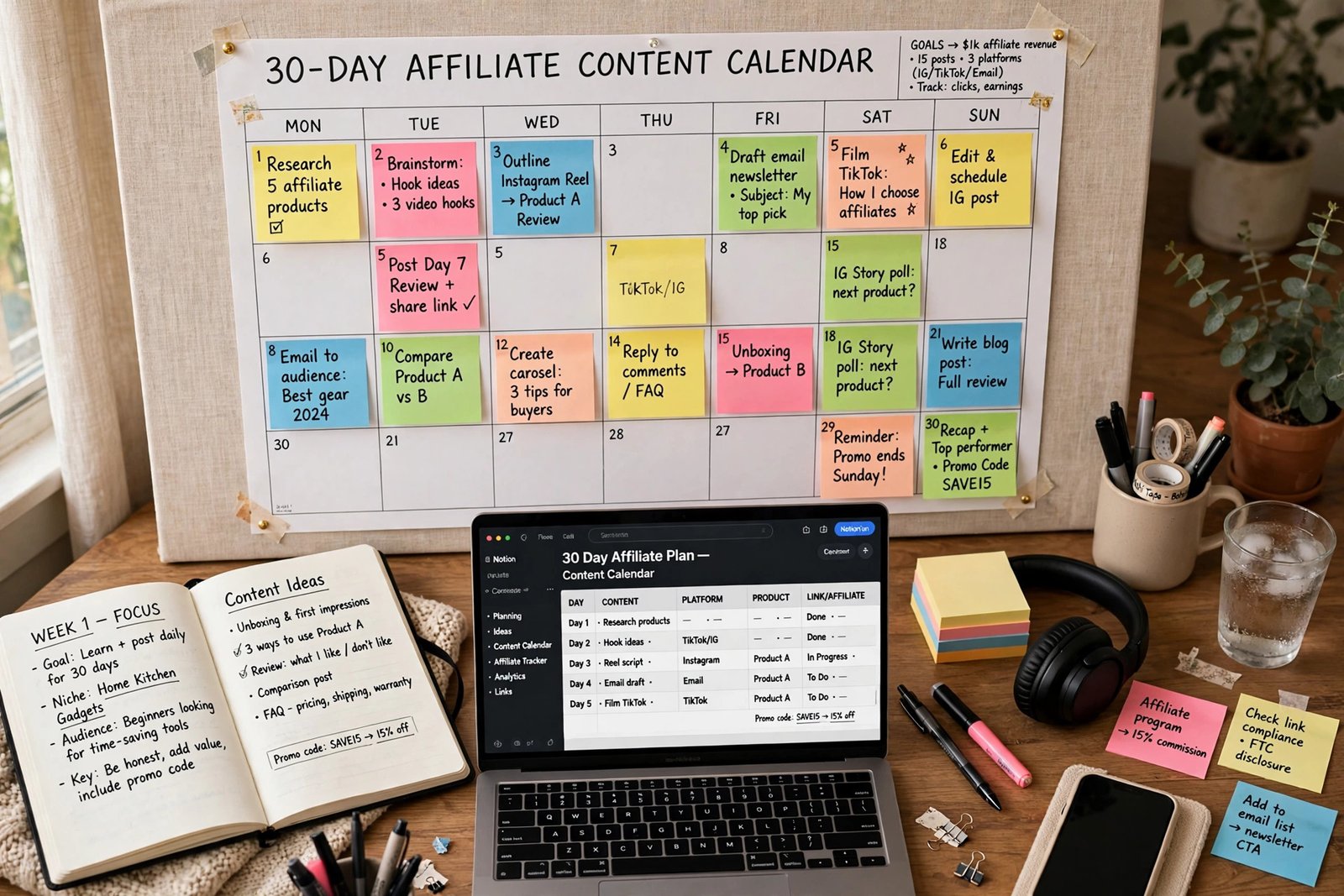
Example only: these numbers are not typical results and do not promise income. Imagine a beginner who chooses email tools for newsletter writers as a niche, a blog as the channel, and one email tool programme as the first programme. In week one, she publishes a guide to choosing an email tool for a first newsletter, with one affiliate link in a comparison table and one in a short checklist. In week two, she publishes a tutorial on setting up a welcome email. In week three, she publishes a comparison of two email tools for small lists. In week four, she sends the three guides to a small email list and answers reader questions in the comments.
What it costs and what to expect
You can start affiliate marketing with no money, using a free platform, a free social account, or a free email tier. That path is slower, because you rely on platforms you do not control, and some programmes may not accept you without an approved site or channel. A small-budget start usually costs money for a domain name, hosting, or an email tool, but prices vary by provider and country, so check current prices before you commit. Do not buy expensive courses, tools, or advertising at the start. Your main cost in the first months is time: learning a niche, writing or filming, and answering readers.
| Start path | Typical cost | Main trade-off | | No money start | No cash cost, using free platforms | Slower growth, platform rules limit you, some programmes may reject you | | Small budget start | Domain, hosting, or email tool fees, prices vary | More control, but you still need time and content before income | | Paid ads start | Advertising spend, which can rise fast | Not recommended for beginners, and many programmes restrict ads |
Expect a slow start. Building search traffic, trust, and a small audience usually takes months, not days. Some beginners make a first sale in weeks, others take many months, and some never earn enough to reach a payout threshold. That range is normal. Results vary with experience, niche, audience size, time, competition, expenses, and programme terms. If anyone promises a first sale in 24 hours or a fixed monthly income, treat that as a warning sign, not a plan. Set a realistic review point, such as 90 days, and judge your work by content published, questions answered, clicks recorded, and lessons learned, not only by sales.
Common mistakes
- Joining too many programmes before you can explain any product well, which leads to thin content and confused readers.
- Publishing links without helpful content, which gives readers no reason to trust or click.
- Hiding disclosure at the bottom of a page, or leaving it out entirely, which breaks trust and programme rules.
- Copying competitor reviews instead of writing your own structure and verdict, which adds nothing new for readers.
- Chasing the highest commission instead of the best product fit, which often leads to refunds and complaints.
- Buying traffic or followers to inflate numbers, which can break programme rules and distort your data.
Risks and scams to watch for
Affiliate marketing attracts scams because it promises income from home. Watch for programmes that charge a fee just to join, require you to buy a starter kit, promise guaranteed income, or pressure you to recruit other people instead of selling a real product. Those are warning signs, not opportunities. Be careful with programmes that will not publish clear commission terms, cookie windows, or payout rules. If terms are hidden, assume the worst and move on.
Frequently asked questions
Do I need a website to start affiliate marketing?
No, but a website or a clear home base helps a lot. You can start on a social account, a video channel, or an email newsletter, if the programme accepts that channel and the platform allows affiliate links. Some programmes still require an approved website or channel, so check the terms before you rely on one programme alone.
How long does it take to make a first affiliate sale?
There is no fixed timeline. It depends on your niche, content quality, traffic, product fit, and how much time you can give each week. Some beginners see a first sale in weeks, while others need months of steady publishing. Judge progress by helpful content published and clicks recorded, not only by sales.
How much money do I need to start affiliate marketing?
You can start with no cash cost on free platforms, but growth is usually slower and some programmes may reject you. A small budget for a domain, hosting, or email tool gives you more control, but prices vary, so check current provider prices. Do not buy expensive courses or ads at the start.
Can I use AI to create affiliate content?
You can use AI tools to outline, draft, or edit, but you must check every fact, price, and claim yourself. AI tools can invent features and results. Rewrite the content in your own voice, add your own structure and verdict, and follow any disclosure rules for the platform you use.
Should I start with a blog or YouTube?
Choose the format you will sustain. A blog suits writing and search traffic, while video suits demonstrations and tutorials. If you dislike writing, a blog will feel like a chore, and if you dislike being on camera, video will stall. Pick one, publish consistently for 90 days, and only then consider adding a second channel.
Conclusion
Starting affiliate marketing in 2026 is a simple sequence done in order: understand tracking, choose a narrow niche, pick one channel, apply to a few programmes you can explain, publish helpful content, build trust slowly, and disclose and track every link. Your next step is to choose your niche and channel today, then read How to Choose a Profitable Affiliate Niche in 2026, and use the Affiliate Marketing category page for the programme, promotion, and first sale guides. Results vary, and nothing on this site is financial advice.