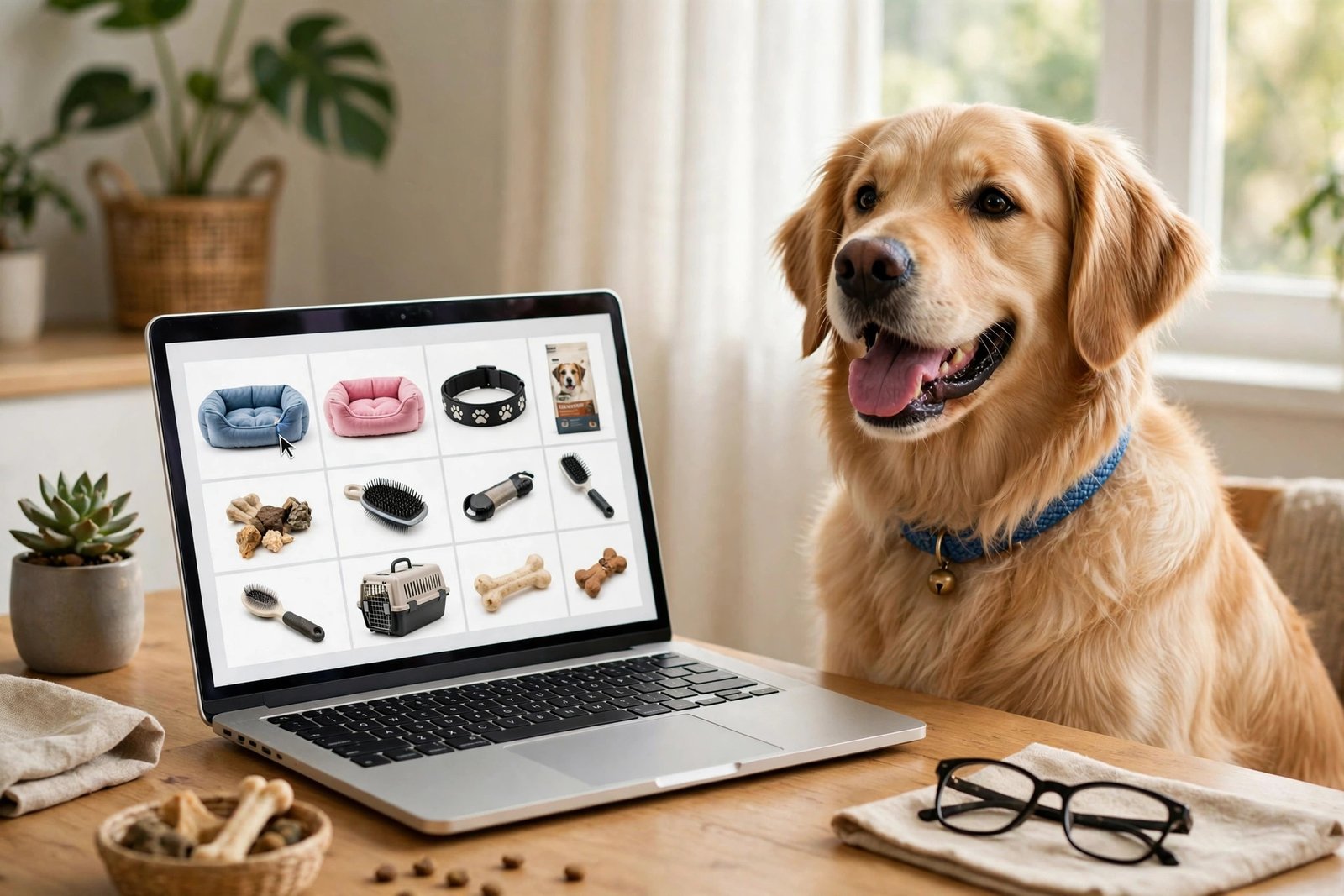
How to Earn with Pet Affiliate Programs in 2026
Pet affiliate programs let you earn a commission when a reader buys pet food, toys, or care products through your tracked link. Many beginners join every programme they find and then struggle to make a first sale. This guide shows a calmer method. You will pick one pet audience, compare a small set of programmes on real terms, publish helpful reviews, and track what actually converts.
In this guide
- What pet affiliate programmes are and who they suit
- Step 1: Choose one pet audience and one problem
- Step 2: Compare programmes on commission, cookie, and payout
- Step 3: Apply and set up your links correctly
- Step 4: Publish reviews and guides that help buyers decide
- Step 5: Track clicks, sales, and returns each week
- What it costs and what to expect
- Common mistakes
- Risks and scams to watch for
- Frequently asked questions
What pet affiliate programmes are and who they suit
A pet affiliate programme is a partnership in which a pet brand or retailer pays you a share of each qualifying sale you refer. You place a tracked link in your content. The retailer records the click with a cookie, which is a small file that remembers your referral for a set number of days. If the reader buys inside that window, you earn the commission stated in the programme terms.
Pet programmes suit you if you already keep a pet, work with animals, or publish pet care content that people trust. They also suit patient beginners who enjoy testing products and writing clear comparisons. They suit you less if you want fast income with no audience. Pet owners research food and health products with care, so trust matters more than volume.
Pet programmes fall into four groups. Large retailers sell food, toys, and supplies for many species. Fresh food brands sell subscription meals for dogs and cats. Pet technology brands sell trackers, cameras, and DNA kits. Service brands sell sitting, walking, and training. Each group pays in a different way, so you should compare the payment model before you compare the headline rate.
| Programme group | How it usually pays | Best first content | Main watch point |
|---|---|---|---|
| Large pet retailers | Small percentage per order | Supply lists and comparison guides | Short cookie windows on some programmes |
| Fresh food subscriptions | Flat fee per new subscriber | Feeding guides and honest reviews | First order only on many programmes |
| Pet technology | Percentage per sale | Setup guides and problem solving posts | Higher prices need more trust |
| Pet services | Percentage or flat fee per booking | Local guides and travel checklists | Service areas differ by town and country |
If you are new to affiliate marketing, read how to start affiliate marketing first. It explains tracking, disclosure, and the first 30 days in the right order.
Step 1: Choose one pet audience and one problem
Start with one audience, such as new puppy owners, indoor cat owners, or owners of senior dogs. Then choose one problem that audience searches for every week. Examples include choosing a first harness, feeding a fussy cat, or keeping a dog calm during fireworks.
A narrow start helps you in three ways. Your reviews stay relevant to the same reader. Your internal links form a clear cluster. Brands can see that your content fits their products when you apply.
Write down three audience ideas and score each one. Note how often the problem occurs, how much buyers spend, and whether you can test products yourself. Pick the idea with repeat purchases and products you can explain from real use. Score each idea on demand, buyer intent, payout maths, and your own access to products before you commit.
Do not copy another creator's niche without checking your own access to products. You need to handle the food, toy, or device before you review it. Readers spot second hand reviews quickly, and brands reject thin content.
Step 2: Compare programmes on commission, cookie, and payout
Compare programmes on five terms, not on the headline rate alone. Check the commission type, the cookie length, the payout threshold, the payment method, and the rules on promotion. A payout threshold is the minimum balance you must reach before the programme pays you.
As of November 2026, Chewy runs its United States affiliate and creator programme through Impact. Chewy's official affiliate page confirms that partners earn on eligible orders from new and existing customers, but the page does not publish a single commission rate or cookie length for the United States programme. You should read the terms inside Impact after you apply and record the rate and cookie that apply to your account. You can read the current details on Chewy's official affiliate page.
Other pet programmes report different models. Fresh food brands often report a flat fee per new subscriber. Subscription boxes often report a flat fee per signup. Pet technology brands often report a percentage per sale. Rates and cookies change by network and by country, so treat any figure in a list article as a reported range until you confirm it on the programme page.
| Term to check | Why it matters | What to record |
|---|---|---|
| Commission type | Flat fees suit subscriptions, percentages suit baskets | Rate, product exceptions, and date checked |
| Cookie length | Short windows lose slow buyers | Days, and whether the last click wins |
| Payout threshold | High thresholds delay your first payment | Amount, currency, and payment method |
| Promotion rules | Breaches can cancel your earnings | Brand bidding, coupon, and social rules |
| Returns policy | Returned orders can reverse commission | Validation period and reversal rules |
Shortlist two or three programmes that serve the same audience. Apply to those first. Our guide to the best affiliate programs for beginners shows how to split a shortlist into apply now and apply later.
Worked example
Example only: these numbers are not typical results.
Imagine you publish a guide to first puppy supplies. In one month, 1,000 readers visit the guide. Of those readers, 100 click your retailer link, which is a 10 percent click rate. Of those 100 clicks, 5 readers buy, which is a 5 percent conversion rate. Each order is worth 40 US dollars, so total sales are 5 times 40, which is 200 US dollars. At a 4 percent commission, you earn 200 times 0.04, which is 8 US dollars before any returns.
Now imagine the same guide promotes a fresh food trial that pays a flat 20 US dollars per new subscriber. If 2 of the 100 clicks become subscribers, you earn 2 times 20, which is 40 US dollars. The flat fee looks better in this example, but it only pays on the first order, while the retailer link can pay on later orders inside the cookie window. Recalculate both models with your own click and conversion rates before you choose.
Step 3: Apply and set up your links correctly
Apply with the exact website, blog, or social account where you will place the links. Brands review your content for fit and quality. A small site with clear pet guides often passes more easily than a large site with mixed topics.
Once you are approved, create one link per product and label each link clearly in your notes. Test every link on your phone and your computer. Check that the link opens the right product page and that your tracking code appears in the address.
Disclose every affiliate link in plain language near the link. In the United States, the Federal Trade Commission says you must disclose a material connection, which includes affiliate commission, in a way that is hard to miss. You can read the plain language rules in the FTC guide on disclosures for social media influencers. Place your disclosure before the first affiliate link, not only in a footer.
Step 4: Publish reviews and guides that help buyers decide
Write content that answers a buying question. Good first formats include a tested review of one product, a comparison of two or three options, and a checklist for a common task. Show the product in use, state who it suits, and state who should skip it.
State your limits clearly. Say how long you tested the product, what you did not test, and which claims come from the manufacturer. Do not repeat health claims you cannot prove. For food and supplements, describe ingredients and feeding instructions, and tell readers to ask their own vet about health decisions.
Link each new guide to related guides on your site. If you run a pet blog, our guide on how to start a pet blog and make money shows how to plan topics around search demand. If you prefer video, read how to start a pet YouTube channel and earn money for a simple filming routine.

Update your guides when prices, sizes, or programme terms change. Add the date you last checked each product. Readers trust dated reviews, and search engines reward fresh, accurate pages.
Step 5: Track clicks, sales, and returns each week
Check your dashboard every week. Record clicks, orders, commission, and reversals for each guide. A reversal happens when a buyer returns an order and the programme takes the commission back.
Look for patterns, not single days. A guide with many clicks and no sales may link to the wrong product or the wrong price. A guide with few clicks and steady sales may deserve more internal links and a clearer title.
Keep a simple record for each programme. Note the rate, cookie, threshold, and the date you checked the terms. A short weekly check of clicks, sales, and reversals takes less than an hour once your record sheet is set up.
What it costs and what to expect
Joining pet affiliate programmes is usually free. Your real costs are products you buy to test, basic filming or writing tools, and your time. Many beginners spend more on test products in the first months than they earn in commission. Set a small monthly test budget and stop when you reach it.
Expect a slow start. Search traffic often takes months to build, and social platforms reward consistent posting over time. Your first sale may come from a reader who already follows you, not from a stranger. Results vary with your audience size, your niche, product prices, and how often owners buy again.
Payment timing also varies. Some networks pay monthly after a validation period. Others hold commission until the return window closes. Read the payment schedule before you plan spending around affiliate income.
| Cost or delay | Typical pattern | How to plan |
|---|---|---|
| Test products | You pay retail price unless a brand sends a sample | Buy one product at a time and review it fully |
| Content time | Each tested review takes several hours | Publish fewer, better guides each month |
| First payout | Threshold plus validation delay | Check the threshold before you apply |
| Returns | Commission can reverse after a return | Keep a reserve and do not spend pending commission |
Common mistakes
Many beginners join ten programmes at once and then cannot explain any product well. Join two or three programmes that serve one audience and learn their terms properly.
Some creators hide affiliate links inside short links with no disclosure. Always disclose the commission clearly and place the disclosure where readers will see it before they click.
Other creators copy product claims from a brand page without testing the product. Test the product yourself and describe only what you observed.
A common error is promoting a programme that does not ship to your readers' country. Check shipping areas and currencies before you publish.
Many sites link to a homepage instead of the exact product page. Link to the product the reader asked about so the click matches the intent.
Risks and scams to watch for
Be careful with programmes that ask you to pay a fee to join or to buy a starter kit. Legitimate affiliate programmes are free to join and pay you after a sale. Walk away from any offer that promises guaranteed income.
Check that the brand sells real products with clear prices, delivery terms, and a returns policy. Avoid brands that make cure claims for pet illnesses. You cannot prove those claims, and promoting them can harm animals and damage your reputation.
Protect your accounts. Use unique passwords and turn on two factor sign in for every network account. Never share your payment details outside the network dashboard.
Frequently asked questions
How much do pet affiliate programmes pay?
Pet affiliate programmes pay in different ways, so there is no single rate. Large retailers often pay a small percentage per order, while fresh food brands often pay a flat fee per new subscriber. Check the current rate, cookie, and threshold on the programme page as of November 2026 before you rely on any figure.
Do I need a pet to start?
You do not need to own a pet, but you do need honest access to the products you review. Many readers own pets and spot vague reviews at once. If you do not keep a pet, work with a local owner who lets you test products, and say so in your review.
Can I promote pet programmes on social media without a website?
Yes, many programmes accept social creators, and some run separate creator tracks. You must still disclose every affiliate link clearly on each post. Check the programme rules for your platform before you post.
How long does it take to make a first sale?
A first sale can take weeks or months, and many new affiliates earn nothing at first. Traffic, trust, and product fit matter more than the number of links you post. Publish helpful guides consistently and review your click data each week.
Should I promote pet food or pet toys first?
Start with the products your audience already buys often. Food brings repeat orders but needs careful health wording. Toys and supplies are simpler to review and suit gift guides. Choose the group you can test well and explain clearly.
Conclusion
Earn with pet affiliate programmes by choosing one pet audience, comparing two or three programmes on real terms, testing products yourself, and disclosing every link. Your next step is to shortlist two programmes today and read their full terms. Then read how to promote affiliate products, how to make your first affiliate sale, and our guide to how to earn with beauty affiliate programs if you also publish lifestyle content. Browse all guides on the Affiliate Marketing category page.
Earning results vary; nothing on this site is financial advice.