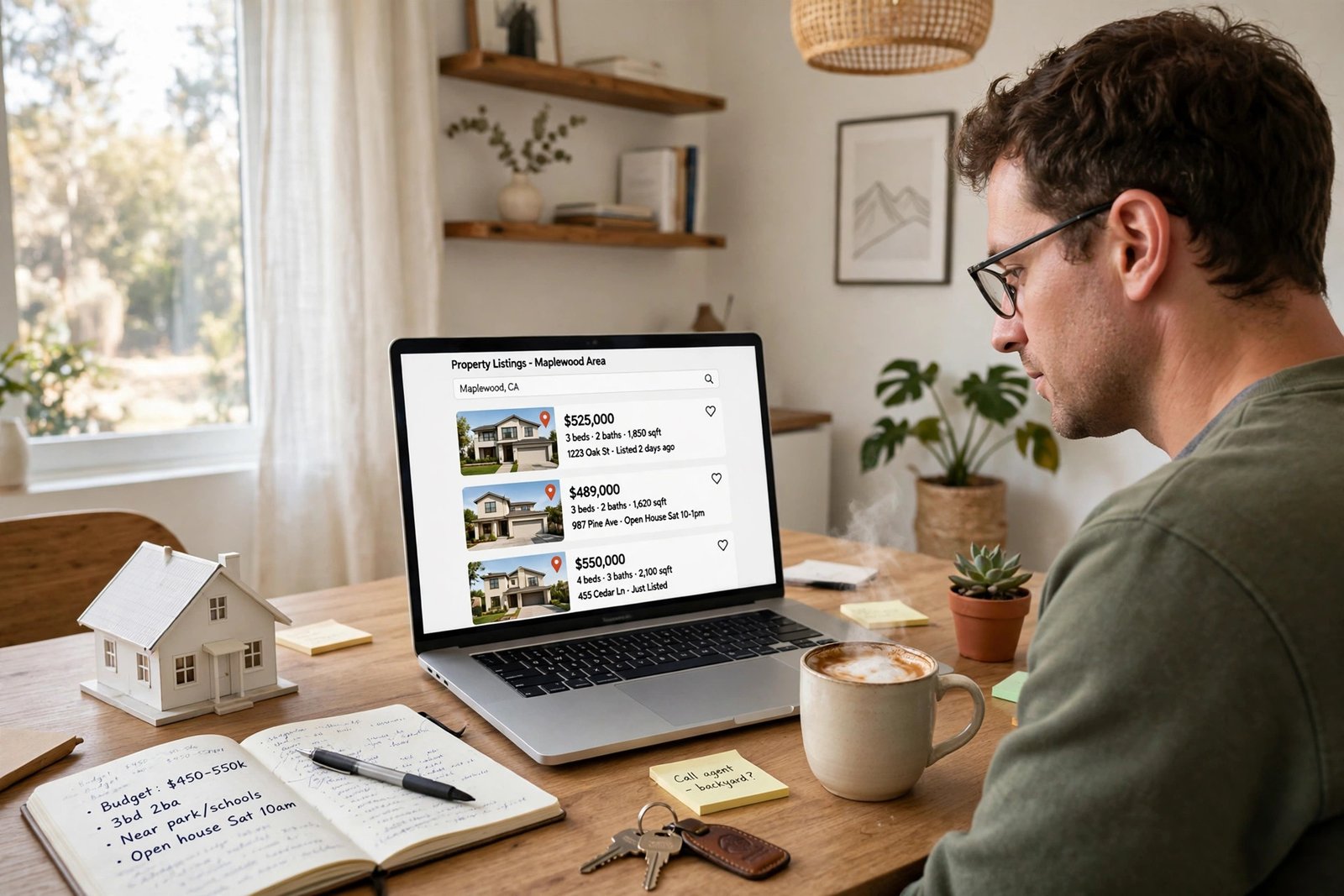
How to Earn with Real Estate Affiliate Programs in 2026
Learning how to earn with real estate affiliate programs is a good fit for anyone who writes about property, investing, freelancing, or small business, because property is one of the biggest purchases most people ever make. Readers search for tools, courses, loans, and software at every stage, from first time buyer to full time landlord. When you recommend a good one, you can earn a useful commission.
The payouts are strong. Property management software can pay 25 percent of every monthly payment, often for a year or more. Real estate courses can pay 50 percent of a high ticket sale. Lead generation tools can pay 20 to 40 US dollars per lead. The trade off is expectation. Most real estate affiliate programs do not pay you for a property sale. They pay for software, courses, leads, listings, and loans. If you understand that from the start, you will not be disappointed.
This guide shows you how to start in real estate affiliate marketing the honest way: pick one real estate audience, compare programs on the numbers that matter, apply to programs you can actually join, and build useful content before you expect income. It is not financial advice, and it does not promise income.
This guide is for beginners who already write about property, investing, freelancing, or small business. You will learn how real estate affiliate programs work, which program types pay best, which programs to shortlist, how to promote them without misleading readers, and what a realistic first year looks like.
Disclosure: this article discusses affiliate links. If you sign up for a service or buy a course through a link in this article, EarnQuill may earn a commission at no extra cost to you. The information in this article is for education only and is not personal financial advice. Read our full affiliate disclosure for details.
In this guide
- How real estate affiliate programs work, and what they do not pay for
- The five program types compared
- Programs compared
- Step 1: Pick one real estate audience
- Step 2: Shortlist programs on five checks
- Step 3: Apply and set up tracking and payouts
- Step 4: Publish the three content types that convert
- Step 5: Track and improve
- Worked example
- What it costs and what to expect
- Common mistakes
- Risks and scams to watch for
- Frequently asked questions
How real estate affiliate programs work, and what they do not pay for
A real estate affiliate program is a partnership between a property company and a publisher. You place a tracked link on your site. When a reader clicks it and completes a qualifying action, you earn a commission. The qualifying action is usually a software sign-up, a course purchase, a completed lead form, or a listing.
Most real estate brands run their programs through a large affiliate network such as Impact, CJ Affiliate, or ShareASale, which is now part of Awin. You join the network, find the brand inside it, and apply. Once you are approved, you get a tracking link and access to banners and reporting. The network tracks clicks, leads, and sales, and it pays you, usually monthly, once your balance passes a minimum threshold.
Here is the fact most new affiliates miss. Real estate affiliate programs almost never pay commission on an actual property sale. You will not earn a share of a house price. The money is in the tools and services around the sale: property management software, investment analysis tools, landlord software, real estate courses, lead generation, mortgage leads, and vacation rental bookings. A 25 percent commission on a 150 US dollar monthly software subscription is real money, and it can repeat every month. A share of a house sale is not on offer, and any program that promises it should be treated with suspicion.
You do not need a real estate licence to promote these programs. You do need to be honest about what you are recommending. Never present yourself as a licensed agent or adviser. Never promise that a course will make a reader money, or that a property will rise in value. Your job is to explain what a tool does, what it costs, and who it suits.
The five program types compared
Real estate affiliate programs fall into five types, and each one serves a different audience. The table below compares them.
| Program type | What the reader buys | Typical commission | Cookie | Best audience |
|---|---|---|---|---|
| Property management software | Monthly software for landlords and managers | 25 percent recurring | 60 days | Landlords, property managers |
| Real estate courses | Training on investing, wholesaling, flipping | 20 to 50 percent per sale | 90 to 180 days | New investors, aspiring flippers |
| Vacation rentals | Bookings and listings on rental platforms | 2 to 5 percent per booking | 7 to 30 days | Travel bloggers, holiday home owners |
| Lead generation | Mortgage leads, buyer and seller leads | 15 to 70 US dollars per lead | 14 to 90 days | Agents, mortgage brokers, finance sites |
| Real estate tools | Analysis software, CRM, websites for agents | 20 to 40 percent per sale | 30 to 90 days | Investors, agents, small teams |
Property management software is the steadiest earner, because the commission repeats every month the customer stays. Real estate courses pay the most per sale, but the audience is narrower and the products are expensive, so fewer readers buy. Vacation rentals pay small percentages, but the booking values are large, so a single booking can still pay well. Lead generation pays per form completed, which suits high traffic sites. Real estate tools suit anyone who writes for agents or investors.
Pick one type first. A site that promotes all five at once will confuse readers and dilute its authority.
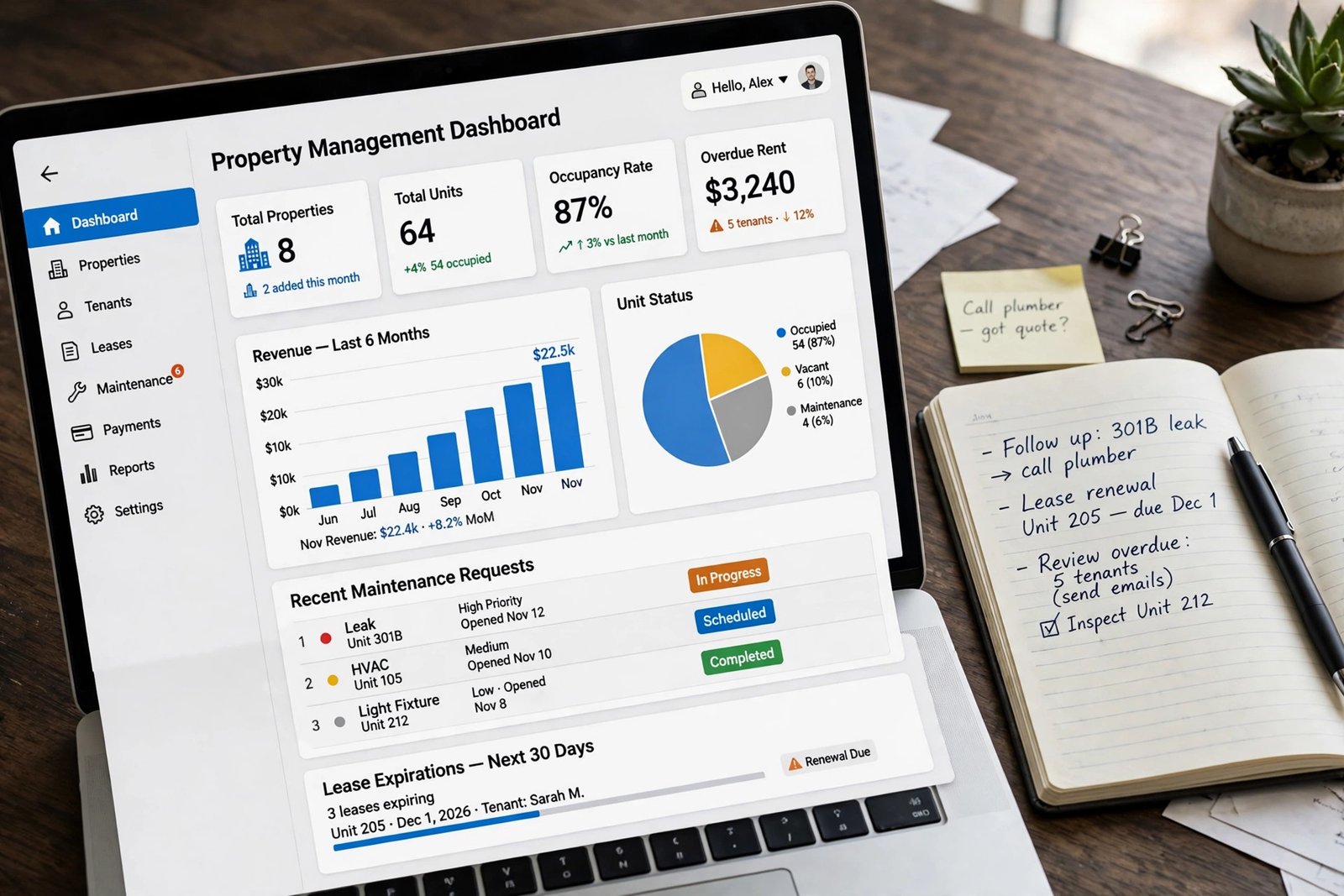
Programs compared
The table below compares eight programs that appear across the main affiliate guides. Figures are reported by affiliate guides and by the brands own pages, checked in November 2026. Always confirm the current terms in the network dashboard before you apply, because rates and cookie windows change.
| Program | What it sells | Typical commission | Cookie | Network |
|---|---|---|---|---|
| Buildium | Property management software | 25 percent on subscriptions, 10 US dollars per qualified lead | 60 days | Impact |
| DealCheck | Property investment analysis app | 30 percent recurring, 100 US dollar bonus per 10 paying users | 90 days | Own program |
| Lex Levinrad | Real estate investing courses and boot camps | 50 percent per sale | 180 days | Own program |
| Foreclosure.com | Foreclosure listings database | 25 percent per subscription | 180 days | Affiliate networks |
| Corporate Housing by Owner | Corporate rental listings | 15 percent per listing, 3 percent per rental | 30 days | ShareASale, now Awin |
| Real Estate Express | Real estate licensing and investing courses | 20 percent per course sale | 100 days | Affiliate networks |
| LendingTree | Mortgage and loan leads | 1 to 70 US dollars per qualified lead | 14 days | CJ Affiliate and Impact |
| Architectural Designs | House plans, over 30,000 designs | 5 percent per sale | 120 days | CJ Affiliate |
Buildium is the strongest starting point for most publishers, because it pays a recurring commission on a product landlords genuinely need. Its program runs on Impact and pays 25 percent on subscriptions plus 10 US dollars per qualified lead, with a 60 day cookie. One guide lists 20 percent in its summary table and 25 percent in its program profile, which is a conflict. The 25 percent figure is repeated by two other guides and by Buildium's own affiliate page text, so the article uses 25 percent and notes the conflict.
DealCheck suits investor audiences, because it pays 30 percent recurring on a cheap analysis app, and adds a 100 US dollar bonus for every 10 new paying users. Lex Levinrad pays the highest percentage at 50 percent, but it only accepts sites with at least 1,000 daily visitors, so it is a second stage program, not a first one. Corporate Housing by Owner runs through ShareASale, which now operates as part of Awin. Read the ShareASale, now Awin page for how to join the network.
Step 1: Pick one real estate audience
Start with the audience you already reach. If you write about freelancing or small business, pick landlord software, because many freelancers rent out property. If you write about investing, pick analysis tools and courses. If you write about travel, pick vacation rentals. If you write about personal finance, pick mortgage leads and first time buyer content.
Check three things before you commit. First, can you write at least 10 useful articles for this audience without repeating yourself? Second, do programs in this niche accept new publishers? Most software and rental programs do. Course programs may want to see traffic first. Third, does your audience live in a country the program covers? Most of these programs are US only. A reader in Pakistan, India, or the UK may not be able to use them. Check the program terms for country limits before you write.
Step 2: Shortlist programs on five checks
Do not choose a program on the headline rate alone. A 50 percent commission on a course that costs 2,000 US dollars sounds exciting, but very few readers buy it. A 25 percent recurring commission on a 150 US dollar monthly subscription pays every month. Compare every program on these five checks.
First, the commission model. Recurring commissions compound over time. One time commissions pay once. Second, the cookie window. A 180 day cookie, like Lex Levinrad and Foreclosure.com, is far more valuable than a 14 day cookie, like LendingTree, for a product readers think about for weeks. Third, the average order value. A 5 percent commission on a 1,000 US dollar house plan is 50 US dollars. A 30 percent commission on a 10 US dollar app subscription is 3 US dollars. Fourth, the payout threshold. Some networks pay from 10 US dollars, others from 100 US dollars. A high threshold can delay your first payout for months. Fifth, the brand. A brand your readers already trust will convert far better than an unknown brand with a higher rate.
Write the five checks in a simple table for yourself before you apply. It takes 20 minutes and it stops you from chasing the biggest number.
Step 3: Apply and set up tracking and payouts
Apply to one network first, then to two or three programs inside it. Impact hosts Buildium. CJ Affiliate hosts LendingTree and Architectural Designs. ShareASale, now Awin, hosts Corporate Housing by Owner. A single network account keeps your reporting and payouts in one place.
Before you apply, make sure your site looks like a real publication. Programs check for an about page, a contact page, a privacy policy, and an affiliate disclosure page. They also check that you already publish useful content in a related topic. A site with five real articles will be approved far more often than an empty site with a single affiliate page.
Once you are approved, set up your payout details straight away, including your bank details and tax information. Networks will not pay you until this is complete. Then test your tracking link by clicking it yourself and checking that it lands on the right product page. Never submit fake lead forms to test a link. That is lead fraud, and it will get your account closed.
Add a clear disclosure near every affiliate link. A short line is enough: "We may earn a commission if you sign up through this link." The FTC endorsement guides explain when and how to disclose a paid recommendation, and the same principle applies in most countries.
Step 4: Publish the three content types that convert
Real estate affiliate income comes from three content types. Publish all three, in this order.
First, comparison guides. "Best property management software for landlords" or "DealCheck vs manual spreadsheets" attract readers who are ready to choose. Compare three to five options on price, features, ease of use, and support. Use a table. Link to the product inside the comparison, not only at the end.
Second, explainer guides. "How to analyse a rental property" or "What is a cap rate" attract readers early in their research. These pages rank well and build trust. They rarely convert on their own, but they send readers to your comparison guides, so link between them.
Third, audience guides. Write for one reader at one moment: a new landlord with their first tenant, a first time buyer comparing mortgage options, or an investor looking at their first rental. "First time landlord checklist: software, contracts, and insurance" will convert better than a generic real estate page, because it reaches readers at the exact moment they need a tool. If you are new to this, read how to start affiliate marketing and how to promote affiliate products before you publish your first real estate article.
Step 5: Track and improve
Check your network dashboard once a week. Look at clicks, sign-ups, sales, and the average order value. Most real estate links will never convert, and that is normal. Find the one or two pages that do convert, and write more content like them.
Update your program table every three months. Rates, cookie windows, and even whole programs change. A page that lists an old rate will lose reader trust and may breach the program terms. Keep a short note at the top of each article with the month you last checked the figures.
Once one audience earns steadily, add a second audience that shares the same readers. Landlords who use property management software often need insurance too, so cross link to how to earn with insurance affiliate programs. Investors who use analysis tools often need finance content too, so link to how to earn with finance affiliate programs. Track your results with the method in how to make your first affiliate sale.
Worked example
Example only: these numbers are not typical results. They show the maths, so you can see how the model works.
Imagine you publish a comparison guide for property management software. It gets 600 visitors in a month. About 3 percent click your Buildium link. That is 18 clicks. About 1 in 6 of those readers starts a free trial. That is 3 trials. About 1 of those 3 becomes a paying customer on a 150 US dollar monthly plan. At 25 percent, that is 37.50 US dollars per month, and it repeats every month the customer stays. If the customer stays for 12 months, that one referral earns 450 US dollars over the year.
Now add the lead payments. The same 3 trials each earn a 10 US dollar qualified lead payment. That is 30 US dollars. Total in the first month: 37.50 plus 30, which is 67.50 US dollars. In later months, the recurring commission keeps paying as long as the customer stays.
Check the maths again. 600 visitors times 3 percent is 18 clicks. 18 divided by 6 is 3 trials. 150 US dollars times 25 percent is 37.50 US dollars per month. 37.50 times 12 is 450 US dollars. 3 trials times 10 US dollars is 30 US dollars. 37.50 plus 30 is 67.50 US dollars.
This is an example, not a promise. A new article may get 50 visitors a month, not 600. Trial rates are often below 1 in 6. Most months will be slower than this example, and some months will earn nothing at all.

What it costs and what to expect
You can start real estate affiliate marketing for very little money. A domain and hosting cost roughly 50 to 100 US dollars a year. Joining affiliate networks and programs is free. Your main cost is time. Expect to spend 6 to 10 hours per article, including research, writing, and updating.
Income is slow at first. In the first three months, expect little or nothing, because new pages take time to rank and new sites take time to earn trust. In months four to six, a focused site with 10 to 20 good articles may see its first trials and leads. Recurring commissions are the real prize here, but they build slowly, one customer at a time. In the first year, a realistic outcome for a part time publisher is a small number of referrals per month, not a full time income. Results vary with traffic, audience, country, and how well your content matches what readers need.
The biggest cost is not money. It is the patience to keep publishing while the recurring income builds. A single software referral can pay for a year, but you need many articles to find that referral.
Common mistakes
- Promising readers a share of a property sale, which real estate affiliate programs do not pay.
- Promoting five program types at once instead of owning one audience first.
- Choosing a program on the headline rate without checking whether the commission repeats, the cookie window, or the payout threshold.
- Writing thin program lists with no real comparison, no pricing, and no honest downsides.
- Recommending a US only product to a global audience without saying who can use it.
- Hiding the affiliate disclosure at the bottom of the page, or leaving it out entirely.
- Using old commission figures without checking the current terms in the network dashboard.
- Expecting income in the first month, then quitting before the content has time to rank.
Risks and scams to watch for
Real estate affiliate marketing has real risks. First, guru courses. Some real estate training programs promise that buyers will get rich from flipping or wholesaling. Their refund rates are high, their claims are often unproven, and promoting them can damage your reputation. Only promote a course if you can verify what it teaches, what it costs, and what its refund policy says. Never repeat a course sales claim as fact.
Second, mortgage and lending leads. Promoting loan products to people who may not be approved can cause real harm. Be honest that approval depends on credit, income, and the lender's rules. Never promise that a reader will be approved for a loan.
Third, fake property deals. Some sites list distressed properties or investment deals that do not exist, and collect fees or personal details from readers. Only promote established platforms with a real company behind them, clear terms, and a support channel.
Fourth, refunds and reversals. A commission can be reversed if the customer cancels during the trial or asks for a refund. Do not count income until the commission is confirmed and paid.
Fifth, misleading claims. Never promise that a property will rise in value, that a course will make a reader money, or that a tool will find profitable deals on its own. Compare honestly, name the limits, and let the reader decide.
Frequently asked questions
How much can you earn from real estate affiliate programs?
It varies widely. A single software referral can pay 25 percent of a monthly subscription, often for a year or more. A single course sale can pay 50 percent of a high ticket price. A single mortgage lead can pay 1 to 70 US dollars. A new site may earn nothing for months, then a small number of referrals per month. Income depends on traffic, audience quality, and how well your content matches what readers need. No honest guide can promise a figure.
Do you need a real estate licence to do affiliate marketing?
No. You do not need a licence to place an affiliate link and explain what a tool or course does in general terms. You must not present yourself as a licensed agent, give personal property investment advice, or promise returns on a property. Keep your content educational and point readers to a licensed professional for advice about their own situation.
Which real estate affiliate program pays the most?
Course programs usually pay the most per sale, with Lex Levinrad paying 50 percent per sale. Software programs usually pay more over time, because Buildium and DealCheck pay a recurring percentage every month the customer stays. Lead programs pay per form completed, which suits high traffic sites. The best program for you is the one that fits your audience and converts, not the one with the biggest headline number.
Do real estate affiliate programs pay on property sales?
Almost never. They pay for software subscriptions, course sales, leads, listings, and loans. They do not pay a share of a house price. Any program that promises a share of a property sale should be treated with suspicion.
Can beginners join real estate affiliate programs?
Yes. Most software, rental, and lead programs accept new publishers with a real site and a few useful articles. Course programs may want to see traffic first, so start with the program that matches the content you already publish, and apply to bigger programs once you have traffic.
How long does it take to get paid?
Most networks pay monthly, once your balance passes a minimum threshold, often 10 to 100 US dollars depending on the network. Recurring commissions are paid each month the customer stays subscribed. Lead commissions are usually confirmed within days, while course sales can take 30 days or more, because the program waits to see that the buyer does not ask for a refund.
Conclusion
To earn with real estate affiliate programs, pick one audience that fits your readers, compare programs on commission model, cookie window, order value, payout threshold, and brand trust, apply through a trusted network, and publish comparison guides, explainers, and audience guides that answer real questions. Remember that programs pay for tools, courses, leads, and listings, not for property sales. Disclose every affiliate link, keep your figures current, and never promise investment returns. Start small, track what converts, and let one audience earn before you add a second.
Next, read how to start affiliate marketing, how to earn with finance affiliate programs, and best affiliate programs for beginners. Browse all our guides in affiliate marketing.
Reader note: commission rates, cookie windows, payout thresholds, tax rules, and property rules differ by country and change often. Figures in this article were checked against official program pages and affiliate guides in November 2026. Check the current terms before you apply, and check your local tax authority or a qualified accountant about declaring affiliate income. Earning results vary; nothing on this site is financial advice.