How to Earn with Antivirus and Security Software Affiliate Programs in 2026
Antivirus affiliate programs pay you when someone buys security software through your link. Most pay a percentage of the sale, and only a few pay again when the customer renews.
This guide compares the main antivirus affiliate programs, explains how renewals and refunds change what you actually earn, and shows how to spot fake programs. It is written for tech bloggers, YouTubers and reviewers who already talk about computers, phones, or online safety.
Disclosure: this article discusses affiliate links. If you buy software through a link in this article, EarnQuill may earn a commission at no extra cost to you. Read our full affiliate disclosure for details. No antivirus product protects against every threat, and this guide does not promise that any product will keep a device safe.
In this guide
- How antivirus affiliate programs work
- Antivirus affiliate programs compared
- The big consumer brands
- Programs that pay on renewals
- The flat payout option
- Mac and specialist audiences
- Business security
- Programs to skip or handle with care
- How to choose the right program for your audience
- How to apply, step by step
- Example only: what the maths looks like
- What it costs and what to expect
- Common mistakes
- Risks and scams to watch for
- Frequently asked questions
How antivirus affiliate programs work
An antivirus affiliate program pays you a share of the price when a reader buys a security product through your link. Most programs pay a percentage of the sale, usually reported between 20 and 40 percent. A few pay a flat dollar amount per sale.
Three numbers decide what you actually earn. The first is the dollars per sale, not the percentage. A 40 percent share of a 30 dollar product pays less than a 20 percent share of a 100 dollar product. The second is renewal commissioning, which means whether you earn again when the customer renews next year. The third is the approval rate after refunds, because most antivirus products offer a 30-day money-back guarantee, and a refund reverses your commission.
The cookie is the tracking window, and it is the number of days after the click during which a purchase still counts as yours. The network is the platform that tracks sales and pays you, and the main ones for antivirus are CJ Affiliate, Impact, FlexOffers and Partnerize. The payout threshold is the minimum balance you must reach before the network pays you.
Refunds deserve special attention in this niche. A reader who buys antivirus software can usually get a full refund within 30 days, and if they do, the network takes your commission back. That means the commission you see in your dashboard is reported commission, not approved commission. Only the approved commission is paid. Track the two separately, as our guide on how to track affiliate earnings explains.
Antivirus affiliate programs compared
The table below shows the programs that appear across the guides reviewed for this article. Figures are as reported by those guides in November 2026, and they disagree on several rates. The most reliable figures come from Affilorama, which cross-checked official program pages against network listings in July and August 2026 and updated its guide in November 2026. Check the live rate on the program page or network listing before you apply.
| Program | Reported commission | Reported cookie | Renewals reported | Network reported | Best for |
|---|---|---|---|---|---|
| ESET | 20 percent, up to 30 percent in the UK | 45 days | Yes | ESET direct | Renewal income, small business |
| Bitdefender | 20 percent consumer, 50 percent business | 30 to 60 days by region | No | Bitdefender direct, Awin | Consumer and business security |
| Malwarebytes | Up to 40 percent | 45 days | No | CJ Affiliate | Malware removal guides |
| Intego | 15 to 50 percent | 45 days | Yes, plus upsells | Intego direct | Mac users |
| TotalAV | About 70 dollars flat per sale | 45 days | No | CJ Affiliate, FlexOffers | Flat payout, strict compliance |
| Norton | 20 to 25 percent, or 16 to 150 dollars per sale by region | 30 to 60 days | No | CJ Affiliate, Impact | The widest audience, brand recognition |
| McAfee | 32 percent North America, 18 percent work-from-home, 10 dollars flat Asia Pacific | 30 days | No | FlexOffers, Partnerize | Large audience, many product tiers |
| AVG | Up to 35 percent | 60 days | No | AVG direct | Budget buyers |
| Trend Micro | Up to 20 percent | 30 days | No | Impact | Home and small business |
| Surfshark One | 40 percent or more | 30 days | Yes | Impact, TUNE | VPN and antivirus bundles |
| Kaspersky | 20 percent base, up to 50 percent or more | 30 days | Not publicly disclosed | Kaspersky direct | Non-US readers only |
ESET is the most consistent figure in the set. Affilorama and RichAds agree on 20 percent with a 45-day cookie, and Affilorama reports that ESET pays on renewals, with a payout minimum of 50 dollars by direct deposit or 100 dollars by check. McAfee shows the widest conflict. Affilorama reports 32 percent in North America through FlexOffers, 18 percent for work-from-home products through Partnerize, and a 10 dollar flat rate in Asia Pacific. RichAds reports up to 25 percent and names a different network. Check the live terms for your region before you quote a McAfee rate. Norton is reported at 20 to 25 percent by Affilorama, and at 16 to 150 dollars per sale by region by RichAds. Surfshark One is reported at 40 percent or more by Affilorama, and at an average of around 60 percent by RichAds, so the two guides disagree. TotalAV is reported at about 70 dollars flat per sale by one guide, and it has strict compliance rules, which are explained below.
The big consumer brands
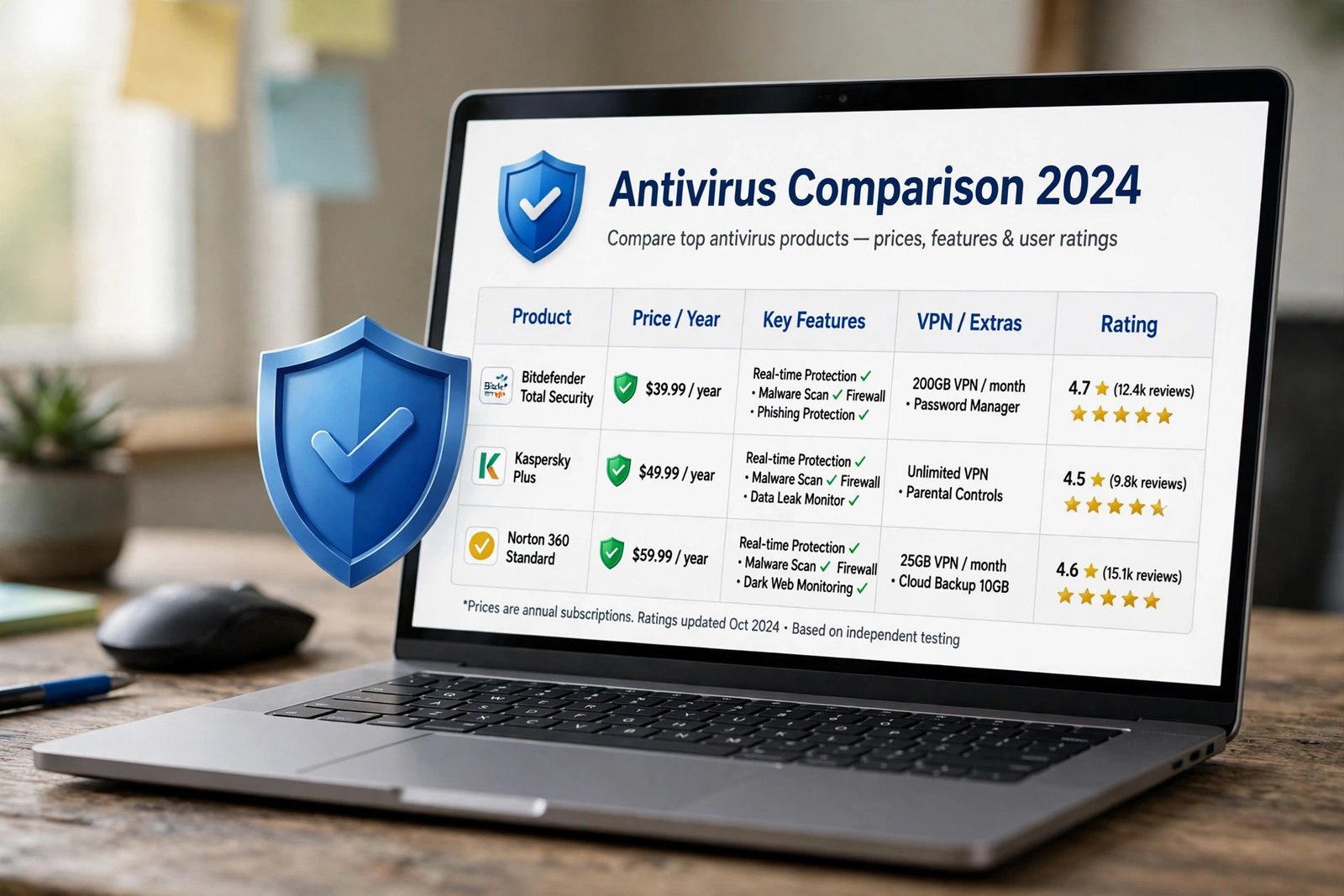
Norton, McAfee, Bitdefender, Avast, AVG and Avira are the six names most readers know. Norton suits the widest audience, because its brand is the best known, and it is reported at 20 to 25 percent. Avast and AVG suit budget buyers, because both offer a free version that readers can upgrade, and they are reported at 25 to 30 percent and up to 35 percent.
One fact changes how you should think about these six brands. Affilorama reports that Norton, Avast, AVG and Avira are all owned by one company, Gen Digital. That means four of the brands in your comparison are the same company with different labels.
Programs that pay on renewals
Renewals are where the long-term money sits in this niche, and only a few programs pay them. ESET is the clearest renewal payer, reported at 20 percent with renewals commissioned and a 45-day cookie. Intego is reported at 15 to 50 percent with renewals and upsells, and it suits Mac users.
A program that pays 20 percent on renewals can be worth more over three years than a program that pays 40 percent once. Work out the three-year value, not just the first payment.
The flat payout option
TotalAV pays a flat amount per sale, reported at about 70 dollars, instead of a percentage.
TotalAV also has the strictest compliance rules in this niche. Affilorama reports that it bans native ads, incentivised traffic, email and SMS promotion, and brand bidding.
Mac and specialist audiences
Intego is the main program for Mac users, reported at 15 to 50 percent with renewals and upsells and a 45-day cookie. Trend Micro is reported at up to 20 percent with a 30-day cookie, and it suits home and small business users.
Specialist audiences convert better than general audiences, because the reader already knows what they need. A Mac security guide or a small business security guide will earn more per visit than a general "best antivirus" list, even with less traffic.
Business security
Business security pays more than consumer security, because business products cost more. Bitdefender is reported at 50 percent for its business tier, against 20 percent for consumer products.
Only promote business security if your audience includes small business owners or IT managers. Our guide on how to learn cybersecurity online covers the skills side of the same audience.
Programs to skip or handle with care
Kaspersky needs care. Affilorama reports that it pays 20 percent base and up to 50 percent or more, but it also reports, citing the US Commerce Department, that new Kaspersky sales in the United States were stopped in 2024. That means you must not promote Kaspersky to US readers.
Gen Digital overlap is the second thing to handle with care. Norton, Avast, AVG and Avira are all reported to be owned by Gen Digital, so a comparison that lists all four as rivals is misleading.
Password managers are a related niche, not antivirus. Keeper Security and 1Password run affiliate programs, reported at 10 percent and 25 percent of the first year. Our guide to VPN affiliate programs covers the VPN side of the same security audience.
How to choose the right program for your audience
Audience fit comes first, and the rate comes second. A reader with a Mac needs Intego. A reader with a small business needs Bitdefender business or ESET. A reader who wants a VPN and antivirus in one product needs Surfshark One.
Then compare the dollars per sale, not the percentage. A 40 percent share of a 30 dollar product is 12 dollars, while a 20 percent share of a 100 dollar product is 20 dollars. Then check renewals, because a program that pays on renewals can be worth more over three years than a program that pays once.
Finally, check the country rules. Some products cannot be sold in some countries, and Kaspersky is the clearest example.
How to apply, step by step
Step 1: Build at least five useful pages before you apply. An antivirus comparison and a guide to choosing antivirus software are a good start.
Step 2: Join the network that runs the program you want. Malwarebytes and TotalAV run through CJ Affiliate. Norton runs through CJ Affiliate and Impact. McAfee runs through FlexOffers and Partnerize. The CJ Affiliate site and the Impact site both explain how publisher accounts work.
Step 3: Read the program terms before you apply. Look for the commission, the cookie, the renewal terms, the payout threshold, the refund policy, and the banned claims. Most antivirus programs ban claims such as "100 percent protection".
Step 4: Apply with honest information about your audience, your traffic, and your content. Do not inflate your numbers, because networks check.
Step 5: If you are accepted, add your disclosure near the top of each page that carries affiliate links, before the first affiliate link.
Step 6: If you are rejected, improve the site and reapply in one to three months. You can also start with a program that accepts smaller sites, and apply to the bigger names later.
Example only: what the maths looks like
This example uses made up numbers. It shows the maths, not what you will earn. Example only.
Suppose an antivirus comparison article gets 5,000 visits a month. Suppose 3 percent of visitors click an affiliate link. That is 5,000 times 0.03, which is 150 clicks. Suppose 4 percent of those clickers buy a product. That is 150 times 0.04, which is 6 sales. Suppose the product costs 60 dollars and the program pays 20 percent, which is 12 dollars per sale. That is 6 times 12, which is 72 dollars reported.
Now suppose one of those 6 buyers asks for a refund within 30 days. That is 72 minus 12, which is 60 dollars approved. The reported commission was 72 dollars, but the approved commission is 60 dollars, and only the approved amount is paid. Now suppose the program pays on renewals, and 4 of those 5 customers renew next year. That is 4 times 12, which is another 48 dollars in the second year, with no new traffic needed.
What it costs and what to expect
| Item | Typical cost | Notes |
|---|---|---|
| Domain and hosting | 50 to 150 dollars per year | Needed for a site you own |
| Network accounts | Free | CJ Affiliate, Impact, FlexOffers and Partnerize are free to join |
| Antivirus software for review | 0 to 100 dollars per year | Useful if you review products from real use |
| Content writing | Your time, or 50 to 200 dollars per article if you hire a writer | Comparisons and removal guides take the most time |
| First payout | One to three months after your first qualifying sale | Refund windows and payout minimums delay payment |
Expect a slow start. Most new affiliates earn nothing in the first month, because they need traffic before they get sales, and sales before they reach the payout threshold. Refunds make the wait longer, because commission is only approved after the refund window passes. A realistic timeline is three to six months of steady content before the first payout.
You do not need to be a security expert to start, but you do need to try the products you promote.
Common mistakes
- Do not quote an "up to" rate as if it were the average, because the top rate is not what most sales pay.
- Do not compare percentages without checking the product price, because a high percentage of a cheap product pays less than a low percentage of an expensive one.
- Do not ignore renewals, because a program that pays on renewals can be worth more over three years than a program that pays once.
- Do not count reported commission as paid money, because refunds reverse commission during the 30-day money-back window.
- Do not promote Kaspersky to US readers, because new sales were stopped in the United States in 2024.
Risks and scams to watch for
Antivirus affiliate marketing has real rules, and breaking them can end your account. The US Federal Trade Commission requires a clear disclosure when you earn a commission from a recommendation, and the disclosure must be easy to notice. The FTC Endorsement Guides explain what counts as a clear disclosure. Put it near the top of the page, in plain words, before the first affiliate link.
Never use fear to sell security software. One guide reviewed for this article advised using "fear triggers" and ads that look like security alerts. Do not follow that advice. Legitimate programs ban it.
Watch for fake antivirus programs. Affilorama reports, citing the security company Huntress, that rates above 50 to 60 percent with no named merchant are a sign of fraud. A real program names the merchant, publishes its terms, and runs through a known network such as CJ Affiliate, Impact, FlexOffers or Partnerize.
Affiliate income is income, and you must report it under the tax rules of your country. Keep records of every payout, and check your local tax authority or a qualified accountant if you are unsure.
Frequently asked questions
What is the best antivirus affiliate program?
For most creators, ESET is the strongest choice, because it is reported at 20 percent with a 45-day cookie and it pays on renewals.
How much do antivirus affiliates earn?
Reported commissions range from about 12 dollars per sale for a cheap product at 20 percent to about 70 dollars flat per sale for TotalAV, and up to 150 dollars per sale for Norton in some regions. Your actual earnings depend on your traffic and your conversion rate.
Which antivirus programs pay recurring commissions?
ESET, Intego and Surfshark One are reported to pay on renewals. ESET is the clearest renewal payer, with two guides agreeing on its rate and its 45-day cookie.
How do I join an antivirus affiliate program?
Build a site with several useful security pages, add a clear disclosure, then apply through the network that runs the program.
Do antivirus affiliate programs pay per sale or per month?
Most pay a percentage per sale, once. A few pay a share of renewals each year.
Can beginners join antivirus affiliate programs?
Yes, but not every program. Comparison platforms and budget programs are the easiest entry point, because they accept smaller sites. The big brand programs are stricter and often want traffic history.
Conclusion
Antivirus affiliate programs pay a share per sale, and only a few pay on renewals, so compare the dollars per sale and the renewal terms, not just the headline percentage. ESET is the strongest renewal payer in the guides reviewed. Do not promote Kaspersky to US readers, and do not count reported commission as paid money until the refund window has passed.
To go further, read our guide to VPN affiliate programs for the VPN side of the security niche, our guide to software and SaaS affiliate programs for the wider software niche, and our guide to website builder affiliate programs, then browse the full Affiliate Marketing category for more guides.
How facts were checked: commission, cookie and renewal figures in this guide are ranges reported by Affilorama, AffiliateJob and RichAds in November 2026. Affilorama cross-checked official program pages against network listings in July and August 2026, and those figures are the most reliable in the set. RichAds advises using fear-based creatives that look like security alerts, and that advice was not followed, because legitimate programs ban it. The CJ Affiliate, Impact and FTC pages linked here were opened and read on 2026-11-22.
Note for the reader: antivirus products, prices and availability differ by country, and Kaspersky cannot be sold to US readers. Check the program page for your country before you apply. Earning results vary; nothing on this site is financial advice.