How to Start a Junk Removal Side Hustle in 2026
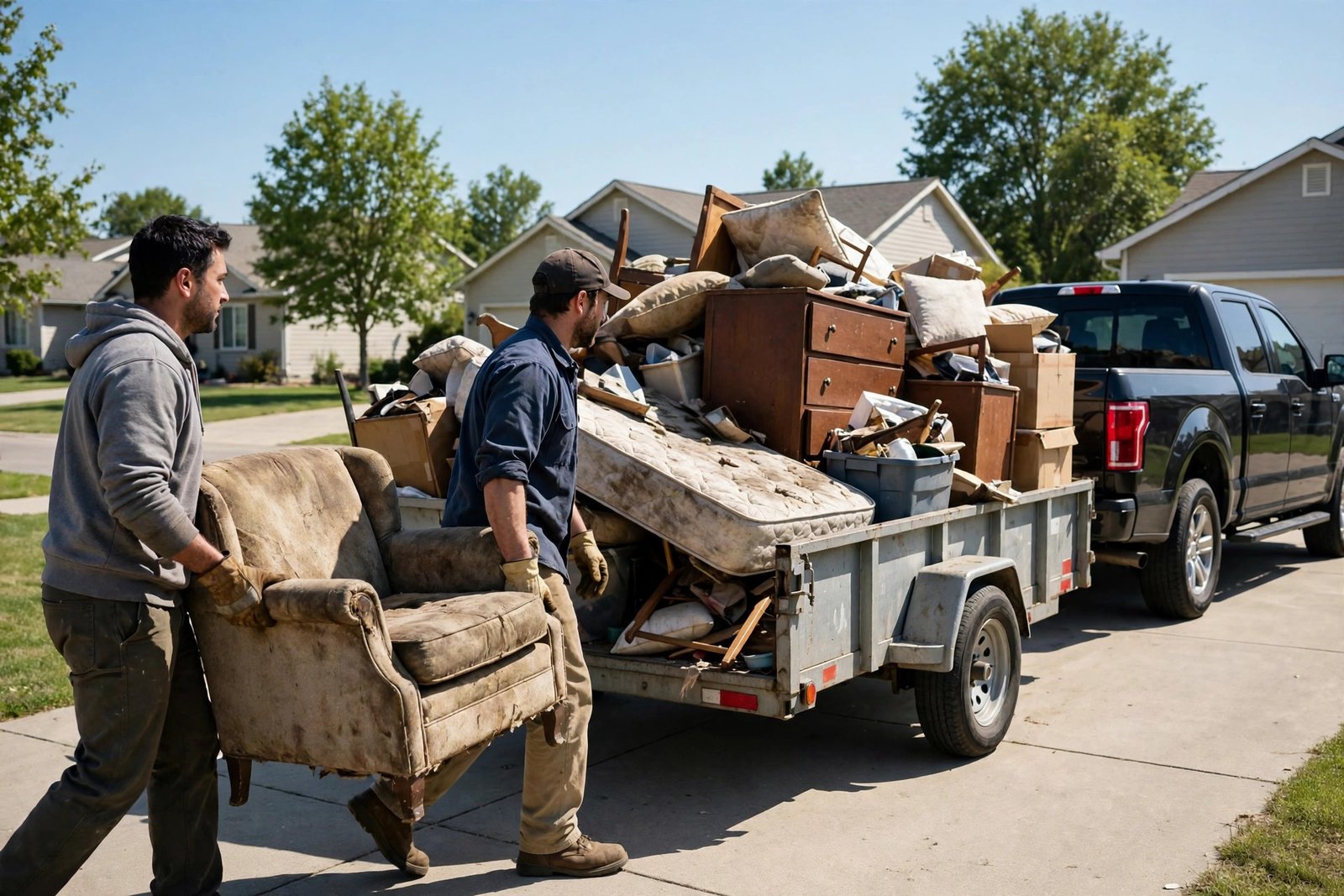
Learning how to start a junk removal side hustle is a good idea if you like physical work, you own or can borrow a truck, and you want weekend income without a big loan. It means collecting unwanted household items, furniture, yard waste and renovation debris from paying customers, then hauling it to a transfer station, a recycler, a donation centre, or a landfill. You charge for the labour, the transport, and the disposal.
You can start small, with a borrowed truck and a few weekend jobs, and grow only when the work is there. This guide covers the vehicle, the prices, the insurance and permits, and how to find your first ten customers.
In this guide
- What junk removal really is
- Step 1: Decide if it suits you
- Step 2: Pick your first vehicle
- Step 3: Sort the legal basics and insurance
- Step 4: Buy the starter kit only
- Step 5: Set your prices by volume
- Step 6: Find your first ten jobs
- Worked example: one Saturday of junk removal
- What it costs and what to expect
- Common mistakes
- Risks and scams to watch for
- Frequently asked questions
What junk removal really is
Junk removal is not the same as moving help. Movers transport items people want to keep. Junk haulers remove items people want gone. Your customers are homeowners clearing a garage, landlords cleaning out after a tenant leaves, estate sellers emptying a house, and builders with a pile of debris. Most jobs are urgent, so speed matters as much as strength.
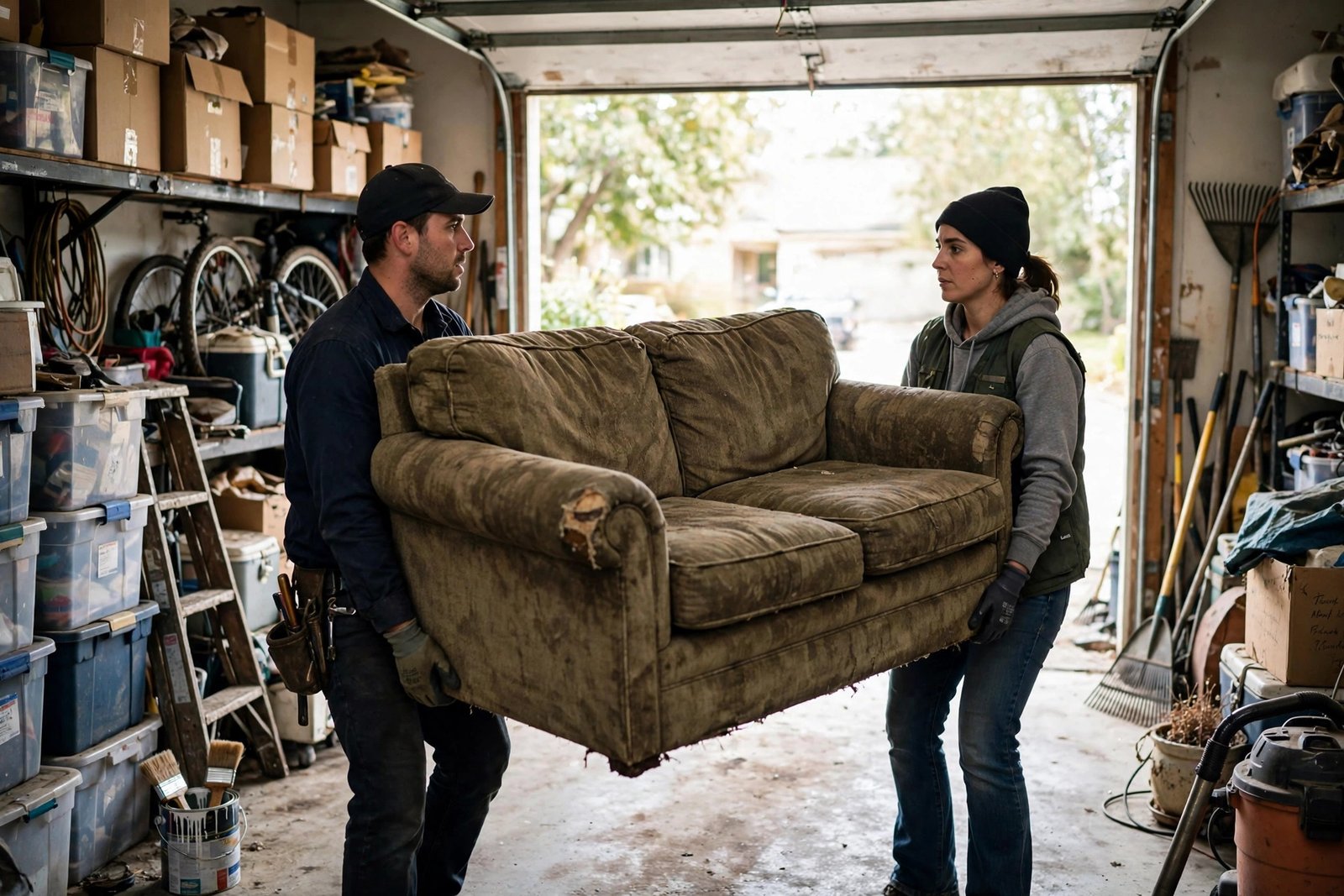
A typical job takes one to two hours. You arrive, walk the pile with the customer, name a price, load the truck, sweep the area, take payment, and drive to the disposal site. The work is physical and dusty.
The money comes from the gap between what you charge and what it costs you to do the job. Your costs are fuel, disposal fees (called tipping fees at most sites), insurance, and your time. Landfills charge by weight, not by volume, so a half load of wet plasterboard can cost more to dump than a full load of furniture.
Step 1: Decide if it suits you
Before you spend any money, test the work. Offer to clear a garage or a shed for a friend or a family member for free, and time the whole job. If you finish in two hours and feel fine, the work suits you.
Junk removal works best where houses have garages, gardens and spare rooms, and where people move often. Check how many haulers already advertise in your area.
Step 2: Pick your first vehicle
Do not buy a dump truck before your first job. Start with one of these three options, cheapest first.
Borrow or rent a pickup truck. If a friend or family member has a pickup, borrow it for your first few weekends and pay them for fuel. If not, rent a pickup or a small box truck by the day. Renting lets you test demand before you commit.
Buy a used dump trailer. It sits behind a pickup you already own and tips its load at the disposal site in minutes. Used trailers often cost a few thousand dollars and hold their value well. Check that your pickup can tow the loaded weight safely before you buy.
Buy a used pickup with tall sides. It can handle small jobs, single items and yard waste, and it is the cheapest way to own your vehicle. You unload by hand at the dump, which adds 30 to 45 minutes to every trip.
Whatever you choose, it must carry 3,000 to 5,000 pounds of payload safely. A half ton pickup loaded with concrete or soil is already overloaded. Measure before you load, and refuse a job that would overload your vehicle.
Step 3: Sort the legal basics and insurance
Register your business. In the United States, most solo haulers start as a sole proprietor or form a limited liability company, known as an LLC. The SBA guide to registering your business explains the structures and the steps by state. If you form an LLC, get a free employer identification number, known as an EIN, from the IRS EIN page. In the United Kingdom, most beginners register as a sole trader through the GOV.UK sole trader page. Tax rules differ by country, so check your local rules and a qualified accountant.
Check the waste rules where you work. Many counties and cities require a waste hauler permit, sometimes with an annual fee and a vehicle inspection. Call your local waste authority before you start. In England, you must register as a waste carrier if you transport other people's waste as part of a business, and you can be fined if you do not. The GOV.UK waste carrier registration page shows the current fee, which was £191.02 for a new upper tier registration in November 2026, with renewal every three years. The system is due to change in July 2027, so check the page again before you apply.
Check the driving rules too. In the United States, a pickup and trailer combination rated over 10,001 pounds usually needs a USDOT number if you cross state lines, and many states also require one for work inside the state. Registration is free on the FMCSA website, but check your state transport department for the local rule.
Get insurance before your first job. Your personal car insurance usually does not cover commercial hauling. You need commercial auto insurance for the truck and trailer, and general liability insurance, which covers damage to a customer's property, such as a scratched floor or a dented door frame. Property managers and estate agents will ask for your insurance certificate before they hire you.
Decide what you will not take, and put it on your website and your quote form. Most haulers refuse hazardous waste, paint, chemicals, asbestos, and tyres. Fridges, freezers and air conditioners need the refrigerant removed by a certified technician before disposal, so most haulers either refuse them or pay a recycler a fee per unit. Saying no to a dangerous job is good business.
Step 4: Buy the starter kit only
Beyond the vehicle, the equipment list is short and cheap. Buy good quality dollies and straps, and buy everything else at the lowest sensible price.
| Item | What to buy | Typical cost |
|---|---|---|
| Appliance dolly and furniture dolly | Steel frame, stair climbers if you can afford them | $150 to $400 |
| Moving straps and ratchet straps | Two moving straps, four ratchet straps | $40 to $80 |
| Tarps, cargo net, contractor bags | Heavy duty tarps, one cargo net, a box of bags | $60 to $120 |
| Tools | Sledgehammer, pry bar, reciprocating saw, bolt cutters, shovel, rake | $150 to $300 |
| Safety gear | Gloves, steel toe boots, safety glasses, dust masks, back support | $80 to $150 |
| Phone and card reader | A card reader that plugs into your phone | $0 to $50 |
| Total starter kit | $480 to $1,100 |
Buy the dollies new and buy them well. A cheap dolly that fails on a stairwell costs you a fridge and a back. Keep a broom and a dustpan on the truck, because sweeping the area clean after you load is the detail customers remember.
Set up a separate business bank account and a simple way to send quotes and take card payments from your phone. Track every job from day one: customer, price, disposal fee, fuel, and time.
Step 5: Set your prices by volume
Junk removal is priced by volume, meaning the fraction of your truck bed a load fills. Customers expect this, and it lets you quote on the spot with confidence. Always include a minimum charge, because a single item still costs you fuel and a trip to the dump.
| Load size | Typical price (2026) | Examples |
|---|---|---|
| Minimum or single item | $100 to $175 | One couch, one mattress, one dresser |
| Quarter load | $200 to $300 | A bedroom set, a small pile of yard waste |
| Half load | $350 to $475 | Half a garage, a full flat of furniture |
| Three-quarter load | $475 to $600 | Most of a garage, a small estate cleanout |
| Full load | $550 to $800 | Full garage, basement cleanout, shed contents |
| Heavy materials | $250 to $400 per half bed load | Concrete, soil, brick, roof tiles, priced by weight |
Prices vary by area. Expensive coastal cities run 30 to 50 percent above these ranges, and small towns run 15 to 25 percent below them. Check the prices of three local competitors, then price 10 to 15 percent below the national franchises with a faster response.
Quote with a photo when you can. A quote form with photo upload lets you send a firm range in minutes, and customers who get a price in under an hour book at a much higher rate. On site, walk the pile, estimate the volume out loud, name the price, and stop talking. If the customer haggles, hold your price and explain what it covers: labour, transport, and the disposal fee. A job that loses money is worse than no job.
Add surcharges for stairs, long carries, and disassembly, and say so before you start. A hot tub that must be cut into pieces or a third floor flat with no lift takes extra time, and extra time must be paid for. Put the surcharges on your price list so nobody is surprised.
Step 6: Find your first ten jobs
Your first jobs will not come from paid ads. They will come from people who already deal with junk every week, and from being found fast on local search.
Start with estate agents and property managers. They need cleanouts before listings and after move-outs, every week of the year. Visit five local offices in person and leave a card. One agent who trusts you can fill your Saturdays for months.
Set up a Google Business Profile as a service area business, list every town you cover, and post photos from every job. After a customer pays, ask for a review while you are still there. Twenty reviews with photos beat a ten year old company with four.
Post in local Facebook groups and on Nextdoor, and answer fast. The customer who called you probably called two competitors too.
Take before and after photos of every job, with the customer's permission. A clean garage where a mess used to be is your best advert.
Worked example: one Saturday of junk removal
Example only: these numbers are not typical results. They show the maths, not a promise.
Imagine you run a two person crew on a Saturday with a borrowed pickup and a rented dump trailer. You book four jobs.
- Job 1: a quarter load of old furniture, $250. Disposal $45, fuel $15.
- Job 2: a half load garage cleanout, $400. Disposal $85, fuel $20.
- Job 3: a single sofa removal, $125. Disposal $25, fuel $10.
- Job 4: a half load of yard waste, $375. Disposal $60, fuel $15.
Total takings: $1,150. Total disposal fees: $215. Total fuel: $60. Trailer hire for the day: $120. That leaves $755 before you pay your helper. If you pay your helper $25 per hour for 8 hours, that is $200, leaving $555 for the day before insurance, phone, and tax.
That is the difference pricing makes. Always quote by volume, and always include the disposal fee in your maths before you name a price.
What it costs and what to expect
| Item | Lean start (weekends, borrowed truck) | Full start (own truck and trailer) |
|---|---|---|
| Vehicle | $0 to $120 per day rented | $4,000 to $9,000 used dump trailer, plus a pickup you own |
| Starter kit | $480 to $1,100 | $800 to $1,500 |
| Insurance (first year) | $1,500 to $4,000 | $2,800 to $6,000 |
| Registration, permits, USDOT | $100 to $500 | $200 to $1,000 |
| Website, Google Business Profile, truck signs | $150 to $500 | $400 to $1,200 |
| Total to start | $2,230 to $6,220 | $8,200 to $18,700 |
Expect your first month to be slow. You will spend more time setting up insurance, permits and profiles than hauling. Your first jobs will come in weeks two to four, mostly from referrals and local groups. Peak demand runs from spring to early autumn. Winter is quieter, so save in the busy months to cover the quiet ones.
A solo operator doing two to four jobs on a Saturday can take in a few hundred dollars per weekend after disposal fees and fuel, before insurance and tax. Results vary with your area, your prices, and how many hours you work.
Common mistakes
- Pricing by the item instead of by volume, which invites haggling and hides the real cost of the job.
- Forgetting the disposal fee in the quote, then watching the landfill scale eat your profit.
- Buying a dump truck before you have customers, which leaves you with a loan and no work.
- Skipping commercial auto insurance, then finding out your personal policy does not cover a work claim.
- Overloading the truck, which is dangerous and can earn you a fine at a weigh station.
- Forgetting to ask for a review, which slows down the local search rankings that bring you work.
Risks and scams to watch for
The biggest physical risk is injury: bad backs, cut hands, and falling items. Wear gloves and steel toe boots on every job, lift with your legs, and refuse to move an item that is too heavy for your crew. If a customer asks you to move a piano or a safe alone, say no and suggest a specialist mover.
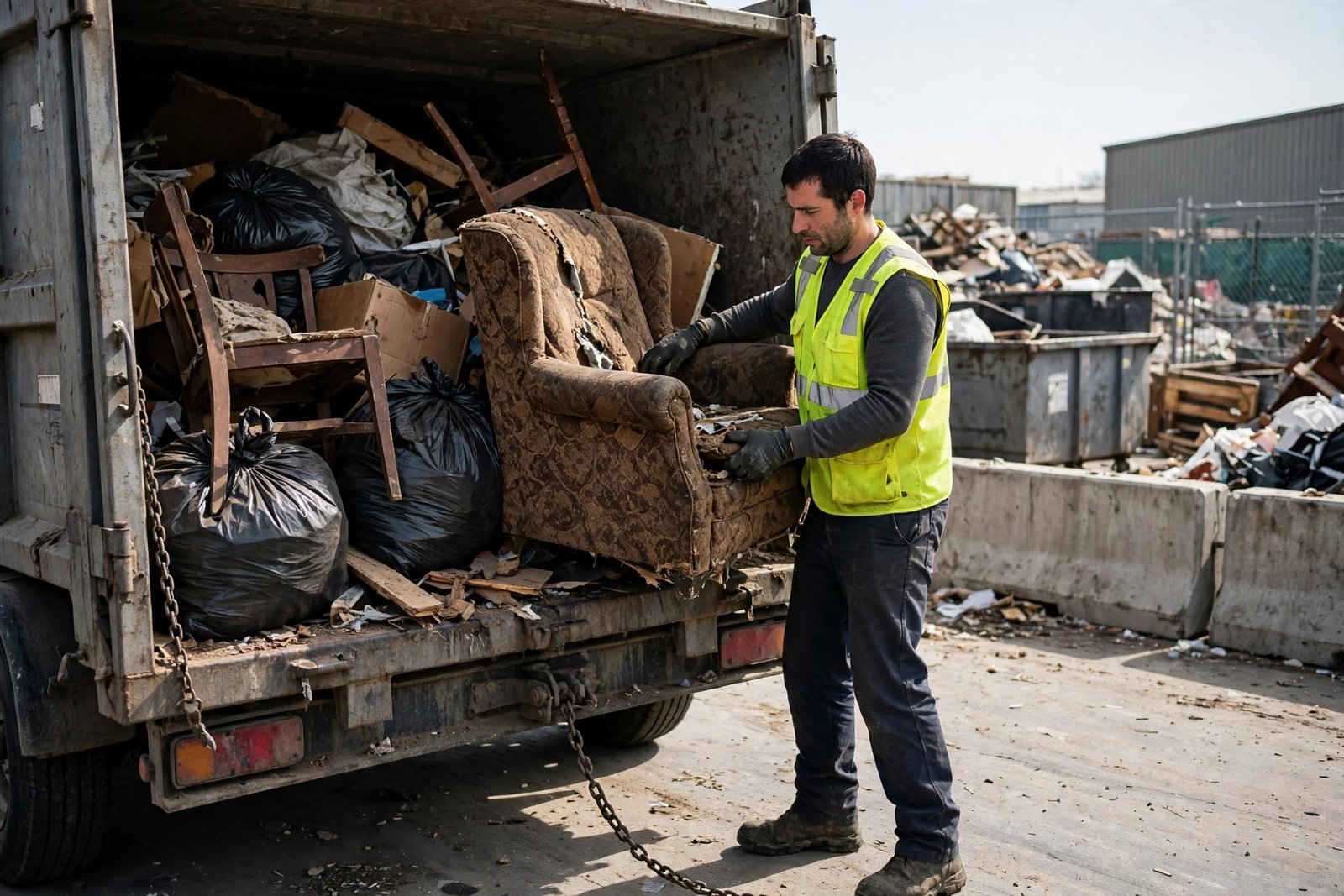
The biggest legal risk is illegal dumping. Never dump on empty land, in a skip that is not yours, or behind a shop. Fines are large. Always use a licensed transfer station or landfill and keep the disposal receipts.
Watch out for jobs that are not what they seem. A "small pile" on the phone can be a full house cleanout when you arrive. Quote again on site before you load. Take payment on site, by card or cash, after the job is done.
Frequently asked questions
How much does it cost to start a junk removal side hustle?
A lean weekend start with a borrowed or rented truck costs about $2,230 to $6,220, mostly insurance and the starter kit. A full start with your own dump trailer costs about $8,200 to $18,700.
Do I need a licence to haul junk?
It depends on where you work. Most places need a general business registration, and many counties and cities also require a waste hauler permit. In England you must register as a waste carrier, which cost £191.02 for a new upper tier registration in November 2026.
How do junk removal companies price jobs?
Most price by volume, meaning the fraction of the truck bed a load fills, with a minimum charge for small jobs. A single item often costs $100 to $175, a half load $350 to $475, and a full load $550 to $800 in 2026. Heavy materials are priced by weight, because landfills charge by the ton.
How do I get my first junk removal customers?
Visit local estate agents and property managers in person, because they need cleanouts every week. Set up a Google Business Profile, post before and after photos, and ask every happy customer for a review. Answer the phone fast, because the first hauler to quote usually wins the job.
What items should I refuse as a junk hauler?
Refuse hazardous waste, paint, chemicals, asbestos, and tyres. Refuse fridges, freezers and air conditioners unless a certified technician can remove the refrigerant. Refuse any job that would overload your vehicle, and any job where you do not have written permission to clear the property.
Conclusion
Starting a junk removal side hustle takes a truck or trailer, a small kit, insurance, and a clear price list. Start lean, sort the legal basics first, price by volume with the disposal fee included, and win your first jobs through estate agents and local search. Answer fast, sweep clean, and ask for a review on every job.
Next, read how to start a moving help side hustle, how to start a handyman side hustle, and how to start a pressure washing side hustle. Then browse all side hustles guides to plan your next step.
Reader note: prices in the worked example are labelled as examples only and are not typical results. Disposal fees, permit costs and insurance prices vary by area, so check your local transfer station, waste authority and insurer for current figures. Tax and registration rules differ by country, so check your local rules and a qualified accountant. Earning results vary; nothing on this site is financial advice.