How to Start a Moving Help Side Hustle in 2026
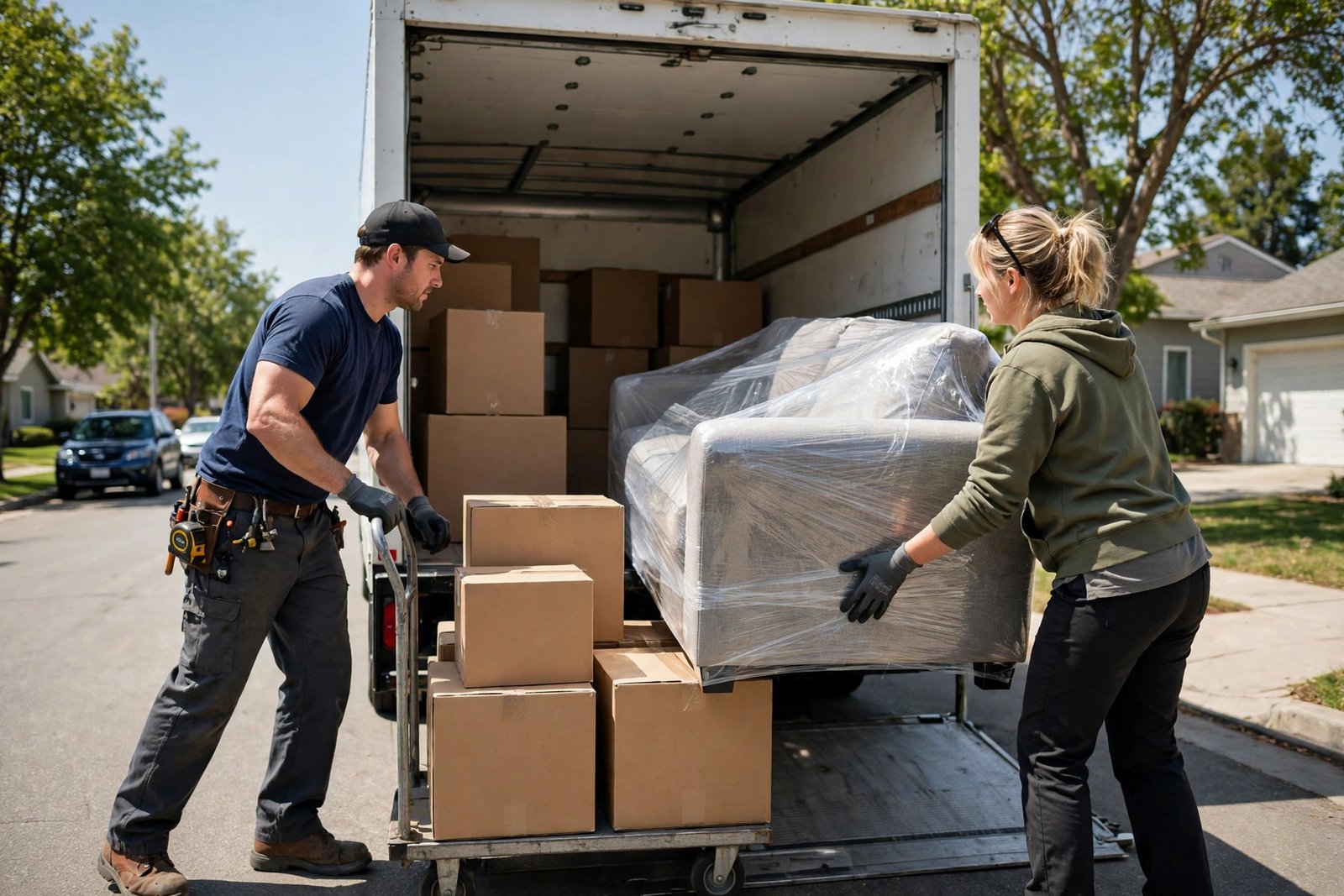
Learning how to start a moving help side hustle is a good idea if you are strong, reliable, and want weekend income without learning a new trade. A moving help side hustle means helping people load and unload their belongings, usually for an hourly rate. You supply the muscle and the know-how. The customer supplies the truck, or you supply the truck as well.
You can start with less than $200 if you begin with labour-only work, which means you provide the people and the customer provides the vehicle. This guide covers the two models, the kit, the rates, the insurance, and how to win your first bookings.
In this guide
- What moving help really is
- Step 1: Start labour-only
- Step 2: Buy the small kit
- Step 3: Sort insurance and the legal basics
- Step 4: Set your rates and minimums
- Step 5: Join the platforms
- Step 6: Go direct and win repeat work
- Worked example: one Saturday of moving help
- What it costs and what to expect
- Common mistakes
- Risks and scams to watch for
- Frequently asked questions
What moving help really is
Moving help splits into two models, and the split decides everything about your startup cost.
Labour-only means you provide the people and the customer provides the truck or the storage container. You show up, load or unload, and get paid by the hour. You need no vehicle, no fuel costs, and no commercial auto insurance. Platforms such as HireAHelper and TaskRabbit run on this model. It is the lowest barrier entry point in the whole moving trade.
Full-service local moving means you provide a truck and the labour. You pick up, drive, and deliver. It pays more per job, but it needs a van or a pickup, commercial insurance, and more coordination. Start labour-only, earn while you learn the work, build reviews, and only buy a vehicle when the phone rings every week.
Your customers are renters moving flats, homeowners moving house, and students moving in and out of term. Most moves happen at month end and in late spring and summer. A typical job takes two to four hours. The work is physical, and you will be tired at the end of the day.
Step 1: Start labour-only
Do not buy a van before your first job. Start by offering your labour only, and let the customer bring the truck. You can take your first booking within a week of setting up a profile, because platforms always need reliable helpers.
First, check your fitness honestly. Can you carry a 25 kilogram box up two flights of stairs, several times an hour, for four hours? If you are unsure, try it with a friend's move before you charge anyone. Learn the basics first: how to lift with your legs, how to wrap furniture in blankets, and how to load a truck so heavy items sit low.
Second, decide your service area. Pick the towns you can reach in 30 minutes, and say no to jobs further away until you have a vehicle. Travel time is unpaid time, and a job an hour away eats your day.
Third, find one partner if you can. Most moving jobs need two people. Agree your split of the pay before the first job, not after.
Step 2: Buy the small kit
Labour-only work needs very little equipment, and what you buy makes you faster and safer. Buy these before your first job.
| Item | What to buy | Typical cost |
|---|---|---|
| Moving straps | One set of forearm or shoulder straps | $25 to $50 |
| Furniture dolly | Two wheel appliance dolly | $50 to $80 |
| Work gloves | Grippy, well fitting gloves | $10 to $20 |
| Moving blankets | Four to six blankets to protect furniture | $40 to $80 |
| Ratchet straps | Four straps for securing loads | $20 to $40 |
| Total starter kit | $145 to $270 |
If you later go full-service, add a used cargo van or pickup, more blankets, and a floor dolly. A used cargo van often costs $8,000 to $20,000, which is why you wait until the work is proven. Rent a truck by the day for the occasional full-service job before you buy one.
Step 3: Sort insurance and the legal basics
If you work labour-only as an individual through a platform, the legal requirements are small. If you work direct, or you drive a vehicle carrying client property, they grow. Sort this before your first paid job.
Register your business. In the United States, most solo helpers start as a sole proprietor or form a limited liability company, known as an LLC. The SBA guide to registering your business explains the structures and the steps by state. If you form an LLC, get a free employer identification number, known as an EIN, from the IRS EIN page. In the United Kingdom, most beginners register as a sole trader through the GOV.UK sole trader page.
Get insurance that matches your model. Platforms such as HireAHelper include limited cargo cover for bookings made through the platform. If you go direct, get your own cargo liability insurance, which covers damage to items you are moving. Policies often start at $500 to $1,000 a year. If you drive a vehicle for paid work, you need commercial auto insurance, because a personal policy usually excludes paid hauling. In the United Kingdom, you need goods in transit cover and public liability cover.
Check the licensing rules where you work. Some states and cities require registration or a permit for household goods movers even at small scale, so check before you advertise. If you ever want to haul across state lines for pay in the United States, federal DOT authority is required. Stick to local moves until you decide to go full time.
Use a simple written agreement for every direct booking. One page is enough: the address, the date and time, the hourly rate, the minimum booking, what is included, what happens if something is damaged, and the cancellation policy.
Step 4: Set your rates and minimums
Price by the hour, with a minimum booking and clear surcharges. Customers expect this, and it stops a hard job from quietly becoming an underpaid one.
| Service | Typical rate (2026) |
|---|---|
| One helper, labour-only, direct | $50 to $75 per hour |
| One helper, labour-only, through a platform | $40 to $60 per hour after fees |
| Two-helper team, labour-only | $100 to $140 per hour combined |
| Full-service local move, studio or one bedroom | $250 to $500 flat, or $100 to $150 per hour |
| Full-service local move, two to three bedroom home | $400 to $900 depending on distance and volume |
| Minimum booking | Two hours, standard in most areas |
Always charge extra for stairs (often $25 to $50 per flight), long carries from the truck to the door, disassembly and reassembly of furniture, and specialty items such as pianos, safes and large appliances. Say so before you start, and put the surcharges on your price list. A piano or a safe is a job for a specialist mover, not a beginner, so refer those jobs out rather than risk an injury or a damage claim.
Check the rates of three local competitors before you set your price, then price slightly below the middle until you have five reviews, and raise your rates after that. Your first five reviews are the hardest to get, and a slightly lower price helps you win them. Never work for free to "get exposure".
Step 5: Join the platforms
Platforms are the fastest way to your first paid job. Set up profiles on HireAHelper and TaskRabbit before your first job, and complete every field. Add a professional profile photo, not a selfie, and write a specific bio. "Careful, experienced mover with furniture dollies and moving straps. I show up on time and treat your belongings like my own" wins more bookings than "I like helping people."
HireAHelper is the largest marketplace built for moving labour. Customers who have already rented a truck use it to hire helpers for loading and unloading. You set your rates and availability, and the platform handles payment and takes a percentage of each booking. Rates run $60 to $100 or more per person per hour, before the platform fee.
TaskRabbit lists moving help under its Help Moving category. Customers post tasks, and registered Taskers can bid or be matched. TaskRabbit charges a service fee and takes a percentage from Taskers on each completed job.
Dolly is built for item-level moving help, such as couch delivery, appliance pickup, and single-room moves. It is most active in urban markets. You need a qualifying vehicle to work on Dolly as a driver, but you can work as a helper without one.
Read the platform terms before you sign up, including the fee, the cancellation rules, and whether you can take a client direct later. Platforms take 15 to 30 percent of your earnings, so going direct is the most profitable path once you have reviews.

Step 6: Go direct and win repeat work
Platforms bring you work, but direct work brings you profit. Build your direct base from the first month.
Post a simple service listing on Facebook Marketplace under Services and in local buy-sell groups. People search for moving help when they are in the middle of a move, so your listing finds them at the right moment. Craigslist still works too. Post in the Services section with a clear title, your rates, and your service area.
Visit local estate agents and property managers, because they see people moving constantly. Drop off business cards and introduce yourself. One good referral relationship can generate steady bookings during peak moving months, from May to September.
Ask every happy customer for a review, and ask for a referral at the same time. Reviews on HireAHelper and on your Google Business Profile are what let you raise your rates. Operators with 50 or more reviews command premium rates and get booked out weeks in advance in peak season.
Worked example: one Saturday of moving help
Example only: these numbers are not typical results. They show the maths, not a promise.
Imagine you and a partner take two labour-only jobs on a Saturday through HireAHelper, at $65 per hour each, with a two hour minimum per job.
- Job 1: loading a truck for a two bedroom flat, 3 hours, two helpers. Gross: $390. Platform fee at 20 percent: $78. Your share before costs: $156.
- Job 2: unloading a storage unit, 2 hours, two helpers. Gross: $260. Platform fee at 20 percent: $52. Your share before costs: $104.
Your total for the day: $260 before fuel, food, and tax. Your partner earns the same. If the same two jobs came direct, with no platform fee, your share would be $325, which is $65 more for the same work. That is why going direct matters, and why your first platform jobs are an investment in reviews, not the end goal.
Minimums and surcharges protect your day. Without them, a four hour job with three flights of stairs pays the same hourly rate for much harder work.
What it costs and what to expect
| Item | Labour-only start | Full-service start |
|---|---|---|
| Starter kit | $145 to $270 | $300 to $500 |
| Vehicle | $0 (customer provides it) | $8,000 to $20,000 used van |
| Insurance (first year) | $0 to $500 (platform cover, plus your own liability if direct) | $2,000 to $3,000 commercial auto plus liability |
| Registration and profiles | $0 to $100 | $100 to $500 |
| Total to start | $145 to $870 | $10,400 to $24,000 |
Expect your first booking within one to two weeks of setting up platform profiles. A solo helper doing weekend jobs through platforms can take in $200 to $500 per busy weekend day before fees and costs. Peak season is late spring and summer. Winter is quieter, so save in the busy season.
Results vary with your area, your rates, your reviews, and how many hours you work. Moving help is one of the most straightforward paths to consistent weekend income for someone willing to do physical work, but it is not passive income. You earn only when you show up and lift.
Common mistakes
- Buying a van before you have customers, which leaves you with a loan and no work.
- Pricing with no minimum booking, so a 45 minute job eats your whole morning.
- Forgetting the stair and long carry surcharges, so a hard job pays the same as an easy one.
- Working without a written agreement, which leads to arguments about damage and payment.
- Taking a piano, a safe, or a long-distance move as a beginner, which risks injury and a damage claim.
- Skipping insurance when you go direct, then paying for a damaged item out of your own pocket.
- Relying on one platform, so a slow week on that platform means no income at all.
- Cancelling a booking at short notice, which damages your rating and your reviews.
Risks and scams to watch for
The biggest risk is injury. Eight hours of loading and unloading will leave you tired in a way a desk job will not. Lift with your legs, use straps and dollies for heavy items, and ask for help rather than carry a two-person item alone. If a customer pressures you to move something unsafe, refuse. Your back is worth more than one job.
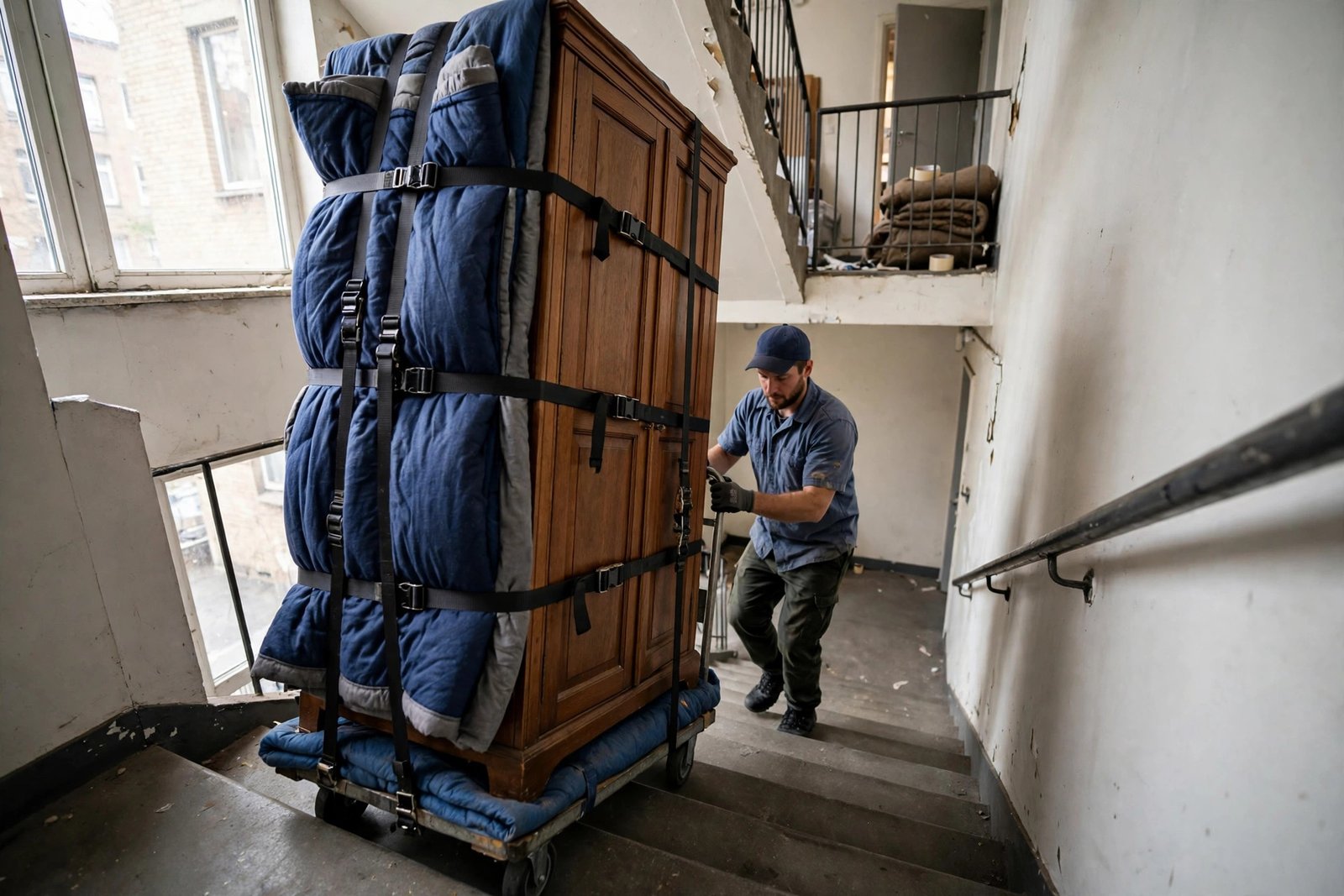
The second risk is damage. You are handling everything a person owns. Wrap furniture in blankets, secure loads with straps, and photograph valuable items before you move them. If something is damaged, tell the customer at once and follow the claims process in your agreement or on the platform.
Watch out for scams. A common one is a customer who books a move, then asks you to pay a "refundable deposit" to a third party before the job. Never pay anyone to get a job, and never move items without the customer present or written permission from the property owner. Another scam is a fake platform message asking you to pay for "verification" outside the app.
Cancellations are a real cost too. Protect yourself with a deposit for direct bookings and a clear cancellation policy. For platform jobs, the platform's cancellation protection usually covers most cases.
Frequently asked questions
How much does it cost to start a moving help side hustle?
Labour-only work costs $145 to $870 to start, mostly the small kit and any insurance you buy. Full-service work with your own van costs $10,400 to $24,000.
Do I need a truck to do moving help?
No. Labour-only work means the customer provides the truck or container and you provide the people. You need no vehicle, just a way to get to the job site. A truck only becomes necessary when you offer full-service moves.
How much should I charge for moving help?
Labour-only rates run $50 to $75 per hour for one helper when you work direct, and $40 to $60 per hour through a platform after fees. Two-helper teams charge $100 to $140 per hour combined. Always set a two hour minimum and add surcharges for stairs and long carries.
Which platform is best for moving help?
HireAHelper is the largest marketplace built for moving labour, and it is the best first choice for most beginners. TaskRabbit suits one-time moves and small loads, and Dolly suits item-level jobs in cities. Many helpers list on two platforms at first, then go direct once they have reviews.
Do I need a licence to help people move?
It depends on where you work. Labour-only helpers usually need no special licence, but some states and cities require registration or a permit for household goods movers, even at small scale. Check your local rules before you advertise.
Conclusion
Starting a moving help side hustle takes a small kit, a platform profile, and a clear price list. Start labour-only, set a two hour minimum with stair surcharges, get insurance before you go direct, and use HireAHelper and TaskRabbit to win your first reviews. Then go direct and build repeat work through estate agents and referrals.
Next, read how to start a junk removal side hustle, how to earn money on TaskRabbit, and how to start a handyman side hustle. Then browse all side hustles guides to plan your next step.
Reader note: rates in the worked example are labelled as examples only and are not typical results. Platform fees, rates and rules change often, so check the current terms on HireAHelper and TaskRabbit before you sign up. Tax, registration and driving rules differ by country, so check your local rules and a qualified accountant. Earning results vary; nothing on this site is financial advice.