How to Make Money with a Food Delivery Side Hustle in 2026
Learning how to make money with a food delivery side hustle is a good idea if you have a car, a scooter, a motorbike, or a bicycle, and you want flexible income on your own schedule. It means picking up prepared food from restaurants and taking it to customers, through an app such as DoorDash, Uber Eats, or Grubhub. You choose when to work, you accept or decline each order, and you are paid per delivery plus tips.
You can start within a few days of signing up, once the background check clears. This guide covers the apps, the requirements, how pay works, and how to earn more per hour without burning out your car.
In this guide
- What food delivery work really is
- Step 1: Pick your apps
- Step 2: Meet the requirements and pass the checks
- Step 3: Set up your car or bike and your kit
- Step 4: Learn how pay really works
- Step 5: Work the busy hours
- Step 6: Track every mile and every pound
- Worked example: one evening of deliveries
- What it costs and what to expect
- Common mistakes
- Risks and scams to watch for
- Frequently asked questions
What food delivery work really is
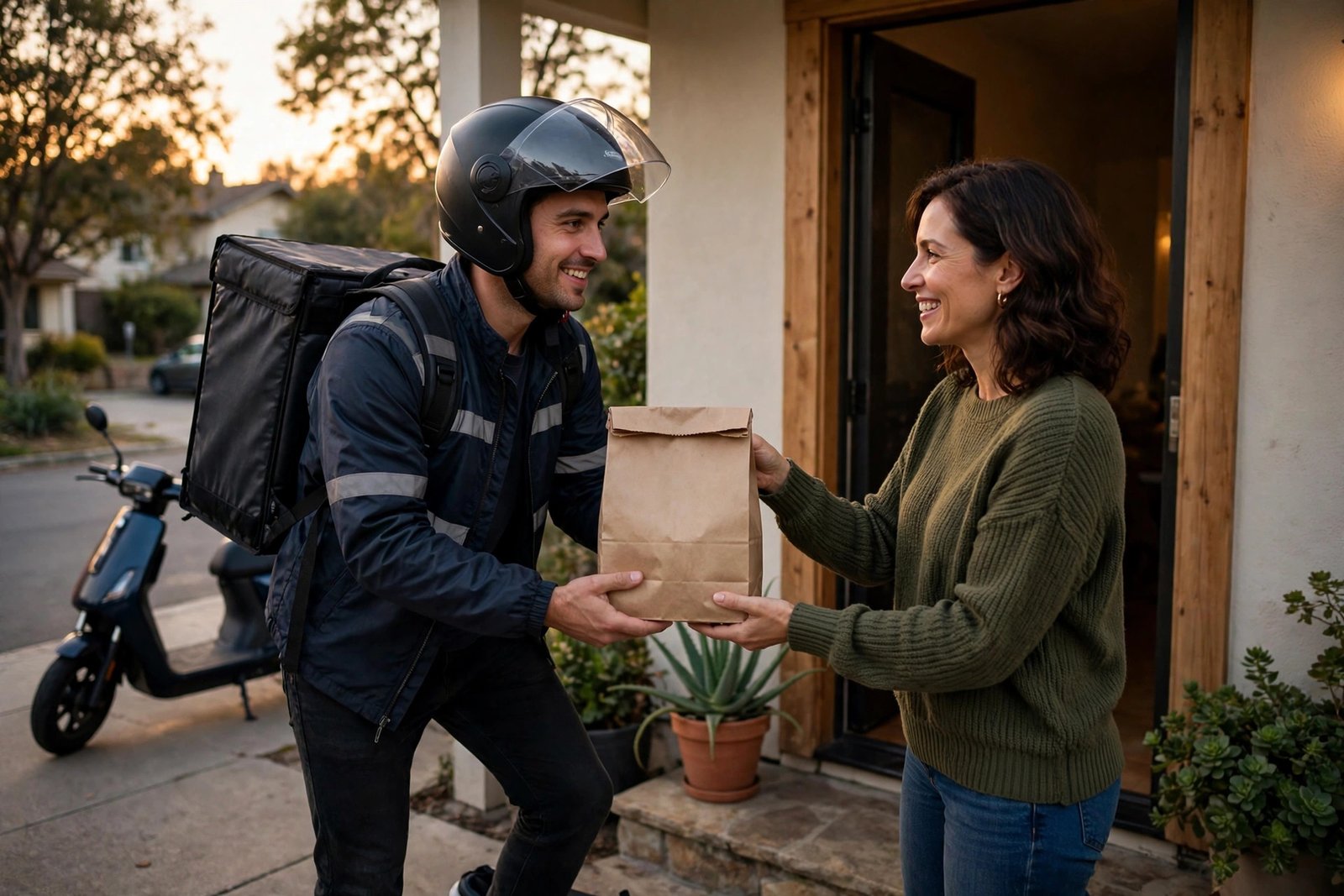
Food delivery follows a clear pattern. A customer orders food, the app offers the delivery to drivers nearby, and you accept or decline it. If you accept, the app guides you to the restaurant, you pick up the order, and then you drive to the customer's address and drop it off. Customers can add a tip, which often makes up a large share of good earnings.
You are an independent contractor, not an employee. That means no boss, no set shifts, and no guaranteed hours. It also means you handle your own taxes, your own expenses, and the wear on your car.
The work suits people who like driving and can stay calm when a restaurant is slow or an address is hard to find. Orders peak at lunch and dinner, on weekends, and in bad weather, when people order in rather than go out.
Step 1: Pick your apps
Start with one or two apps in your area, and add a third only when you know which ones send the best orders.
DoorDash is the largest food delivery app in the United States, available in over 7,000 cities. Drivers are called Dashers. You sign up online, pass a background check, download the Dasher app, and start accepting offers. The DoorDash getting started page explains the signup, the pay, and the first delivery step by step. There is no minimum acceptance rate, so you can decline orders that do not pay enough.
Uber Eats is the food delivery arm of Uber, available in many cities around the world. You deliver by car, scooter, motorbike, or bicycle, depending on your city. You keep 100% of your tips, and you are paid a flat rate to pick up and drop off, plus a per-mile rate in many places.
Grubhub is another large United States platform. Drivers need to be 19 or older with at least two years of driving experience in many areas. You are paid per delivery based on time and mileage, plus the full tip, and you are also paid per minute for the time you wait for the order.
Instacart is grocery delivery, not food delivery, but many drivers do both. For many orders you also do the shopping, which takes longer but can pay more per order. SkipTheDishes is the main app in Canada, and Deliveroo and Just Eat are the main apps in the United Kingdom. Pick the apps that are active in your town.
Many old guides still list Postmates as a separate app. Postmates is now part of Uber Eats, so do not sign up for it as a separate service.
Step 2: Meet the requirements and pass the checks
The requirements are modest. You generally need to be an adult of the minimum age the app sets, have a valid driver's licence and auto insurance, a reliable car (though some apps allow bikes or scooters in dense cities), and a smartphone that can run the app. You will also need to pass a background check and provide your details for payment and taxes.
The background check verifies your driving record and criminal history, and it can take anywhere from a few days to a couple of weeks to clear.
Check your insurance before your first delivery. Your regular car insurance may not cover you while you are delivering food for pay, and it may cost more once you start. Some insurers offer a delivery add-on. Tell your insurer what you are doing, and ask what cover you need.
In the United Kingdom, you must be at least 18, hold a valid licence and vehicle insurance that covers food deliveries, and pass a safety screening. In Canada, you need a valid licence, proof of insurance, and proof that you can work legally.
Step 3: Set up your car or bike and your kit
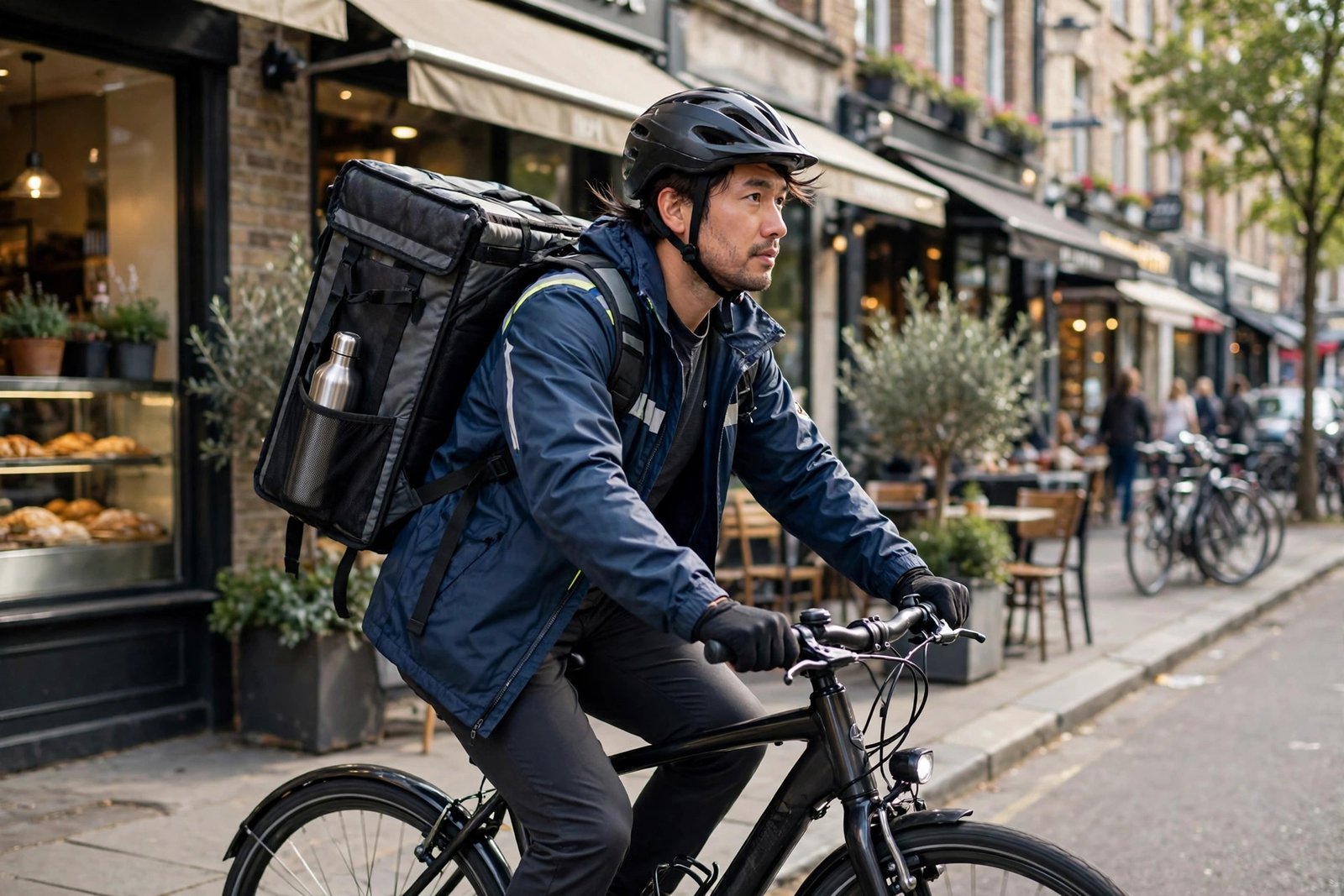
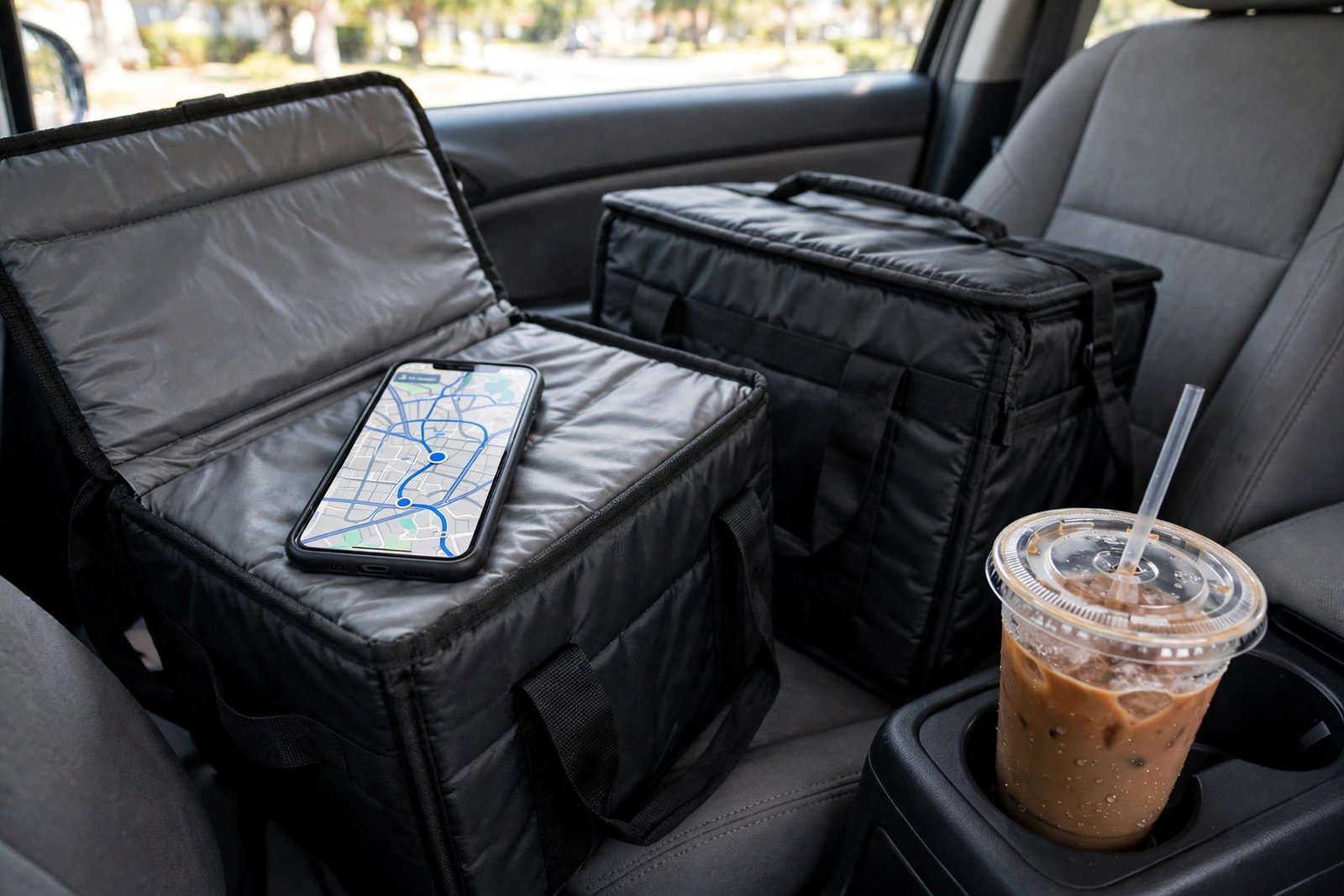
You do not need special skills or experience. If you can drive, use a smartphone app, and deal politely with people, you have the essentials. A few practical items help: a phone mount for safe navigation, a charger because the app drains the battery, and insulated bags to keep food hot or cold. DoorDash ships an activation kit, including an insulated bag, after your first dash.
Keep your car in good order before you start. Check the tyres, the brakes, the lights, and the oil. A breakdown during a delivery costs you the order, the tip, and your rating. Learn your area before your first shift: the restaurant streets, the one-way systems, and the estates where house numbers are hard to find.
Step 4: Learn how pay really works
You earn a base amount per delivery, which varies by app, distance, and effort, plus any tip the customer adds. Tips often make up a large share of good earnings, and on DoorDash and Uber Eats you keep 100% of your tips. Every offer on DoorDash shows your estimated pay upfront.
The crucial part people overlook is that your gross earnings are not your profit. Out of what you earn, you pay for fuel, and you bear the wear, maintenance, and depreciation on your car. A sensible driver tracks both earnings and costs to know the real hourly profit, which is often lower than the gross figure the app shows.
Here is how the main apps pay. Check the current terms on each app before you rely on these figures, because they change.
| App | How you are paid |
|---|---|
| DoorDash | Base pay per delivery, plus promotions and Peak Pay, plus 100% of tips. No minimum acceptance rate. Paid weekly by direct deposit, or daily with Fast Pay from $1.99 per transfer. |
| Uber Eats | Flat rate to pick up and drop off, plus a per-mile rate, plus 100% of tips. Paid weekly, or instantly with Instant Pay up to five times a day. |
| Grubhub | Pay per delivery based on time and mileage, plus waiting time, plus 100% of tips. Paid weekly by direct deposit. |
| Instacart | Pay per order based on size and distance, plus tips. Full-service shoppers also shop the order, which takes longer but can pay more. |
Decline low-paying orders. An order that pays $3 for a 20 minute round trip is worse than no order, because it burns fuel and time you could spend on a better one. The best drivers are picky, not busy.
Step 5: Work the busy hours
When you work affects what you make more than how fast you drive. Earnings are higher during peak demand, meal times, weekends, and bad weather, and thinner at slow times. Plan your shifts around the peaks.
Lunch runs from about 11 in the morning to 2 in the afternoon. Dinner runs from about 5 to 9 in the evening, and Friday and Saturday nights are the busiest of the week. Bad weather pushes orders up, because people stay in. But it also slows traffic and raises the risk of an accident, so drive carefully.
Work near restaurants, not near houses. Position yourself in a busy restaurant area at the start of a shift, and stay there between orders. Driving home between orders wastes fuel and puts you far from the next pickup. Learn which restaurants are slow, and decline their orders.
Multi-apping is the main way experienced drivers earn more. Run two apps at once, and take the best order from either. But do not accept two orders at the same time if you cannot deliver both on time. Start with one app, learn the rhythm, then add a second app only when you can manage both without rushing.
Step 6: Track every mile and every pound
You are self-employed, so no tax is withheld from your pay. The money you receive is before tax, and you are responsible for setting aside and paying your own income tax and self-employment tax. Set aside a portion of what you earn from the start.
The good news is that you can deduct your business expenses, most importantly your vehicle costs. The simplest common method in the United States is the standard mileage deduction, where you deduct a set amount for every business mile driven. The IRS sets the rate each year, so check the current figure. Keep a careful log of your delivery miles. In the United Kingdom, you must register as self-employed with HMRC once you pass the trading allowance. Tax rules differ by country, so check your local rules and a qualified accountant.
Track every shift: hours worked, deliveries completed, gross pay, tips, fuel, and miles driven. At the end of each week, work out your real hourly profit: gross pay minus fuel and other costs, divided by the hours you worked. If that number is lower than you expected, change something: work busier hours, decline low orders, or drive a cheaper route.
Worked example: one evening of deliveries
Example only: these numbers are not typical results. They show the maths, not a promise.
Imagine you dash with DoorDash on a Friday evening in the United States, from 5 in the afternoon to 9 in the evening, four hours. You complete 10 deliveries.
- Base pay: 10 deliveries at $4 each, $40.
- Peak Pay and promotions: $15.
- Tips: 10 deliveries at an average of $4 each, $40.
- Gross earnings: $95.
- Fuel for 60 miles at about $0.15 a mile: $9.
- Car wear, using the same mileage figure as a rough guide: $9.
- Net before tax: about $77 for four hours, or about $19 an hour.
Now imagine the same evening with slow orders, long waits, and no tips. You complete six deliveries, gross $48, fuel $9, car wear $9, net about $30 for four hours, or about $7.50 an hour. Same driver, same car, very different evening. Judge the work by what you keep after expenses, not by the gross figure the app shows.
What it costs and what to expect
| Item | Typical cost |
|---|---|
| Insulated bags | $0 to $30 (some apps provide one) |
| Phone mount and charger | $15 to $40 |
| Fuel per shift | $10 to $25, depending on miles |
| Extra insurance add-on | Varies by insurer, ask before you start |
| Background check | Usually free, paid by the app |
| Total startup | $15 to $70, plus fuel |
Expect your first delivery within a few days of approval. Most Dashers can start earning within days of being approved. Your first week will be slow while you learn the area, the restaurants, and the app. By week three, you should know your best hours and your best zones.
How much you make depends on your city, your hours, your acceptance choices, and your tips. DoorDash drivers can earn up to $25 per hour in busy periods, but the average pay appears lower based on driver reviews online. Food delivery is a flexible way to earn extra cash in your spare time, but it is hard to depend on as a reliable full-time job, because work is not guaranteed during your preferred hours and your car costs never stop.
Common mistakes
- Accepting every order, including low-paying ones.
- Forgetting that gross pay is not profit, and never tracking fuel and car costs.
- Working slow hours and wondering why pay is low.
- Sitting at home between orders instead of near restaurants.
- Skipping the insurance check, then finding out you are not covered.
- Not setting aside money for tax.
- Delivering to the wrong door because you did not read the instructions.
- Rushing in bad weather to chase a surge.
- Running two apps at once before you can manage one.
- Letting food go cold by stacking too many orders.
Risks and scams to watch for
The biggest risk is on the road. You are under pressure to meet tight deadlines, and you can be fined for breaking traffic rules if you are caught rushing. Even worse, you could get into an accident and hurt yourself or others. Never speed to beat a timer. If an order is late because a restaurant was slow, message the customer through the app.
The second risk is your car. Delivery driving adds thousands of miles a year, which means more fuel, more tyres, more brakes, and faster depreciation. Your regular car insurance may become more expensive, and some policies exclude delivery work entirely. Tell your insurer, and do not drive uninsured.
Watch out for scams. A common one is a fake customer message asking you to buy gift cards or pay a fee before a delivery. Never pay anyone to get a delivery job. Another is a phishing message pretending to be from the app, asking you to log in through a fake link. Only log in through the official app. If a customer asks you to leave food somewhere unsafe, leave it in a safe, visible place instead.
Account deactivation is a real risk too. Low ratings, late deliveries, and cancelled orders can lead to warnings or deactivation. Protect your rating by communicating delays, following drop-off instructions exactly, and keeping food secure and at temperature.
Frequently asked questions
How much can I earn delivering food?
It depends on your city, your hours, and your tips. DoorDash drivers can earn up to $25 per hour in busy periods, but the average pay appears lower based on driver reviews online. Your net pay after fuel and car costs is lower than the gross figure the app shows.
Which food delivery app pays best?
There is no single best app, because pay depends on your city and your hours. DoorDash is the largest in the United States, Uber Eats pays a flat rate plus a per-mile rate, and Grubhub pays for waiting time too. Many drivers work for two apps and take the best order from either.
Do I need special insurance to deliver food?
Your regular car insurance may not cover you while you are delivering food for pay, and it may cost more once you start. Some insurers offer a delivery add-on. Tell your insurer what you are doing and ask what cover you need before your first delivery.
Can I work for more than one delivery app?
Yes. Many drivers run two apps at once and take the best order from either, which is called multi-apping. Do not accept two orders at the same time if you cannot deliver both on time. Start with one app, learn the rhythm, then add a second app only when you can manage both without rushing.
What do I need to start food delivery?
You need to be an adult of the minimum age the app sets, hold a valid driver's licence and auto insurance, have a reliable car, bike, or scooter, and own a smartphone that can run the app. You must also pass a background check, which can take a few days to a couple of weeks.
Conclusion
Making money with a food delivery side hustle takes a vehicle, a phone, and a clear head about the numbers. Pick one or two apps, pass the background check, tell your insurer, and learn how pay works before your first shift. Work the busy hours, decline low-paying orders, track every mile, and judge the work by what you keep after fuel and car costs.
Next, read how to start a moving help side hustle, best weekend side hustles, and how to find part-time online jobs. Then browse all side hustles guides to plan your next step.
Reader note: pay figures in the worked example are labelled as examples only and are not typical results. App fees, pay rates, and requirements change often, so check the current terms on DoorDash, Uber Eats, and Grubhub before you sign up. Tax and insurance rules differ by country, so check your local rules and a qualified accountant. Earning results vary; nothing on this site is financial advice.