How to Make Money with a Dog Walking Side Hustle in 2026
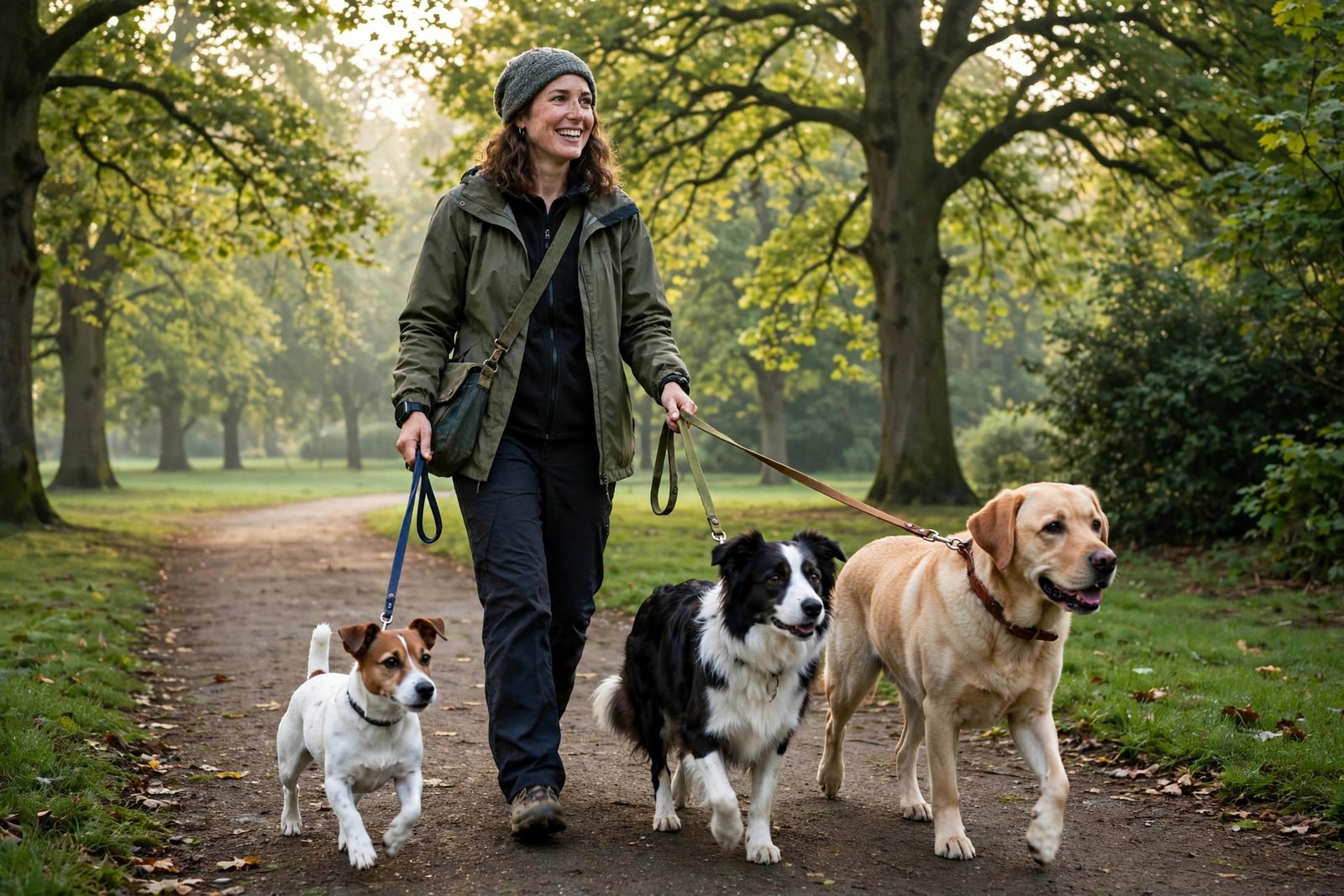
Learning how to make money with a dog walking side hustle is a good idea if you love dogs, you enjoy being outdoors, and you want flexible income without a big startup cost. A dog walking side hustle means walking other people's dogs for pay, usually for 30 or 60 minutes, while the owner is at work or away. You charge per walk, and regular clients book the same slot every weekday.
You can start with about $200 to $600, mostly insurance, and take your first paid walk within a month. This guide covers the rules, the insurance, the rates, the apps, and how to find your first ten clients.
In this guide
- What dog walking really pays
- Step 1: Check the rules in your area
- Step 2: Get insurance before your first walk
- Step 3: Pick your services and area
- Step 4: Set your rates
- Step 5: Choose apps or go direct
- Step 6: Win your first ten clients
- Worked example: one week of dog walking
- What it costs and what to expect
- Common mistakes
- Risks and scams to watch for
- Frequently asked questions
What dog walking really pays
Dog walking pays per walk, not per hour, and the rate depends on your area, the length of the walk, and whether a platform takes a cut. In the United States, a 30 minute solo walk commonly runs $15 to $30, and a 60 minute walk $25 to $45. In the United Kingdom, a 30 minute walk is often £10 to £18. Big cities pay more, and small towns pay less. Check what five or six local walkers charge before you set your price.
The honest picture is this: basic dog walking is the lowest paid work in pet care. Specialist services such as overnight stays, grooming, and training pay more per hour, but they need more skill or space. Once you have clients and reviews, you can add group walks, drop-in visits, or boarding, which pay more for the same hours.
Your busiest hours are usually the middle of the workday, from about 11 in the morning to 3 in the afternoon, when owners are at the office. If you work a standard nine to five job, you will take on early mornings, evenings, and weekends first.
Step 1: Check the rules in your area
Spend an hour on your city or council website before you do anything else.
In the United States, a dog walker working alone usually needs no special state licence, but your city may require a general business licence, and some cities limit how many dogs one person can walk at once. In the United Kingdom, walking dogs for pay generally needs no licence in England, though you still need to register as self-employed with HMRC if you earn over the trading allowance, but boarding dogs in your home or running day care needs an animal activity licence from your local council. In Canada, many towns require a business licence and set their own limits on dogs per walker. In Australia, you will usually want an ABN, and councils often set caps on the number of dogs one person can walk.
Never exceed the dog limit in your area, even when a client asks. One fine or one incident can end a young business.
Step 2: Get insurance before your first walk
Think about what can go wrong. A dog slips its collar near a busy road. Two dogs get into a scuffle and a vet bill follows. A client's dog pulls you over, or bites another person. Without cover, you could pay for that out of your own pocket.
A typical pet sitter or dog walker policy bundles a few protections together. General liability covers injury to other people or damage to their property because of your work. Care, custody and control covers injury to, or loss of, a pet while it is in your care, which matters because a standard general liability policy often excludes animals in your custody. Key cover helps if you lose a client's house key, and bonding protects clients against theft by a pet care worker.
In the United States, policies for solo pet sitters and walkers commonly run $150 to $400 a year. Look for providers that specialise in pet care businesses, because general business insurers sometimes do not understand the risk.
Step 3: Pick your services and area
Starting narrow usually works better. A tight, reliable service beats a long menu you cannot deliver.
Most new walkers start with 30 minute solo walks, which are the most common booking by far, and 60 minute walks for high-energy breeds. Drop-in visits, a quick trip for a toilet break and fresh water, are a useful add-on. Once you are steady, think about group walks, which pay better per hour but need good dog handling skills and a higher insurance tier.
Next, pick your service area. Choose two or three neighbourhoods close to where you live, ideally within about 10 to 15 minutes of each other. Travel time is unpaid time, and it quietly eats your profit. A tight cluster of clients on the same few streets is worth far more than scattered clients across town.
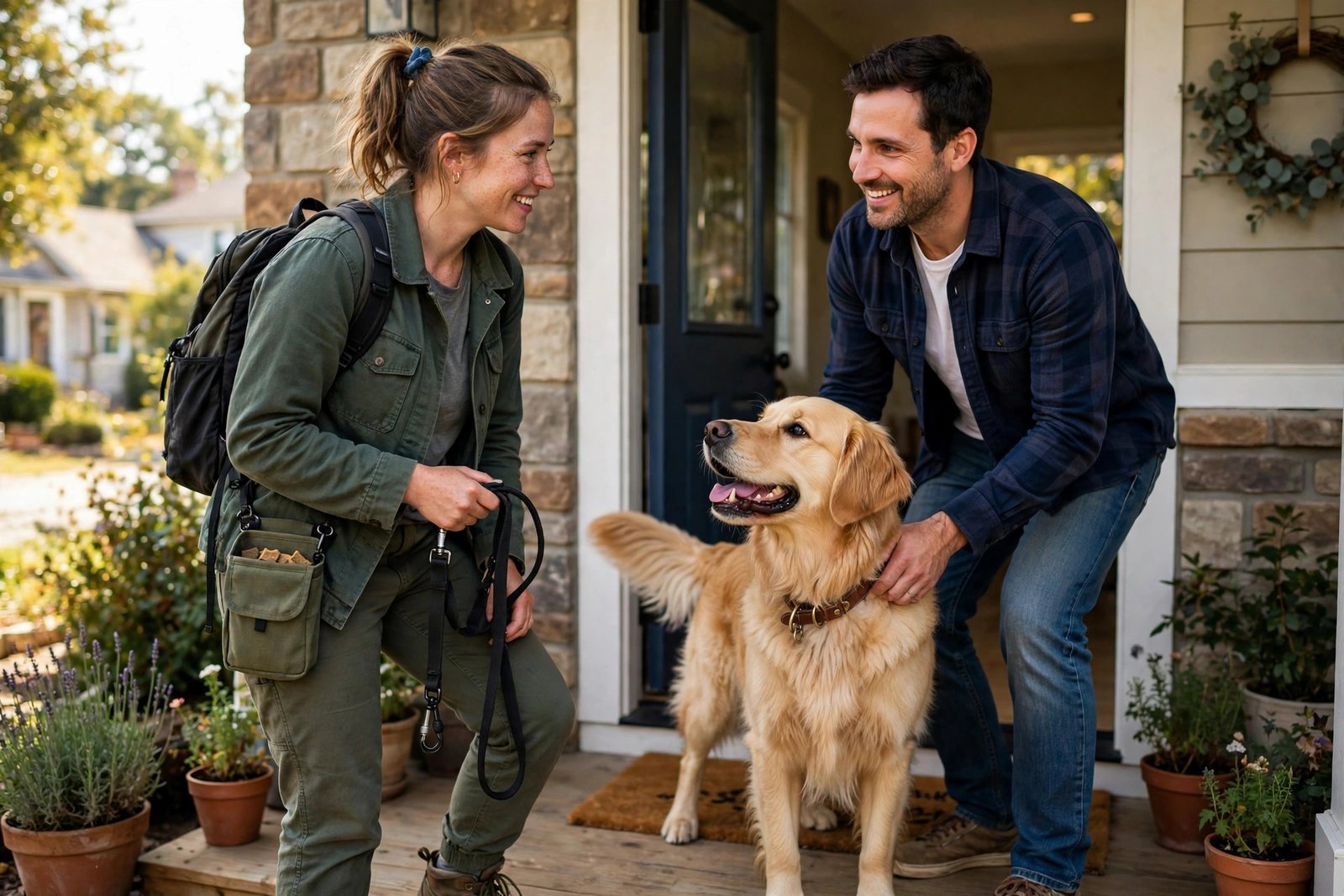
Before you take a client, run a free 15 minute meet and greet. Meet the dog, watch how it behaves, and check the lead and any behaviour concerns. Ask the owner: does the dog pull, react to other dogs, or have a history of slipping out of a collar? Does it have any medical needs? Write the answers on a client information form, with the vet details and emergency contacts.
Step 4: Set your rates
Charge too little and you will burn out. Charge too much with no reviews and you will not get calls. Research your local market, then price a little below the middle until you have a few reviews, and raise your rates after that.
| Service | Typical rate (2026) |
|---|---|
| 30 minute solo walk, United States | $15 to $30 |
| 60 minute solo walk, United States | $25 to $45 |
| Group walk, per dog, United States | $12 to $25 |
| 30 minute solo walk, United Kingdom | £10 to £18 |
| 60 minute solo walk, United Kingdom | £14 to £25 |
| Drop-in visit | $10 to $20, or £8 to £15 |
Remember that a 30 minute walk really takes 40 to 45 minutes once you add travel and handover time, so price the whole job, not just the walking. Offer a bundle such as ten walks for a small discount, which locks in repeat income. Charge a small fee for extra dogs in the same household. Add a holiday surcharge, and set a clear cancellation policy, such as 24 hours notice.
Group walks can push your hourly income higher. If you walk four dogs together for an hour at $15 per dog, that is $60 for a single hour. More dogs also means more risk and more skill, so build up to it slowly. Start with one dog at a time, then two, then a small group of dogs you know well.
Step 5: Choose apps or go direct
You have two routes for finding clients: apps and your own marketing. Smart walkers use both, at least at first.
Rover is the largest pet care marketplace in the United States. You create a profile, set your rates and availability, and owners contact you. Rover takes a cut of each booking, reported as about 20% in most cases, though the figure has been reported differently elsewhere, so check Rover's current terms before you sign up. Rover also requires a safety quiz and a background check, and profile approval can take 10 to 20 business days. The Rover help page on becoming a sitter or dog walker explains each step. Wag often charges around 40% on walks, but it may deliver quicker short-notice bookings. Outside the United States, look at local options such as Pawshake, Care.com, and PetBacker.
Apps are great for your first month because they hand you visibility and a built-in review system. They are less great for your profit margin. Many experienced walkers use an app to meet clients, then move steady customers to direct booking when the platform's terms allow it.
Going direct pays better once you have a client base. You keep 100% of what clients pay, you own the relationships, and you can raise prices freely. Most walkers who grow into real businesses start on a platform, build reviews for 10 to 20 clients, and then gradually move their best customers to direct relationships.
Step 6: Win your first ten clients
You do not need an ad budget. You need people to know you exist.
Start with your own circle. Tell friends, family, coworkers, and neighbours you are taking on clients. Dog owners often ask each other for recommendations, and a warm referral beats any ad.
Use local community groups. Neighbourhood Facebook groups, Nextdoor, and local noticeboards are full of people looking for a walker. Post a short, friendly introduction with your rate, your area, and your availability.
Walk the neighbourhood with flyers. A simple flyer at vet clinics, groomers, and pet supply stores still works. Ask permission first. Include a phone number and a QR code that links to your profile.
Partner with local pet businesses. Groomers, trainers, and vets often get asked for walker recommendations. Offer to refer clients to them too.
Offer a discounted first walk to your first five clients in exchange for a review and permission to use them as a reference. Three good reviews on Nextdoor or Google Maps is worth more than a month of paid advertising.
Worked example: one week of dog walking
Example only: these numbers are not typical results. They show the maths, not a promise.
Imagine you walk dogs in the United States, you charge $22 for a 30 minute solo walk, and you work five days a week.
- Light schedule: one walk a day, five walks a week. Gross: $440 a month. After a 20% app fee: about $352.
- Part-time schedule: three walks a day, 15 walks a week. Gross: about $1,430 a month. After a 20% app fee: about $1,145.
- Busy schedule: six walks a day, 30 walks a week. Gross: about $2,860 a month. After a 20% app fee: about $2,285.
These numbers are before taxes, insurance, and travel costs. A 30 minute walk takes 40 to 45 minutes with travel, so six walks a day is really five hours of work. Group walks change the maths: four dogs together for an hour at $15 per dog is $60 for one hour, but only once you have the skill and the insurance to handle four dogs safely.
If the same part-time schedule came from direct clients with no app fee, you would keep the full $1,430 instead of $1,145. That $285 a month is why experienced walkers move steady clients to direct booking when the platform rules allow it.
What it costs and what to expect
| Expense | Typical cost |
|---|---|
| Pet business insurance | $150 to $400 per year |
| Business licence or registration | $0 to $100 |
| Pet first aid and CPR course | $0 to $50 |
| App application or background check | $0 to $80 |
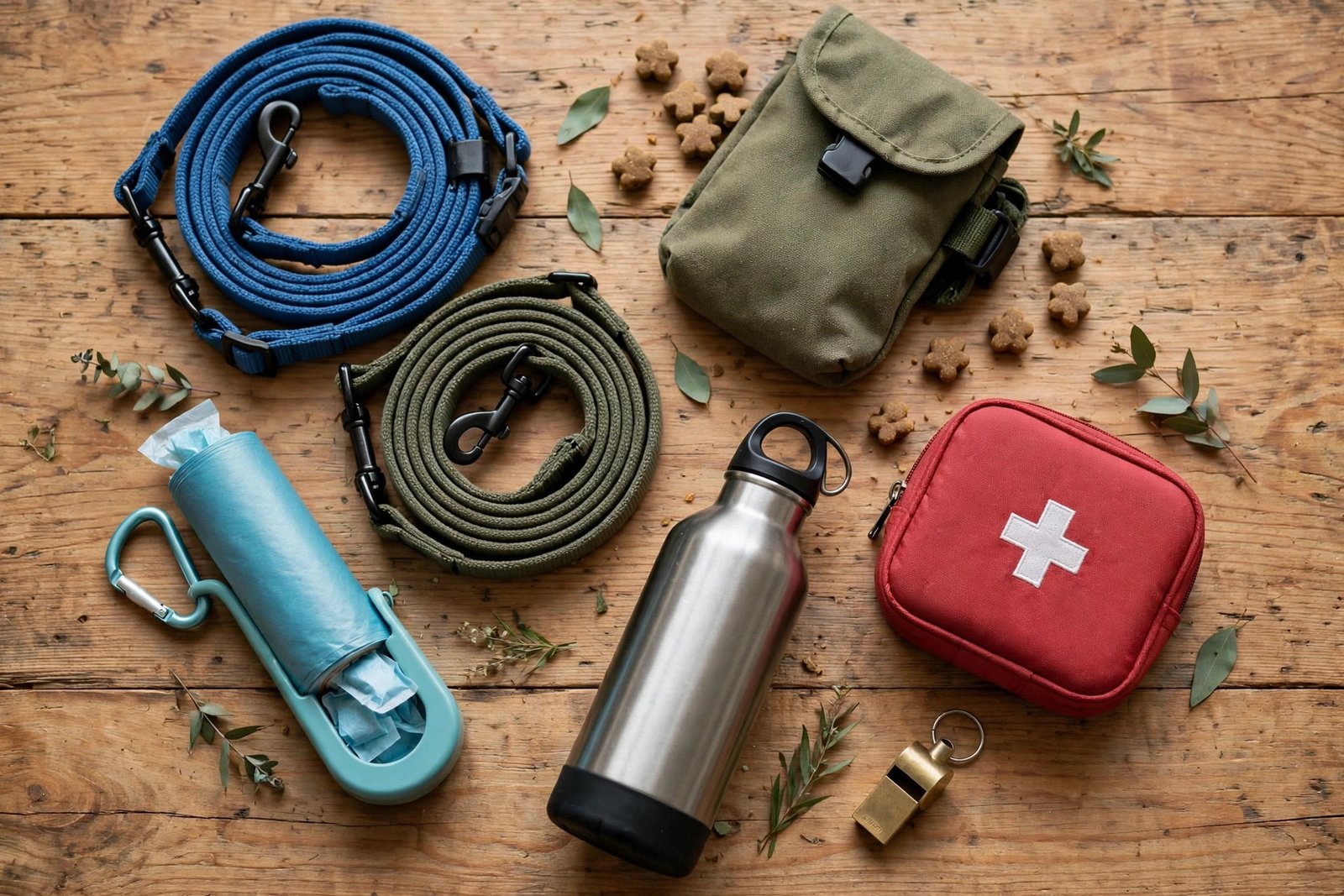
| Spare lead, treat pouch, waste bags | $20 to $40 |
| Flyers and simple branding | $0 to $25 |
| Estimated total | $200 to $600 |
Most people can finish the setup in two to four weeks: check the rules, buy insurance, finish a pet first aid course, create a service agreement and a client form, set up an app profile, and post in local groups.
Expect slow growth at first. A few walks a day can bring in around $1,000 to $1,500 a month before costs in a typical United States market, and more if you add group walks or boarding. App fees, taxes, and travel time all reduce your take-home pay, so plan with net numbers. Set aside a slice for taxes, a slice for slow weeks, and a slice for your own savings.
Common mistakes
- Skipping insurance, then paying a vet bill out of your own pocket.
- Walking too many dogs at once before you have the skill to control them.
- Pricing by the walk time only, and forgetting travel and handover time.
- Taking on reactive or aggressive dogs without asking about behaviour first.
- Working without a written service agreement, so nobody knows who pays if a problem happens.
- Relying on one app, so a slow week on that app means no income at all.
- Forgetting to set aside money for tax, then facing a surprise bill.
- Saying yes to every client, including ones outside your area, which eats your day in travel.
Risks and scams to watch for
The biggest risk is a dog emergency. A dog can slip its collar near a busy road, get into a fight with another dog, or eat something harmful on a walk. Keep a first aid kit and know the nearest emergency vet for every client's area. Use secure equipment: a well-fitted harness or a martingale collar is safer than a flat collar for dogs who back out of gear. Never use off-leash time as a default, even for good dogs. Hot pavement can burn paws in minutes.
The second risk is keys and homes. You will hold keys to people's houses, and losing a key is a serious problem. Keep keys on a labelled tag, never with the client's address on it, and return them at once if a booking ends.
Watch out for scams. A common one is a "client" who asks you to buy pet supplies with your own money and promises to pay you back with a cheque that bounces. Never buy supplies for a client with your own money. Another scam is a fake platform message asking you to pay for "verification" outside the app. Only pay through the official platform.
Frequently asked questions
How much does it cost to start a dog walking business?
Most people spend between roughly $200 and $600 in the United States to get going, with insurance as the biggest cost. Prices differ in the United Kingdom, Canada, and Australia, so check local insurance quotes and registration fees.
How much should I charge for dog walking?
In the United States, a 30 minute solo walk commonly runs $15 to $30, and an hour often falls between $25 and $45. In the United Kingdom, a 30 minute walk is often £10 to £18. Look at what local walkers charge, then raise your rates as you collect reviews.
Do I need insurance to walk dogs for money?
Legally, requirements vary by location, but you should treat insurance as essential. Pet business insurance covers injuries, damage, and care, custody and control of the animals in your charge. Many clients, and some apps, will ask about it, and having a policy makes you look more professional and protects your savings.
Can I really make money with a dog walking side hustle?
Yes, but how much depends on your area, your rate, and the time you put in. A few walks a day can bring in around $1,000 to $1,500 a month before costs in a typical United States market, and more if you add group walks or boarding. App fees, taxes, and travel time all reduce your take-home pay, so plan with net numbers.
Which dog walking apps are best for beginners?
Rover is the most popular starting point, with a commission reported as about 20% in most cases. Wag often charges more, around 40% on walks, but may deliver quicker short-notice bookings. Many walkers sign up for both and compare results. Check current fees before applying, since they change.
Conclusion
Making money with a dog walking side hustle takes insurance, a small kit, a clear price list, and a tight service area. Check your local rules, buy insurance before your first walk, run a meet and greet for every new client, and use Rover or a local app to win your first reviews. Then move steady clients to direct booking and add group walks when you are ready.
Next, read how to make money with a cleaning side hustle, best weekend side hustles, and how to turn a side hustle into full-time income. Then browse all side hustles guides to plan your next step.
Reader note: rates in the worked example are labelled as examples only and are not typical results. Rover and Wag fees change often and have been reported differently, so check the current terms on each platform before you sign up. Tax, licensing, and animal care rules differ by country, so check your local rules and a qualified accountant. Earning results vary; nothing on this site is financial advice.