How to Start a Furniture Flipping Side Hustle in 2026
Learning how to start a furniture flipping side hustle is a good idea if you like hands-on work, you enjoy spotting potential in old things, and you want weekend income without a big startup cost. Furniture flipping means buying used furniture cheaply, restoring or refinishing it, and selling it for more than you paid.
You can start with $60 to $225, and your first flip can be a free curbside find. This guide covers what sells, where to find pieces, how to judge them, how to restore them, and how to price and sell them.
In this guide
- What furniture flipping really is
- Step 1: Learn what sells in your area
- Step 2: Find your first piece
- Step 3: Judge a piece before you pay
- Step 4: Restore it step by step
- Step 5: Price it with the maths
- Step 6: Photograph and list it
- Worked example: one dresser flip
- What it costs and what to expect
- Common mistakes
- Risks and scams to watch for
- Frequently asked questions
What furniture flipping really is
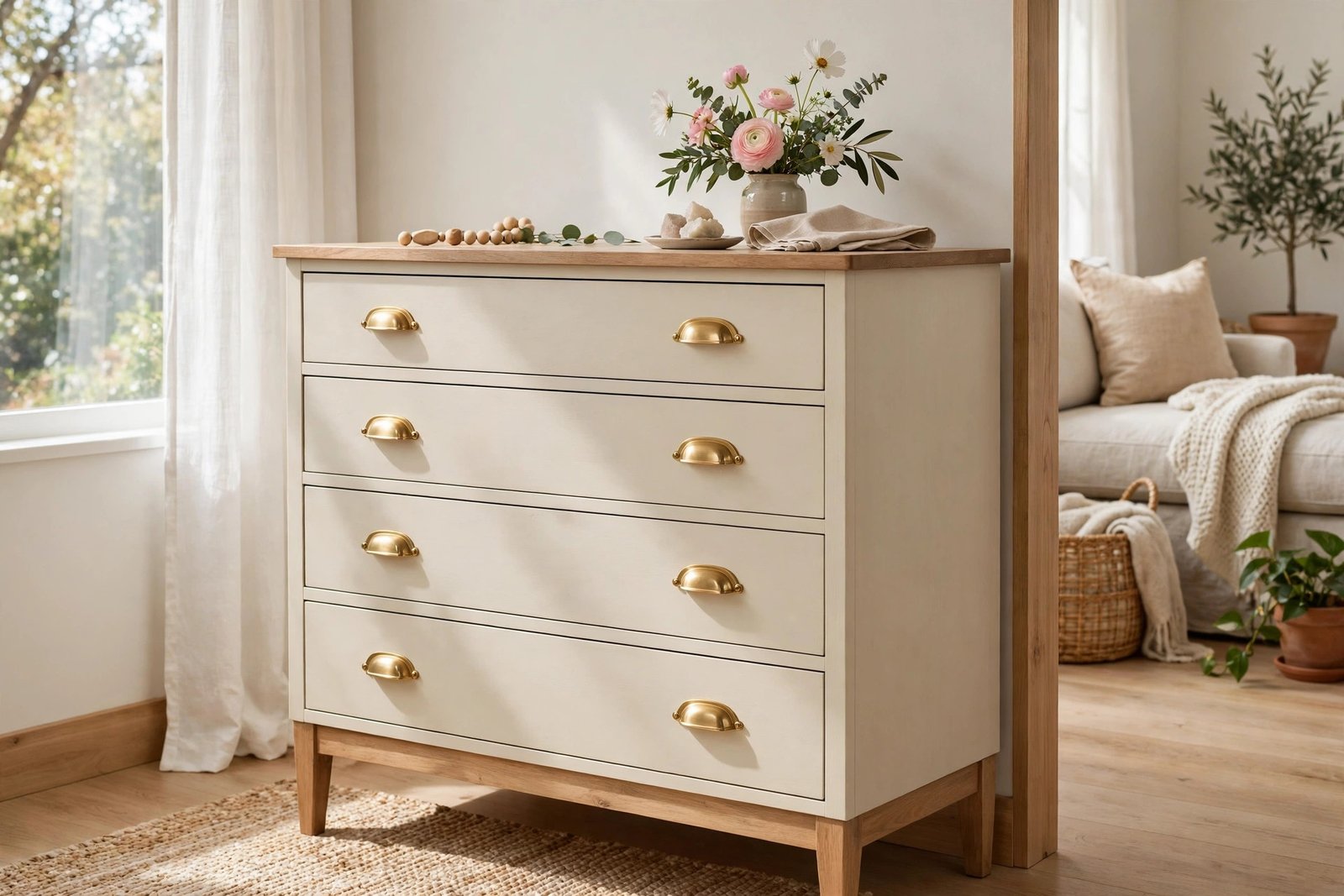
Furniture flipping is buying and reselling furniture specifically, after you improve it. It is not the same as general reselling, where you sell items as you found them. A flipper buys a scratched dresser, sands it, paints it, fits new handles, and sells a piece that looks new. The profit comes from the change you make, not just from finding a bargain.
The best pieces to flip are solid wood dressers, dining tables, coffee tables, nightstands, bookshelves, and dining chairs. Solid wood is durable and responds well to refinishing. Particleboard pieces, the flat-pack kind, fall apart easily and do not refinish well. Avoid them.
You need a space to work, a way to transport pieces, and a place to sell. A single-car garage is more than enough to start. Your first few attempts may not be good enough to sell, and that is normal.
Step 1: Learn what sells in your area
Before you buy anything, spend a week watching what sells near you. Search Facebook Marketplace and OfferUp for refinished furniture in your town. Note which pieces sell fast, which sit for weeks, and what prices they reach. Sort by sold listings where the platform allows it. Simple, clean lines usually appeal to more buyers than ornate styles.
Solid wood dressers and dining tables are reliable sellers. Coffee tables and nightstands sell fast because they are cheap and easy to move. China cabinets and hutches can earn more, but they take longer to sell and need a bigger vehicle.
Pick one style to learn first, such as modern farmhouse or mid-century modern. Learn what your local buyers want, and buy only what fits that demand.
Step 2: Find your first piece
Start with the free and cheap sources, and pay for a piece only when you know what it will sell for.
Curbside finds cost nothing. Drive through neighbourhoods during move-out season, from May to September, and around the first of the month. People leave good furniture on the curb because it is easier than selling it.
Facebook Marketplace is the largest source for most flippers. Filter by Free or sort by price, low to high, in the furniture category. Many people just want items gone, especially after a move or a remodel. Be the first to respond. Speed wins on Marketplace.
Thrift stores and charity shops are reliable too. Stores such as Goodwill, the Salvation Army, and Habitat for Humanity ReStore regularly receive furniture donations. Visit two or three times a week, and ask when new furniture arrives. Estate sales and garage sales are also worth your Saturday mornings, especially on the last day, when everything is often discounted by half or more.
Step 3: Judge a piece before you pay
A good flip starts with a good buy. Check every piece carefully before you pay, because a bad buy eats your profit before you start.
First, check the structure. Press firmly on different sections. The piece should not wobble or bend. Examine the joints where pieces meet: they should fit snugly without gaps. Test drawers and doors several times. They should move smoothly without sticking. A solid piece feels heavy for its size.
Second, check the materials. Look for hardwoods such as oak, maple, or walnut by examining the grain. Check the drawer bottoms and backs: quality furniture uses real wood even in hidden areas. Pull out a drawer and look at the joinery. Dovetail joints show higher quality than stapled corners. Scratch a hidden spot gently: real wood shows consistent colour underneath.
Third, count the repair cost. Note visible damage such as scratches, dents, loose veneer, and missing hardware. Minor cosmetic issues are simple fixes. Water rings often sand out easily. But walk away from pieces with broken frames, heavy water damage, a strong smell of smoke or damp, or signs of bed bugs. Never bring soft furnishings with bed bugs into your home or workspace. If the repair cost plus the purchase price is close to the selling price, leave the piece for someone else.
Step 4: Restore it step by step
Restoration is where you add the most value. Follow the same workflow for most flips, and do not skip the boring steps.
Clean thoroughly first. Use a gentle cleaner diluted in warm water to remove grease and grime, wipe down, and let the piece dry fully. Older pieces may need several passes. Always clean used furniture before you bring it into your home or workspace.
Assess and repair next. Fix structural issues first: apply wood glue to loose joints and clamp overnight, fill scratches and holes with wood filler, let it dry, and sand smooth. Glue down lifting veneer. Remove broken hardware and plan for replacements.
Sand the surface. For painting, a light sand with 120 to 150 grit is enough to help paint stick. For staining, strip fully with 80 grit, then work through 120, 180, and 220 grit for a smooth finish. Always sand with the grain, not against it. For chalk paint, minimal sanding is needed, which is one reason beginners like it.
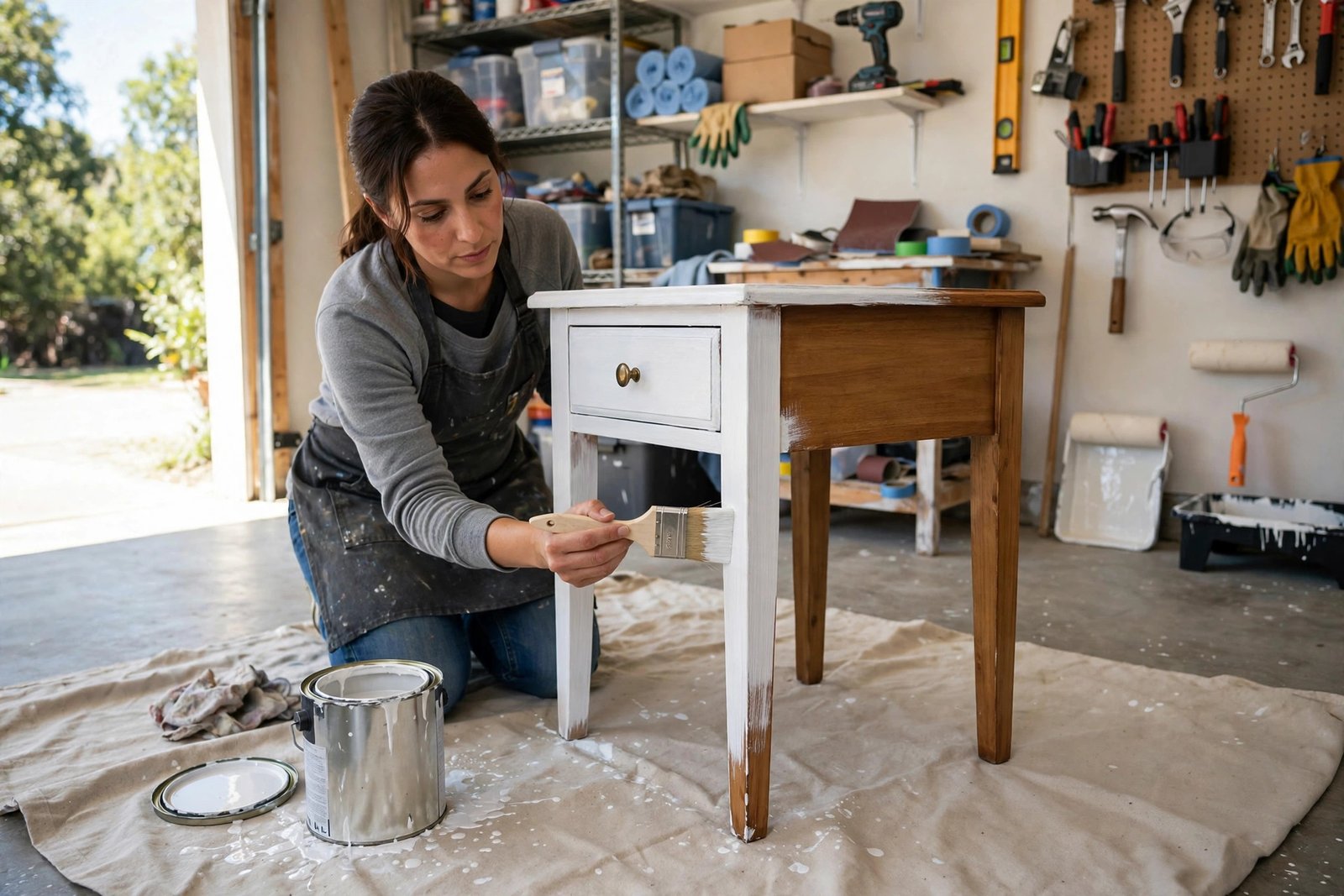
Prime if needed. If you paint over a dark finish with a lighter colour, or the piece has stains or tannin bleed, common with oak, apply a shellac-based primer first. Then paint or stain in thin, even coats. Two to three coats is typical, with a light sand between dry coats. Test stain colours on a hidden area first.
Protect the finish with a top coat, which is essential for durability on tabletops and dressers. Polycrylic is water-based and does not yellow. Furniture wax gives a soft sheen but needs reapplying. Polyurethane gives maximum durability. Finally, update the hardware. Swapping dated pulls for matte black bar pulls or brushed gold knobs is the easiest way to modernise a piece. Budget $3 to $8 per pull.
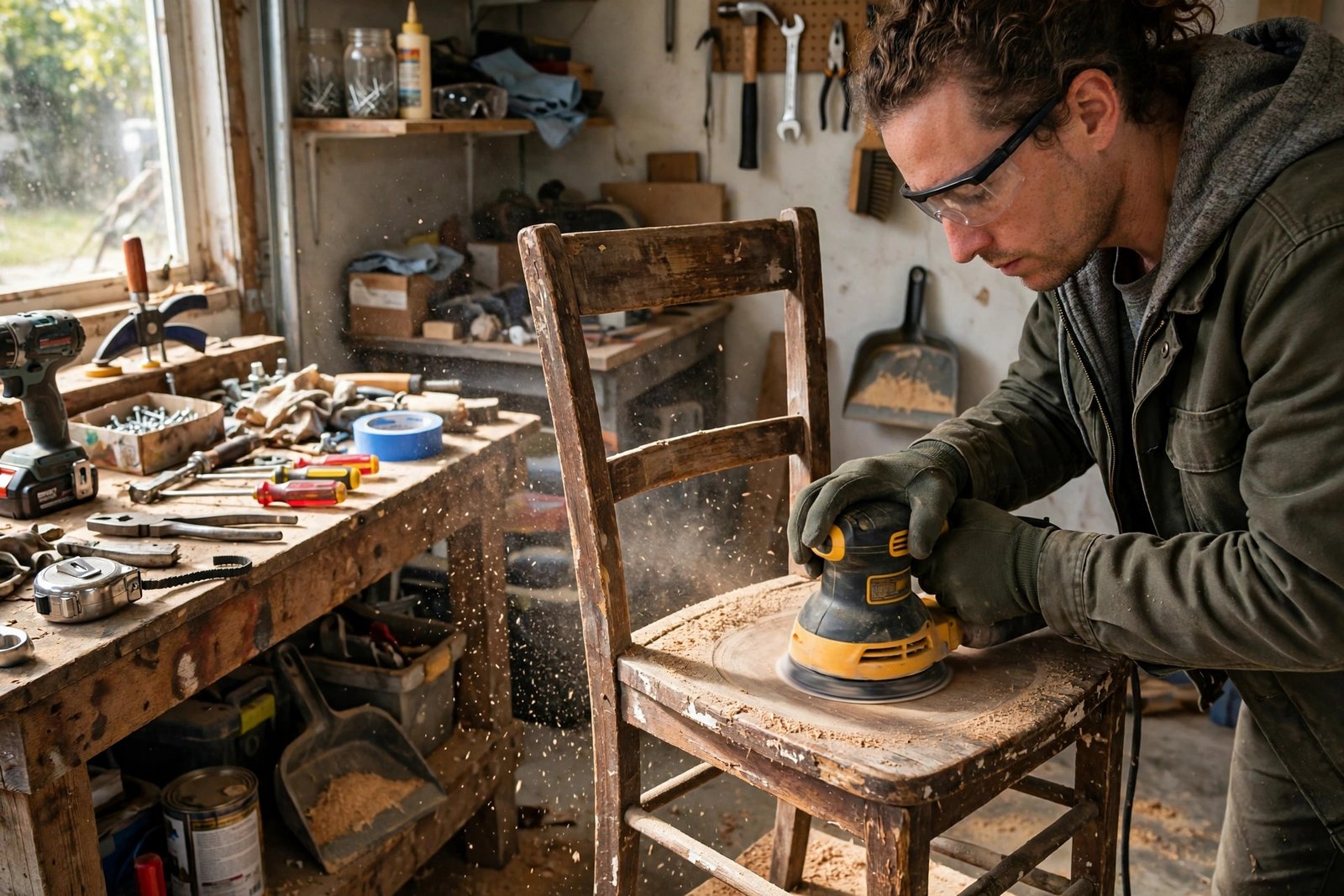
Work safely. Sanding creates dust, and paint stripper creates fumes, so work in a ventilated space and wear a dust mask, safety glasses, and gloves. Let each coat dry fully before the next one. Rushing the drying time is the most common reason a finish looks poor.
Step 5: Price it with the maths
Pricing is where many beginners leave money on the table, or price themselves out of sales. Use a simple formula, then check it against the market.
A good starting formula is the 3x rule: your selling price should be roughly three times your total cost, meaning purchase price plus materials plus hardware. Here is an example: a piece acquired for $25, sandpaper, paint and primer for $20, and new hardware for $15. Total cost $60. Target selling price at 3x: $180.
Before you list, research comparable sales. Search Facebook Marketplace and OfferUp for similar pieces of the same style, size, and condition. That gives you a realistic market range. General market ranges for refinished furniture in 2026 are shown below, but local prices vary, so check your own area.
| Piece | Typical flip price |
|---|---|
| Nightstand | $75 to $150 |
| Coffee table | $75 to $200 |
| Dresser, six drawer | $200 to $450 |
| Dining table | $250 to $600 |
| Bookshelf | $100 to $250 |
| China cabinet or hutch | $300 to $700 |
Factor in your time as well. Track your hours on each flip. If a flip takes six hours and nets $150 in profit, that is $25 an hour, which is solid for a side hustle. If it takes 20 hours for the same profit, you need to speed up or target higher-value pieces. Leave room to negotiate, but set a floor price below which you will not sell, and stick to it.
Step 6: Photograph and list it
Good photos sell furniture. Bad photos kill a good flip. Take your photos in natural light, against a plain wall or a tidy background, with the piece staged simply: a small vase, a book, or a plant. Photograph from the front, from both sides, and from above. Include close-ups of the finish and the new hardware, and always include a before photo if you have one. Before and after content builds trust and shows the quality of your work.
Write a clear listing. State the piece, the dimensions, the materials, what you did to it, and the condition. Mention solid wood, dovetail joints, or new hardware where true. Do not invent a brand or an age you cannot prove. Set a firm price, state that the buyer collects, and answer messages fast. The first buyer to message usually wins the piece.
List on several platforms at once. Facebook Marketplace is the top platform for most flippers, because it has a massive local audience and no listing fees. OfferUp is a strong second choice, and Craigslist still works for larger pieces. For high-end or vintage pieces, Chairish and Instagram attract buyers willing to pay more, though Chairish takes a 30% commission. Local consignment shops take 40 to 60 percent.
Worked example: one dresser flip
Example only: these numbers are not typical results. They show the maths, not a promise.
Imagine you find a six drawer solid wood dresser at a thrift store for $40. It is sturdy, with dovetail joints, but the finish is scratched and the handles are dated.
- Purchase price: $40.
- Sandpaper, wood filler, primer, chalk paint, top coat: $28.
- New hardware, six pulls at $5 each: $30.
- Fuel and travel to collect and deliver: $12.
- Total cost: $110.
- Your time: seven hours across three days, including drying time.
- Selling price on Facebook Marketplace: $295.
- Profit: $185, or about $26 per hour for your time.
Now imagine you paid $120 for the same dresser at an antique shop, spent $60 on materials, and sold it for $295. Your profit would be $115, or about $16 per hour. Same dresser, same work, very different result. The buy price decides the profit more than the paint does. That is why step 3 matters more than step 4.
If the dresser does not sell in two weeks, lower the price by 10 percent and refresh the photos. If it still does not sell after a month, the price is too high or the style does not suit your area.
What it costs and what to expect
| Item | Typical cost |
|---|---|
| First piece to flip | $0 to $50 |
| Basic tools and supplies | $50 to $150 |
| New hardware | $10 to $25 |
| Listing supplies (your phone works) | $0 |
| Total startup | $60 to $225 |
Expect your first flip to take a week, including drying time. A simple paint flip on a nightstand takes three to five hours of work across two to three days. A more involved restoration, such as stripping and staining a dining table, can take eight to 15 hours across a week. Efficiency improves a lot with practice.
Most part-time flippers who sell regularly report a few hundred to a couple of thousand dollars a month, depending on volume and piece selection, but that is their report, not a promise. Your results depend on what you buy, how well you restore it, and what your local market will pay.
Common mistakes
- Buying particleboard furniture, which does not refinish well and buyers know the difference.
- Paying too much for a piece, so the profit disappears before you start.
- Skipping the cleaning and sanding steps, so the paint peels within weeks.
- Rushing the drying time between coats, which ruins the finish.
- Overspending on tools before you have steady sales.
- Forgetting to track your hours, so you do not know your real hourly rate.
- Pricing by feeling instead of by the maths and the market.
- Listing with dark, cluttered photos, which hides a good flip.
- Bringing home soft furnishings with bed bugs or heavy smoke damage.
- Storing unsold pieces for months instead of cutting the price and moving on.
Risks and scams to watch for
Furniture flipping has real risks, and most of them are in the buying and selling, not the painting.
Health first. Sanding dust and paint stripper fumes are harmful. Work in a ventilated space, wear a dust mask, safety glasses, and gloves, and keep children and pets out of the workspace. Read the safety label on every product you use, and store chemicals away from heat and children.
Money second. Never pay for a piece before you have seen it in person. A common scam is a seller who asks for a deposit to "hold" a piece, then disappears. Pay in person, in cash or by card, after you have inspected the piece. When you sell, meet buyers in a safe, public place or at your home only if you are comfortable. Take payment before the buyer loads the piece, and do not accept a cheque that has not cleared. Be careful with buyers who overpay "by mistake" and ask you to refund the difference: that is a classic overpayment scam.
Legal third. You must pay tax on your income, so track your expenses, save your receipts, and report your earnings on your tax return each year. In the United States, you can apply for a free employer identification number, known as an EIN if you form a business. In the United Kingdom, most beginners register as a sole trader. Tax rules differ by country, so check your local rules and a qualified accountant. If you sell regularly, check whether your area needs a business registration or a sales tax permit.
Frequently asked questions
How much money can you make flipping furniture?
It depends on volume, piece selection, and your local market. Part-time flippers who sell regularly report a few hundred to a couple of thousand dollars a month, but that is their report, not a promise. Your profit per piece is the selling price minus the purchase price, materials, and your time, so track every flip.
Do I need any special skills to start flipping furniture?
No prior experience is required. Basic skills such as sanding, painting, and minor repairs can be learned from online tutorials in a weekend. The most important skill is developing an eye for pieces with profit potential, which comes with practice.
What type of furniture is most profitable to flip?
Mid-century modern pieces often command the highest premiums. Solid wood dressers, dining tables, and accent chairs also sell well. Avoid particleboard furniture, because it does not refinish well and buyers know the difference.
How long does it take to flip a piece of furniture?
A simple paint flip on a nightstand or an end table takes three to five hours across two to three days, allowing for drying time. A more involved restoration, such as stripping, repairing, and staining a dining table, can take eight to 15 hours across a week.
Where is the best place to sell flipped furniture?
Facebook Marketplace is the top platform for most flippers, because it has a massive local audience and no listing fees. OfferUp is a strong second choice. For high-end or vintage pieces, Chairish and Instagram attract premium buyers.
Conclusion
Starting a furniture flipping side hustle takes an eye for solid wood, a small tool kit, and a clear pricing rule. Buy cheap, judge the piece before you pay, restore it carefully, price it at about three times your cost, and photograph it well. Start with one piece, track your numbers, and let the sales tell you what to buy next.
Next, read how to start a reselling side hustle, how to sell on Facebook Marketplace, and how to start a car detailing side hustle. Then browse all side hustles guides to plan your next step.
Reader note: prices in the worked example are labelled as examples only and are not typical results. Market prices vary by area and change over time, so check comparable sales near you before you price a piece. Tax and business registration rules differ by country, so check your local rules and a qualified accountant. Earning results vary; nothing on this site is financial advice.