How to Sell on Facebook Marketplace as a Side Hustle in 2026
Learning how to sell on Facebook Marketplace is the fastest free way to turn clutter into cash, because buyers in your town are already browsing the app. You can list an item in minutes, with no listing fee for local pickup in most cases, and a buyer can collect it the same day. That speed makes Marketplace a good place to start a side hustle, not just a one off clear out.
This guide covers what sells, what you cannot list, how to create a listing that sells, photos, titles, pricing, fees, messaging, safe meetups, scams, and a repeatable weekly routine. It is written for beginners who want to sell regularly, not just once. It also notes where fees and rules differ by country, and where you should check the current fee in the Facebook app.
In this guide
- What sells best, and what does not sell
- What you cannot list
- Step by step: create a listing that sells
- Photos that stop the scroll
- Titles and descriptions buyers actually search for
- How to price it
- Fees by country
- Messaging, haggling, and closing the deal
- Staying safe and spotting scams
- Turning it into a side hustle
- Tax basics
- Frequently asked questions
What sells best, and what does not sell
Furniture sells well on Marketplace, because buyers want to see it, collect it, and avoid delivery costs. Sofas, tables, chairs, and wardrobes are popular, especially when they are clean and fairly priced. Baby and kids items sell fast too, because parents buy and resell them in short cycles. Small electronics, bikes, garden tools, and branded clothes also sell well when they are in good condition.
Some items sell slowly or not at all. Old mattresses, worn out shoes, damaged electronics, and items with missing parts are hard to sell. Very common items, such as old DVDs or basic mugs, have low demand and low prices. Custom items with a personal name or photo are also hard to sell, because few buyers want someone else name on their wall.
| Sells well | Why it sells | Sells slowly | Why it struggles |
|---|---|---|---|
| Sofas and tables | Buyers collect locally and save on delivery | Old mattresses | Hygiene worries and transport costs |
| Baby and kids items | Short use, high turnover | Worn out shoes | Condition worries and low value |
| Bikes and garden tools | Useful, easy to check in person | Damaged electronics | Repair costs and trust worries |
| Branded clothes | Buyers search by brand and size | Common DVDs and mugs | Low demand and very low prices |
| Small electronics | Easy to test before buying | Personalised items | Few buyers want a stranger name |
Start with items you already own, then move to stock you buy cheap. Our reselling guide, how to start a reselling side hustle, explains how to source stock and price it from sold data, which applies directly to Marketplace too.
What you cannot list
Marketplace has Commerce Policies that ban certain items, and breaking them can lead to a listing removal or a loss of Marketplace access. You cannot list weapons, animals, alcohol, tobacco, drugs, or medicines. You cannot list gift cards, event tickets, services, or digital goods. You also cannot list recalled products, counterfeit items, or items that break the law in your country.
Check the rules in the Facebook app before you list an item you are unsure about, because the rules change and they vary by country. If your listing is rejected, read the reason carefully and do not just relist the same item with a different title. Repeated rejections can restrict your account, so fix the problem first, or sell the item on a different platform that allows it.
Step by step: create a listing that sells
Start with a Facebook account that looks real and trustworthy. A profile with a clear photo, a real name, and some history gets more replies than a new, empty profile. Buyers check who they are dealing with, so keep your profile honest and up to date.
Open Marketplace, tap Create Listing, and choose the item type. Add your photos first, because buyers scroll past listings with poor photos. Then write your title, set your price, and add a description with measurements, condition, and collection details. Set your location honestly, because buyers filter by distance and will not travel far for a small item. Choose local pickup or shipping, and publish the listing. Then reply fast to messages, because the first seller to reply often wins the sale.
Cross post to local buy and sell groups if you want more views, but do not spam the same listing in ten groups at once. Pick two or three relevant groups, and follow each group rules. For a general starting plan, read how to start a side hustle and our low cost ideas in side hustles with low startup costs.
Photos that stop the scroll
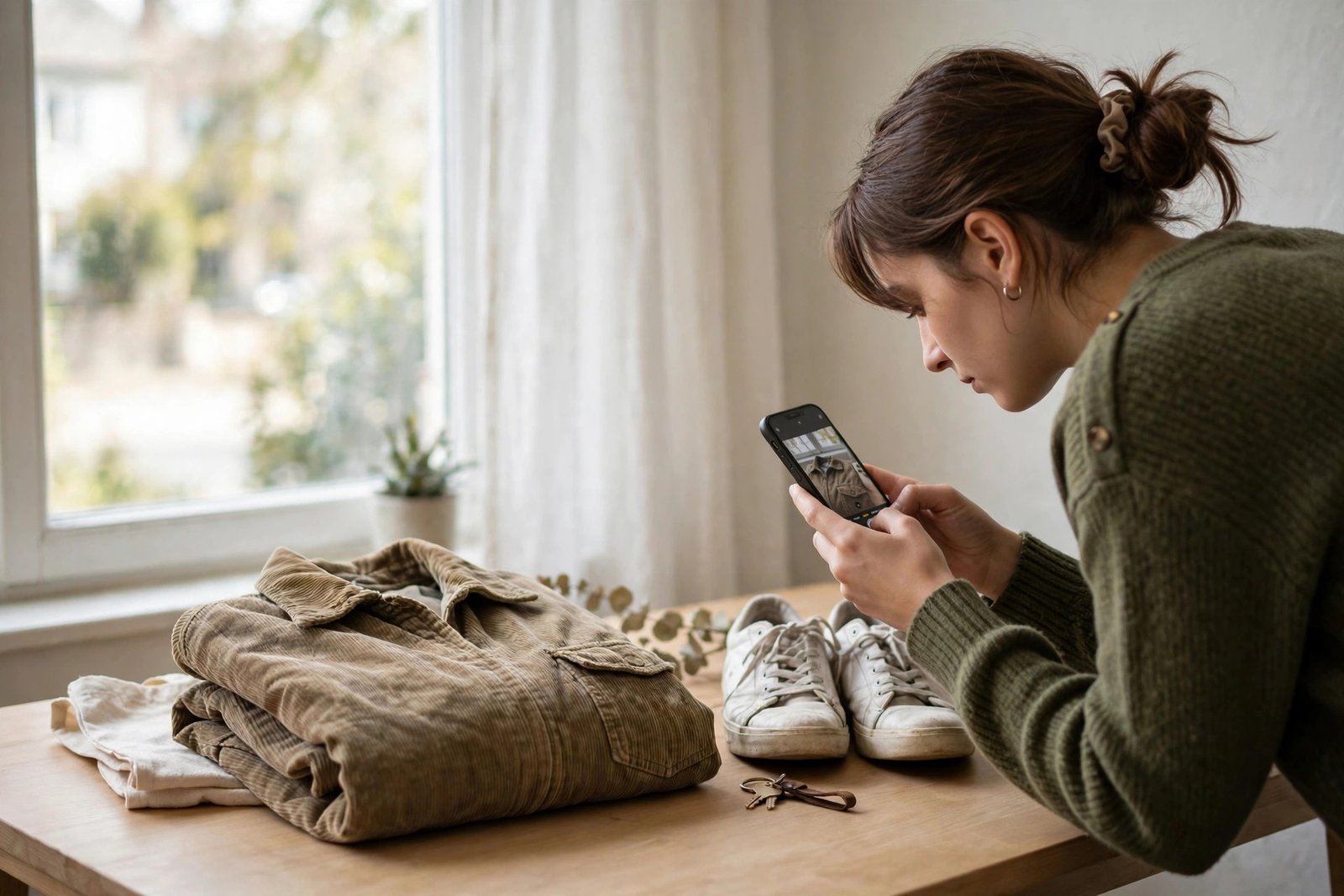
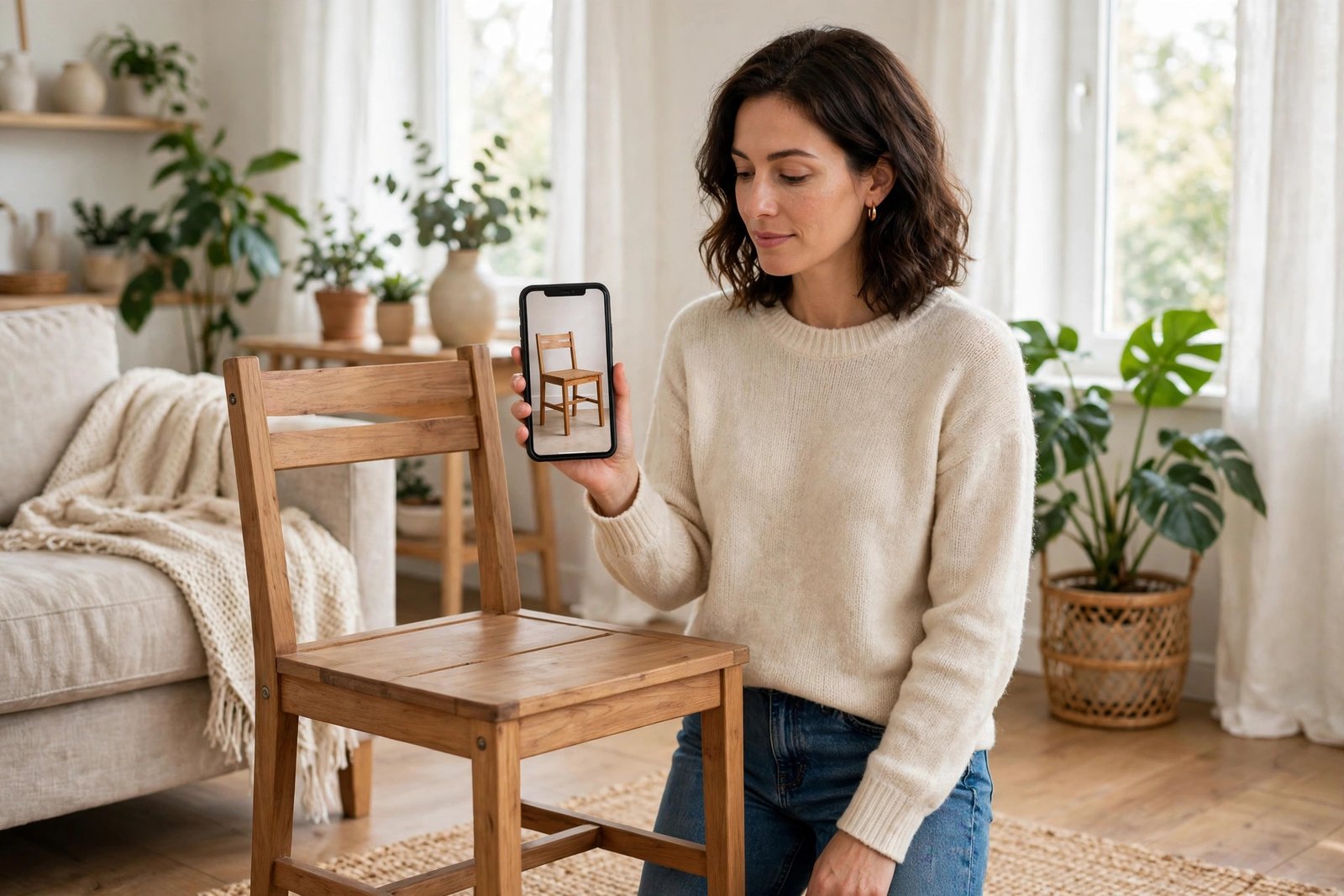
Photos decide whether a buyer opens your listing. Take at least five photos in natural light, near a window or outside in daylight. Clean the item first, and use a plain background so the item stands out. Photograph the front, the back, a close up of the label or brand, any flaws, and the item in use if that helps, such as a chair at a table.
Show flaws honestly. A small scratch in a photo is a minor detail. A scratch a buyer finds on collection is a reason to cancel the sale. Use a ruler or a common object for scale if the size is hard to judge, such as a small table or a pair of shoes. Avoid filters that change the colour, because a buyer who arrives to find a different colour will be disappointed. Take new photos for each listing, and do not reuse old photos from a different item.

Titles and descriptions buyers actually search for
Write titles with the words buyers search for: brand, item type, size, colour, and condition. A good title is "IKEA KALLAX shelving unit, white, good used condition, collection only". A bad title is "Nice shelf, must see, no time wasters". The first title helps search, and the second title tells the buyer nothing.
| Good title | Why it works | Bad title | Why it fails |
|---|---|---|---|
| IKEA KALLAX shelving unit, white, good used condition | Brand, type, colour, condition | Nice shelf, must see | No brand, no size, no condition |
| Dyson V8 vacuum, works well, new filter | Brand, model, condition, useful detail | Vacuum for sale | No brand or model to search for |
| Baby cot, white, with mattress, collection only | Item, colour, included parts, pickup | Cot, cheap | No detail, sounds low quality |
In the description, give measurements, materials, age, condition, and any flaws. Say what is included, such as cushions or a mattress, and say what is not included. Say whether you offer delivery or collection only, and give your area, not your exact address, until a buyer agrees to collect. End with a simple line, such as "Collection from the town centre, cash or bank transfer on collection."
How to price it
Price from sold listings, not from what you paid for the item. Search Marketplace and other platforms for the same item in the same condition, and note what similar items sold for, not what they are listed for. If three similar sofas sold for 80 to 120 dollars, price yours in that range, not at 200 dollars because you paid more.
Leave a little room to haggle, because many buyers will offer less. Price an item at 100 dollars if you will accept 80 dollars, not at 80 dollars if you will accept 60 dollars. Drop the price after 7 to 10 days if you get views but no messages, and relist the item with fresh photos if it still does not sell after two weeks. A price drop of 10 percent is often enough to restart interest. For more on pricing from sold data, see how to start a reselling side hustle.
Example only: these numbers are not typical results. Imagine you list a wooden dining table for 120 dollars, and you receive three offers of 80 dollars, 90 dollars, and 100 dollars. You accept 100 dollars, and the buyer collects it the same day with no fee for local pickup. Your profit is 100 dollars minus the 20 dollars you paid for the table, which is 80 dollars, before any cleaning or fuel costs. That is a good result for one item, but it is only an example, and many items sell for far less.
Fees by country
Fees on Marketplace differ by country and by sale type, so check the current fee in the Facebook app before you list. Local pickup is usually free in most countries, which is why Marketplace suits furniture and other large items so well. Shipped orders are different, and they carry a fee in the United States.
In the United States, shipped orders are widely reported to carry a fee of 10 percent of the sale price, with a minimum fee of 0.80 dollars. That figure is corroborated by several 2026 guides and by the competitors reviewed for this article, but it is not a directly verified Meta fact. Meta own fees page could not be opened on 2026-11-06 because it returned a 403 error, so this guide presents the 10 percent figure as widely reported current practice. Check the fee shown in the Facebook app when you create a shipped listing, because the fee may have changed since this guide was written.
In the United Kingdom, Marketplace sales are local pickup only in most cases, and they are free for the seller. That makes the UK version of Marketplace a simple, no fee way to sell furniture and household items, but it also means you cannot rely on shipping for small items. If you sell in another country, check the fee and the shipping rules in the app for your country before you list.
Messaging, haggling, and closing the deal
Reply fast, politely, and clearly. A short reply such as "Yes, it is still available. Collection from the town centre, cash or bank transfer on collection." answers the buyer question and sets the terms. Avoid long chats that go nowhere, and move to a clear plan: price, time, and place.
Handle lowball offers calmly. A buyer who offers half your price is testing you, not insulting you. Reply with your lowest price, such as "Thank you for the offer. My lowest price is 90 dollars." If the buyer keeps pushing, thank them and move on. Do not argue, and do not lower your price in anger.
Use a deposit for holds. If a buyer asks you to hold an item for a few days, ask for a small deposit by bank transfer, such as 10 dollars, and agree a collection date in writing. If the buyer does not collect by that date, keep the deposit and relist the item. That rule stops no shows from wasting your week. For no shows, do not wait for hours. Agree a time window, such as 30 minutes, and relist the item if the buyer does not arrive or reply.
Staying safe and spotting scams
Meet buyers in a public place in daylight, such as a busy car park, a shop entrance, or a police safe exchange zone if your area has one. Tell someone where you are going, keep your phone charged, and do not meet a stranger at your home if you can avoid it. For large items, ask a friend to be present, or arrange collection from a public place near your home.
Check payment before you hand over the item. For cash, check the notes before the buyer leaves. For bank transfer, check your own bank account, not a screenshot the buyer shows you. Fake payment screenshots are a common scam, and a screenshot proves nothing. Never accept an overpayment and refund the difference, because that is a classic overpayment scam. The buyer sends too much, asks for a refund, and the original payment turns out to be fake.
Watch for other warning signs: a buyer who asks you to post outside the platform, pay by gift card, or share a code sent to your phone. A buyer who offers to pay extra for fast postage without seeing the item is also a warning sign. If a message feels wrong, stop replying and report it in the app. For more on spotting online scams, read how to spot online job scams and our Facebook guide how to make money on Facebook.

Turning it into a side hustle
A one off clear out is easy. A repeat side hustle needs a routine. Set a weekly routine: source stock on Monday, photograph and list on Tuesday, reply to buyers and pack sales on Wednesday, and relist or reprice unsold items on Friday. That routine keeps listings fresh without taking over your week.
Relist items every 7 to 10 days with fresh photos or a new title, because old listings sink in search results. Track every sale in a simple spreadsheet: item, cost, sale price, fee, and profit. That record shows which items earn well and which ones waste time. A business page can help later, when you sell regularly, because it separates your selling from your personal profile and lets you build a small following. Start with your personal profile, and move to a business page only when you sell most weeks.
Tax basics
Tax rules differ by country, and you should check the rules where you live. In the United States, all gig income must be reported, and a tax return must be filed if net earnings from self employment are 400 dollars or more. The IRS explains this in its guide on managing taxes for gig work.
In the United Kingdom, the trading allowance gives up to 1,000 pounds of gross trading income per tax year free of tax for 2026 to 2027. The GOV.UK page on tax free allowances on property and trading income explains the rule. The allowance rises to 3,000 pounds only from 6 April 2027, so do not use the higher figure for the current tax year. Keep a record of every sale, every cost, and every fee, even for small items. For more detail, read freelance taxes for beginners.
Frequently asked questions
How do I sell on Facebook Marketplace?
Open Marketplace in the Facebook app, tap Create Listing, add at least five clear photos, write a title with brand, item, size, and condition, set your price, and add a description with measurements and collection details. Then reply fast to messages and arrange a safe public meetup for collection.
Is selling on Facebook Marketplace free?
Local pickup sales are usually free for the seller in most countries, including the United Kingdom. Shipped orders in the United States are widely reported to carry a fee of 10 percent, with a minimum of 0.80 dollars, but check the current fee in the Facebook app before you list, because fees can change.
What sells best on Facebook Marketplace?
Furniture, baby and kids items, bikes, garden tools, and branded clothes sell best, because buyers can see them, collect them locally, and avoid delivery costs. Items in good condition with clear photos and honest descriptions sell fastest, while damaged or very common items sell slowly.
How much does Facebook charge to sell?
Facebook usually charges no fee for local pickup sales. For shipped orders in the United States, the fee is widely reported as 10 percent of the sale price, with a minimum of 0.80 dollars. Check the fee shown in the Facebook app when you create your listing, because the fee may have changed.
How do I get paid on Facebook Marketplace?
For local pickup, you usually get paid in cash or by bank transfer when the buyer collects the item. Check your own bank account before you hand the item over, and do not rely on a screenshot as proof of payment. For shipped orders, payment goes through Facebook, and the timing depends on the shipping and delivery rules in your country.
Is Facebook Marketplace safe?
Marketplace is as safe as the care you take with it. Meet in a public place in daylight, tell someone where you are going, check payment in your own account before you hand over an item, and never share codes, bank details, or gift cards with a stranger. Report suspicious messages in the app and walk away from any deal that feels wrong.
Conclusion: list five items this week and learn from the replies
Selling on Facebook Marketplace as a side hustle starts with five good listings, not with a full shop. Photograph items in natural light, write titles buyers search for, price from sold listings, and reply fast to messages. Then track what sells, relist what does not, and build a weekly routine around the items that earn well.
Your next step is to list your first five items this week, starting with furniture or household items you already own. Read how to start a reselling side hustle for the full sourcing and pricing method, how to make money on Facebook for other ways to earn on the platform, and how to start an online business with no money if you want to grow beyond Marketplace. You can also browse all our guides in the side hustles category.
Earning results vary; nothing on this site is financial advice. Tax rules differ by country, so check your local tax authority or a qualified accountant before you rely on the general notes in this guide. Fees are as widely reported in November 2026, so check the current fee in the Facebook app before you list a shipped item.