
Learning how to find remote legal jobs starts with two checks that most job seekers skip. First, is the job truly remote, or does it only say remote on the listing? Second, are you allowed to do that legal work from where you live? This guide answers both questions, then gives you a five step search plan you can repeat every week. It is written for lawyers, paralegals, and anyone who wants legal work they can do from home.
In this guide
- What remote legal jobs exist
- What you need before you apply
- Step 1: Build your target list of structurally remote employers
- Step 2: How to find remote legal jobs on the right boards
- Step 3: Use contract legal marketplaces to get started
- Step 4: Go direct to company career pages and set up alerts
- Step 5: Tailor your CV and LinkedIn for remote legal work
- How to tell a real remote listing from a pipeline or fake one
- Employed, contract or freelance: which route suits you
- Worked example: a four week search plan
- What it costs and what to expect
- Common mistakes
- Risks and scams to watch for
- Frequently asked questions
What remote legal jobs exist
Remote legal work is wider than most people think. Firms, companies, and legal service providers hire for many roles that need no office at all.
| Role | What it involves | Who it suits | Licence needed |
|---|---|---|---|
| In-house counsel | Advice, contracts, risk, and compliance for one company | Qualified lawyers with experience | Yes, bar admission or practising certificate |
| Remote associate | Case work and client files for a law firm | Qualified lawyers with two or more years of experience | Yes |
| Paralegal | Research, drafting, case preparation, and filing support | Law graduates and career changers | Usually no, but some roles ask for a paralegal certificate |
| Contract review lawyer | Reviewing contracts for a set period | Lawyers who want flexible work | Yes, usually |
| Document review attorney | Reviewing large document sets for litigation | Lawyers who want steady work | Yes, usually |
| Legal operations specialist | Systems, budgets, and process for a legal team | Organised people with legal experience | No |
| Compliance officer | Checking that a company follows laws and rules | People with law or finance experience | No, but compliance certificates help |
| Legal assistant | Diary, billing, client contact, and documents | Beginners with admin skills | No |
Paralegal, legal operations, compliance, and legal assistant roles are the most realistic entry points if you are not yet a qualified lawyer, because they do not need bar admission. If you are a qualified lawyer, in-house counsel and remote associate roles are the main employed routes.
What you need before you apply
Licence and jurisdiction rules decide whether you can take a remote legal job, so sort them out before you apply anywhere.
Bar admission is the licence to practise law in a place. In the United States, you are admitted to the bar of a state, and that admission usually limits where you can practise, so a remote job with a New York employer does not help you if you are only admitted in Texas. In England and Wales, solicitors hold a practising certificate, with rules set by the Solicitors Regulation Authority. Check the regulator where you live and the regulator where the employer sits.
Insurance roles follow a similar licence model: check the licence first, then apply. Our guide on how to find remote insurance jobs shows how that check works in another licensed field.
You also need the practical tools of remote legal work: a document management system, an e-signature tool, and a video meeting app. Common names in listings are NetDocuments, iManage, DocuSign, Ironclad, and Westlaw. You do not need to master them all first, but know what each one does.
Step 1: Build your target list of structurally remote employers
The fastest way to find remote legal jobs is to start with employers that are remote by design. These structurally remote employers hire remote legal staff as a normal part of how they work, not as a favour.
Start with three types of employer: virtual law firms, which have no central office and run entirely online; legal process outsourcing providers, which handle document review and contract work for other firms; and remote first companies with in-house legal teams, especially technology and financial services companies.
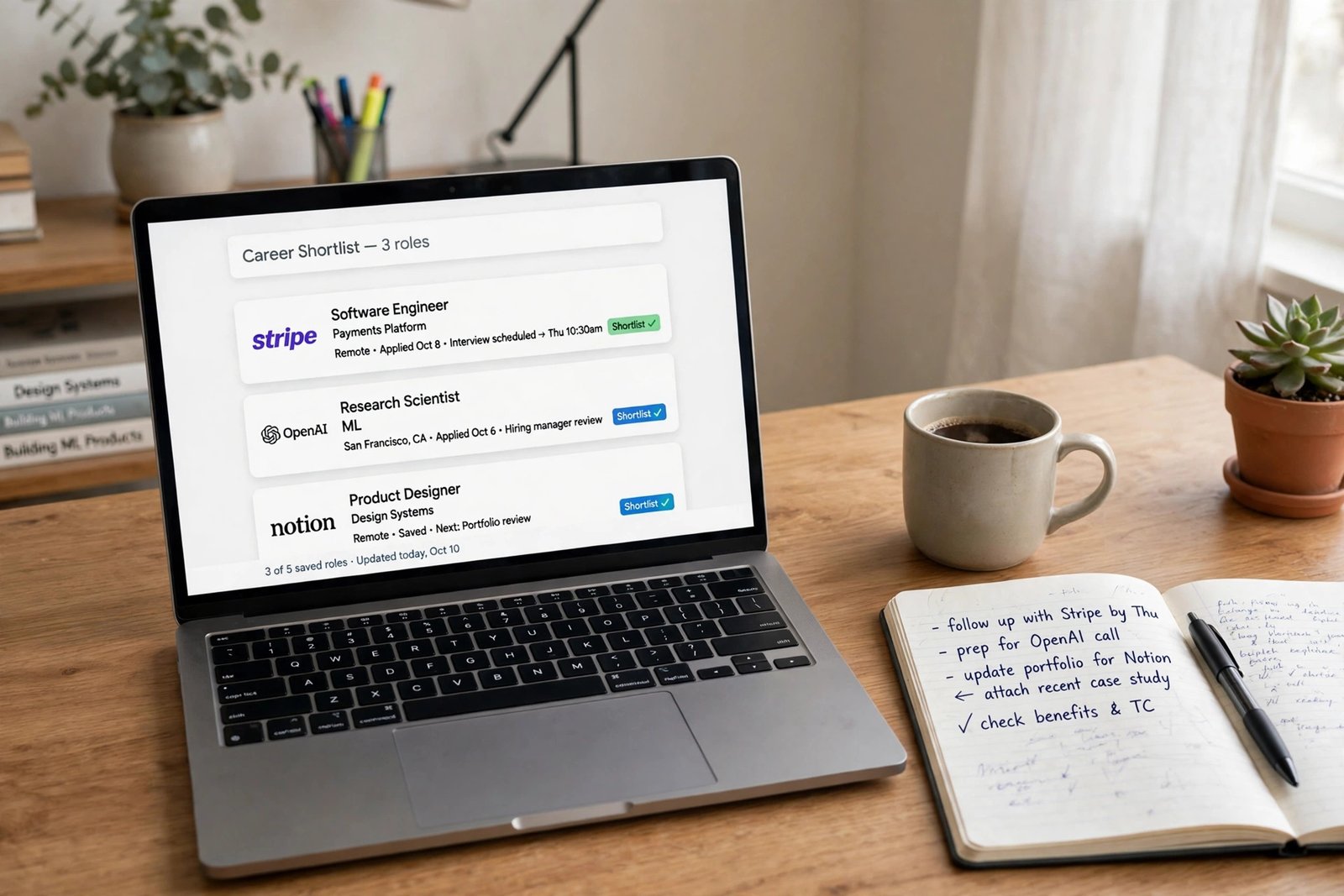
Build a list of 20 employers in a simple spreadsheet, noting the careers page link, the roles each one hires, and the countries or states it hires from. Add to the list every week. A list of 20 real employers beats 200 random applications, because you can watch those employers and apply early when a role opens.
Step 2: How to find remote legal jobs on the right boards
General job boards list thousands of legal jobs, but most are office based. Use the filters, and use search strings that match how employers write the job title.
Try these search strings: "remote attorney", "remote legal counsel", "remote paralegal", "virtual attorney", "remote contract attorney", and "remote document review". Put the word "remote" in the location field too, not only in the keyword field. Then set the date filter to the last seven days, so you see fresh roles first.
Use the American Bar Association Career Center as one of your boards. The ABA Career Center is the job board run by the American Bar Association, with job alerts, CV upload, and career development webinars.
Also check FlexJobs, which lists remote attorney work as its own category. The FlexJobs remote attorney jobs page shows live vetted listings across freelance, full time, and part time work. FlexJobs charges a subscription, so check the current price on its site before you pay.
Read our guide on how to find legitimate online jobs before you trust a board you have never used.
Step 3: Use contract legal marketplaces to get started
If you are a qualified lawyer and you want remote work soon, contract legal marketplaces are often faster than waiting for a full time employed role, because they match lawyers with short projects for firms and companies.
The names to know are Hire an Esquire, LawClerk, Axiom, and Consilio. Hire an Esquire and LawClerk list project work for freelance lawyers, including research and drafting. Axiom places lawyers with company legal teams, often as an Axiom employee working remotely. Consilio is a large provider of document review work, and a common entry route for lawyers who want steady remote project work.
Treat marketplace work as a way to build remote experience while you keep applying for employed roles. The work can be uneven, with busy weeks and quiet weeks, so keep your employed search going at the same time.
Check the terms of each marketplace before you join: how you are paid, whether you are an employee or a contractor, who handles tax, and whether you can work from your country. If a marketplace asks you to pay a fee to join, stop, because real marketplaces earn their money from the client, not from you.
Step 4: Go direct to company career pages and set up alerts
The best remote legal jobs often appear on a company careers page before they reach a job board. Visit each careers page on your target list once a week, and set up a job alert where the site offers one.
Set up alerts with exact job titles, not with the word "legal" on its own. An alert for "remote legal counsel" sends useful roles, while an alert for "legal" sends every legal job the company posts.
When you find a role on a company page, apply there, not through a third party site. Direct applications reach the hiring team faster. Save the job description, because listings close and change, and you will want the original wording when you prepare for interview.
Step 5: Tailor your CV and LinkedIn for remote legal work
A general legal CV will not win a remote legal job. Tailor it for each role, and make your remote working ability easy to see.
Put your bar admission or practising certificate at the top of your CV, with the state or jurisdiction and the year of admission. Then list your practice areas, the tools you have used, and the types of matters you have handled. Use honest, checkable numbers where you can, such as the number of contracts you reviewed in a month.
Add a short line about remote working: which tools you have used, such as video meetings, document sharing, and e-signature tools, and that you have a private home workspace. Give one example of work you completed on your own, with the result, so employers can see you work well without close supervision.
Update LinkedIn the same way, with a headline that names the role you want, such as "Remote Paralegal, Contract Review and Legal Research". Turn on the "open to work" setting for remote roles only, and follow the companies on your target list.
Read our guide on how to write a CV for remote jobs for the full CV structure. When you reach interview stage, read our guide on how to pass a remote job interview.
How to tell a real remote listing from a pipeline or fake one
Some listings that say "remote" are not real jobs. Pipeline listings collect CVs for roles that do not exist yet, so the employer can hire fast later. Fake listings steal your details or charge you a fee.
Check every listing against this list before you apply.
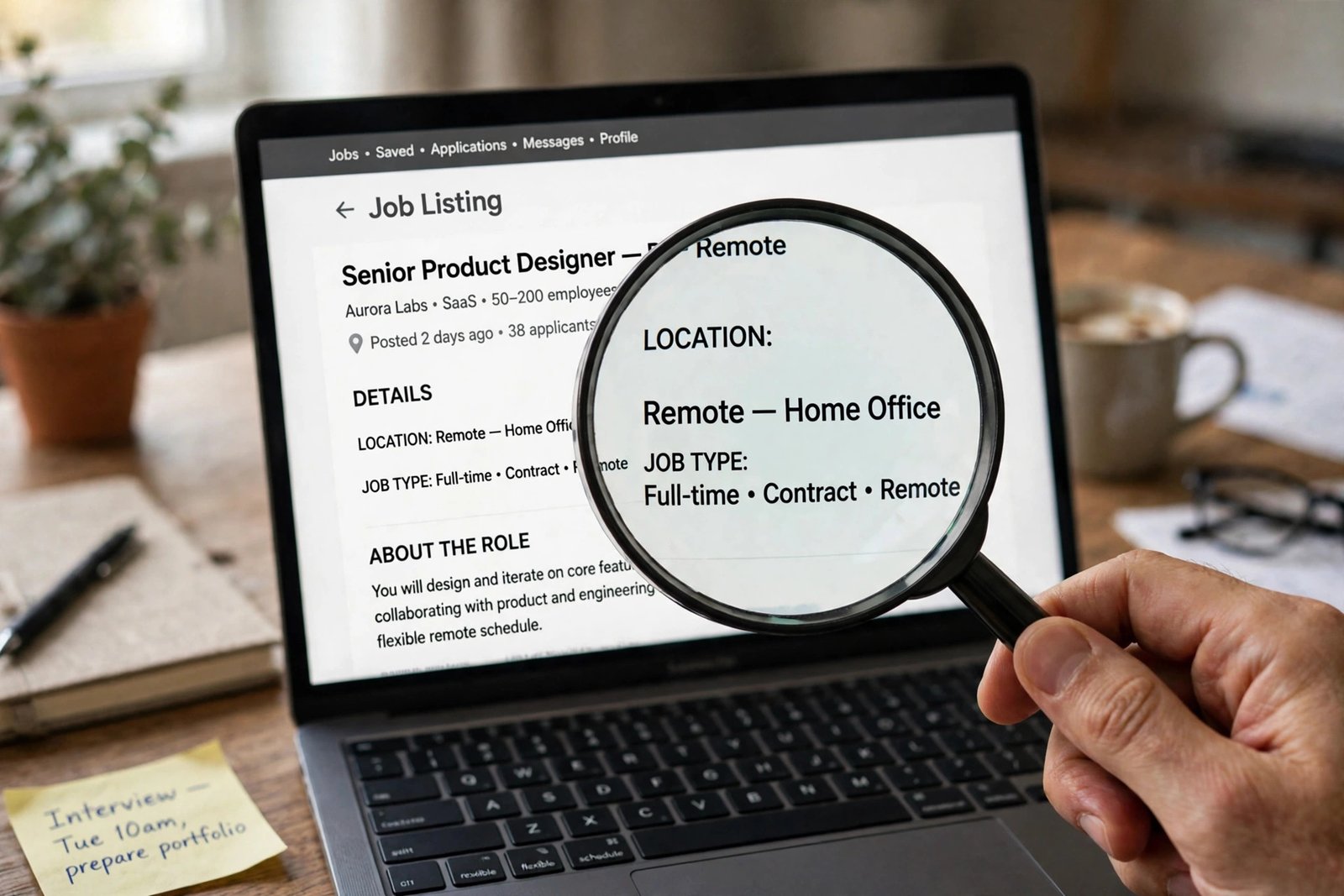
- The listing names a real employer and a real location for the company, even if the job is remote.
- The job description names the practice area, the tools, and the duties in detail. Vague listings that promise high pay for "legal work from home" are a warning sign.
- The listing states the states, countries, or time zones it hires from. Real remote legal jobs always state this, because licence rules force them to.
- The posting date is recent. A listing that has been live for 45 days with no change is often a pipeline listing, not an open role.
- The application goes through the company careers page or a known board, not through a personal email address or a messaging app.
- No fee is charged at any stage. No real employer charges you to apply, to train, or to receive equipment.
If a listing fails two or more of these checks, skip it.
Employed, contract or freelance: which route suits you
Remote legal work comes in three forms. Choose the one that fits your licence, your need for steady income, and how much admin you are willing to do.
| Route | How it works | Pay and benefits | Security | Suits whom |
|---|---|---|---|---|
| Employed | You work for one firm or company | Regular salary, paid leave, pension, and training | Highest, with a contract | People who want steady income |
| Contract | You work for one client for a set period | Daily or hourly rate, rarely with benefits | Medium, work ends with the contract | Lawyers who want variety |
| Freelance | You find your own clients | You keep the fee, but you pay your own tax and insurance | Lowest, income varies | Lawyers with a client network |
Employed work suits most people starting out, because it gives steady pay and a team to learn from. Contract work suits lawyers with experience who want to try remote work without a long commitment. Freelance work suits lawyers with clients of their own. You can move between the three over time.
Worked example: a four week search plan
Example only: these numbers are not typical results. They show the shape of a plan, not what you should expect to earn or how fast you will be hired.
Imagine you are a paralegal with two years of experience, looking for your first fully remote role.
Week 1: Build your target list of 20 employers, set up job alerts on five boards, and rewrite your CV and LinkedIn profile for remote paralegal work.
Week 2: Apply for 10 roles from your target list or from boards you have checked, and track each one in a spreadsheet.
Week 3: Apply for 10 more roles, and send short, polite messages to hiring managers at three firms on your list, naming the role you want and one relevant skill.
Week 4: Follow up on the Week 2 applications, keep applying for 10 new roles, and review your tracker. If you have had no replies at all, rewrite the top of your CV, or widen your target list to legal operations and compliance roles.
That is 30 applications in a month, plus outreach. The number matters less than the routine: a steady weekly plan beats a single weekend of 50 rushed applications.
What it costs and what to expect
Finding remote legal work costs little in cash, but it costs real time. Budget for both.
Most of the cost is your time. Expect to spend two to three hours a day on the search: reading listings, tailoring applications, and following up. A focused search of four to eight weeks is normal for an experienced hire, and longer is normal for a first remote role. No one can promise you a job in a set number of weeks.
Cash costs are small but real. A job board subscription is a monthly fee, so check the current price before you pay and cancel it when you stop using it. A practising certificate renewal, a bar admission fee, or a background check may be needed, and the amounts differ by country and state. Do not pay for a course that promises a remote legal job, because no course can promise that.
Pay varies widely by role, country, and experience. In-house counsel and remote associate roles usually pay more than paralegal and legal assistant roles, and contract rates can look higher than salaries because they rarely include paid leave or a pension. Compare the whole package, and check the live listing for the pay range before you apply.
Common mistakes
- Applying for every remote legal job you see, instead of choosing roles that match your licence and experience.
- Ignoring the jurisdiction line in the listing, then finding out too late that you cannot practise in that state or country.
- Sending the same generic CV to every employer, with no mention of remote working skills or the tools you know.
- Trusting a listing because it says "remote" in the title, without checking whether the role is truly remote.
- Paying for a course, a board, or a recruiter that promises a guaranteed remote legal job.
- Stopping your search after one week of no replies, instead of keeping a steady weekly routine.
Risks and scams to watch for
Remote legal jobs attract scams because the work sounds professional and the pay sounds good. The most common scam is a fake recruiter who offers you a role quickly, then asks for a fee for training, equipment, or a background check. Real employers never ask you to pay to start work.
Another scam asks for your bank details, passport scan, or full address before any interview. Give personal documents only after a real interview, and only to a verified employer. A third trick is a "job" that asks you to move money or receive packages for a client. That is not legal work, and it can be part of a fraud scheme.
If a listing feels wrong, trust that feeling and move on. The scams guide linked in the conclusion below lists the warning signs and shows where to report a scam in your country.
Frequently asked questions
Are there fully remote law firms?
Yes. Virtual law firms hire lawyers, paralegals, and support staff to work entirely from home, with no central office. Check a firm's careers page to see whether it is truly virtual, or whether only some roles are remote.
How do I know if a remote legal job listing is real?
Check that it names a real employer, states the states or countries it hires from, and gives a detailed job description. Apply through the company careers page or a known board, and skip any listing that asks for a fee or uses a personal email address.
Can I work as a remote lawyer from another country?
Sometimes, but it depends on the licence rules. You usually need to be admitted where the work is done and where the client sits, and some employers only hire from certain countries for tax reasons. Read the eligibility line in the listing first.
Do I need to be barred in the employer's state?
In the United States, usually yes, if the work involves practising law in that state. Legal operations and compliance roles do not need bar admission, and contract review roles usually need admission in at least one state. The listing should say which admission it needs.
What is the fastest way to get remote legal work?
For qualified lawyers, contract marketplaces are often the fastest route, because they place lawyers on short projects without a long hiring process. For paralegals, direct applications to virtual firms and legal process providers are usually faster than big job boards. Neither route guarantees work.
Can I get a remote legal job with no experience?
It is harder, but it is possible in support roles. Legal assistant and entry level paralegal roles accept beginners who show strong writing, organisation, and attention to detail. Start there, build experience, and move into more senior remote work over time.
Conclusion
You now know how to find remote legal jobs in 2026: check your licence first, build a list of employers that are remote by design, search the right boards with exact job titles, and apply direct on company career pages. Use contract marketplaces to gain remote experience while you keep applying for employed roles, and check every listing before you apply.
Next, read how to find remote finance jobs, how to spot online job scams, and how to get hired for remote jobs on LinkedIn. Then browse all online jobs guides to plan your next step.
A note for readers outside the United States and England and Wales: licence rules, practising certificates, and tax treatment differ by country, so check your local regulator and tax authority before you apply. Earning results vary; nothing on this site is financial advice.