A remote job interview tests two things at once: whether you can do the job, and whether you can work well at a distance. A hiring manager will listen for clear answers, but they will also notice how you handle video, how you manage your time, and how you communicate when no one is in the same room. Passing does not mean being perfect or performing a personality. It means preparing well, answering with evidence, handling technology calmly, and following up professionally. This guide covers interviews only. It does not cover finding roles, CV writing, or scam checks, and those guides are linked where they matter.
First, be clear about the arrangement you are interviewing for, because it changes the questions you should expect and ask. An employee interview usually covers teamwork, reliability, and fit with a manager and a team, plus working hours and benefits. A contractor interview usually covers deliverables, timelines, tools, and how you will report progress, plus contract length and payment terms. A freelancer conversation is closer to a sales conversation, where a client asks about services, past work, and price. Most remote job interviews in this guide are for employment or contract roles. If you are preparing for freelance client conversations instead, How to Start Freelancing in 2026 covers that different dynamic. For employee and contract roles, the advice below applies across video, phone, and async formats, with format specific notes where they matter.
Understand the stages before you prepare
Most remote hiring processes have more than one stage, and each stage has a different purpose. A screening call, often fifteen to thirty minutes by phone or video, checks basic fit: availability, location and time zone, salary expectations in general terms, and whether your experience matches the role. A main interview, often forty five to sixty minutes, checks skills and work style in depth, usually with a hiring manager and sometimes with team members. A panel or multi round process may add a task, a second interview, or a meeting with a wider team. A final stage may cover terms, start date, equipment, and next steps. Knowing the stage helps you prepare the right material. For a screening call, prepare a short summary, your availability, and two questions. For a main interview, prepare stories and examples. For a task stage, prepare to show your working, not just the answer.
Ask the recruiter or hiring manager, politely and early, what the format and stages will be, who you will meet, and whether there is a task. That is a professional question, not a sign of weakness. It also prevents surprises, such as preparing for a chat and facing a recorded async interview with no interviewer present. If stages change, stay flexible and confirm the new plan in writing. Keep a note of each stage, the people you met, and the questions you were asked, because that note helps you prepare for the next round and follow up accurately. If you are still at the application stage, How to Write a CV for Remote Jobs in 2026 will help you reach this stage with a stronger document.
Set up for video, phone, and async formats
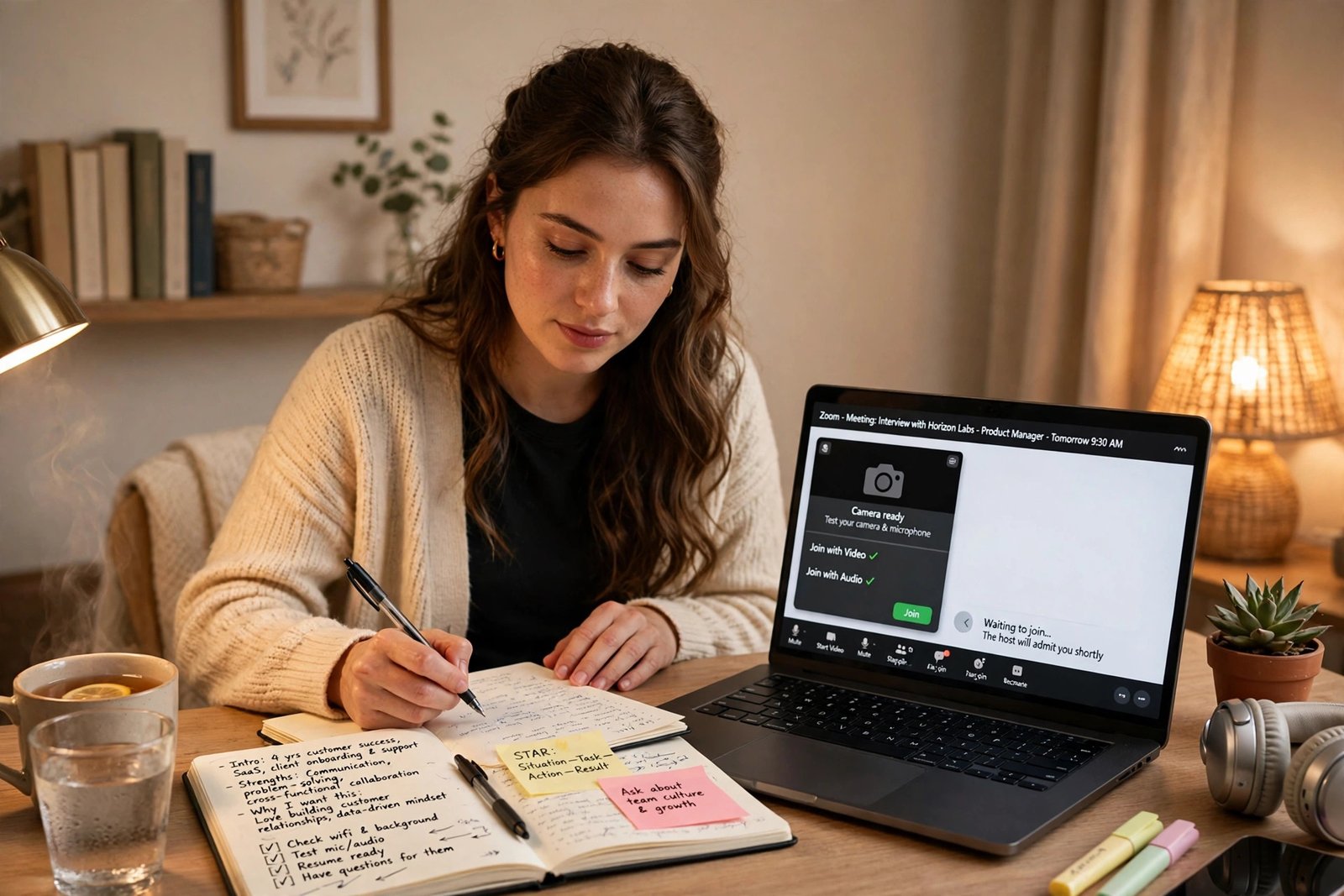
Your setup should be simple, reliable, and repeatable. For video, choose a quiet corner with a plain background, good light on your face, and your camera at eye level. Test the link, microphone, and camera the day before, and again thirty minutes before the interview. Keep a glass of water, a pen, and a notebook nearby, and close other apps and notifications. Dress as you would for an in person interview for that role, at least for the parts visible on camera. For phone, choose a quiet place, charge your phone, use headphones if they improve sound, and keep notes in front of you, because no one can see them. Speak slightly slower than usual, and confirm key details aloud, since the interviewer cannot read your body language.
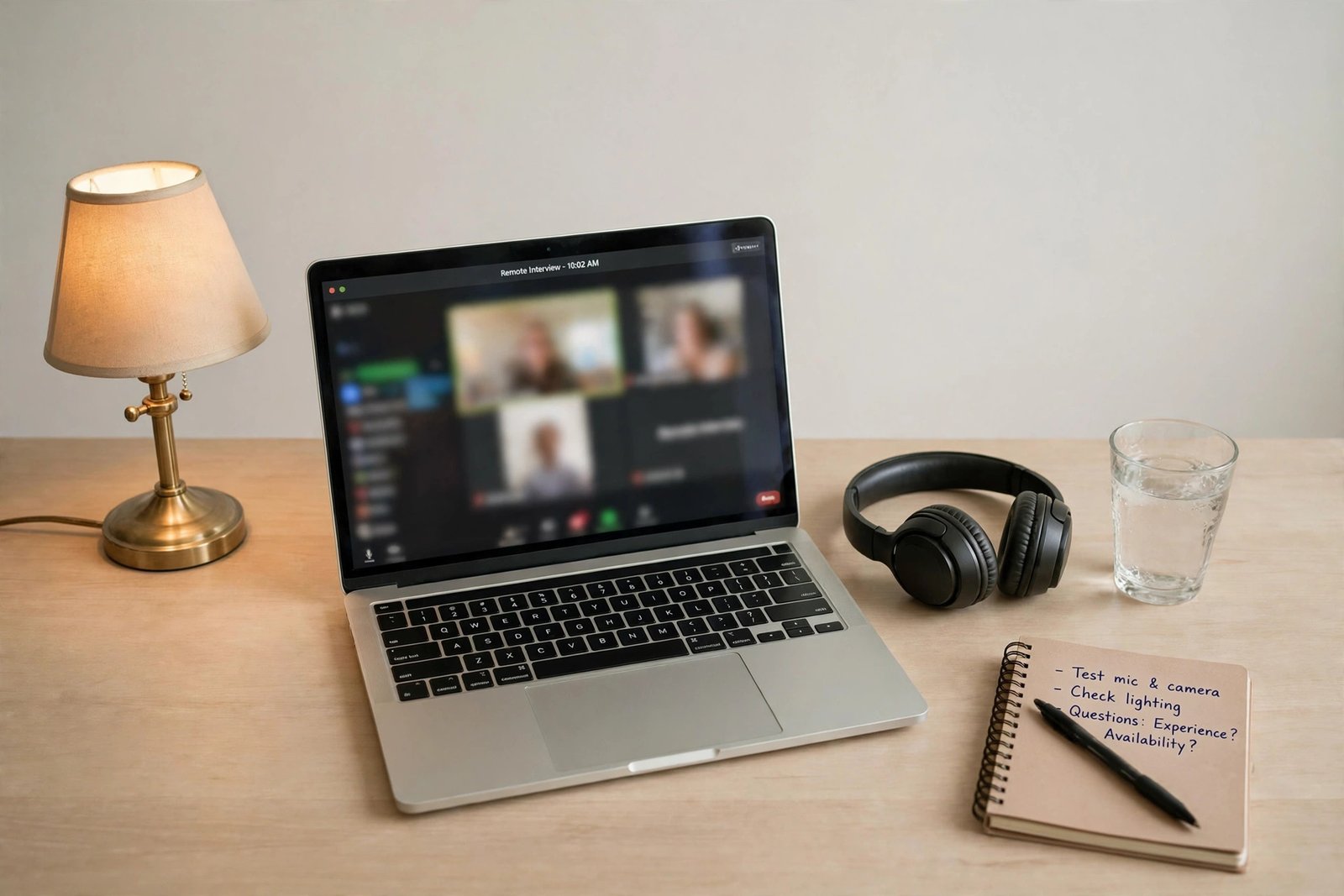
For async video interviews, where you record answers to set questions with no live interviewer, the rules change. You usually have a time limit per question and sometimes a limited number of retakes. Read each question fully before you start, plan a short structure in your head, and speak to the camera as if you are speaking to a person. Do not read a script word for word, because it sounds flat and can look unnatural. One practice recording, watched back once, will show you more than hours of worry. If your internet is slow or your space is shared, plan around it honestly: choose the most stable connection you can, tell others in the household the interview time, and have a backup plan, such as a phone hotspot, ready in case the main connection fails. If a problem happens during the interview, say so calmly, suggest a short pause or a switch to phone, and continue. How you recover from a problem often tells a hiring manager more than a perfect setup does.
| Format | Main risk | Simple fix | | Live video | Poor light, sound, or connection | Test a day before, use a lamp and headphones | | Phone screen | Sounding vague without visual cues | Keep notes, speak slowly, confirm details aloud | | Async video | Flat, scripted answers | Plan a structure, speak naturally, do one practice take | | Shared space or low bandwidth | Noise and dropouts | Agree quiet time, use hotspot backup, stay calm |
Answer with STAR stories, not slogans
The STAR method gives your answers a clear shape: Situation, Task, Action, and Result. Situation sets the context in one sentence. Task states what you needed to do. Action explains what you actually did, in enough detail to be credible. Result states what changed, honestly and without invented numbers. A weak answer says: I am good at customer service and I handle pressure well. A STAR answer says: in a small support queue, I received a message from a customer whose order was delayed and who was upset. I needed to calm the situation and find the next step. I apologised briefly, checked the order status, explained the delay plainly, and offered a clear choice of refund or replacement. The customer chose a replacement, and the case was closed without a second complaint. That answer shows skill, process, and outcome, and it can be adapted to many questions.
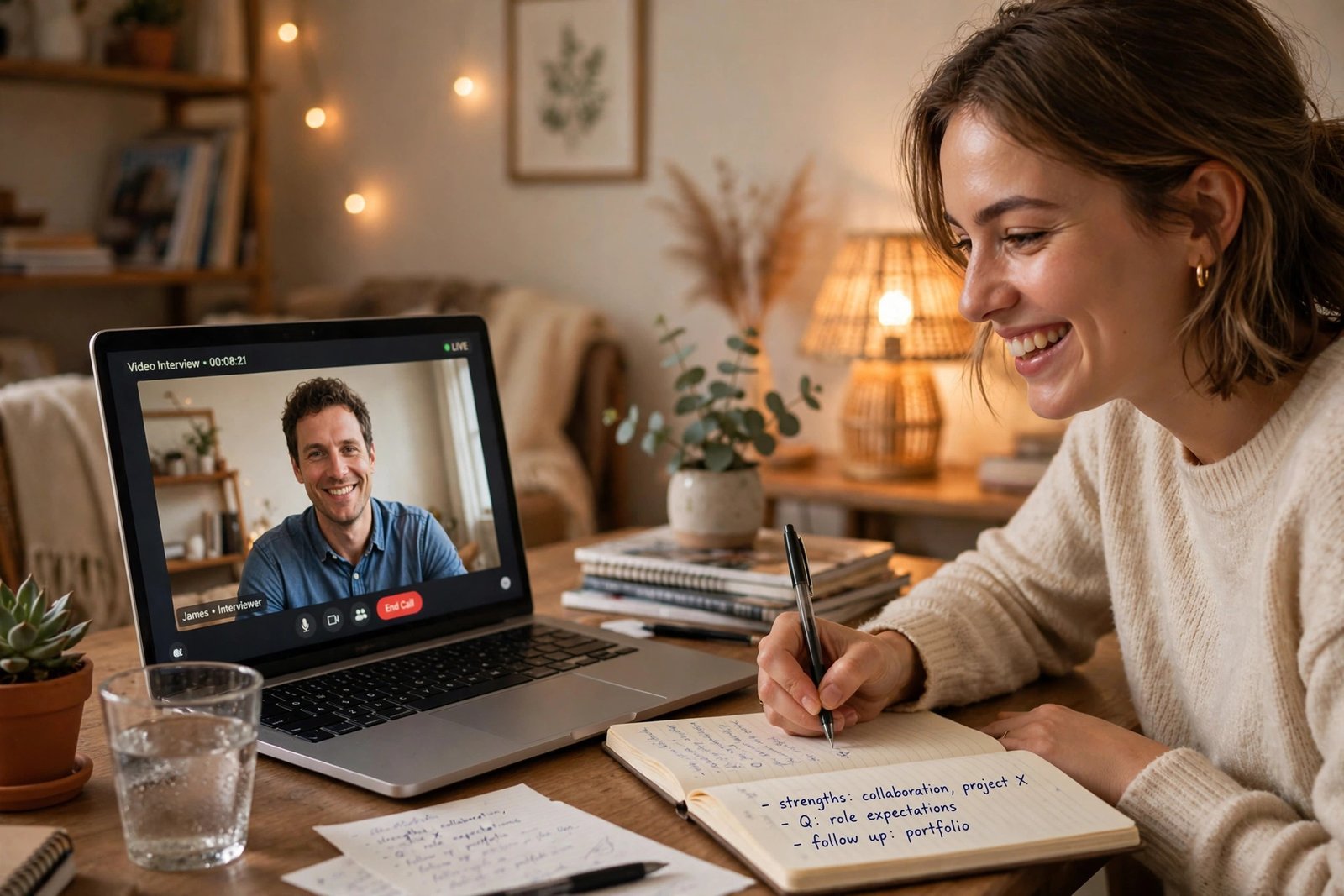
Prepare five or six stories that cover common remote themes, and reuse them with small changes. Useful themes include: handling a difficult customer, meeting a deadline without supervision, learning a new tool quickly, working across time zones, fixing a mistake, and helping a teammate at a distance. For each story, write a short version of about ninety seconds when spoken, and a longer version with more detail if asked. Practice aloud, not just in your head, because spoken answers reveal rambling, filler words, and missing results that silent reading hides. For the question about working remotely, do not just say you like working from home. Give a remote example: how you planned your day, how you kept a manager updated, and how you handled a task when help was not immediately available. For the question about weakness, choose a real, minor weakness with a clear fix you are using, not a disguised strength. For the question about a gap in experience, name the gap honestly, then show the sample, training, or transferable skill that closes it, as explained in How to Get a Remote Job With No Experience in 2026.
Questions to ask, and the salary stage
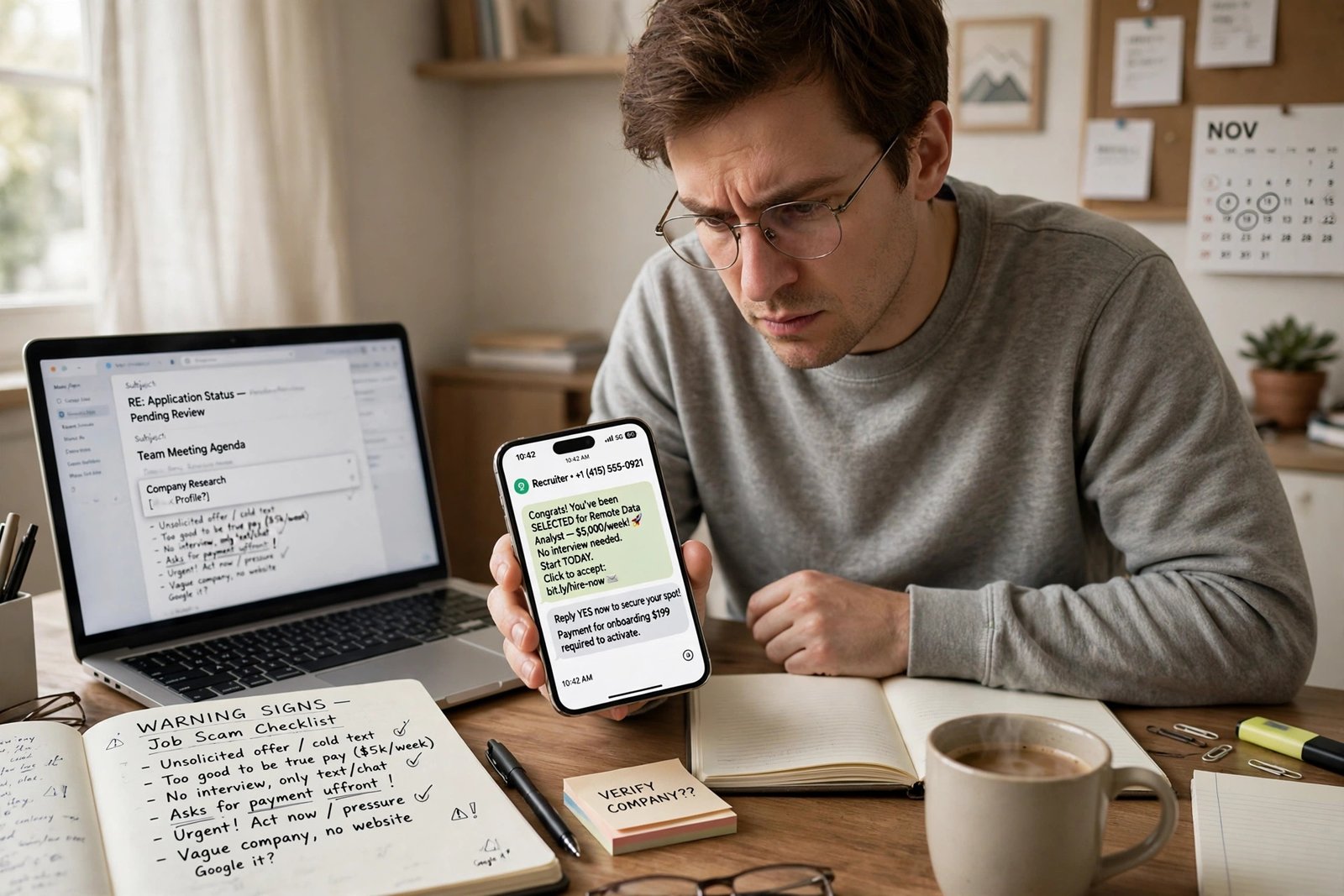
Good questions show that you understand the role and remote work. Ask about the team and manager, the daily work and tools, how progress is reviewed, how the team communicates async, what a successful first ninety days looks like, and what the next stages and timeline are. Ask one or two questions per stage, not a long list, and listen to the answers instead of waiting to ask the next question. Avoid asking only about perks in the first interview, and avoid questions you could have answered from the job description. If the interviewer asks about salary, be prepared with a range based on research for the role, location, and employment type, and state it calmly with a reason, such as market range and your experience level. If you do not know the range, say you would like to understand the full role and terms first, and ask for the budgeted range. Do not accept terms you do not understand, and do not agree to pay for equipment, training, or checks as a condition of hiring without checking the employer carefully. If anything in the process feels rushed or asks for sensitive data early, pause and review How to Find Legitimate Online Jobs in 2026 and the scam guide linked from the Online Jobs category page before you continue.
Recover from mistakes and follow up well
Mistakes happen in interviews, and recovery is part of the test. If you misunderstand a question, ask for clarification rather than guessing. If you lose your train of thought, pause, summarise your point so far, and continue. If technology fails, explain briefly, propose a fix, and stay calm. If you realise after the interview that you gave a weak answer, do not send a long correction. Use the follow up message to thank the interviewer, restate your interest briefly, mention one strength that fits the role, and, if truly needed, add one short clarification in a single sentence. Send that message within twenty four hours, by the same route the employer used, and keep it short. For multi round processes, follow up after each stage, and keep a note of who said what, so later messages are accurate.
Risks and limitations
No preparation method guarantees an offer, and results vary with experience, location, demand, time, competition, and the number of candidates for each role. Interviewers differ in style, some roles have many strong applicants, and a good interview can still end in rejection for reasons you cannot control, such as an internal candidate or a changed hiring plan. Also remember that remote interviews can be tiring, especially across time zones, so schedule breaks between interviews where possible, and do not book back to back interviews that leave no time to recover or prepare.
Frequently asked questions
How do I prepare for a remote job interview?
Learn the format and stages first, then prepare five or six STAR stories covering remote themes, plus questions about team, tools, and communication. Test video, sound, and connection the day before, set up a quiet space with light on your face, and keep water and notes nearby. Practice answers aloud, not just in your head, and plan a calm recovery if technology fails.
What questions are asked in remote interviews?
Common questions cover remote work habits, communication across time zones, handling a difficult customer or task without supervision, learning a new tool, meeting deadlines, and working in a team at a distance. Expect also role specific questions about skills and tools from the posting. Prepare stories, not slogans, and give results honestly.
How does the STAR method work?
STAR stands for Situation, Task, Action, and Result. State the context in one sentence, state what you needed to do, explain what you actually did in detail, and state what changed as a result. Keep the spoken answer to about ninety seconds for a standard question, with more detail ready if asked.
How do I handle a video interview with poor internet?
Choose the most stable connection available, test it before the interview, and have a phone hotspot as a backup. Tell others in your household the interview time, close other apps, and keep the video simple. If a dropout happens, explain briefly, suggest a short pause or a switch to phone, and continue calmly. Recovery often matters more than perfection.
When should I follow up after an interview?
Send a short thank you message within twenty four hours, restating interest and one relevant strength. After the final stage, wait for the timeline the employer gave you, then send one polite follow up if that time has passed. Do not send repeated messages every day, and reply politely if you are rejected.
Conclusion
Passing a remote interview comes down to preparation you can repeat: know the stages, set up simply for the format, answer with STAR stories that show remote work in action, ask thoughtful questions, and follow up once, well. Your next step is to write five STAR stories, practice them aloud, and test your video and sound today, before your next interview is booked. Then browse the Online Jobs category page for the finding, CV, and no experience guides that support each stage before the interview.