
If you want to learn how to find remote data analyst jobs, start with the eligibility line, because remote does not mean worldwide. Many listings say "remote" but hire from one country only, or from one time zone only. This guide shows you how to read those rules first, build the skills employers actually test, build a small portfolio that proves the work, and search the right boards in the right order. It is written for beginners, career changers, and analysts who want to move into remote work.
In this guide
- What a remote data analyst does
- Skills employers actually test
- Step 1: Read the eligibility line first
- Step 2: Build your target employer list
- Step 3: How to find remote data analyst jobs on the right boards
- Step 4: Apply direct and use LinkedIn before the crowd
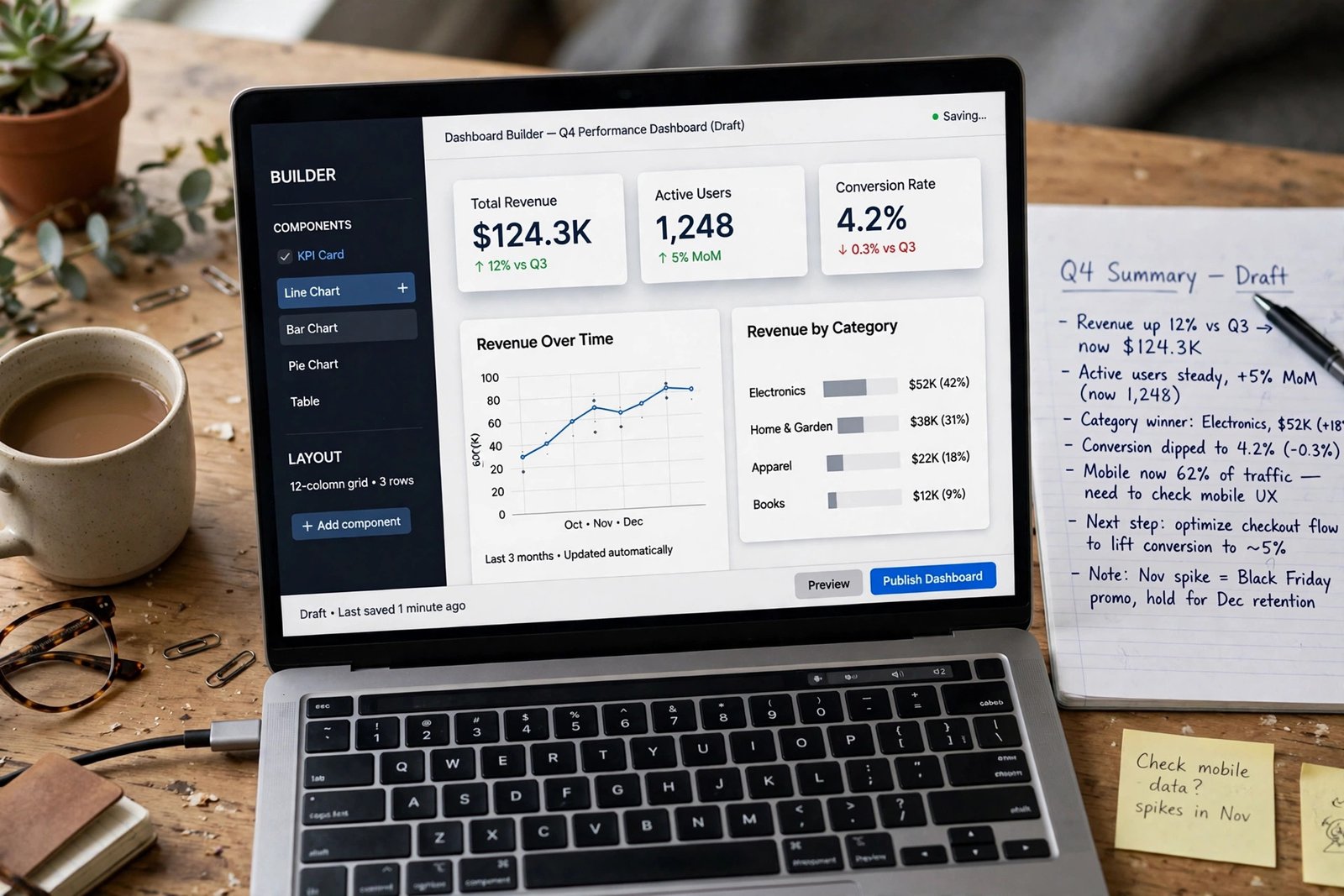
- Step 5: Build a small portfolio that proves the work
- CV, cover letter and interview preparation
- Employed, contract or freelance: which route suits you
- Worked example: a 90 day plan from beginner to first applications
- What it costs and what to expect
- Common mistakes
- Risks and scams to watch for
- Frequently asked questions
What a remote data analyst does
A remote data analyst turns raw data into answers a business can use. The day to day work is the same as an office analyst: cleaning data, writing queries, building dashboards, and explaining what the numbers mean. The difference is that you do it from home, and you explain your findings on video calls and in written reports instead of across a desk.
A typical day starts with checking the data: is it complete, is it clean, does it match yesterday? Then you answer a question from a team, such as why sales fell last month. You write a query, build a chart, and write a short summary with a clear recommendation. Some days you build a dashboard that a team will use every week.
Remote data analysts work in software companies, banks, insurers, retailers, health companies, and startups. The employers that hire remotely most often are remote first software companies and startups that already work across time zones. The work suits people who like puzzles and explaining numbers in plain words.
Skills employers actually test
Employers test skills in a practical way. They do not ask you to list tools on a CV. They give you a small task and watch how you work through it. The table below shows the skills, how each one is tested, and how to learn it.
| Skill | How it is tested | How to learn it |
|---|---|---|
| SQL | A timed query test, such as joining tables and filtering results | Free SQL courses, then practise on a sample database |
| Excel and Google Sheets | A take home task, such as cleaning a messy sheet | Daily practice with real datasets |
| Data visualisation | Building a dashboard from a sample dataset | Power BI or Tableau free versions, plus one guided project |
| Python | A short script to clean or analyse a dataset | Free Python courses for data analysis |
| Statistics | Questions about averages, trends, and what a change means | A short statistics course, then practise on real data |
| Communication | Explaining a chart in plain words in the interview | Practise explaining your own projects out loud |
| Business sense | Questions about what a number means for the business | Read how your target industry makes money |
Learn SQL first. It is the skill almost every remote data analyst job asks for, and it is the skill most often tested. Then learn one visualisation tool, such as Power BI or Tableau, and one spreadsheet tool well. Learn Python after SQL, not before.
Step 1: Read the eligibility line first
Before you apply for any remote data analyst job, read the eligibility line. It is usually near the top or the bottom of the listing, and it states where the employer hires from and which hours it expects.
Look for three things. First, location: does it say worldwide, one country, or a list of states? Second, time zone: does it ask for overlap with a time zone, such as four hours with US Eastern Time? Third, contract type: are you an employee, with a salary and benefits, or a contractor, paid per project or per hour? If the listing does not state these, ask the recruiter before you spend hours on a test.
If you live outside the employer's country, check the tax and payment rules too. Some employers hire worldwide through an employer of record, which handles local tax and benefits for them. Others hire contractors only, which means you handle your own tax.
Step 2: Build your target employer list
The best remote data analyst jobs often appear on a company careers page before they reach a job board. Build a list of 20 employers and watch those pages every week.
Include three types of employer. First, remote first companies, which hire data analysts as a normal part of how they work. Second, software and SaaS companies, which have large data teams and often hire remotely. Third, startups that already work across time zones, because they are used to remote analysts. For each employer, note the careers page link, the analyst roles it hires, and the countries or time zones it hires from.
Also include companies in your own country that hire remotely. A local company with a remote data team is often easier to join than a global company with thousands of applicants.
Step 3: How to find remote data analyst jobs on the right boards
Search with the exact job title, not with the word "analyst" on its own. Try "remote data analyst", "remote junior data analyst", "remote business intelligence analyst", "remote analytics manager", and "remote data analyst entry level". Add the word "remote" to the location field, and set the date filter to the last seven days.
Use two or three boards, not ten. LinkedIn works well for data analyst roles, because most hiring managers post there first. General remote boards, such as We Work Remotely and Remote OK, list remote data roles too. Save your best searches on each board so you can repeat them in one click each week.
Set up an alert for each exact title. An alert for "remote data analyst" sends useful roles. An alert for "analyst" sends every analyst job on the board, and you will stop reading them.
Step 4: Apply direct and use LinkedIn before the crowd
When you find a role on a company careers page, apply there, not through a third party site. Direct applications reach the hiring team faster. Save the job description, because listings close and change, and you will want the original wording when you prepare for interview.
Use LinkedIn as well. Follow the companies on your target list, turn on job alerts for your exact titles, and connect with data team members at those companies. A short, polite message to a hiring manager, naming the role and one relevant project, is worth more than ten more applications to random boards.
Apply within 48 hours of a role going live. Remote data analyst roles often receive hundreds of applications, and many hiring teams read the first batch first. Keep your CV, your portfolio link, and a short cover note ready, so you can apply the same day a good role appears.
Step 5: Build a small portfolio that proves the work
A portfolio is a short set of projects that proves you can do the work. For data analysts, it matters more than a certificate, because it shows real analysis, not only study.
Build two to four projects. Use public datasets, such as government statistics, sports data, or open business data, and answer one clear question with each project. For each project, show the question, the data you used, how you cleaned it, the chart or dashboard you built, and one finding in plain words. Keep every number honest and checkable, and link to the dataset so a hiring manager can see where it came from.
Present each project the same way: the question, your method, and one finding. For example: "Question: which products sold best in winter? Method: I cleaned three years of sales data in SQL and built a dashboard in Power BI. Finding: two products made up most of winter sales, and one of them fell each year." A hiring manager can read that in thirty seconds and know you can do the job.
If you have no work experience, do the projects for yourself, or for a small business you know, with their permission. A real project with small honest numbers beats a fake project with big numbers. Never copy a portfolio project from the internet and present it as your own, because a hiring manager will ask how you built it.
CV, cover letter and interview preparation
Your CV should lead with skills and proof, not with a long personal statement. Start with a two line summary that names the role you want and your strongest skill. Then list your skills, with the tools you know. Then list your portfolio projects, each with one line: the question, the tool, and one finding. Then list your work history, even if it is not in data, and show the transferable skills, such as accuracy, reporting, and working with numbers.
Write a short cover letter for each application, not a long one. Three short paragraphs are enough: why this role, one project that fits it, and one line about how you work remotely. Mention the company by name and one thing you noticed about its data team or its product.
For interviews, prepare for three kinds of test. First, a SQL test, usually timed, with questions on joins, filters, and grouping. Practise with sample databases until you can write a basic query without looking it up. Second, a take home task, usually a small dataset to clean and present. Spend time on the written summary, because clear writing is what the hiring team reads first. Third, a communication interview, where you explain a chart in plain words.
Read our guide on how to write a CV for remote jobs for the full CV structure. To build the skills behind the CV, read our guide on how to learn data analysis online.
Employed, contract or freelance: which route suits you
Remote data analyst work comes in three forms, and they suit different people. Choose the one that fits your experience and your need for steady income.
| Route | How it works | Pay and benefits | Security | Suits whom |
|---|---|---|---|---|
| Employed | You work for one company, full time or part time | Regular salary, paid leave, pension, training | Highest, with a contract | Most people, especially beginners |
| Contract | You work for one client for a set period | Daily or hourly rate, rarely with benefits | Medium, work ends with the contract | Analysts with experience who want variety |
| Freelance | You find your own clients and set your own rates | You keep the fee, but you pay your own tax and tools | Lowest, income varies | Experienced analysts with a client network |
Employed work is the best fit for most people starting out, because it gives steady pay and a team to learn from. Contract work suits analysts who already have experience and want to try new industries. Freelance work suits analysts with clients of their own and the discipline to run a small business.
This article covers finding employed remote data analyst roles. If freelance work interests you instead, read our guide on how to work as a freelance data analyst, which covers finding freelance clients and project work. The two routes are different, so choose one to start with, and move between them later if you wish.
Worked example: a 90 day plan from beginner to first applications
Example only: these numbers are not typical results. They show the shape of a plan, not what you should expect to earn or how fast you will be hired.
Imagine you have no data analyst experience, but you know spreadsheets and you are willing to study. Your 90 day plan could look like this.
Days 1 to 30: Learn SQL. Take a free SQL course, practise for one hour a day, and finish with a small project: write ten queries against a sample database, and save the best three. Build your target employer list of 20 companies.
Days 31 to 60: Build the portfolio. Complete two projects with public datasets, one in SQL and one in Power BI or Tableau. Write a one page summary for each, with the question, the method, and one finding. Rewrite your CV around the skills and the projects.
Days 61 to 90: Apply. Apply for 10 junior or entry level remote data analyst roles, track each one in a spreadsheet, and follow up on the first batch. If you have had no replies, change one thing: rewrite the top of your CV, add a third project, or widen your search to data entry roles that lead into analysis. Our guide on how to get a data entry job online shows that entry route.
That is one skill learned, two portfolio projects, and 10 applications, all in 90 days. The number matters less than the routine. A steady weekly plan beats a single weekend of rushed applications.
What it costs and what to expect
Finding remote data analyst work costs little in cash, but it costs real time and study. Budget for both.
Most of the cost is study time. Expect to spend one to two hours a day learning SQL and building your portfolio for two to three months before you apply for junior roles. A focused job search then takes four to eight weeks, and longer is normal for a first role. No one can promise you a job in a set number of weeks.
Cash costs are small. SQL, Python, and the free versions of Power BI and Tableau cost nothing to learn. Certificates are optional, not required. The Google Data Analytics Certificate is one option beginners ask about. Google's official page says it teaches SQL, Python, and Tableau, needs no experience or degree, takes three to six months, covers eight courses including a capstone case study, and gives US graduates access to a 150 plus employer consortium. See the Google Data Analytics Certificate page for the detail. A certificate teaches skills, but it does not guarantee a job, and a portfolio with real projects matters more.
Pay varies widely by country, experience, and specialism, so there is no single figure. For a sense of the scale in the United States, the US Bureau of Labor Statistics reports a 2025 median pay of 88,940 US dollars a year for operations research analysts, the closest listed occupation to data analyst, with a typical entry level education of a bachelor's degree, 113,100 jobs in 2025, and projected growth of 12 per cent from 2025 to 2035, with about 7,500 openings a year. See the BLS page for operations research analysts. Note that this is US data for a related occupation, not a remote data analyst salary promise. Pay outside the United States is usually lower, and junior roles pay less than senior roles. Check the live listing for the pay range before you apply.
Common mistakes
- Applying for roles that hire from one country only, without reading the eligibility line first.
- Listing tools on your CV that you have never used, then failing the practical test.
- Sending a CV with no portfolio, no projects, and no proof of analysis.
- Learning Python before SQL, even though almost every junior role tests SQL first.
- Copying a portfolio project from the internet instead of doing a real project.
- Applying only on big job boards and never checking company career pages directly.
- Ignoring the time zone line in the listing, then finding out too late that you cannot work those hours.
- Stopping your search after one week of no replies, instead of keeping a steady weekly routine.
Risks and scams to watch for
Remote data analyst jobs attract scams because the work sounds skilled and the pay sounds good. The most common scam is a fake recruiter who offers you a role quickly, then asks for a fee for training, equipment, or a background check. Real employers never ask you to pay to start work.
Another scam asks for your bank details, passport scan, or full address before any interview. Give personal documents only after a real interview, and only to a verified employer. A third trick is a "training" company that charges you for a course and promises you a remote data analyst job at the end. No course can promise a job, and the certificate alone will not get you hired without a portfolio.
If a listing feels wrong, trust that feeling and move on. The scams guide linked in the conclusion below lists the warning signs and shows where to report a scam in your country.

Frequently asked questions
Are remote data analyst jobs going away?
No, but the work is changing. Software now handles routine reporting, so employers want analysts who can clean data, ask good questions, and explain findings in plain words. Junior roles still exist, but they ask for SQL and a portfolio, not only a certificate. Keep learning, and your skills stay in demand.
Can entry level data analysts work remotely?
Yes, but it is harder than for experienced analysts, because employers cannot watch a beginner as closely from a distance. A portfolio with two or three real projects, a strong SQL test result, and a clear CV give you the best chance. Data entry roles can also be a first step into analysis work.
Do I need a degree to be a data analyst?
Usually a degree helps, but it is not always required. Many junior roles ask for a degree or equivalent experience, and some accept a strong portfolio instead. The BLS notes a bachelor's degree as the typical entry level education for the closest listed occupation, but remote employers vary, so check the listing.
Which skills should I learn first?
Learn SQL first, because almost every remote data analyst job asks for it and tests it. Then learn one visualisation tool, such as Power BI or Tableau, and spreadsheets well. Learn Python after SQL, not before, because most junior roles need SQL more than Python.
Which websites are best for finding remote data analyst jobs?
LinkedIn works well, because most hiring managers post there first. General remote boards, such as We Work Remotely and Remote OK, list remote data roles too. Use two or three boards, not ten, and set up alerts with exact job titles. Company career pages are also worth checking each week.
How do I avoid remote job scams?
Never pay a fee to apply, to train, or to receive equipment. Never give bank details or a passport scan before a real interview. Check that the employer has a real website, a careers page, and a physical address. Read our scams guide before you apply, and trust your feeling if a listing looks wrong.
Conclusion
You now know how to find remote data analyst jobs in 2026: read the eligibility line first, build a list of employers that hire remotely, search with exact job titles, and apply within 48 hours. Learn SQL first, build a small portfolio with two to four real projects, and lead your CV with skills and proof. Check every listing against the real or fake test before you apply.
Next, read how to learn data analysis online, how to get a remote job with no experience, and how to spot online job scams. Then browse all online jobs guides to plan your next step.
A note for readers outside the United States: pay, benefits, and tax treatment differ by country, and the BLS figures above are US data for a related occupation, so check the live listing and your local tax authority before you apply. Earning results vary; nothing on this site is financial advice.