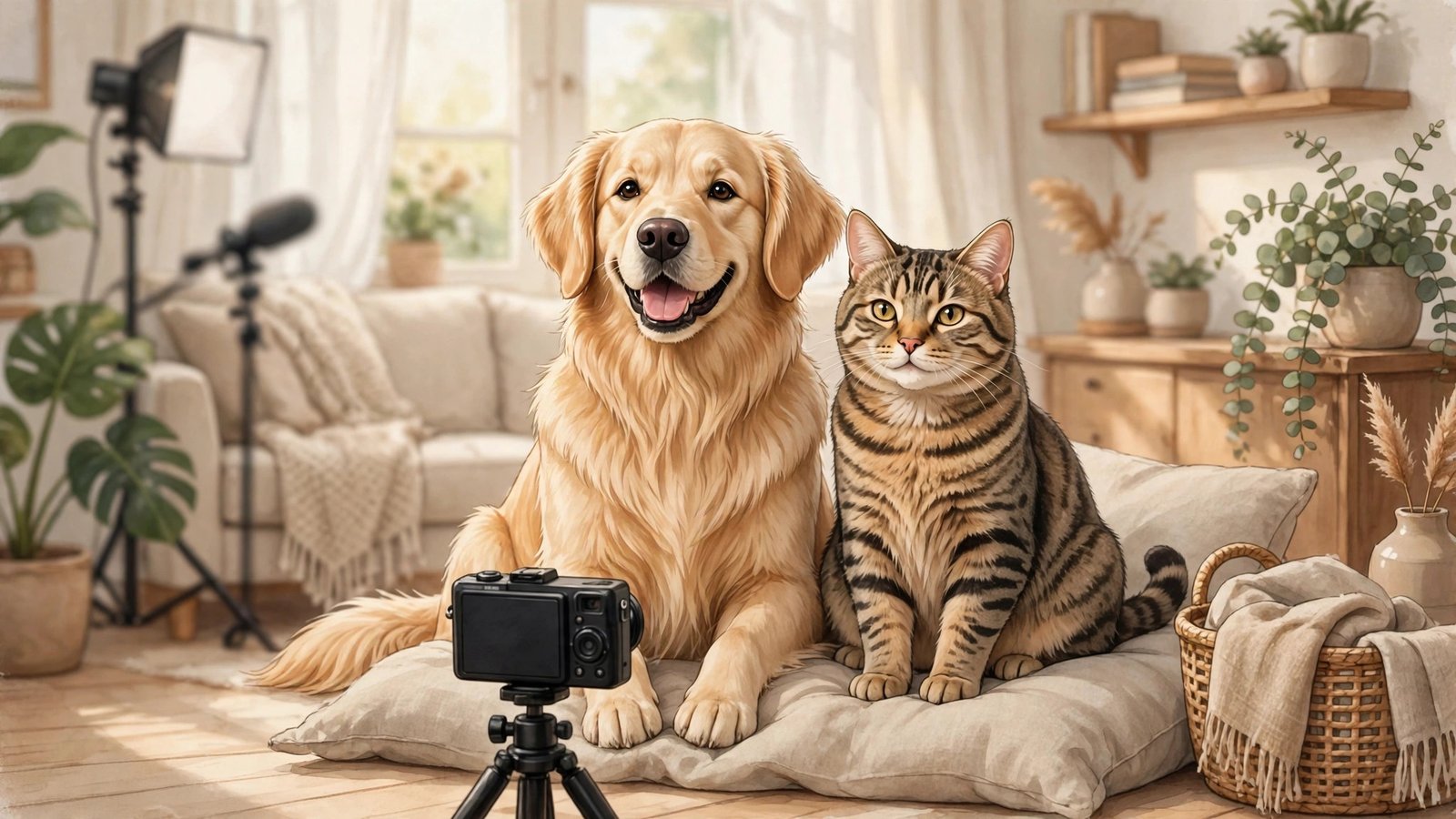
How to Start a Pet YouTube Channel and Earn Money in 2026
A pet YouTube channel can turn the time you already spend with your dog, cat, rabbit or bird into an audience and, in time, an income. The hard part is not filming a cute animal. The hard part is choosing a clear niche, posting on a steady schedule, and waiting long enough to reach monetisation. This guide shows you how to start a pet YouTube channel, film your pet safely, grow an audience, and earn money, with honest costs and a realistic timeline.
In this guide
- Is a pet channel still worth starting in 2026?
- Step 1: Choose your niche and your star
- Step 2: Plan your first 10 videos
- Step 3: Set up your channel the right way
- Step 4: Film your pet without stressing it
- Step 5: Edit, title and thumbnail
- Step 6: Grow with Shorts and search
- How a pet YouTube channel earns money
- How to join the YouTube Partner Programme
- What it costs and what to expect
- Worked example: what the maths could look like
- Common mistakes
- Risks and scams to watch for
- Frequently asked questions
Is a pet channel still worth starting in 2026?
Yes, if you pick a clear niche and you enjoy the work. The cute clip space is crowded, because every pet owner with a phone can post a funny cat video. The channels that last are the ones that help viewers. Training guides, care advice, honest product reviews and breed guides keep getting views months after they are posted.
A pet YouTube channel suits you if you already spend time with a pet, you enjoy filming, and you can post on a steady schedule. It does not suit you if you want fast income, because most new channels earn nothing for months.
Step 1: Choose your niche and your star
A niche is the narrow topic your channel is known for. "Pets" is too broad. "Puppy training for first time owners" is a niche. "Honest reviews of cat toys" is a niche. A narrow niche helps YouTube and viewers understand what your channel is about.
Pick a niche that fits three tests. First, you know it or you can learn it well. Second, people search for it. Third, you can make at least 20 videos about it. Good options for a pet YouTube channel include dog training and behaviour, cat care for new owners, breed guides, pet product reviews, and rescue stories.
Then choose your star. One pet should be the face of the channel, even if other pets appear, because viewers bond with one animal first.
Step 2: Plan your first 10 videos
Do not post one video and wait to see what happens. Plan your first 10 videos before you publish the first one. A plan keeps you posting when the first videos get few views.
Mix search videos with shareable videos. Search videos answer questions people type into YouTube, such as how to stop a puppy biting. Shareable videos are short, fun clips that people send to friends. Search videos bring steady views. Shareable videos bring new subscribers.
| Format | Best for | Effort | Main earning route |
|---|---|---|---|
| Training guides | Steady search views and trust | Medium | Affiliates and digital products |
| Product reviews | Viewers ready to buy | Medium | Affiliates and sponsorships |
Good first videos include five things I wish I knew before getting your breed and how to teach your dog to sit in one day. Write a simple title for each video before you film it.
Step 3: Set up your channel the right way
Create a Google account for your pet YouTube channel, separate from your personal email if you can. This keeps your private details out of your public work. Then create the channel, pick a name that matches your niche, and write a short description that says what the channel is about and who it helps. Use the words viewers would search for, but write it for people first.
Add a clear profile photo of your pet and a simple banner with the channel name. Turn on 2-Step Verification for your Google Account. You will need it later to join the YouTube Partner Programme. Verify your phone number to unlock advanced features such as longer uploads and custom thumbnails. Then browse the full YouTube Earning category to see how other niche channels on this site are built.
Step 4: Film your pet without stressing it
Your pet comes first, and the video comes second. A stressed animal does not make good content. Film in short sessions of 10 to 15 minutes, and stop sooner if your pet loses interest. Use treats and play as rewards, and never use fear, shouting or punishment to get a reaction.
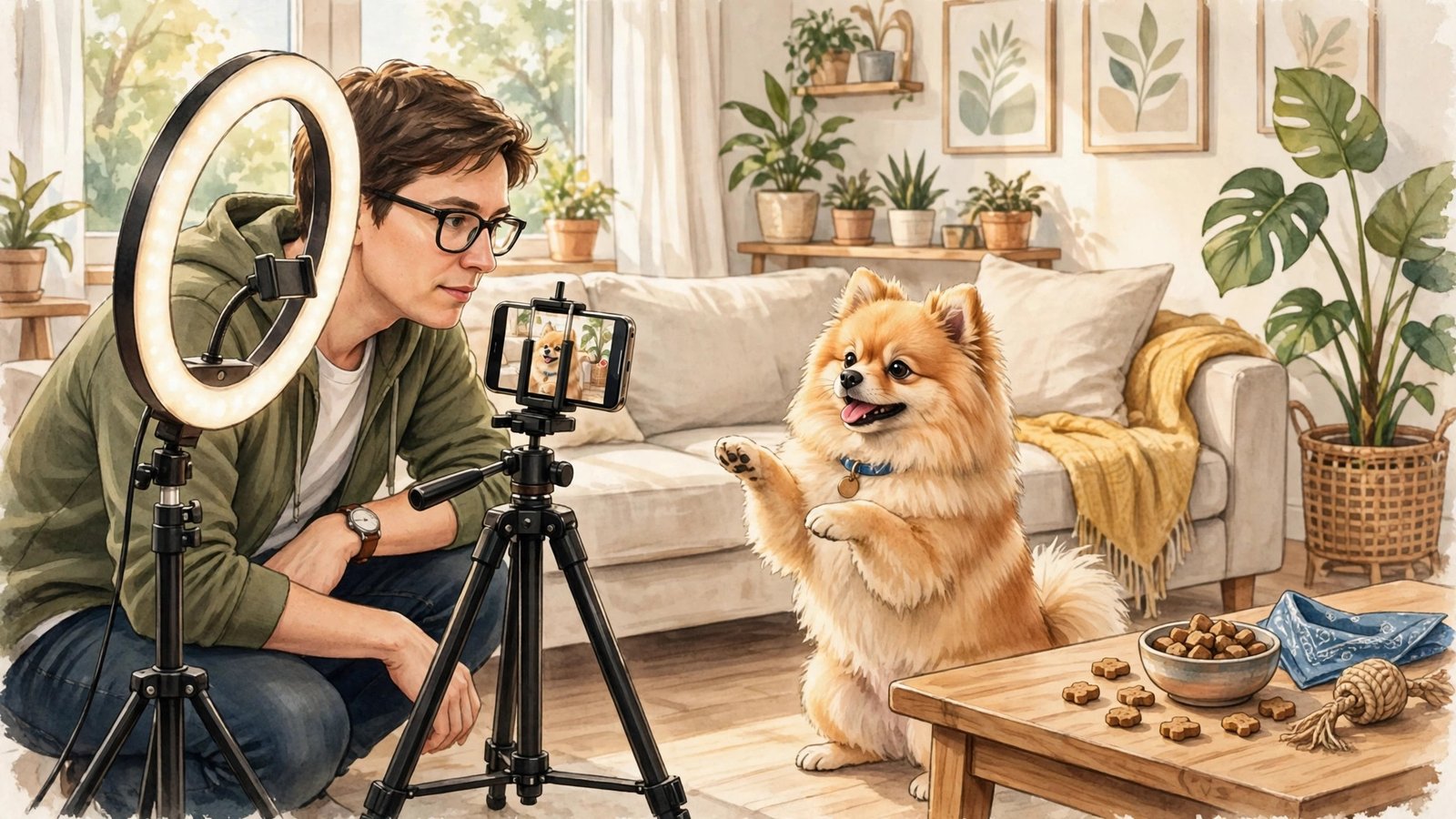
Learn the signs that your pet wants a break. A dog may yawn or try to leave the room. A cat may flatten its ears or hide. A rabbit may thump or freeze. When you see these signs, stop filming.
Never put your pet in danger, near traffic, water it cannot escape, or heights it could fall from. Never dress your pet in a costume that stops it moving or breathing properly. Never stage a scare or feed your pet unsafe food just to get a reaction. Film at your pet's eye level in natural daylight. A modern phone and a small tripod are good enough to start.
Step 5: Edit, title and thumbnail
Good editing matters more than an expensive camera. Cut dead time, keep the best moments, and keep most videos between 5 and 12 minutes. Start with the most interesting moment in the first 30 seconds. Add captions, because many people watch with the sound off. Free tools are enough to start. See our guide on how to edit YouTube videos for beginners.
Write titles that say what the video gives the viewer. "How to Stop Your Puppy Biting in 7 Days" is clear. "You Will Not Believe What My Dog Did" is not. Keep titles under 70 characters, put the main search words near the start, and do not use clickbait.
Make a thumbnail with one clear photo of your pet, a plain background, and at most three or four big words. Do not use a photo of a different animal or a moment that is not in the video.
Step 6: Grow with Shorts and search
Shorts and long videos do different jobs for a pet YouTube channel. Shorts reach new viewers. Long videos build watch time, trust and income, because they can carry more ads and more affiliate links. Use Shorts to bring people in, then turn them into long video viewers.
Post on a schedule you can keep. One long video a week plus two or three Shorts is a good target for most beginners. Our guide on how to grow YouTube Shorts explains how to make Shorts that get seen.
Write a short description that says what the video covers, add it to a playlist, and use end screens to point viewers to your next video. Reply to comments in the first days after you post. Remember that Shorts views do not count towards the 4,000 watch hours needed for the YouTube Partner Programme, so long videos still matter.
How a pet YouTube channel earns money
A pet YouTube channel can earn money in several ways. Ads are the best known route, but they are rarely the first money a pet channel makes. Affiliate links and sponsorships often pay sooner, because they do not need you to meet a subscriber threshold.

| Route | When it can start | What it needs | Honest note |
|---|---|---|---|
| Ads through the YouTube Partner Programme | After 1,000 subscribers and the watch time threshold | Original videos and a linked AdSense account | Pays only when views are high, and rates vary |
| Affiliate links | From your first video | A programme to join and products you truly use | Small at first, grows with trust and search views |
| Brand sponsorships | Usually from about 10,000 subscribers | An audience brands want to reach | Only take deals for products you would use yourself |
| Merchandise and digital products | Once fans ask for them | A design, a shop, or a guide you made | Works best for training and care topics |
Affiliate marketing means you earn a commission when a viewer buys a product through your link. Only link to products you have used, and say in the video and in the description that the link earns you a commission. Our guide on how to make money with YouTube affiliate marketing explains the rules in full. Sponsorships work the same way. Say clearly when a video is sponsored, and turn down products you would not give your own pet.
How to join the YouTube Partner Programme
The YouTube Partner Programme, often called YPP, is the scheme that lets you earn a share of ad revenue on YouTube. As of November 2026, the YouTube Partner Programme overview says your channel needs 1,000 subscribers plus either 4,000 qualified public watch hours in the last 12 months or 10 million qualified public Shorts views in the last 90 days. You also need no active Community Guidelines strikes, 2-Step Verification turned on, and one active AdSense for YouTube account linked to your channel.
Meeting the numbers does not mean automatic entry. YouTube reviews your whole channel against its YouTube channel monetisation policies before it accepts you, and the review typically takes about one month. Your content must be original and authentic. Reused content, such as clips taken from other creators without adding real value of your own, is not eligible for monetisation. The same applies to repetitive videos, including series that show animals in repeated distress or danger.
YouTube may show ads on videos from channels that are not in the Partner Programme, but the creator earns nothing from those ads. YouTube may also switch off monetisation on a channel that has not uploaded a video or posted for six months or more. Our guide on how to monetise a YouTube channel covers the application process step by step.
What it costs and what to expect
You can start a pet YouTube channel for very little money if you already own a phone and a pet. The main cost is your time, plus a few small items.
| Item | Rough cost | Notes |
|---|---|---|
| Phone camera | 0 dollars if you own one | A phone made in the last few years is good enough |
| Tripod | About 15 to 30 dollars | Keeps shots steady and frees your hands |
| Total to start | About 0 to 100 dollars | Prices vary by country and shop |
Time is the bigger cost. Expect to spend two to four hours on each long video, including planning, filming and editing, plus an hour a week on Shorts and replies. In the first three months, focus on posting your first 12 videos and learning what your viewers like. Income is unlikely in this period. In months four to nine, your best videos may start to rank in search. In months nine to 18, a steady channel may reach the Partner Programme thresholds. Some channels get there faster, and many take a year or more.
Worked example: what the maths could look like
Example only: these numbers are invented to show how the maths works, and they are not typical results. Imagine a pet channel that gets 100,000 long video views in a month, makes some affiliate sales, and has a small membership. For ads, take 100,000 views divided by 1,000, which equals 100, then times an invented rate of 3 dollars per 1,000 views, which equals 300 dollars. For affiliates, take 20 sales of a 25 dollar toy, which equals 500 dollars of sales, then take 4 percent of 500 dollars, which equals 20 dollars. For memberships, take 50 members times 5 dollars a month, which equals 250 dollars before YouTube takes its share. The total is 570 dollars before tax and fees. A real channel would earn more or less than this. Treat this as a way to understand the parts, not as a promise.
Common mistakes
- Do not post random pet clips with no theme. Viewers subscribe to a topic, not to a pet they saw once.
- Do not copy other creators' videos. Reused content can block monetisation and lose you trust.
- Do not buy subscribers or views. It breaks YouTube's rules and can cost you monetisation.
- Do not film your pet when it is tired, scared or unwell. One bad session can harm your pet and your channel.
- Do not give vet advice unless you are qualified. General care tips are fine, but health problems need a vet.
- Do not stop after 10 videos. Most channels grow slowly, and early videos often get few views.
Risks and scams to watch for
Fake brand deals are common in the pet niche. A real brand will contact you from a company email address, offer clear terms, and never ask you to pay money to receive a product. Walk away from any deal that asks for an upfront fee, asks you to buy a starter kit, or sends you a link to log in to your YouTube account. Check the brand's real website before you agree to anything.
Beware of services that promise fast subscribers, views or monetisation for a fee. Buying engagement breaks YouTube's rules, and it can lead to strikes or loss of monetisation.
Be careful with health content. Pet owners trust video advice, and wrong advice can harm an animal. If you are not a vet, say so, keep advice general, and tell viewers to see their vet for health problems.
Set the audience for every video. If your video is aimed at children, YouTube requires you to mark it as made for kids, and wrong settings can bring consequences on YouTube and under child privacy law. Read the guide to content made for kids before you upload videos aimed at young viewers. Use music you have the right to use, such as tracks from the YouTube Audio Library. Keep records of your income and costs, because tax rules differ by country.
Frequently asked questions
How much do pet YouTubers make?
There is no fixed figure. Earnings depend on views, content type, viewer country, and how many income routes the channel uses. Most small channels earn little or nothing at first.
How many subscribers do you need to monetise a pet channel?
You need 1,000 subscribers plus either 4,000 qualified public watch hours in the last 12 months or 10 million qualified public Shorts views in the last 90 days, as of November 2026, plus a channel review and a linked AdSense for YouTube account.
Can I start a pet YouTube channel without owning a pet?
Yes, if you have regular access to animals and permission to film them. Rescue shelter volunteering, with the shelter's written permission, is one honest route. Do not reupload other people's pet clips, as that will block monetisation.
What pet content gets the most views?
Training guides and care advice get the steadiest views, because people search for them when they need help. Funny clips and Shorts can get far more views in a short time, but they are crowded and the views often fade fast. A mix works best.
Do I need an expensive camera to start a pet channel?
No. A modern phone, natural daylight and a small tripod are enough for your first year. Viewers care more about clear sound, steady shots and useful content than about camera brands.
Is it safe to film my pet for YouTube?
Yes, if you keep sessions short, use treats and play as rewards, and stop when your pet shows stress. Never frighten, endanger or exhaust your pet for a video. If your pet does not enjoy filming, choose a calmer format, such as care guides or voiceover videos.
Conclusion
To start a pet YouTube channel and earn money, pick one niche, plan your first 10 videos, film your pet kindly in short sessions, post one long video a week with a few Shorts, and add income routes one at a time as your audience grows. Put your pet first, and give the channel at least a year of steady work before you judge it.
To go further, read how to start a food YouTube channel and earn money, how to sell digital products with YouTube, and how to start a pet sitting side hustle, then browse the full YouTube Earning category for more guides. The facts in this guide were checked against the official YouTube Partner Programme, monetisation policy, and made for kids pages in November 2026.
Note for the reader: pet care and tax rules differ by country. Earning results vary; nothing on this site is financial advice.