How to Start a Pool Cleaning Side Hustle in 2026
A pool cleaning side hustle turns a weekly chore that homeowners dislike into steady, repeat income for you. You visit the same pools on the same day each week, keep the water clean and safe, and get paid every month. If you live somewhere warm with lots of backyard pools, this is one of the most practical local side hustles you can start.
This guide shows you how to start a pool cleaning side hustle from zero. You will learn what it costs, what equipment to buy first, how to price your work, what licences and insurance you need, and how to win your first ten clients.
In this guide
- What a pool cleaning side hustle is, and who it suits
- Step 1: Learn the basics before you charge anyone
- Step 2: Pick your service area and your services
- Step 3: Sort the legal setup and insurance
- Step 4: Buy your starter kit
- Step 5: Set prices that cover your real costs
- Step 6: Win your first 10 clients
- Step 7: Run the route like a business
- What it costs and what to expect
- Common mistakes
- Risks and scams to watch for
- Frequently asked questions
What a pool cleaning side hustle is, and who it suits
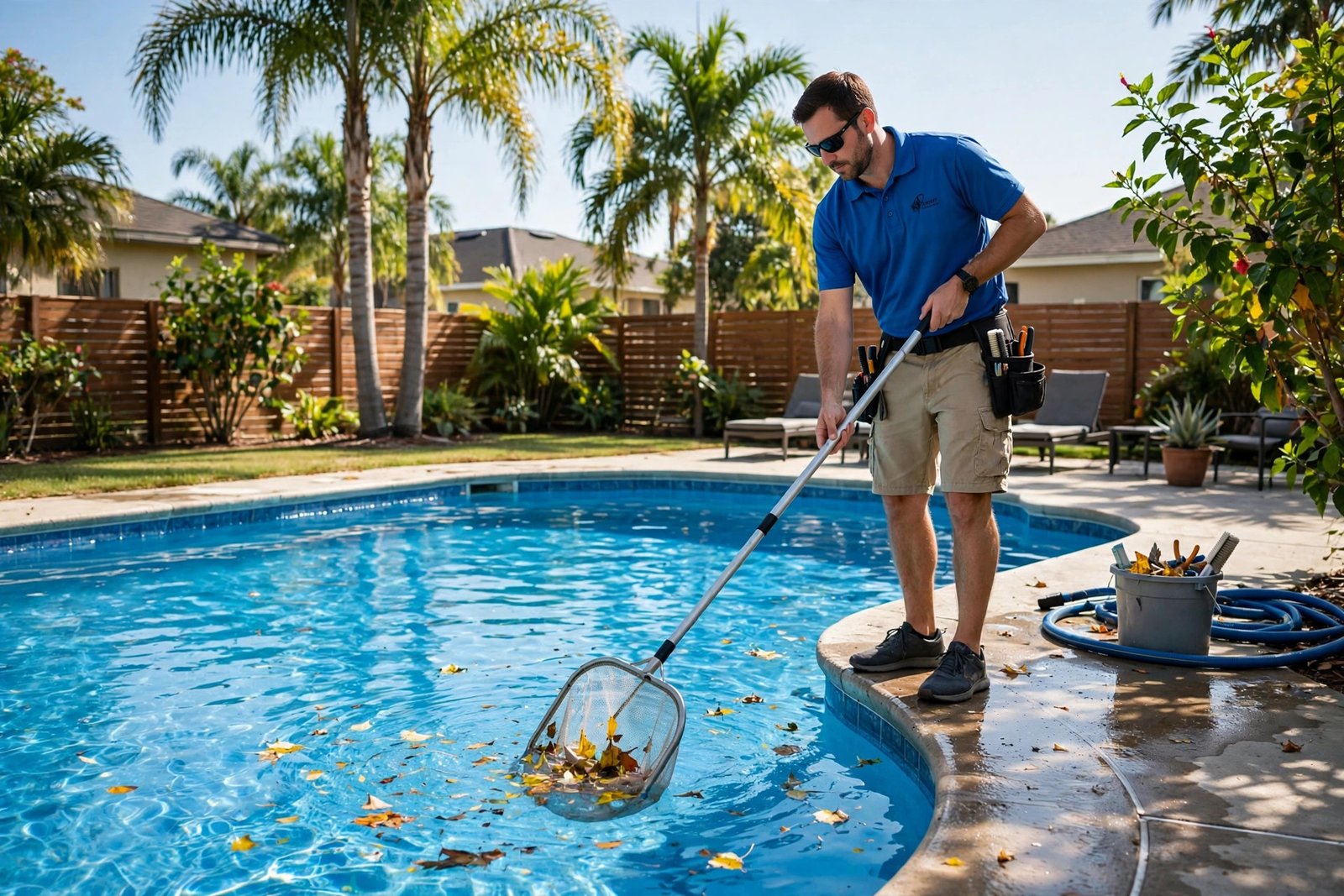
Pool cleaning is a route business. A route is a fixed list of pools you visit on the same day each week. Each pool owner pays you a flat monthly fee. You skim leaves, brush the walls, empty the baskets, vacuum, test the water, and add the chemicals it needs. A regular visit takes about 20 to 30 minutes once you know the pool.
The work suits you if you like being outdoors, you are happy with a fixed weekly routine, and you can lift and carry equipment in hot weather. It does not suit you if you want varied work every day, because the job is the same set of tasks at pool after pool. The same customers pay you every month, and the work is easy to plan.
Where you live matters more than anything else. Pool cleaning works best in warm states with long swim seasons and lots of private pools, such as Florida, California, Arizona, and Texas. In colder states the season is short, so most operators there focus on pool openings in spring and closings in autumn, which pay well but only happen twice a year. Check how many pools are in your area before you spend money. Open a map app, switch to satellite view, and count the blue rectangles in a few streets near your home. If you cannot see at least 50 pools within a short drive, this hustle will be hard to grow.
Step 1: Learn the basics before you charge anyone
Water chemistry is the skill that separates a real pool cleaner from someone with a net. Get it wrong and the water turns green, the plaster stains, or swimmers get sore eyes. Get it right and customers stay for years, because they trust you with something they do not understand themselves.
The fastest way to learn is to work for an established pool service company for a few weeks or a season. You will see how a route is planned, how many pools one person can clean in a day, and how to handle problems such as green water after a storm or a clogged filter. Many companies hire extra help in summer, so ask around before the season starts.
If you cannot get a job with a company first, take a short course. The best known credential in the United States is the Certified Pool Operator (CPO) certificate, run under the standards of the Pool and Hot Tub Alliance (PHTA). The course takes two days, covers water chemistry, filtration, operations, and safety, and ends with an exam. Training providers list the course at about $390 to $500 in 2026, and the certificate usually lasts five years. You do not need it for basic residential cleaning in most states, but many commercial clients, hotels, apartment blocks, and homeowners associations will only hire a certified operator. It also helps you win trust with homeowners from day one. You can read about the certificate on the Pool and Hot Tub Alliance website.
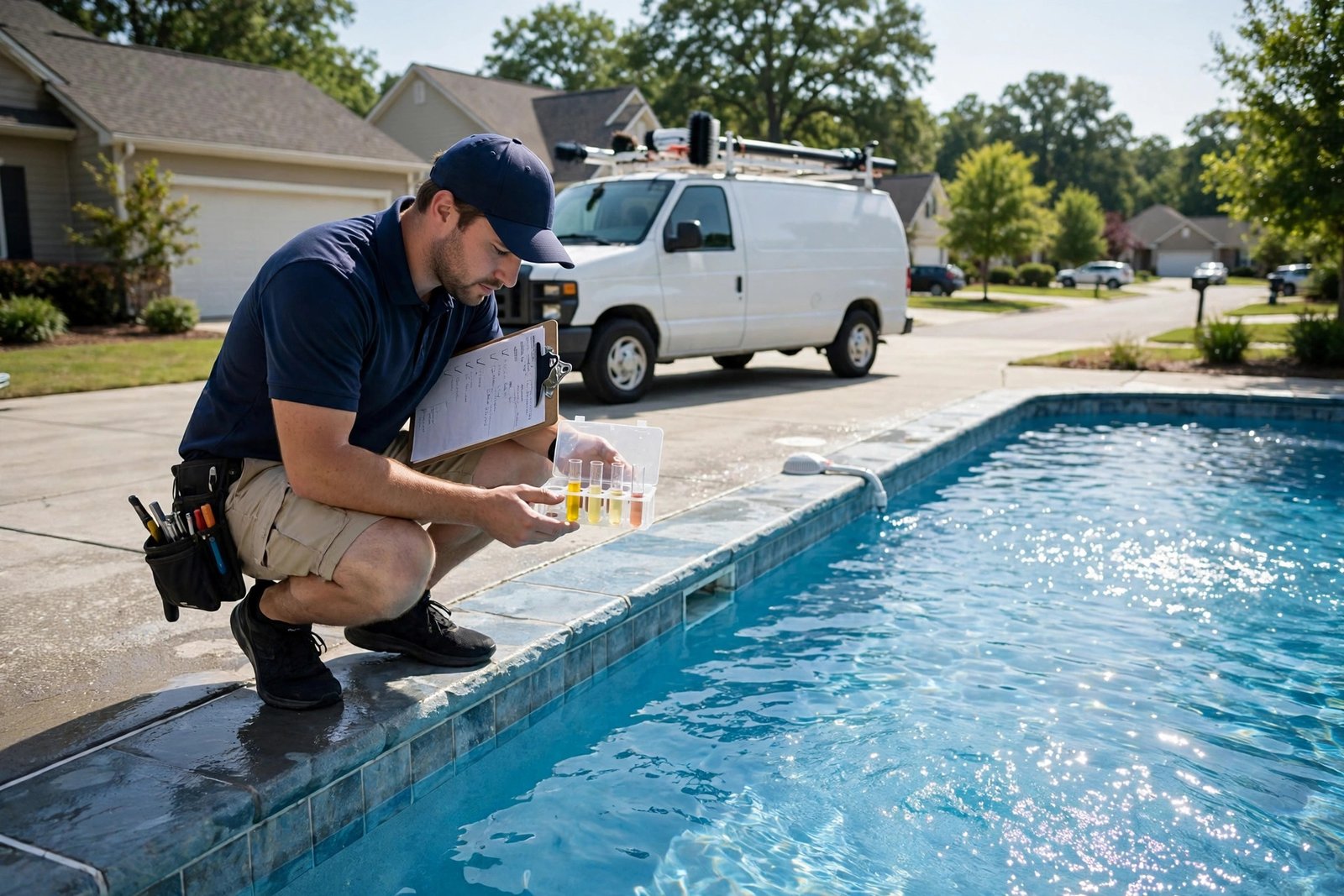
Learn these four tasks before your first paid job: how to test chlorine and pH with a test kit, how to dose chlorine and acid safely, how to vacuum a pool without losing suction, and how to clean a filter. Practise on your own pool, or on a friend or family member's pool, until each task feels routine. Always wear gloves and eye protection when you handle chemicals, and never mix chlorine with acid.
Step 2: Pick your service area and your services
Start small and stay close to home. Pick one or two neighbourhoods with a high density of pools and keep every job inside a short drive. A tight route is what makes this hustle pay, because driving time is unpaid time. Ten pools on one street are worth far more than ten pools spread across a whole town.
Decide what you will sell. Start with the services you can do well, then add more as you gain skill:
- Weekly cleaning, which means skimming, brushing, vacuuming, emptying baskets, testing water, and balancing chemicals. This is your core service and your main income.
- One-off deep cleans for pools that have been left alone for months.
- Green pool recovery, which means clearing algae and bringing a neglected pool back to clear water. This pays well but takes several visits.
- Filter cleaning, which is a quick add-on at a regular visit.
- Pool opening and closing in colder areas, which are seasonal jobs with premium prices.
Step 3: Sort the legal setup and insurance
There is no national pool cleaning licence in the United States. The rules are set by your state, county, and city, and they depend on what work you do. For basic residential cleaning, most states ask only for a general business licence from your city or county, plus business registration. Commercial and public pools are different. Many states and local health departments require the person servicing a public pool to hold an operator certificate such as CPO. Repairs and equipment work usually need a pool contractor licence. In California, for example, repair work needs a C-61/D-35 contractor licence, while basic cleaning does not. In Florida, cleaning residential pools needs no state licence, but repairs need a Certified Pool Contractor licence. Check your state contractor licensing board and your local health department before you take your first payment, because the rules change from place to place.
Choose a business structure. Many solo operators start as a sole proprietor, which is simple and cheap. A limited liability company (LLC) costs more to set up, usually $50 to $200 depending on the state, but it separates your personal money from the business. That matters in a job where you handle chemicals and work around electrical pool equipment. The SBA guide to choosing a business structure explains each option in plain language.
Insurance is not optional in this trade. If a child is hurt in a pool you service, or your chemicals damage a pool surface, you need cover. A general liability policy for a solo pool cleaner typically costs $600 to $1,200 a year. Add commercial auto cover if the business owns the vehicle. Get quotes from more than one insurer, and make sure the policy covers chemical handling. Keep a simple written service agreement for every client, with the services included, the price, the payment terms, and what happens if a visit is missed.
Taxes apply from the first dollar you earn. Keep every receipt for chemicals, fuel, and equipment. In the United States, the IRS self-employment tax page explains that you generally owe self-employment tax once your net earnings reach $400 in a year. The rate is 15.3 percent, which covers Social Security and Medicare. Rules differ by country, so check your local tax authority if you are outside the United States.
Step 4: Buy your starter kit
You do not need expensive gear to start. Buy the basics, earn from them, and upgrade from your income. Here is a realistic starter list, with the prices guides published in 2026 report:
| Item | Typical cost |
|---|---|
| Telescoping pole | $30 to $60 |
| Leaf net and vacuum head | $40 to $80 |
| Wall and tile brush | $20 to $40 |
| Water testing kit or digital tester | $80 to $150 |
| Chemical carrying case or tray | $30 to $50 |
| Initial chemical stock (chlorine, shock, algaecide, pH adjusters) | $300 to $600 |
| Gloves, goggles, and safety gear | $30 to $60 |
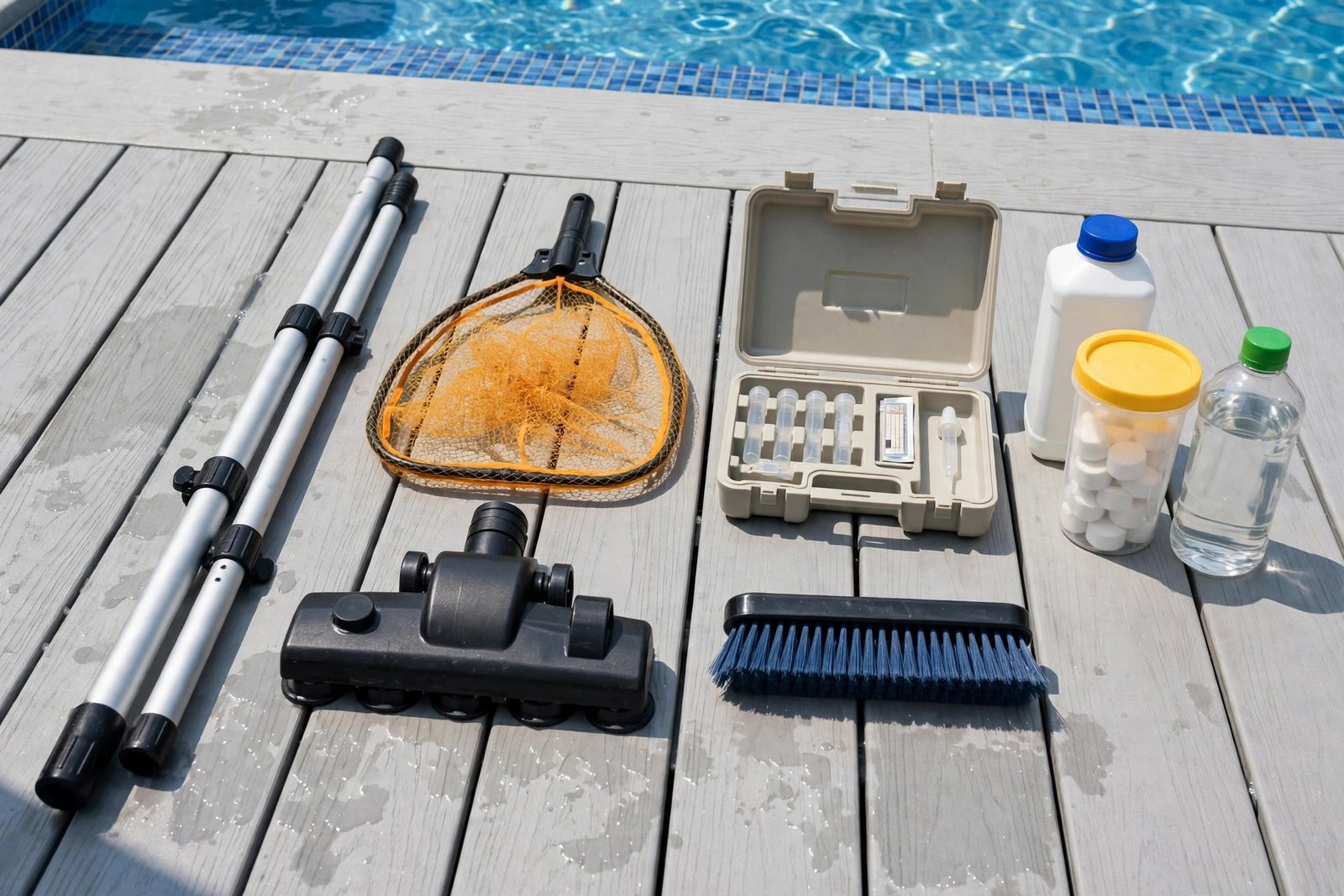
An automatic or robotic pool vacuum costs $200 to $600 and speeds up each job, but it is an upgrade, not a day-one need. Buy quality poles and a good test kit first, because you touch those tools at every stop. Buy chemicals in bulk from a pool supply wholesaler rather than a retail shop. Ongoing chemical costs run about $20 to $40 per pool per month, so build that into your price.
You also need a reliable vehicle with room for poles, chemicals, and a vacuum. A truck, large SUV, or van all work.
Step 5: Set prices that cover your real costs
Pool cleaning is almost always sold as a flat monthly fee for weekly visits, not per visit. That is what makes the model strong. You are paid every month whether it rains or not, and the customer gets a clean pool without thinking about it.
Typical monthly prices reported in 2026 guides are:
| Pool type | Monthly price for weekly visits |
|---|---|
| Small residential pool (under 15,000 gallons) | $100 to $150 |
| Medium residential pool (15,000 to 30,000 gallons) | $150 to $200 |
| Large pool, spa, or commercial account | $200 to $400 or more |
Prices run higher in expensive cities and lower in cheaper areas. Check what local competitors charge, then price from your own costs, not from theirs. Work out your true cost per pool: add up chemicals, fuel, insurance, phone, and software for the month, then divide by the number of pools. Add a margin of 20 to 30 percent on top. If the number you get is higher than the local market price, your route is too spread out or your chemical costs are too high, so fix that before you cut your price.
One-off services are high margin add-ons. A green pool cleanup typically costs $150 to $400 depending on how bad the water is. Filter cleaning runs $75 to $125. A pool opening or closing costs $150 to $300. Offer these to your regular clients first, because they already trust you.
Do not copy the cheapest price in town. Cheap prices attract the customers who leave first, and they do not cover your chemical costs when prices rise. A clear written quote, a fixed monthly fee, and a promise to show up on the same day each week are worth more to a pool owner than a low price.
Step 6: Win your first 10 clients
The first ten accounts are the hardest part of this business. After that, route density and referrals do much of the work. Here is how to get started.
Pick one pool-dense neighbourhood and knock on doors. Print a simple one-page flyer with your name, phone number, services, and price. Offer a free first cleaning or a free water test so the owner can see how you work. Satellite view on a map app shows you which streets have the most pools, so start there.
Set up a free Google Business Profile on day one. Pool owners who search for pool cleaning near them are ready to buy, and a profile with photos of your equipment and honest reviews will win calls. Ask every new client for a Google review after the first month.
Post in Nextdoor and local Facebook groups. Neighbourhood platforms are ideal for local service work. Introduce yourself, say which streets you cover, and answer pool questions when people ask them. One good client in a street often leads to two or three more, because pool owners talk to each other.
Talk to people who already serve pool owners. Real estate agents, short-term rental managers, and pool builders all meet owners who need a reliable cleaner.
Step 7: Run the route like a business
Once you have 15 to 20 accounts, how you run the route matters more than how well you clean. Cluster your accounts by area so you can clean six to ten pools in one place before you drive to the next zone. A solo operator can clean 8 to 12 pools a day when the route is tight. Long drives between stops eat your margin fast.
Keep a log for every pool. Write down the chemical readings, what you added, the filter pressure, and anything unusual, such as a cracked tile or a noisy pump. A simple notebook works at first. Route software such as Skimmer or Jobber handles scheduling, chemical logs, invoicing, and reminders once you have more accounts, and most plans cost $30 to $80 a month. A written log also protects you if a client ever claims you failed to look after their pool.
Text the client after each visit. A short message with the chemical readings and a photo of the clean pool takes a minute and builds trust. It also stops small problems from becoming arguments. Bill on the same day each month, and chase late payments within a week. Offer card payment as well as bank transfer, because it gets you paid faster.
What it costs and what to expect
Here is a realistic startup budget for a lean start, assuming you already own a vehicle:
| Item | Cost |
|---|---|
| Basic equipment and test kit | $200 to $400 |
| Initial chemical stock | $300 to $600 |
| Business registration (LLC) | $50 to $200 |
| General liability insurance, first year | $600 to $1,200 |
| Flyers, Google Business Profile, basic website | $0 to $300 |
| Total to start | $1,500 to $3,500 |
Guides that include branding, software, and a bigger chemical kit put the total at $5,000 to $8,000. Buying a used work vehicle adds $5,000 to $20,000. Franchises are a different world, with total investments from about $88,695 to $213,171 reported for one national brand. You do not need a franchise to run a profitable route.
Example only: these numbers are not typical results. Imagine you build a route of 20 pools, each paying $140 a month. That is $2,800 a month in gross income. Chemicals at $30 per pool per month cost $600. Fuel, insurance, and phone cost about $400. That leaves $1,800 before tax for roughly 20 to 25 hours of field work a week. Your real numbers will differ with your prices, your area, and how tight your route is. Results vary with experience, location, demand, time, competition, expenses, and platform fees.
Most people sign their first account within two to four weeks of active prospecting. By month three, consistent operators often have 10 to 20 accounts. By month six, 30 to 40 accounts is a realistic aim. At 40 accounts averaging $140 a month, the route earns $5,600 a month before costs. That is the point where the business feels steady and referrals start to compound.
Common mistakes
- Starting without learning water chemistry, then losing clients to green pools.
- Underpricing to win the first jobs, then finding chemical costs eat the whole fee.
- Skipping insurance to save money, which leaves you exposed if anything goes wrong.
- Taking pools across a whole city instead of building one tight route.
- Offering repairs before you have the licence and the skill to do them safely.
- Forgetting to log chemical readings, which leaves you with no defence if a client complains.
- Buying a franchise or expensive gear before you have a single paying client.
- Ignoring the off-season in colder areas instead of planning openings, closings, and other winter work, such as indoor cleaning jobs.
Risks and scams to watch for
Pool cleaning carries real risks. Chemicals can burn skin and eyes, and chlorine and acid must never be mixed. Store them separately and keep them locked away from children. Electrical pool equipment can be dangerous, so never open a pump or heater you are not trained to service. Slips on wet pool decks are common, so wear shoes with grip and move carefully.
Watch for these warning signs when you buy gear or training. Be wary of any course or supplier that asks for a large upfront payment before you see what you get, or that promises guaranteed income from a route. No one can guarantee your income. Buy equipment from established pool supply shops, check reviews before you pay, and keep receipts for everything. If a client asks you to do repair work you are not licensed for, say no and refer them to a licensed contractor. That protects the client, and it protects you.
Frequently asked questions
How much does it cost to start a pool cleaning side hustle?
A lean start costs about $1,500 to $3,500 if you already own a vehicle. That covers basic equipment, initial chemicals, business registration, and a year of liability insurance. Guides that include branding, software, and a larger chemical kit put the total at $5,000 to $8,000.
Do I need a licence to clean pools?
In most US states, basic residential pool cleaning needs only a local business licence and insurance. There is no national pool licence. Commercial and public pools often need an operator certificate such as CPO, and repair work usually needs a contractor licence. Check your state licensing board and local health department before you start.
How much can I charge for weekly pool cleaning?
Typical monthly prices in 2026 are $100 to $150 for a small residential pool, $150 to $200 for a medium pool, and $200 to $400 or more for large pools and commercial accounts. Prices vary by area, pool size, and what is included, so check local rates and price from your own costs.
Is pool cleaning a good side hustle in a cold climate?
It can work, but the season is short. Operators in northern areas focus on pool openings in spring and closings in autumn, which pay $150 to $300 per job, and many pair pool work with another service such as lawn care or snow removal for the rest of the year.
Do I need CPO certification to start?
No, not for basic residential cleaning in most states. The CPO course is worth taking if you want commercial clients such as hotels, apartments, and homeowners associations, because many of them require it. It also builds trust with homeowners and teaches you water chemistry properly.
How many pools can one person clean in a day?
A solo operator on a tight route can clean 8 to 12 pools a day. A route of 40 pools visited weekly, at an average of $140 a month per pool, earns about $5,600 a month before costs. Your real figure depends on your prices, your route density, and your area.
Conclusion
This guide showed you how to start a pool cleaning side hustle step by step. You build a tight route of weekly pools, you show up on time, you keep the water safe, and you get paid every month. Start by learning water chemistry, then set up the business, buy a lean kit, price from your real costs, and win your first ten clients in one pool-dense neighbourhood.
To round out your plan, read our guide to starting a pressure washing side hustle, which pairs well with pool work because the same customers need both, and our guide to starting a lawn care side hustle, which uses the same route model through the summer. If you want to compare another outdoor trade first, our handyman side hustle guide covers a service with similar startup costs. You can browse all of them in the side hustles category.
Earning results vary, and nothing on this site is financial advice. Check your local rules before you start, and get insured before your first paid job.