How to Start a Lawn Care Side Hustle in 2026
Learning how to start a lawn care side hustle is one of the simplest ways to earn extra income outdoors. A lawn care side hustle means mowing lawns, trimming edges, blowing clippings and keeping gardens tidy for paying customers, usually on a weekly or fortnightly visit. You can start with one mower and a handful of neighbours, and grow only when the work is there.
This guide is for complete beginners. You will learn which services to offer, how to mow well, what kit to buy, how to price by lawn size, how to build a tight route, and how to find your first customers.
In this guide
- What a lawn care side hustle really is
- Step 1: Pick your services and your area
- Step 2: Learn to mow well before you charge
- Step 3: Buy the starter kit
- Step 4: Register, insure and check the chemical rules
- Step 5: Set your prices by lawn size
- Step 6: Build a tight route and find your first customers
- Worked example: one month of weekend mowing
- What it costs and what to expect
- Common mistakes
- Risks and scams to watch for
- Frequently asked questions
What a lawn care side hustle really is
Lawn care is a recurring service, and that is what makes it a good side hustle. Grass keeps growing, so clients need the same visit every week or two through the growing season. A handful of regular clients gives you predictable income, and you can fit the work around a full-time job on evenings and weekends.
Start with mowing and maintenance, not with landscaping installs. Mowing routes are the fastest path to revenue, the cheapest to equip, and they teach you the route and pricing maths that everything else is built on. You can add cleanups, mulching, hedge trimming and leaf removal once you are rolling. Hardscaping and installs, such as stone patios and plantings, have bigger tickets but need more skill, more equipment and a fatter wallet to start. For the wider picture of starting small, read how to start a side hustle.
| Service | What it includes | Typical price range |
|---|---|---|
| Basic mowing | Mow, edge and blow clippings | 30 to 75 US dollars per yard |
| Full service visit | Mow, trim, edge and blow | 45 to 150 US dollars per yard |
| Leaf removal | Fall cleanup of leaves from lawns and beds | 100 to 400 US dollars per visit |
| Mulching | Spreading mulch in flower beds and around trees | 50 to 100 US dollars per yard of mulch |
| Hedge trimming | Shaping and maintaining shrubs and hedges | 50 to 150 US dollars per visit |
| Fertilisation and weed control | Lawn treatment programmes | 50 to 150 US dollars per application |
Prices vary by region, property size and complexity. These ranges come from competitor guides published in 2026 and are a starting point for your own local research, not a promise of what you will earn. Fertilisation and weed control usually need a licence, which is covered in Step 4.
Step 1: Pick your services and your area
Start with core services and expand as you build skills, equipment and demand. Your starter list should be basic mowing, string trimming and edging, and blowing clippings off paths and driveways. That is the foundation of any lawn care business. Add leaf removal in autumn, mulching in spring, hedge trimming when you have the equipment, and fertilisation only once you have the training and any licence your area requires.
Choose a small service area first. Start within a 10 to 15 minute radius of your home. Tight routes minimise driving time between jobs, and that is where the profit lives. Five to ten lawns clustered in one neighbourhood can out-earn fifteen scattered across town, because you are cutting grass, not driving. As you grow, expand by clustering new clients near existing ones, not by taking single lawns far away.
Decide who you serve. Busy homeowners in one subdivision, small commercial properties, or older residents who can no longer mow themselves are all good starting points. You could also focus on a quiet, battery-powered service if your area values low noise, or on small gardens that big companies ignore. Pick one area and one kind of customer, and own it before you widen. For the wider method of picking a side hustle that fits, read how to choose the right side hustle.
Step 2: Learn to mow well before you charge
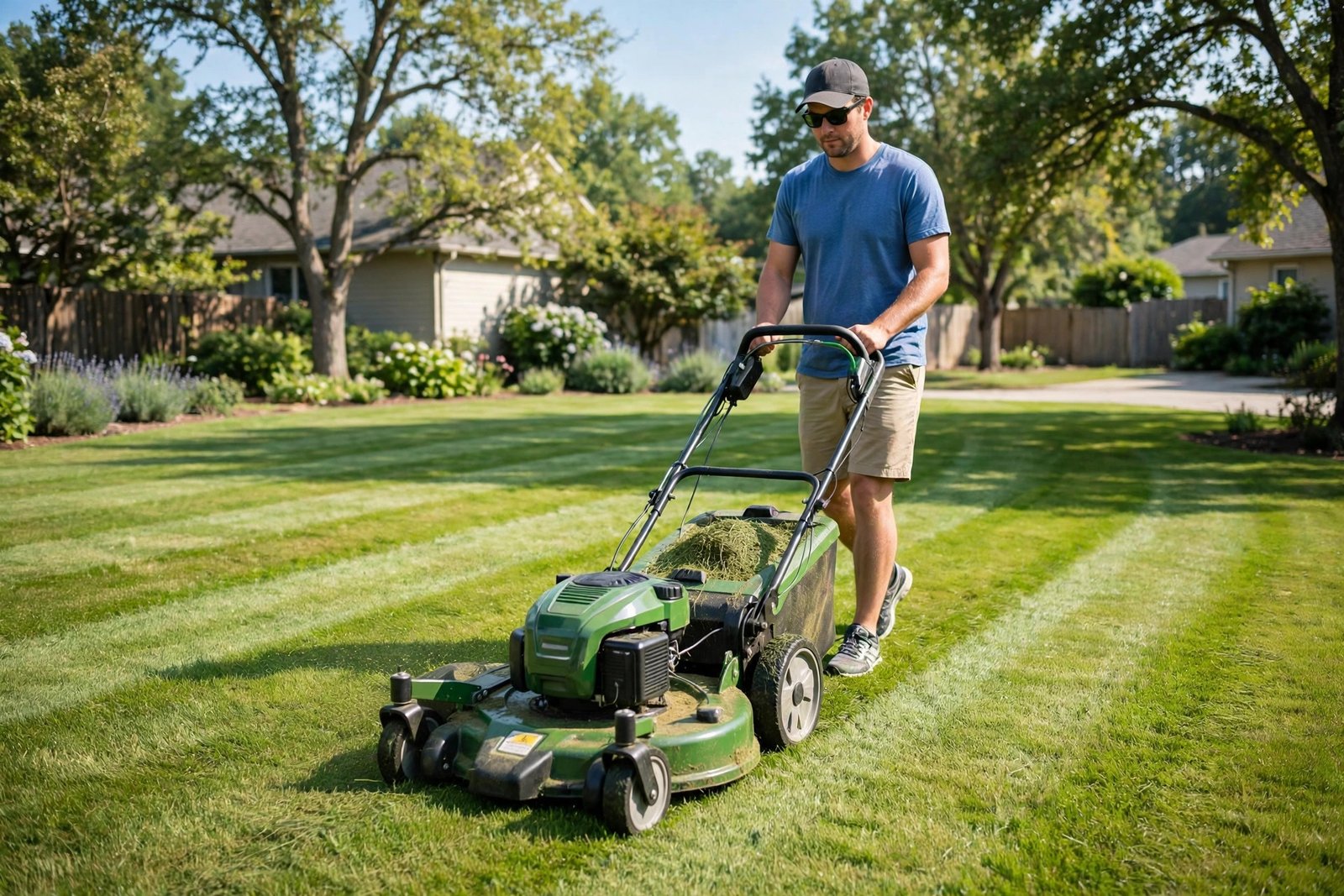
Mowing looks simple, and doing it well is a skill. Practise on your own yard and those of family and friends before you sign up a long list of customers. Learn mowing patterns, clean edging and how to leave a property tidy. A good cut is the difference between a customer who rebooks and one who finds someone else.
Learn the basics. Mow at the right height for the grass in your area. Cutting too short, known as scalping, stresses the grass and lets weeds in. Your state or local cooperative extension service publishes free guides on mowing heights, watering and seasonal care for local grass types, so look those up. Change your mowing pattern each visit, so the grass does not lean one way and the wheels do not wear ruts into the lawn. Keep your blades sharp. A sharp blade cuts cleanly and quickly, while a dull blade tears the grass, leaves brown tips and slows you down. Sharpen blades weekly once you are busy.
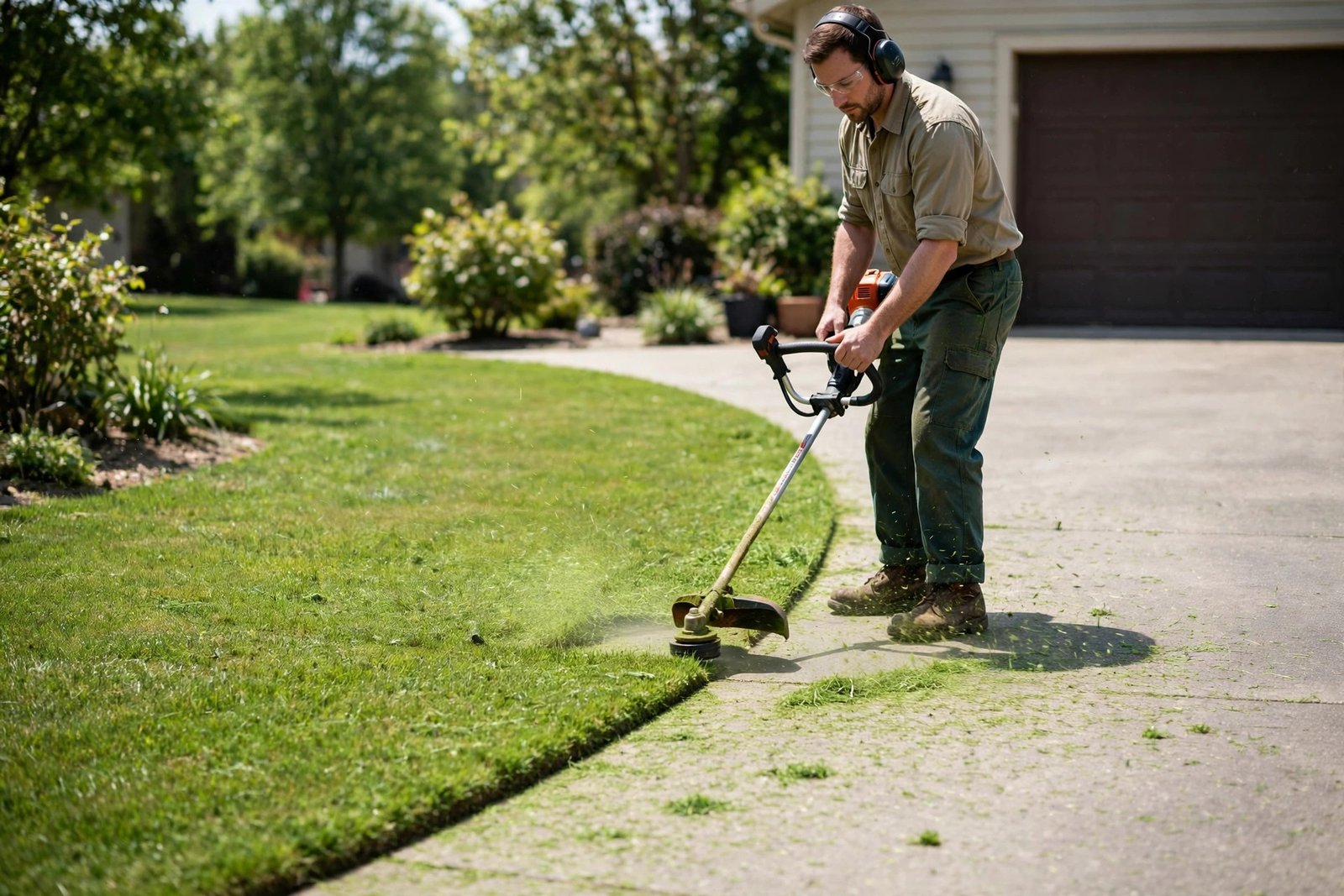
Work in a consistent order on every lawn: mow first, then trim, then edge, then blow. Keep your equipment organised on the trailer for quick transitions, because every minute saved adds up across a day of lawns. Clean up before you leave. Blow clippings off paths, driveways and patios, close gates, and leave the property looking better than you found it. If the grass is wet, wait, because wet grass clumps, clogs the mower and leaves a mess. If a lawn is badly overgrown, quote it as a separate cleanup job, not as a normal mow, because it takes far longer and wears your equipment.
Step 3: Buy the starter kit
You can start with a quality self-propelled mower and a few hand tools, and upgrade out of profit. The mantra is simple: buy used, rent what is occasional, and only buy new when a tool is making you money every single day. Do not buy a trailer full of new commercial gear before you have earned a dollar.
| Stage | What to buy | Typical cost |
|---|---|---|
| Starter kit, 5 to 15 small lawns a week | Self-propelled mower, string trimmer, handheld blower, basic hand tools, fuel cans, safety gear | 500 to 1,500 US dollars |
| Growth kit, 20 to 40 lawns a week | Commercial walk-behind mower, commercial trimmer, backpack blower, standalone edger, hedge trimmer, utility trailer | 2,000 to 5,000 US dollars |
| Professional kit, 50 plus lawns a week | Zero-turn mower, stand-on mower, commercial power equipment set, enclosed trailer, aerator and dethatcher | 8,000 to 20,000 US dollars plus |
A used self-propelled walk-behind mower handles most residential lawns. Buy a known brand secondhand before financing a zero-turn mower, which is a real time saver on big lawns but a profit-funded upgrade, not a day-one purchase. Go commercial grade for your trimmer, because homeowner models die fast under daily use. A backpack blower saves your arms once volume picks up. An edger and a hedge trimmer are nice to have, but a trimmer turned sideways edges fine at first. Rent an aerator, a dethatcher or a stump grinder by the day and bill it into the job. Never buy what you use twice a year.
Think about gas or battery equipment before you buy. Battery mowers, trimmers and blowers are quieter, need less maintenance and have no fuel to store. The trade-off is that you need extra batteries and a way to charge them for a full day of work. In California, this decision matters more, because the state requires most newly manufactured small off-road engines to be zero-emission starting with model year 2024. You can still use the gas equipment you already own, but new gas models are being phased out of the state. Check the rules where you live, and check noise rules for early mornings, because many neighbourhoods and cities limit them.
Wear eye and hearing protection and sturdy boots. A mower throws rocks, and rocks crack windshields, dent siding and break windows. That is a normal Tuesday, not a freak accident. For more on keeping startup costs low, read side hustles with low startup costs.

Step 4: Register, insure and check the chemical rules
Register as a sole proprietor or form a limited liability company, known as an LLC, before your first paying job. An LLC separates your personal assets from the business, so if something goes wrong on a job, your savings and home are not on the line. The US Small Business Administration explains the business structures on its register your business page. Get a free EIN from the IRS, which takes about ten minutes and is needed to open a business bank account. You can apply on the IRS EIN page. Never pay a third party for an EIN. Get a business licence from your city or county, and file a DBA if you use a business name. Costs are typically 50 to 300 US dollars.
In the United Kingdom, most lawn care operators start as a sole trader. You register with HMRC soon after you start trading and complete a Self Assessment tax return each year. The GOV.UK page on setting up as a sole trader explains the steps, including keeping records and paying Income Tax and National Insurance on your profits.
General liability insurance is strongly recommended. It protects you if you damage a customer's property or someone gets hurt, and many commercial customers will ask for proof of insurance before they hire you. Policies start at around 400 to 800 US dollars a year for a small operator. If you use your vehicle for business, personal auto cover may not cover accidents while working, so ask your insurer about commercial auto cover. Once you hire employees, most places require workers' compensation.
Know the chemical rules before you offer fertilising or weed control. Most US states require a licence to apply pesticides, and some states also license fertiliser application. Contact your state's department of agriculture, because it often requires an exam and annual renewal. If you plan to offer weed control or fertilising, check with your state's department of agriculture first, and leave those services out until you have the training and the licence. Basic mowing usually needs nothing more than a local business licence, but anything involving chemicals or tree work frequently requires a permit or certification. For the tax side in plain language, read freelance taxes for beginners.
Step 5: Set your prices by lawn size
Most lawn care businesses charge a flat price per visit, based on the size of the yard, how long the job takes and what services are included. Quote per property, and keep the rate consistent each visit, because clients prefer predictability. As you get faster, your effective hourly rate increases.
| Lawn size | Basic mow | Full service | Time estimate |
|---|---|---|---|
| Small, under a quarter acre | 30 to 45 US dollars | 45 to 65 US dollars | 20 to 35 minutes |
| Medium, quarter to half acre | 45 to 65 US dollars | 65 to 100 US dollars | 35 to 50 minutes |
| Large, half to one acre | 65 to 100 US dollars | 100 to 150 US dollars | 50 to 75 minutes |
| Extra large, over one acre | 100 to 175 US dollars plus | 150 to 250 US dollars plus | 75 minutes plus |
Full service includes mowing, edging, trimming and blowing. To set your prices, figure out what it costs you to run your business per hour, including fuel, equipment wear, insurance and your own pay, and then add your profit. Call a few local competitors or check their websites to see the going rate in your area. Do not try to be the cheapest. Customers who choose you only on price will leave for the next cheaper option. It is better to offer more reliable service and charge a fair rate for it.
There are three ways to charge, and they stack. Per cut is a flat price each visit, based on lot size and difficulty, and it is the simplest to quote. Per visit with services bundles mow, trim, edge and blow into one visit price, and it is the most common for residential work. Monthly flat rate averages the season's visits into an even monthly payment, which customers love for predictability and which smooths your income. That is what you are aiming towards. To price any lawn, think about three things: how long it takes you, including loading, driving and unloading; your costs, such as fuel, equipment wear, insurance and your time; and what the work is worth. Then charge for the drive. A lawn 20 minutes across town is not worth the same as one next door, even if the grass is identical. When in doubt, quote a little higher. It is far easier to come down than to raise a customer you lowballed.
Step 6: Build a tight route and find your first customers
Your first customers will come from your own circle and your own street, not from adverts. Tell everyone you know that you have started. Friends, family and former coworkers are almost always your first five customers. Offer a competitive rate for your first 5 to 10 clients in exchange for reviews and referrals. These early clients become your testimonial base and your referral source.
Then work the street you are already on. Booked one lawn on a block? Knock on three or four doors nearby. You are already there, your gear is already out, and the maths works in everyone's favour. The most powerful pitch in this business is also the simplest: "We are already mowing your neighbour's place, would you like us to take care of yours while we are here?" It is true, it is low pressure, and it builds the route density that makes you money. Put a yard sign on every lawn you cut, with permission, and hang door hangers on the houses on either side. When you finish one yard, walk your flyers to neighbouring homes, because they have just seen your quality work.
Set up a free Google Business Profile as soon as you have a business name. It is the listing that appears in local searches for lawn care near you, and it is essential for people searching on their phones. Add photos of your work and ask every happy customer for a review. You can set one up on Google Business Profile. Post in your neighbourhood's Nextdoor group, where local groups are full of people asking for exactly this service. A friendly, real introduction beats any paid advert.
Keep the same clients on the same days each week. This builds routine, reduces scheduling complexity, and helps clients know when to expect you. Group clients by location and day, and service nearby properties one after another. Apps can optimise your driving route automatically, but a simple rule works just as well: never drive past a lawn you could have cut. Raise your prices as your schedule fills. When you are booked solid, your next quotes should be higher, and you can gently re-price your oldest, cheapest customers. For the wider method of fitting a side hustle around a job, read how to manage a side hustle with a full-time job.
Worked example: one month of weekend mowing
Example only: these numbers are not typical results. They show how the maths works for one month of weekend work, in US dollars.
A weekend operator mows 12 lawns a week, at an average of 50 US dollars per lawn, for 4 weekends in a month.
| Line | Amount |
|---|---|
| 48 lawns at 50 US dollars | 2,400 US dollars |
| Fuel | minus 160 US dollars |
| Equipment wear and maintenance | minus 80 US dollars |
| Insurance share for the month | minus 60 US dollars |
| Net before tax | 2,100 US dollars |
The work takes about 30 minutes per lawn on site, so 24 hours of mowing, plus about 8 hours of driving, loading and quoting, so 32 hours in total. That is about 65 US dollars per hour before tax, on a month where all 12 lawns are clustered in two neighbourhoods. Your result can be lower or higher. If the same 12 lawns are scattered across town, driving time doubles and the hourly rate falls sharply. If half the lawns cancel in a rainy month, the income falls with them. That is why route density matters more than the number of clients: ten lawns on the same five streets beat twenty lawns spread across the county.
What it costs and what to expect
Starting a lawn care side hustle costs about 500 to 1,500 US dollars for a starter kit, or 500 to 2,000 US dollars if you add insurance, registration and a trailer. If you already own a mower, a trimmer and a vehicle that can haul them, you can start for very little. Monthly running costs are fuel, equipment wear, insurance and marketing, usually a few hundred dollars.
Expect a seasonal business. In most regions, lawn mowing runs from spring through autumn, about 28 to 36 weeks a year. Spring brings peak demand, cleanups and new clients. Summer is consistent weekly mowing. Autumn brings leaf removal, final fertilisation, aeration and overseeding. Winter brings snow removal in cold climates, holiday lighting installation, equipment maintenance and business planning. In warm southern areas the season is longer, and some operators work nearly year round. Plan for the quiet months. Sell leaf cleanup and mulch installs to your existing route in autumn, and put money aside in the busy months to cover winter.
A realistic first season is 5 to 10 lawns booked from your circle, your street and Nextdoor in the first month, growing to a fuller route by month three if you keep asking for reviews and referrals. Just 20 weekly lawn clients at 50 US dollars each generates 1,000 US dollars a week during the growing season, but that is a full route built over time, not a starting point. Many operators complete 20 yards in 2 to 3 days of work, but only after months of building. The work is physical and outdoors, in heat and rain, and it takes stamina. If you like working outside and you are reliable, it is one of the most accessible side hustles there is.
Common mistakes
- Pricing below established companies to win work, then being unable to raise prices without losing customers.
- Taking scattered lawns across town instead of building a tight route, so driving eats the profit.
- Buying a zero-turn mower and a trailer before you have the customers to keep them busy.
- Mowing too short, which stresses the grass and lets weeds in.
- Using dull blades, which tear the grass and leave brown tips.
- Skipping insurance. A rock thrown by a mower can shatter a window, and that is a normal working day.
- Offering fertiliser and weed control without the licence your state requires.
- Forgetting to plan for winter, and having no income for months.
- Never asking for reviews, so the Google Business Profile stays empty.
Risks and scams to watch for
The biggest risk is damage. A mower throws rocks, and rocks crack windshields, dent siding and break windows. General liability insurance covers property damage you cause, and it is affordable, so get it before you cut a single lawn. Keep clear of children and pets while you work, and stop the blades before you cross a path or a driveway.
Chemicals are a second risk. Fertilisers and pesticides can harm plants, pets and waterways if they are applied wrongly, and most states require a licence to apply them. Do not offer chemical treatments until you have the training and the licence. Tree work is a third risk. Anything involving climbing, chainsaws or large branches is not lawn care, and it needs different skills, equipment and cover. Refuse it and refer it to a tree specialist.
Watch out for customers who ask you to mow a lawn that is badly overgrown at the normal price, or who expect you to clear dog waste, rubbish or hazards without agreeing a price. Inspect the lawn before you quote, agree the scope in writing, and charge a separate cleanup rate for overgrown work. Be careful with franchise offers and courses that promise guaranteed income. No course can guarantee customers. Start small, spend little, and let paying work decide what you buy next. For the wider method of choosing a side hustle that fits your life, read how to choose the right side hustle.
Frequently asked questions
How much does it cost to start a lawn care business?
It depends mostly on your equipment. If you already own a mower, a trimmer and a vehicle that can haul them, you can start for very little. A starter kit costs about 500 to 1,500 US dollars, and a more comfortable setup with insurance and registration costs 500 to 2,000 US dollars. Commercial mowers, a trailer and insurance cost more.
Do I need a licence to mow lawns?
Basic lawn mowing typically does not require a special licence in most areas, but you will need a business licence. Pesticide or fertiliser application requires certification in most US states. Check local regulations and consider liability insurance to protect yourself and your business.
How much should I charge to mow a lawn?
It depends on the size of the lawn, how long the job takes and what is included. A small lawn costs about 30 to 45 US dollars for a basic mow, a medium lawn 45 to 65 US dollars, and a large lawn 65 to 100 US dollars. Full service, with trimming, edging and blowing, costs more. Check what local competitors charge, and price in the middle.
Is lawn care seasonal or year round?
In most regions, lawn mowing is seasonal, from spring through autumn. You can offer leaf cleanup in autumn, snow removal in winter and spring cleanup services. Southern states have longer seasons. Many operators add complementary services to generate year-round income.
What equipment do I need to start lawn care?
A quality push or self-propelled mower, a string trimmer, a leaf blower and basic hand tools are enough to start. Add a trailer, a commercial mower and a hedge trimmer only when you have the customers to keep them busy. Rent occasional-use machines by the day instead of buying them.
How do I get my first lawn care customers?
Start with people you know, neighbours and your own street. Hand out flyers and door hangers, set up a Google Business Profile and a Nextdoor page, and ask every happy customer for a review and a referral. Knock on the doors next to a lawn you have just cut.
Conclusion
Learning how to start a lawn care side hustle comes down to a simple order: pick mowing and maintenance as your core service, learn to mow well before you charge, buy a lean starter kit, register and insure the business, check the chemical rules, price by lawn size, and build a tight route in one neighbourhood before you expand. Ten lawns on the same five streets beat twenty lawns spread across the county. Keep your blades sharp, ask for a review on every job, and let paying work decide what you buy next.
For your next steps, read how to start a side hustle, best weekend side hustles, and how to turn a side hustle into full-time income. You can browse all the guides in the category at Side Hustles.
Notes for the reader: rules on licences, registration, insurance, chemicals and tax differ by country, state and city, and prices differ by area. Check your local authority and your state's department of agriculture before you offer chemical treatments. Earning results vary; nothing on this site is financial advice.