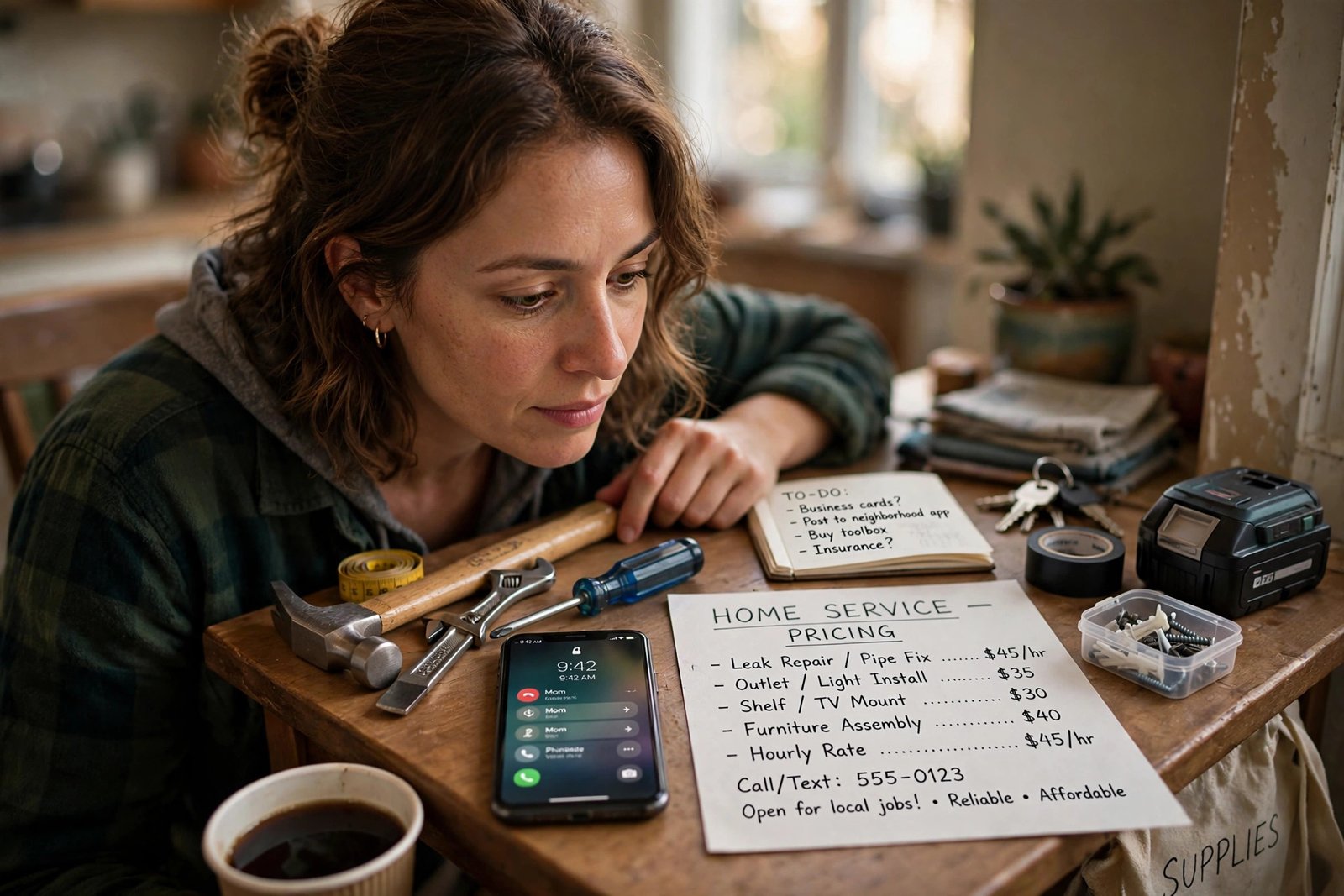
You have an idea for extra income, but you do not know where to start. You may have read idea lists, saved posts about earning online, and still taken no first step. That stall is common. Most beginners do not fail because the idea is bad. They fail because they build too much before anyone pays, or they wait for the perfect idea. This guide gives you a clear order to follow: test the idea fast, set one clear offer, win three paying customers, then build only what those customers prove you need. It covers side hustles of every type, including services, local work, reselling, and digital products. If your hustle is a service you sell to clients, read How to Start Freelancing in 2026 for platform and portfolio detail. If your hustle is an online business, read How to Start an Online Business for Beginners for online models in depth.
In this guide
- Step 1: Pick one idea type that fits your week
- Step 2: Run a 7 day validation test
- Step 3: Shape one first offer and set a price
- Step 4: Win your first 3 customers
- Step 5: Set up money and records simply
- Step 6: Follow the first 30 days plan
- What it costs and what to expect
- Common mistakes
- Risks and scams to watch for
- Frequently asked questions
Step 1: Pick one idea type that fits your week
A side hustle is work you run yourself, alongside a job, study, or family life, to earn extra income. It is not employment. Nobody sets your hours or pays you a wage. That freedom is the appeal, and it is also the risk, because you must find customers and manage your own time. Start by choosing a type, not a perfect idea. There are four broad types. A service sells your time and skill, such as tutoring, cleaning, design, or pet sitting. A product sells something you make or resell, such as crafts, refurbished items, or print goods. Local work serves people near you, such as gardening, errands, or event help. Content and digital products earn from an audience or a file you sell more than once, such as a template or a short course. Each type fits a different week. Services usually bring the first payment fastest, because you sell to one person at a time. Products need stock, photos, and listings before the first sale. Content usually takes the longest to earn, because an audience must grow first. Choose the type that matches the hours you truly have, not the hours you wish you had. If you are torn between ideas, use the decision method in How to Choose the Right Side Hustle in 2026 before you go further.
Step 2: Run a 7 day validation test
Validation means checking that real people want what you plan to sell, before you spend much money or time. Many beginners skip this step and build a website, buy stock, or design a logo for an offer nobody has asked for. A 7 day test avoids that trap. On day 1, write one sentence that names the buyer, the problem, and the result. For example, busy parents near me need healthy weeknight meals without cooking, or new sellers need clear product photos for their listings. On days 2 and 3, talk to 10 people who match that buyer. Ask about the problem, what they do now, and what they would pay to fix it. Do not ask friends if your idea is good, because friends will be kind. Ask strangers or acquaintances who have the problem, and listen for real spending, not compliments. On days 4 and 5, offer a small trial to 3 of those people at a real price, even a low one. A trial with no price proves nothing, because free help is easy to accept. On days 6 and 7, review the results. You pass the test if at least one person pays or books, or if at least three people ask for a price, a date, or a next step. You fail the test if everyone is polite but nobody acts.

Step 3: Shape one first offer and set a price
Your first offer should be one thing, for one buyer, with one price and one clear result. A vague offer such as "I can help with anything online" is hard to buy, because the buyer cannot tell what they will get. A clear offer sounds like this: two hours of home organising for one room, including a tidy plan you keep, for a fixed fee. Or: five edited short videos from your footage, delivered in three days, for a fixed fee. Write down what is included, what is not included, how long it takes, and when it is delivered. Then set a price with a simple method. First, add your direct costs, such as materials, travel, platform fees, and payment fees. Second, decide how many hours the work takes, including messages, travel, and admin, not just the visible task. Third, pick an hourly value that reflects your skill and your local market, and multiply it by those hours. Fourth, add a margin for tax and quiet weeks, because not every hour you work is paid. The result is your starting price. Test it with real buyers, and raise it for new buyers once you are booked. A common beginner error is pricing so low that the work cannot survive. If you charge less than your costs and a fair hourly value, you will burn out or quit.
Example only: pricing a first offer
Example only: these numbers are not typical results. Suppose you offer tutoring at 25 dollars per hour, and each session needs 2 hours of teaching plus 30 minutes of preparation. The time total is 2.5 hours, so the fee is 62 dollars and 50 cents before payment fees and tax set aside. Counting preparation time is what stops the price from looking fair but paying poorly.
Step 4: Win your first 3 customers
Your first customers almost never come from a website nobody visits. They come from direct contact with people who already know you or already have the problem. Make a list of 30 people: past colleagues, neighbours, members of groups you belong to, and local businesses that serve your buyer. Message 10 of them per day for three days with a short, specific note. Say who you help, what the offer is, what it costs, and what the next step is. For example, "I am offering two hour home organising sessions for one room this month. The fee is fixed and I have two slots left this week. Would you like me to hold one, or do you know someone who needs this?" Do not send a mass message with no name and no offer. Personal messages with a clear offer get replies. Mass posts get ignored. Also list your offer where your buyer already looks, such as a local community board, a marketplace, or a freelance platform, depending on the type. Keep the listing short and use the same clear offer and price. When someone replies, answer fast, confirm the scope and price in writing, and deliver on time.
Step 5: Set up money and records simply
Simple money habits protect you from a mess later. Open a separate bank account or a separate spending pot for hustle money, so business income and costs never mix with household money. Keep every receipt for costs, and record every payment you receive, with the date, the buyer, and the amount. A simple spreadsheet is enough at the start. You do not need expensive software before your first sale. Tax rules differ by country, so check your local rules early. In the United Kingdom, general guidance for people who work for themselves is published by GOV.UK, and you can read the official guidance for working for yourself to see when registration applies. In the United States, the tax authority publishes guidance for small businesses and self-employed people. As a general principle, keep a share of each payment aside for tax, keep records from day one, and speak to a qualified accountant if your income grows or your situation is complex. Some hustles need insurance, a licence, or a safety check, such as food handling, childcare, or work in other people's homes. Check what applies to your type before you sell, not after a problem. That boundary is covered in depth in How to Manage a Side Hustle With a Full-Time Job in 2026.
Step 6: Follow the first 30 days plan
| Week | Main job | Done when |
|---|---|---|
| Week 1 | Pick a type and run the validation test | You have talked to 10 people and offered a trial to 3 |
| Week 2 | Finalise one offer, price, and a simple listing | One buyer can read the offer and book it |
| Week 3 | Contact 30 people and deliver the first jobs | You have at least one paying customer and feedback |
| Week 4 | Review, raise or fix the price, and ask for referrals | You have 3 paying customers or a clear reason to change the offer |

What it costs and what to expect
| Hustle type | Typical cash to start | Main costs | Time to first payment |
|---|---|---|---|
| Service, such as tutoring or cleaning | Low, often under 100 dollars or pounds | Travel, basic supplies, payment fees | Days to 2 weeks |
| Local work, such as gardening or errands | Low to medium | Tools, travel, insurance where needed | Days to 2 weeks |
| Product, such as crafts or reselling | Medium, stock dependent | Stock, packaging, listing and platform fees | 2 to 6 weeks |
| Digital product or content | Low cash, high time | Software or hosting, if any | 1 to 6 months |
Common mistakes
- Building a website, logo, or product range before any buyer has paid.
- Offering everything to everyone, so no buyer can tell what you actually do.
- Pricing by guessing, or copying the lowest price you see, instead of costing your hours and expenses.
- Giving work away for free in the hope of exposure, with no paid trial or next step.
Risks and scams to watch for
A side hustle involves money, strangers, and platforms, so scams are a real risk. Be wary of any opportunity that asks you to pay a joining fee, buy a starter kit, or deposit a cheque and send money back. Be wary of guaranteed income claims, pressure to recruit others, and jobs that ask for bank details before any agreement exists. Real clients pay you for work, or pay a platform fee they can explain. They do not ask you to pay to get paid. Meet local clients in safe, public places where possible, confirm scope and price in writing, and take a deposit for larger jobs where that is normal in your trade. Keep records of every payment and message. If an offer feels rushed or secretive, pause and check it. A genuine opportunity will still be there after you check.
Frequently asked questions
How do I start a side hustle with no experience?
Start with a skill or task you can already do well enough to help someone, such as organising, tutoring a school subject, cleaning, or simple design. Offer a small, clear job first, and learn the rest from real customers.
How do I know if my side hustle idea will work?
Run the 7 day validation test in this guide. Talk to 10 people with the problem, offer a paid trial to 3 of them, and watch what they do. Paying customers, bookings, and price questions are evidence.
How much should I charge for my first side hustle offer?
Add your direct costs, then add a fair hourly value for all hours the job takes, including messages and travel, then add a margin for tax and quiet weeks. Test that price with real buyers.
How do I get my first side hustle customers?
Contact people directly with a short, personal message that names the offer, the price, and the next step. List the same offer where your buyer already looks. Ask each happy customer for feedback and one referral. For online businesses, the full method is in How to Get First Customers for an Online Business.
Conclusion
Starting a side hustle in 2026 comes down to a short sequence done in order: pick one type that fits your week, test it with real people in 7 days, shape one clear offer with a real price, win three paying customers through direct contact, keep money and records simple, and review the month honestly. Your next step is to write your one sentence offer today and talk to your first 10 potential buyers this week. When you need help picking between ideas, read How to Choose the Right Side Hustle in 2026. When money is your main limit, read Side Hustles With Low Startup Costs in 2026. Browse the full Side Hustles category page for the rest of the series.