How to Start a Window Cleaning Side Hustle in 2026
A window cleaning side hustle starts with a squeegee, a bucket, and a ladder. The skill is easy to learn, the kit is cheap, and almost every home and shop needs the work done again and again. If you want a side hustle you can start this weekend around a full-time job, window cleaning is one of the most practical choices.
This guide shows you how to start a window cleaning side hustle from zero. You will learn what it costs, what kit to buy, how to price by the window and by the visit, what insurance and rules apply, how to stay safe on a ladder, and how to build a route of repeat customers.
In this guide
- What a window cleaning side hustle is, and who it suits
- Step 1: Learn the skill on your own windows first
- Step 2: Decide between homes, storefronts, or both
- Step 3: Buy your starter kit
- Step 4: Sort the legal setup and insurance
- Step 5: Set prices by the window, the pane, and the visit
- Step 6: Win your first clients
- Step 7: Build the route and keep customers coming back
- What it costs and what to expect
- Common mistakes
- Risks and scams to watch for
- Frequently asked questions
What a window cleaning side hustle is, and who it suits
Window cleaning comes in two shapes, and most owners do both. Homes are cleaned inside and out, usually once or twice a year, for the bigger tickets. Storefronts, which means shops, cafes, salons, and small offices, are cleaned every two or four weeks on a route, for small tickets that come back every month.
The work suits you if you are happy working outdoors, you do not mind heights, and you like a job with a clear finish. It does not suit you if you are afraid of ladders or you want work that is the same all year, because window cleaning is seasonal in colder climates and the first year is slow while you build a customer list.
The skill is learnable in weeks rather than years. A squeegee technique takes practice, but you can learn it on your own windows and a friend's windows before you charge anyone. The real challenge is not the cleaning. It is pricing the work properly, staying safe on ladders, and building a round of customers who book again.
Step 1: Learn the skill on your own windows first
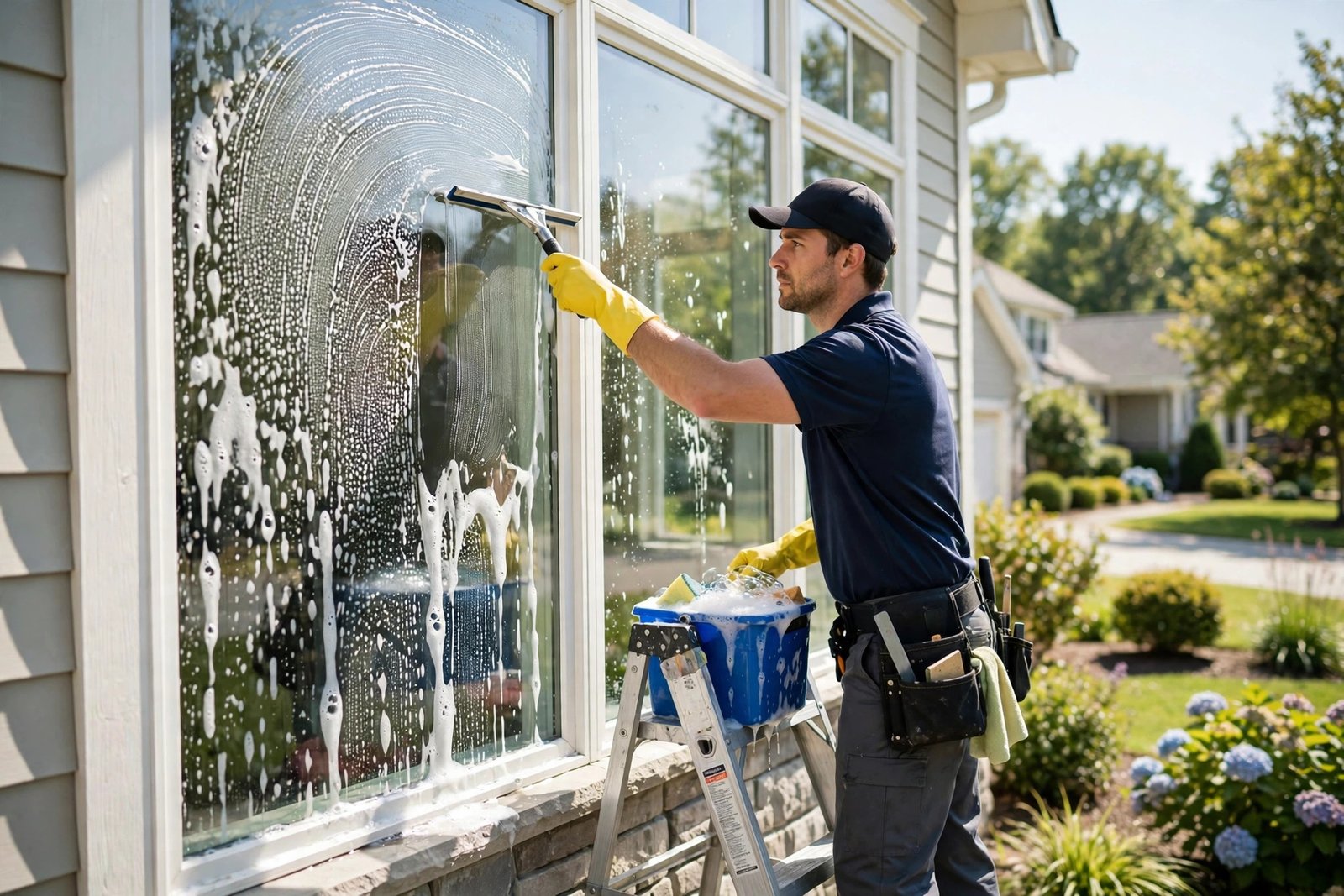
Start by cleaning your own windows until you can finish a whole house in half a day with no streaks. The basic method is simple: wet the glass with a scrubber, pull the water off with a squeegee in smooth strokes, and wipe the edges with a cloth. The detail is in the edges, the corners, and the frames. Streaks live there.
Practise on a friend's house next, for free, and ask for honest feedback. Time yourself. A solo cleaner typically manages two or three inside-and-out homes a day, and a large home can fill a whole day. Knowing your real speed matters, because your prices must cover the hours you actually spend.
Learn the three jobs beginners get wrong. First, screens take longer than you expect, and the springs are fragile. Clean each screen and put it back on the same window straight away, instead of pulling every screen in the house first and sorting them out later. Second, never scrape tempered glass with a razor without checking first. Tempered glass can scratch, and the scratch becomes your claim. If a blade hisses or pops on the glass, stop at once. Third, do a quick walk around the house before you start and photograph any existing damage, such as cracked panes or scratched glass. That photo is the cheapest insurance you will ever have against a dispute.
Step 2: Decide between homes, storefronts, or both
Homes pay more per visit and book twice a year at best, so the work comes in spring and autumn rushes. Storefronts pay little per stop but come back every two or four weeks, and the money is in density, which means a block of shops you can walk between. Most owners do both: storefronts on fixed weekday mornings, homes in the afternoons and on the busy weeks.
If you are starting around a full-time job, storefronts are a good first target. You can walk into a shop and ask the manager who cleans their windows and whether they are happy. A yes costs you nothing, and a small route of 20 shops on one street, cleaned every two weeks, is steady income you can build on. Homes are better for weekend work, when owners are at home to let you in.
Step 3: Buy your starter kit
The starter kit is short, and a few hundred dollars covers it. Here is what to buy first:
| Item | Typical cost |
|---|---|
| Squeegee with channel and rubber | $15 to $35 |
| Scrubber or T-bar with sleeve | $15 to $30 |
| Bucket, tool belt, and holster | $30 to $60 |
| Extension ladder, 24 to 28 feet, fibreglass | $400 to $600 |
| Ladder levelers | $117 to $214 |
| Microfiber cloths and scrim towels | $20 to $40 |
| Scraper, steel wool, and basic soap | $20 to $40 |
| Basic squeegee kit, all in | $75 to $300 |
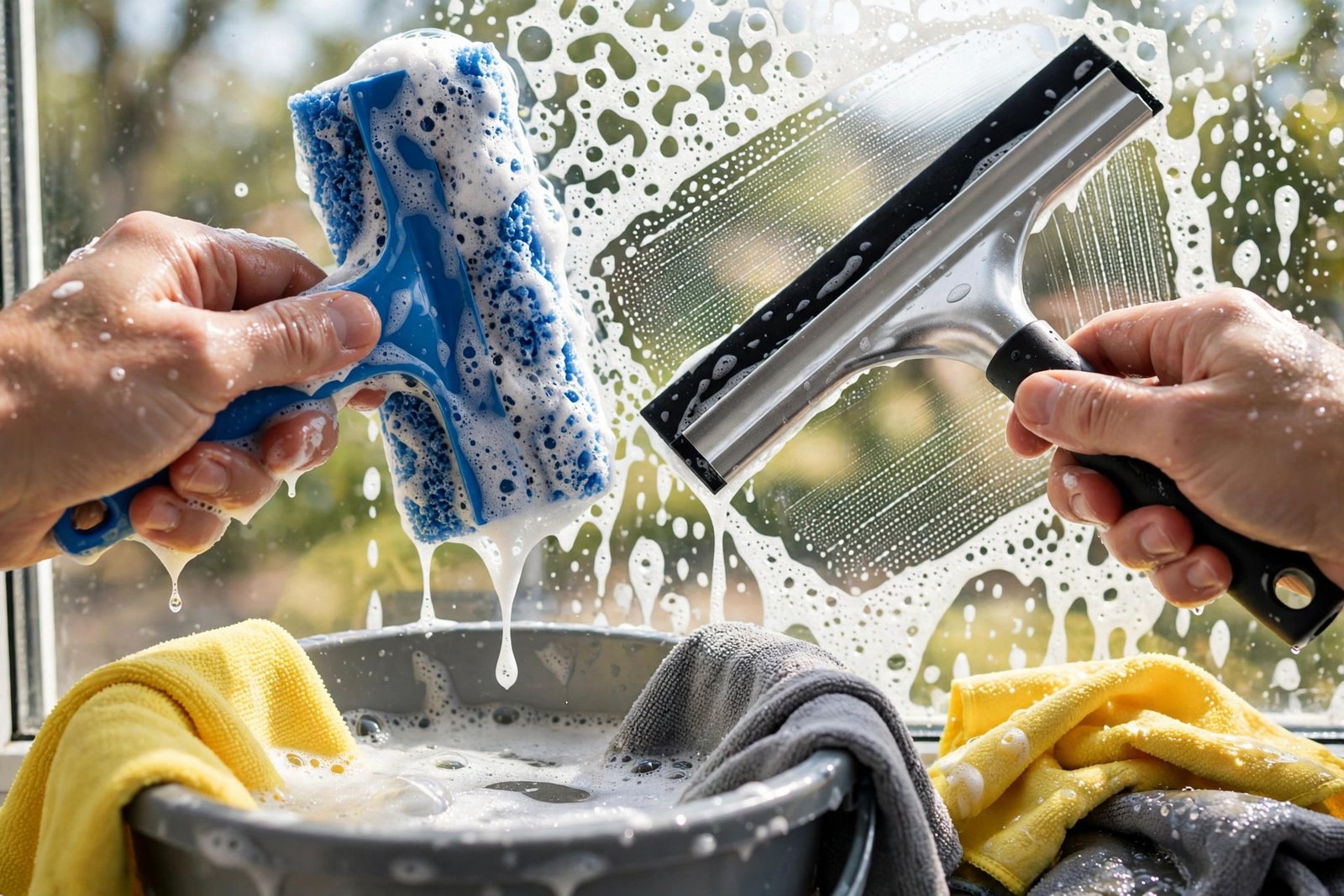
The two brands that come up again and again among people who have worn out a few squeegees are Ettore and Unger. A basic hardware store squeegee works fine to learn on, but most operators upgrade quickly.
The purchase that changes the business is a water-fed pole system. A water-fed pole is a long, light pole with a brush at the top that sprays purified water. You scrub the glass from the ground and leave it to dry, and because the water has no minerals in it, it dries without spots. A deionising tank with a 21-foot pole costs about $938, and a full reverse-osmosis system with a pole costs about $2,428. A carbon fibre pole alone costs $749 to $1,149. The pole keeps you off the ladder for second-storey glass and speeds up storefronts, so most operators add one within the first year. You do not need it on day one.
Step 4: Sort the legal setup and insurance
For window cleaning itself, most places need no special licence. You register the business and pay the taxes that apply. A few cities are exceptions. Saint Paul in Minnesota, for example, licenses cleaning outside windows above the first floor with ladders or lifts, though not on one- or two-family homes. Some states also tax window cleaning as a service, including Texas, Connecticut, Ohio, and New York, so you may need a sales tax permit. Check your own state and city rules before your first paid job.
Many solo operators start as a sole proprietor, with the business income flowing through their personal tax return. A limited liability company (LLC) can come later, once there is a real business and real assets to protect. The SBA guide to choosing a business structure explains each option. Open a dedicated business bank account from day one so personal and business money never mix, which makes tax time far simpler.
Insurance is close to a must-have in this trade, and contractors who have done the work treat it that way. The risk is real and recurring: a broken pane, a damaged screen, or a dispute over hard water stains you did not cause. General liability for window cleaners has a median cost of about $78 a month, or $931 a year, according to insurance marketplace Insureon. Commercial auto cover for a business-owned vehicle runs about $250 a month at the median, and a janitorial bond costs about $9 a month. Get quotes from more than one insurer, and ask your agent whether damage to the glass you are working on is covered. Some policies do not cover it, and you need to know that before a claim.
Taxes apply from your first paid job. In the United States, the IRS self-employment tax page explains that you generally owe self-employment tax once your net earnings reach $400 in a year. The rate is 15.3 percent, which covers Social Security and Medicare. Keep every receipt, and set money aside for tax with every payment you receive.
Step 5: Set prices by the window, the pane, and the visit
Pricing is where new operators lose the most money without realising it. Price by the window based on what the job includes, interior, exterior, or both, add a premium for anything above ground level, and price screens, tracks, storm windows, and hard water treatment as their own line items instead of folding them into the base rate.
Typical prices reported in 2026 guides are:
| Job | Typical price |
|---|---|
| Whole home, inside and out | $150 to $302, averaging about $221 |
| Per window | About $10 to $15 |
| Per pane (one sheet of glass) | $4 to $15 |
| Small storefront, per visit | $40 to $75 |
| Minimum charge per job | $45 to $85 |
A pane is one sheet of glass, so a two-pane window counts twice. Add-ons are where the margin lives. Screens cost about $5 each to clean, tracks and sills about $1 to $6 per window, and hard water stain removal $15 to $75 per pane. Write every price down before the first job, and quote in writing. A written quote with the price, what is included, and the date protects you and the customer.
Offer a frequency ladder on every home quote, because the round is the asset. One operator's published ladder is: one-off $180, quarterly $145, bi-monthly $130, monthly $115. A one-off customer is worth one clean. A quarterly customer is worth four cleans a year with no further selling, and each visit is faster because the glass is never very dirty. Book every home's next clean before you leave the job.
Do not price from a gut feeling. One operator's first paid job, a two-storey home with French panes and storm windows nobody warned them about, took two full 12-hour days and was billed at a flat $200. That works out to about $8 an hour before fuel and gear. Price from the time the work really takes, and raise your prices before it is too late. Owners who started low say so again and again.
Step 6: Win your first clients
Door-to-door work is the fastest and cheapest way to get initial momentum, even for people who genuinely dislike doing it. The pattern is simple: sell one job in a neighbourhood, then use it as leverage, with door hangers, a yard sign, or a referral ask, to pick up the rest of the street. Knock on the street you are already working on. A line that works is: "I am cleaning number 14 today. I could do yours while I am here, or add you to the round."
Walk the local high street for storefront work in your first month. Shops, cafes, salons, estate agents, and small offices are the most stable revenue in this trade, and they are won by walking in and asking. Twenty storefronts on one street, cleaned every two weeks at $30 each, is $600 every two weeks from a morning's work with almost no driving.
Set up a Google Business Profile before you even have a website. Post on Nextdoor, where one operator traced roughly half of their revenue back to a single post. Ask every happy customer for a review before you drive away, and send the review link the same day. Follow up fast on quotes that did not convert. A same-day or next-morning text closes more jobs than people expect.
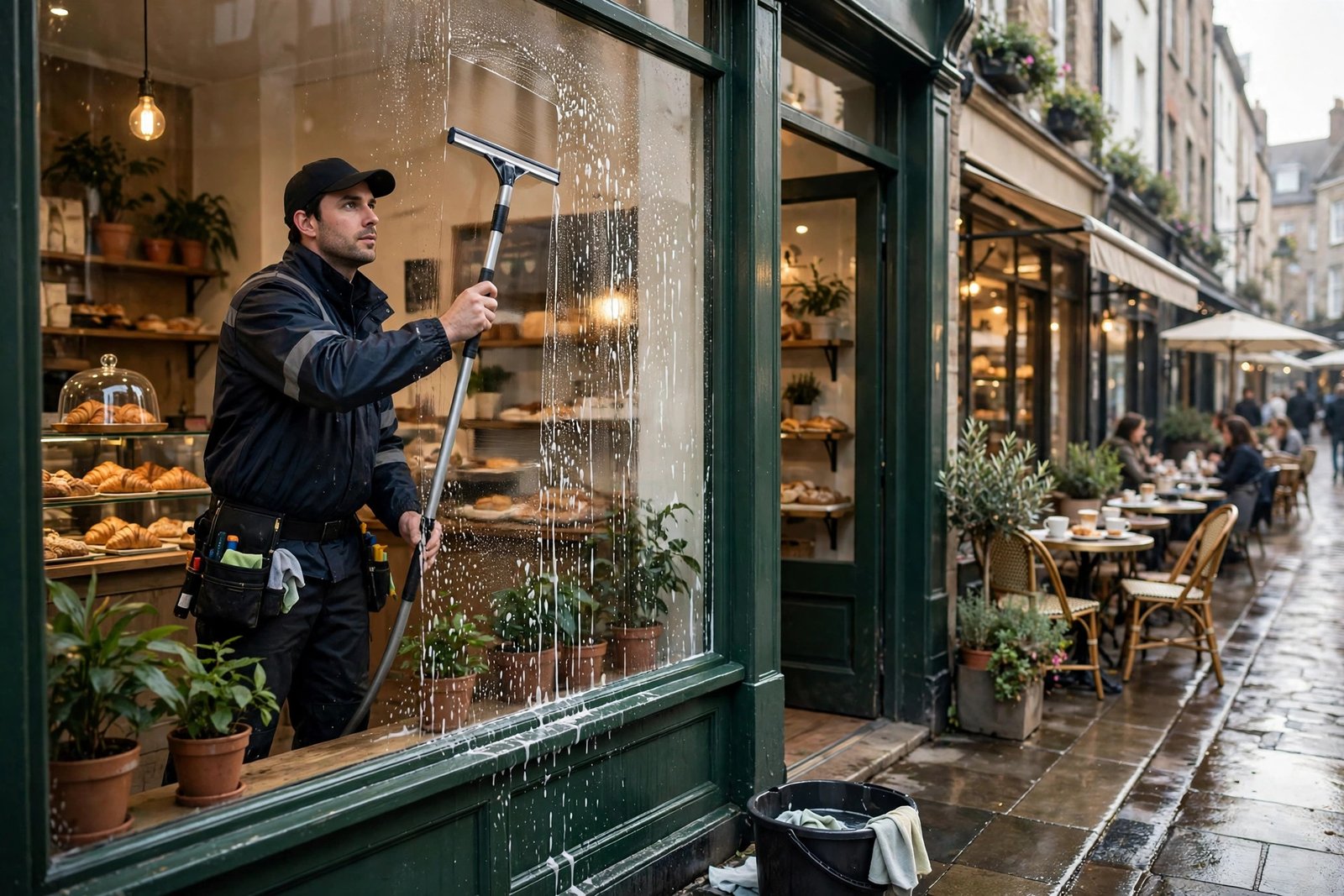
Take before-and-after photos at every job, with the customer's permission, and post them on your profile and social pages. Clean glass is a visual product. Photos of the work sell the next house on the street better than any advert.
Step 7: Build the route and keep customers coming back
A route is a list of customers on fixed days, and it is the asset you are building. Tell people the week, not the day, and hold to it. Window cleaning customers rarely leave over price. They leave when they stop knowing when you are coming. Send a text the evening before each visit. That text does more for retention than any discount, and it solves the access problem for interior work at the same time.
Keep the route tight. Ten houses on one street are a morning. Ten houses across a town are a day. Group homes by neighbourhood, put storefronts on fixed weekday mornings, and book each home's next clean before you leave.
At low volume, cash or a payment app and a notebook are fine. Buy field service software only once the volume justifies it.
Add services once the route is steady. Gutters, solar panels, and pressure washing are the common ones, because the customer and the ladder are already there. Gutter cleaning typically costs $119 to $234 per home, and solar panel cleaning $200 to $500 per system. Read the panel maker's cleaning rules before you touch solar panels, and never pressure wash them, because that can crack the cells.
What it costs and what to expect
Here is a realistic startup budget for a lean start:
| Item | Cost |
|---|---|
| Basic squeegee kit | $75 to $300 |
| Extension ladder and levelers | $400 to $800 |
| Business registration and city licence | $50 to $300 |
| General liability insurance, first year | $500 to $1,200 |
| Flyers, Google Business Profile, basic website | $0 to $300 |
| Total to start | $1,500 to $3,000 |
A full start with a water-fed pole and pure water system runs $3,395 to $12,882, according to one published 2026 business plan. A vehicle and your own living costs come on top.
Example only: these numbers are not typical results. Imagine you clean 10 homes a month at $200 each, which is $2,000 a month in gross income, plus a small storefront route of 15 shops at $50 a visit every two weeks, which is $1,500 a month. That is $3,500 a month gross. Fuel, insurance, soap, and replacement rubbers cost about $400. That leaves $3,100 before tax for roughly 60 to 70 hours of work a month. Your real numbers will differ with your prices, your area, and how tight your route is. Results vary with experience, location, demand, time, competition, expenses, and platform fees.
The first year is slow no matter how good you are at the cleaning. Some operators reach about $15,000 in recurring annual revenue within a year working weekends only. Others report closer to $50,000 in their first full year. The pattern that shows up again and again is that the first one to three years are the hardest part of any service business. The people who stick with it past the rough first few months are the ones who end up glad they started.
The calendar has seasons. In colder areas, work runs from mid-March to the end of November, and December to February are slow. In warmer areas, summer can also slow down. Use the quiet months for reminder postcards to past customers, for add-on services, and for planning the next season.
Common mistakes
- Pricing from a gut feeling instead of timing the job and pricing the real hours.
- Quoting a flat price without asking about storm windows, French panes, or screens.
- Mixing up screens between windows on the same house.
- Scraping tempered glass with a razor and scratching it.
- Skipping insurance because the first jobs are small.
- Starting with no minimum charge, then driving 40 minutes for a tiny job.
- Forgetting to photograph existing damage before you start.
- Waiting for customers to call you, instead of knocking on doors and walking the high street.
- Taking on high-rise or rope work without training.
Risks and scams to watch for
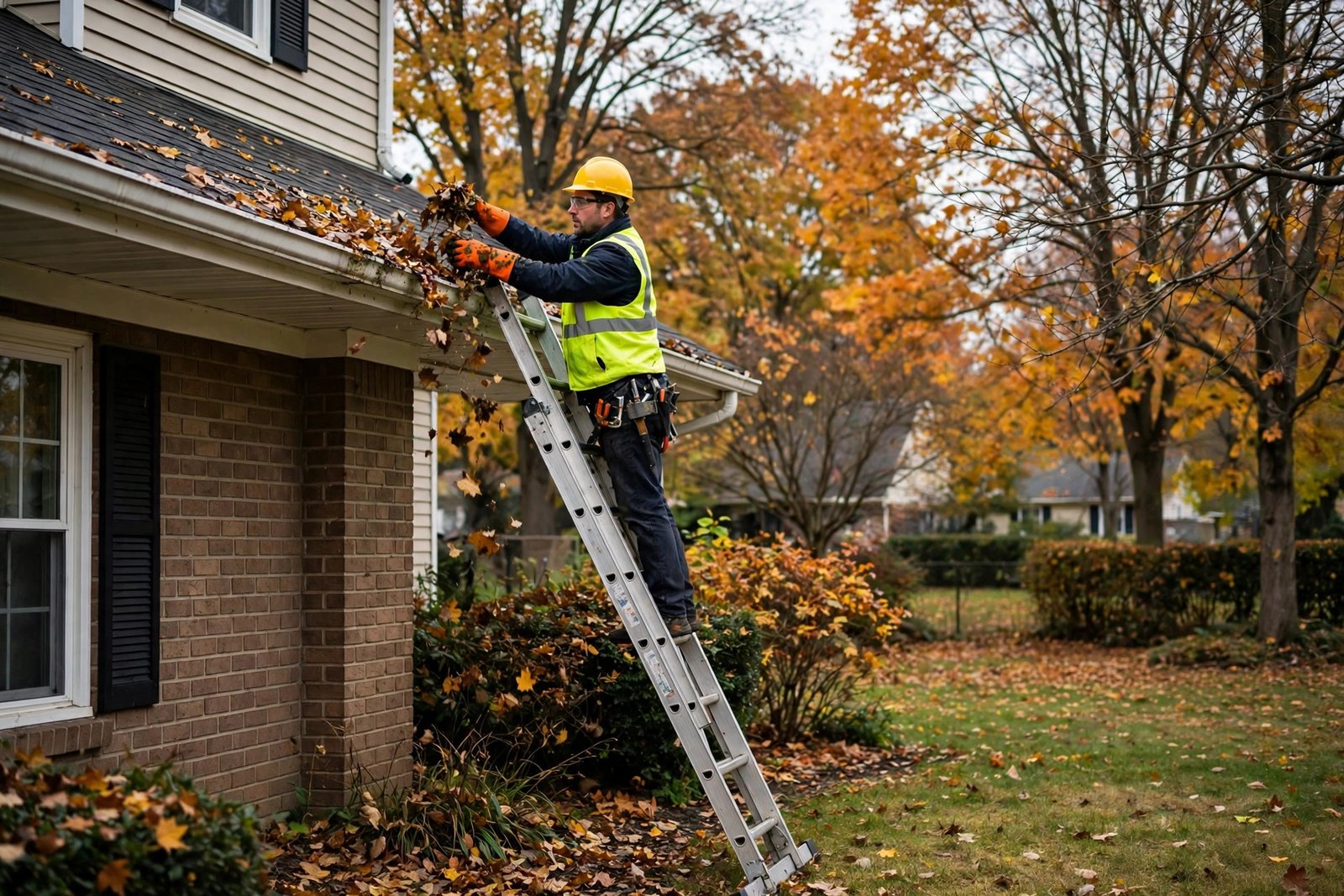
Ladders are the biggest risk in this trade. Falls from portable ladders are one of the leading causes of work deaths and injuries, according to the US Occupational Safety and Health Administration (OSHA). Follow the rules on the OSHA portable ladder safety QuickCard: inspect the ladder before every use, set the base a quarter of the working length from the wall, extend the top at least 3 feet above the landing, keep three points of contact while you climb, and never stand on the top three rungs. Never work on a wet or windy day, and never lean a ladder on a gutter you are cleaning.
Be wary of anyone who offers you a ready-made window cleaning route or a franchise for a large upfront fee with a promise of guaranteed income. No one can guarantee your income. Check reviews, ask for the names of real operators, and never pay for leads or training before you have seen what you get. If a job needs rope access, a lift, or work above three storeys, say no until you have the training and the gear. No single job is worth a fall.
Frequently asked questions
How much does it cost to start a window cleaning side hustle?
A basic start costs about $1,500 to $3,000, which covers a squeegee kit, a ladder, insurance, and registration. A full start with a water-fed pole and pure water system runs $3,395 to $12,882. You can do the first jobs for far less with a basic kit and a ladder you already own.
Do I need a licence to start a window cleaning business?
In most places, no special licence is needed for the cleaning itself. You register the business and get a city business licence where your city requires one. A few cities license upper-floor work, and some states tax window cleaning, so check your state and city rules before your first paid job.
How much can I charge for window cleaning?
A typical home clean costs $150 to $302, averaging about $221, or about $10 to $15 per window and $4 to $15 per pane. A small storefront on a regular route pays $40 to $75 per visit. Set a minimum charge of $45 to $85 so small jobs still pay.
Do I need a water-fed pole to start?
No. Many owners start with a squeegee kit and a ladder, but most say to buy a pole early. A pole cleans second-storey glass from the ground, keeps you off the ladder, and speeds up storefronts. A deionising tank with a 21-foot pole costs about $938.
Is window cleaning seasonal?
Yes, in colder climates. Work peaks in spring and autumn, and winter is slow. In warmer areas, summer can also slow down. Storefront routes help, because shops need cleaning all year, and add-ons such as gutters and solar panels fill the quiet weeks.
How many houses can a window cleaner clean in a day?
Two or three inside-and-out homes a day is what solo owners report, and one large home can fill a day. Storefronts go faster: one pair of cleaners reported 30 to 35 storefronts in eight to nine hours, all within five miles.
Conclusion
This guide showed you how to start a window cleaning side hustle step by step, from your first squeegee to a route of repeat customers. Start by practising on your own windows, buy a lean kit, insure yourself, price by the window with a minimum charge, and build a route street by street. Walk the high street for storefronts, knock on the doors of the homes you already clean, and book every customer's next clean before you leave.
To round out your plan, read our guide to starting a pressure washing side hustle, which is the most common add-on for window cleaners, and our guide to making money with a cleaning side hustle, which covers year-round indoor work for the slow winter months. If you want a trade with similar low startup costs, our car detailing side hustle guide is a good comparison. You can browse all of them in the side hustles category.
Earning results vary, and nothing on this site is financial advice. Check your local rules before you start, and get insured before your first paid job.