How to Earn with Travel Affiliate Programs in 2026
Learning how to earn with travel affiliate programs is a natural step for anyone who already writes about travel, because travel readers are always about to spend money. They book flights, hotels, tours, insurance, car rental, and gear. When you recommend a good service at the exact moment they are ready to book, you can earn a useful commission.
The payouts vary a lot by product type. Tours usually pay 8 percent of the booking. Hotels usually pay a small percentage of the booking. Flights pay very little, often under 1 percent. Car rental can pay well, because the cookie can last a full year. Travel insurance can pay about 10 percent of the premium. The trade off is timing. Commission is usually confirmed only after the trip is completed, not when the reader books. Your first payout can land months after your first sale, and that is normal.
This guide shows you how to start in travel affiliate marketing the honest way: pick one travel audience, compare programs on the numbers that matter, apply to programs you can actually join, and build useful content before you expect income. It is not financial advice, and it does not promise income.
This guide is for beginners who already write about travel, or who plan to start a travel blog. You will learn how travel affiliate programs work, which program types pay best, which programs to shortlist, how to promote them without misleading readers, and what a realistic first year looks like.
Disclosure: this article discusses affiliate links. If you book a trip or buy a product through a link in this article, EarnQuill may earn a commission at no extra cost to you. The information in this article is for education only. Read our full affiliate disclosure for details.
In this guide
- How travel affiliate programs work
- The seven program types compared
- Programs compared
- Step 1: Pick one travel audience
- Step 2: Shortlist programs on five checks
- Step 3: Apply and set up tracking and payouts
- Step 4: Publish the three content types that convert
- Step 5: Track and improve
- Worked example
- What it costs and what to expect
- Common mistakes
- Risks and scams to watch for
- Frequently asked questions
How travel affiliate programs work
A travel affiliate program is a partnership between a travel company and a publisher. You place a tracked link on your site. When a reader clicks it and completes a booking, you earn a commission. Most travel programs pay a percentage of the booking, usually 1 to 8 percent. Some pay a flat fee per booking, and some pay per lead, such as a completed quote for travel insurance.
Most travel brands run their programs through a large affiliate network such as CJ Affiliate, Impact, Awin, or Travelpayouts, which is a travel only network. Some run their own program on their own site. You join the network or the brand program, apply, and once you are approved you get a tracking link and access to banners and reporting. The network tracks clicks and bookings, and it pays you, usually monthly, once your balance passes a minimum threshold.
Travel affiliate marketing is different from most niches in two ways. First, the cookie window matters more than the rate. Trips are planned over weeks, not minutes. A reader may read your post on a Tuesday, talk to their partner on Thursday, and book the following weekend. A 30 day cookie catches that booking. A 24 hour cookie does not. Second, the payment delay is long. Commission is usually confirmed only after the traveller has completed the trip, not when they book. A tour booked in March for a trip in August earns you nothing until August, and nothing at all if the traveller cancels.
You do not need to be a travel agent to promote these programs. You do need to be honest about what you are recommending. Never claim that a hotel, tour, or flight is the cheapest option unless you have checked. Never promise that a trip will be perfect. Your job is to explain what a service offers, what it costs, and who it suits.
The seven program types compared
Travel affiliate programs fall into seven types, and each one serves a different audience. The table below compares them.
| Program type | What the reader books | Typical commission | Cookie | Best audience |
|---|---|---|---|---|
| Tours and activities | Guided tours, attraction tickets, day trips | 8 percent per booking | 30 days | Destination guides, city break readers |
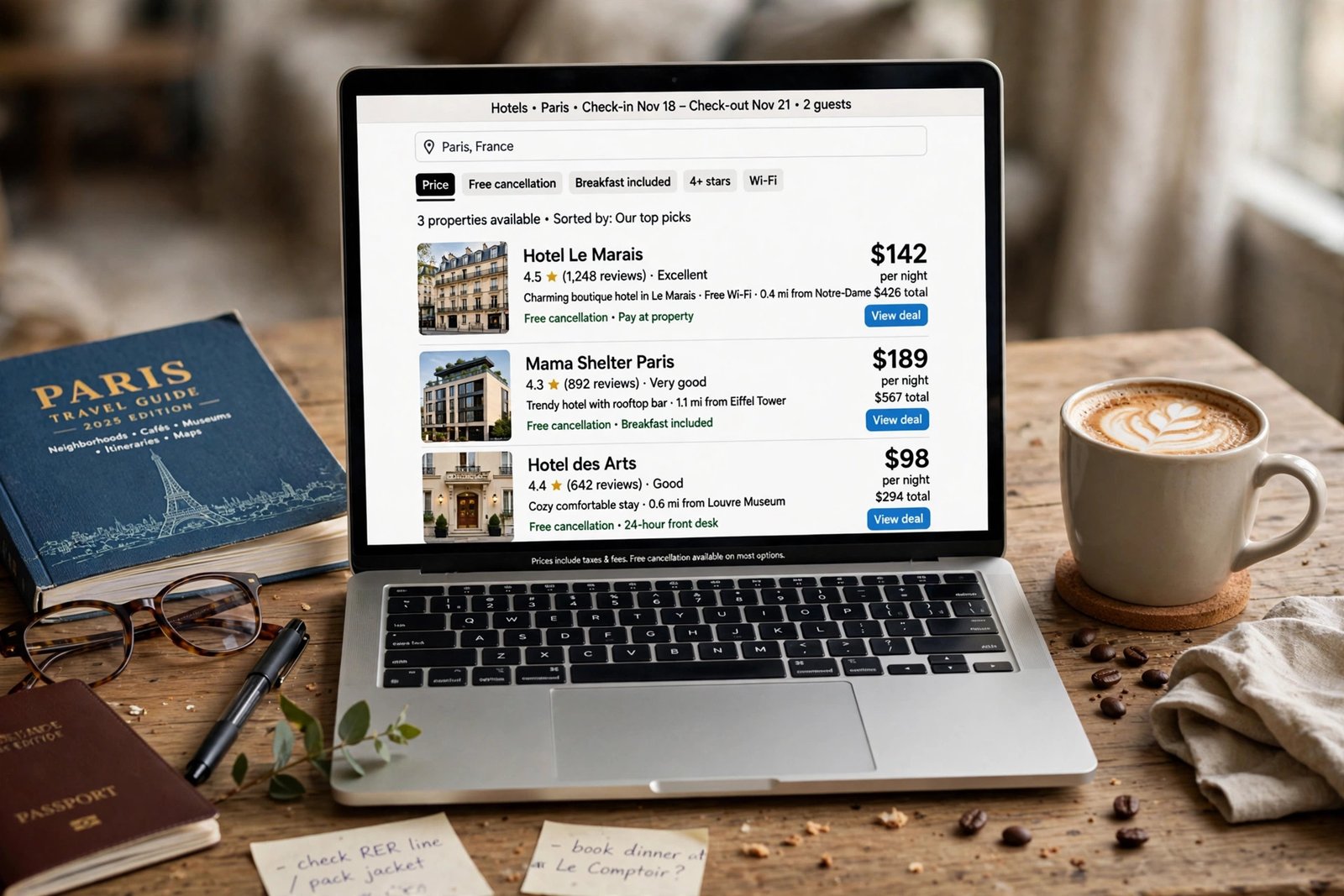
| Hotels and stays | Hotels, hostels, apartments, holiday rentals | 1 to 7 percent per booking | 30 days | Destination guides, family travellers |
| Flights | Flight search and bookings | Under 1 percent, often performance based | 30 days | Flight comparison readers |
| Travel insurance | Trip cancellation and medical cover | About 10 percent of the premium | 30 to 60 days | Long term travellers, families, older travellers |
| Car rental | Rental cars for road trips | Up to 70 percent of rental profit | 365 days | Road trip readers, family travellers |
| eSIMs | Mobile data for travel | 10 percent per sale | 30 days, guide reported | International travellers, digital nomads |
| Travel gear | Luggage, backpacks, accessories | 3 to 4 percent per order | 24 hours | Packing list readers, gear buyers |
Tours are the best starting point for most publishers, because the commission is clear, the cookie is long enough, and tours fit into almost any destination post. Hotels pay small percentages, but the booking values are large. Flights pay the least and have the highest competition, so put them last. Car rental pays well and has the longest cookie in the niche, at 365 days. Travel insurance fits almost any post, because every trip needs cover. eSIMs are a useful extra for destination guides, but the purchases are small. Travel gear pays low rates with a short cookie, so it works best on packing lists.
Pick one type first. A site that promotes all seven at once will confuse readers and dilute its authority.
Programs compared
The table below compares nine programs that appear across the main affiliate guides. Figures are reported by affiliate guides and by the brands own pages, checked in November 2026. Always confirm the current terms in the network dashboard before you apply, because rates and cookie windows change.
| Program | What it sells | Typical commission | Cookie | Network |
|---|---|---|---|---|
| Viator | Tours and experiences, over 300,000 worldwide | 8 percent per completed booking | 30 days | Own program |
| GetYourGuide | Tours and activities | 8 percent per booking, guide reported | 30 days, guide reported | Own program |
| Booking.com | Hotels, apartments, holiday rentals, transport | Share of booking, not stated publicly | Not stated publicly | CJ Affiliate |
| Expedia Group | Hotels, flights, vacation rentals | Up to 4 percent on eligible bookings | In program terms | Own program |
| Trip.com | Hotels, flights, trains, tours | Up to 7 percent on hotels, up to 0.8 percent on flights | 30 days | Own program |
| Skyscanner | Flight, hotel, and car search | Performance based, paid on partner bookings | 30 days | Impact |
| SafetyWing | Travel medical insurance for nomads | About 10 percent of the premium | Not stated publicly | Own program |
| Discover Cars | Car rental | 70 percent of rental profit, 30 percent of Full Coverage revenue | 365 days | Own program |
| Amazon Associates | Travel gear, luggage, accessories | 4 percent luggage, 3 percent outdoors | 24 hours | Own program |
Viator is the clearest starting point, because its terms are published on its own partner page. Viator states an 8 percent commission on every completed booking, a 30 day cookie window, no traffic or follower minimums, weekly payouts by PayPal with no minimum, and monthly bank transfer payouts with a 50 US dollar minimum. Commission is paid once the experience is completed, not at booking. Read the Viator partner resources page yourself before you apply.
GetYourGuide is Viator's main rival. Guides commonly list an 8 percent base commission per booking for new partners, with commission earned once the activity takes place, and a 30 day attribution period. The official partner resource center does not publish the rate on its public pages, so treat 8 percent as guide reported and confirm it in your own dashboard. Read the GetYourGuide Partner Resource Center for the current program details. Booking.com also does not publish a rate on its public page. It directs applicants to register through CJ Affiliate, so check the terms inside your account before you plan around a figure.
Step 1: Pick one travel audience
Start with the audience you already reach. If you write about city breaks, pick tours and hotels. If you write about backpacking, pick hostels and budget insurance. If you write about road trips, pick car rental. If you write about long term travel, pick insurance and eSIMs.
Check three things before you commit. First, can you write at least 10 useful articles for this audience without repeating yourself? Second, do programs in this niche accept new publishers? Viator, Amazon Associates, Discover Cars, SafetyWing, and Travelpayouts accept new blogs. Skyscanner asks for more than 5,000 unique visitors per month, so it is a second stage program. Third, does your audience travel to places the program covers? A program that only covers Europe will not convert for readers travelling in Asia. Check the program terms for country coverage before you write.
Step 2: Shortlist programs on five checks
Do not choose a program on the headline rate alone. An 8 percent commission on a 50 US dollar tour is 4 US dollars. A 70 percent share of rental profit on a 200 US dollar car rental can pay far more. Compare every program on these five checks.
First, the commission model. Some programs pay a percentage of the booking. Some pay a share of the provider's profit, which is less than a share of the price. Discover Cars pays 70 percent of its car rental profit, not 70 percent of what your reader pays. Read the definition carefully. Second, the cookie window. A 365 day cookie, like Discover Cars, is far more valuable than a 24 hour cookie, like Amazon, for a purchase readers plan over weeks. Third, when commission is confirmed. Most travel programs pay only after the trip is completed, so cancellations cost you the commission. Fourth, the payout threshold. Viator pays weekly by PayPal with no minimum. Bank transfers need a 50 US dollar minimum. Fifth, the brand. A brand your readers already trust will convert far better than an unknown brand with a higher rate.
Write the five checks in a simple table for yourself before you apply. It takes 20 minutes and it stops you from chasing the biggest number.
Step 3: Apply and set up tracking and payouts
Apply to one network first, then to two or three programs inside it. Travelpayouts holds more than 90 travel brands in one account, including Booking.com, Viator, and GetYourGuide. CJ Affiliate hosts Booking.com. Impact hosts Skyscanner. Viator, Discover Cars, and SafetyWing run their own programs, so you apply on their own sites.
Before you apply, make sure your site looks like a real publication. Programs check for an about page, a contact page, a privacy policy, and an affiliate disclosure page. They also check that you already publish useful travel content. A site with ten real posts in one clear niche will be approved far more often than an empty site with a single affiliate page. Amazon gives a useful hint: it suggests at least 10 original posts as a rule of thumb, and it needs three qualifying sales in your first 180 days.
Once you are approved, set up your payout details straight away, including your bank details and tax information. Networks will not pay you until this is complete. Then test your tracking link by clicking it yourself and checking that it lands on the right product page. Never place fake bookings to test a link. That is fraud, and it will get your account closed.
Add a clear disclosure near every affiliate link. A short line is enough: "We may earn a commission if you book through this link." The FTC endorsement guides explain when and how to disclose a paid recommendation, and the same principle applies in most countries.
Step 4: Publish the three content types that convert
Travel affiliate income comes from three content types. Publish all three, in this order.
First, destination guides. "Where to stay in Lisbon" or "Best day trips from Bangkok" attract readers who are about to book. Compare hotels by area, price, and transport access. Compare tours by duration, group size, and what is included. Link to the booking page inside the guide, at the exact point where the reader is deciding, not only at the end.
Second, comparison guides. "Viator vs GetYourGuide" or "Best travel insurance for long trips" attract readers who are ready to choose. Compare on price, cover, cancellation terms, and who each option suits. Use a table. Link to the product inside the comparison.
Third, planning resources. Packing lists, transport explainers, seasonal advice, and itinerary posts attract readers at different stages of planning. A packing list can link to gear. An itinerary can link to tours and hotels for each day. A transport guide can link to car rental or eSIMs. If you are new to travel blogging, read how to start a travel blog and make money and how to start affiliate marketing before you publish your first travel article.
Step 5: Track and improve
Check your network dashboard once a week. Look at clicks, bookings, completed trips, and cancellations. Most travel links will never convert, and that is normal. Find the one or two pages that do convert, and write more content like them.
Update your program table every three months. Rates, cookie windows, and even whole programs change. A page that lists an old rate will lose reader trust and may breach the program terms. Keep a short note at the top of each article with the month you last checked the figures.
Once one audience earns steadily, add a second audience that shares the same readers. Travellers who book tours often need travel insurance too, so cross link to how to earn with insurance affiliate programs. Travellers who buy gear often use Amazon, so link to how to earn with Amazon Associates. Track your results with the method in how to promote affiliate products.
Worked example
Example only: these numbers are not typical results. They show the maths, so you can see how the model works.
Imagine you publish a destination guide for Lisbon. It gets 2,000 visitors in a month. About 2 percent click your Viator link. That is 40 clicks. About 1 in 10 of those readers books a tour. That is 4 bookings. The average tour costs 60 US dollars, and the commission is 8 percent. That is 4.80 US dollars per booking. 4 bookings times 4.80 US dollars is 19.20 US dollars for the month from one article.
Now imagine the same article also links to a hotel booking page, and 2 readers book a hotel for 300 US dollars each. At 4 percent, that is 12 US dollars per booking, or 24 US dollars. Total for the month: 19.20 plus 24, which is 43.20 US dollars.
Check the maths again. 2,000 visitors times 2 percent is 40 clicks. 40 divided by 10 is 4 bookings. 60 US dollars times 8 percent is 4.80 US dollars per booking. 4 times 4.80 is 19.20 US dollars. 300 US dollars times 4 percent is 12 US dollars per booking. 2 times 12 is 24 US dollars. 19.20 plus 24 is 43.20 US dollars.
This is an example, not a promise. A new article may get 50 visitors a month, not 2,000. Click rates are often below 2 percent. Most months will be slower than this example, and some months will earn nothing at all. Remember too that the commission is only confirmed after the trip is completed, so this money may not reach your account for months.

What it costs and what to expect
You can start travel affiliate marketing for very little money. A domain and hosting cost roughly 50 to 100 US dollars a year. Joining affiliate networks and programs is free. Your main cost is time. Expect to spend 6 to 10 hours per article, including research, writing, and updating.
Income is slow at first. In the first three months, expect little or nothing, because new pages take time to rank and new sites take time to earn trust. In months four to six, a focused site with 10 to 20 good articles may see its first bookings. Remember the payment delay: a booking made in month four may not pay until month eight, after the trip is completed. In the first year, a realistic outcome for a part time publisher is a small number of bookings per month, not a full time income. Results vary with traffic, audience, country, and how well your content matches what readers need.
The biggest cost is not money. It is the patience to keep publishing while the first payouts are still months away. Travel content earns slowly, then compounds as old guides keep ranking and keep sending bookings.
Common mistakes
- Promoting seven program types at once instead of owning one audience first.
- Choosing a program on the headline rate without checking the cookie window, when commission is confirmed, or the payout threshold.
- Writing inspiration posts with no booking links at the point where the reader decides, then wondering why nothing converts.
- Recommending a hotel or tour you have never checked, with no honest downsides.
- Hiding the affiliate disclosure at the bottom of the page, or leaving it out entirely.
- Using old commission figures without checking the current terms in the network dashboard.
- Counting a booking as income before the trip is completed and the commission is confirmed.
- Expecting income in the first month, then quitting before the content has time to rank.
Risks and scams to watch for
Travel affiliate marketing has real risks. First, cancellations. A booking can be cancelled, refunded, or changed, and the commission is lost. Do not count income until the trip is completed and the commission is confirmed.
Second, fake travel deals. Some sites advertise holidays, flights, or tours that do not exist, and collect payments or personal details from readers. Only promote established brands with a real company behind them, clear terms, and a support channel. If a program has no clear company details, do not promote it.
Third, travel disruption. Flights are cancelled, hotels close, and tours change. A recommendation that was good last year may be wrong today. Update your guides regularly, and tell readers to check the current terms, cancellation policy, and travel advice before they book.
Fourth, refunds and reversals. A commission can be reversed if the traveller cancels or asks for a refund. Do not count income until the commission is confirmed and paid.
Fifth, misleading claims. Never promise that a hotel is the cheapest option, that a tour will run on a specific date, or that a flight will be on time. Compare honestly, name the cancellation terms, and let the reader decide.
Frequently asked questions
How much can you earn from travel affiliate programs?
It varies widely. A single tour booking can pay 4 to 10 US dollars. A single hotel booking can pay 10 to 30 US dollars. A single car rental can pay far more, because the cookie lasts a year. A new site may earn nothing for months, then a small number of bookings per month. Income depends on traffic, audience quality, and how well your content matches what readers need. No honest guide can promise a figure.
Which travel affiliate program pays the most?
Tours usually pay the most reliable commission for beginners, with Viator paying 8 percent per completed booking and no traffic minimum. Car rental can pay more per booking, because Discover Cars pays 70 percent of its rental profit with a 365 day cookie. Hotels pay small percentages on large bookings. The best program for you is the one that fits your audience and converts, not the one with the biggest headline number.
Do you need a travel blog to join travel affiliate programs?
No. You can use YouTube, social media, or an email list, but most programs prefer to see a website with real travel content before they approve you. Viator states no traffic or follower minimums, so it accepts new blogs. Skyscanner asks for more than 5,000 unique visitors per month, so it is a second stage program. A website also lets your content rank in search and earn commissions for months after you publish it.
When do travel affiliates get paid?
Most networks pay monthly, once your balance passes a minimum threshold, often 10 to 100 US dollars depending on the network. Viator pays weekly by PayPal with no minimum, and monthly by bank transfer with a 50 US dollar minimum. The key delay is confirmation: commission is usually confirmed only after the trip is completed, so your first payout can land months after your first booking.
Do travel affiliate programs pay if the trip is cancelled?
No. If the traveller cancels the booking, the commission is not paid. If the trip is changed to a different date, the commission is usually paid once the trip is completed. Always check the cancellation terms for each program, because they differ.
Can I promote more than one travel affiliate program at once?
Yes, and most travel publishers do. A single destination guide can link to Viator for tours, Booking.com for hotels, and SafetyWing for insurance, because each link serves a different decision. Only promote programs that fit the article, and do not stack links for the same product from two programs, because the reader will only use one.
Conclusion
To earn with travel affiliate programs, pick one audience that fits your readers, compare programs on commission model, cookie window, confirmation timing, payout threshold, and brand trust, apply through a trusted network, and publish destination guides, comparisons, and planning resources that answer real questions at the exact moment readers are ready to book. Disclose every affiliate link, keep your figures current, and remember that commission is only confirmed after the trip is completed. Start small, track what converts, and let one audience earn before you add a second.
Next, read how to start a travel blog and make money, how to start affiliate marketing, and best affiliate programs for beginners. Browse all our guides in affiliate marketing.
Reader note: commission rates, cookie windows, payout thresholds, tax rules, and travel rules differ by country and change often. Figures in this article were checked against official program pages and affiliate guides in November 2026. Check the current terms before you apply, check the cancellation policy before you book, and check your local tax authority or a qualified accountant about declaring affiliate income. Earning results vary; nothing on this site is financial advice.