
Learning how to work as a remote project manager is confusing, because most guides only explain how to manage a remote team, not how to get the job. You need both halves: the skills and proof that win the role, and the daily habits that make remote projects work. This guide covers both, in order.
In this guide
- What a remote project manager actually does
- Step 1: Decide which project management path fits you
- Step 2: Get the skills and certifications employers ask for
- Step 3: Learn the tools remote teams use
- Step 4: Build proof of remote-ready work
- Step 5: Find remote project manager jobs
- Step 6: Prepare for remote project manager interviews
- How to run a remote project day to day
- What it costs and how long it takes
- Common mistakes
- Risks and scams to watch for
- Frequently asked questions
What a remote project manager actually does
A project manager plans work, keeps it on track, and makes sure the team delivers on time. A project is a piece of work with a clear goal, a deadline, and a budget, such as launching a website, moving a company to new software, or running a marketing campaign. The project manager does not usually do the specialist work, but they organise who does what, when it is due, and what happens when things go wrong.
A remote project manager does the same job from home, with a team spread across different places. Your day is mostly planning, writing clear updates, running short video meetings, checking progress in a shared tool, and solving problems before they grow. You will talk to stakeholders, which means the people who care about the result, such as clients, managers, and team leads. You will also keep records, track risks, and report progress in writing.
The job suits people who are organised, calm under pressure, and good with people. You need to enjoy planning, writing clearly, and following up without being pushy. You do not need to be the best coder or designer on the team, but you do need to understand enough about the work to ask good questions and spot when a task is in trouble.
Step 1: Decide which project management path fits you
Project management is not one job. Different industries and different methods suit different people, so pick a path before you study.
First, pick an industry. IT and software projects are the most common remote roles, but marketing, construction, health care, and finance also hire remote project managers. Your past work matters here. If you have worked in marketing, a marketing project role is easier to win than a software role, because you already know the work.
Next, pick a method. Agile is a flexible method that works in short cycles called sprints, with regular reviews and changes as the work grows. Waterfall is a step by step method where each stage finishes before the next starts, and it suits projects with fixed plans, such as construction. Many remote teams use Agile or a hybrid of the two, so learn Agile first if you are unsure.
Then, be honest about your start point. If you have managed projects in an office, your next step is to show you can do it remotely. If you have never managed a project, your next step is to lead a small project first, even a volunteer or side project, and build proof from there.
Step 2: Get the skills and certifications employers ask for
Certifications help in project management, because employers use them as a quick check of knowledge. They do not replace experience, but they do open doors, especially for your first remote role.
| Certification | Issuer | Who it suits |
|---|---|---|
| CAPM | PMI | Beginners who want a first project management credential |
| PMP | PMI | Experienced managers with project leadership hours |
| PRINCE2 Foundation | PeopleCert | Beginners and managers in the UK and Europe |
| PRINCE2 Practitioner | PeopleCert | Managers who want to show they can apply the method |
| Scrum Master (PSM or CSM) | Scrum.org or Scrum Alliance | People who want to run Agile teams |
The PMP, issued by PMI, is the best known credential, but it asks for project leadership experience, so most beginners start with CAPM or PRINCE2 Foundation. A Scrum Master credential suits Agile teams and is a good choice if you want software roles. Check the issuing body's own site for the current rules, exam fees, and experience requirements before you choose, because they change. Do not pay for a course until you have checked the current requirements on the official page.
Skills matter as much as certificates. Employers in the research for this guide asked most often for clear written communication, planning, risk tracking, and stakeholder management. Learn to write a short status update that a busy manager can read in one minute, run a meeting that ends on time, and keep a simple risk list that says what could go wrong and what you will do about it.
If you want to build digital skills beside your management skills, read how to learn digital marketing online or how to learn data analysis online, depending on the industry you choose.
Step 3: Learn the tools remote teams use
Remote teams live in shared tools, so you need to be comfortable with the main types before your first day. You do not need to master every tool, but you should know one from each group.
| Tool type | Examples | What it is for |
|---|---|---|
| Project boards | Jira, Asana, Trello | Tasks, deadlines, and progress in one place |
| Communication | Slack, Microsoft Teams, Zoom | Daily chat and video meetings |
| Documents | Google Drive, Dropbox, OneDrive | Shared files and plans |
| Time tracking | Clockify, Toggl | Recording hours where the team asks for it |
| Planning | Gantt charts in Asana or Jira | Timelines and milestones for a project |
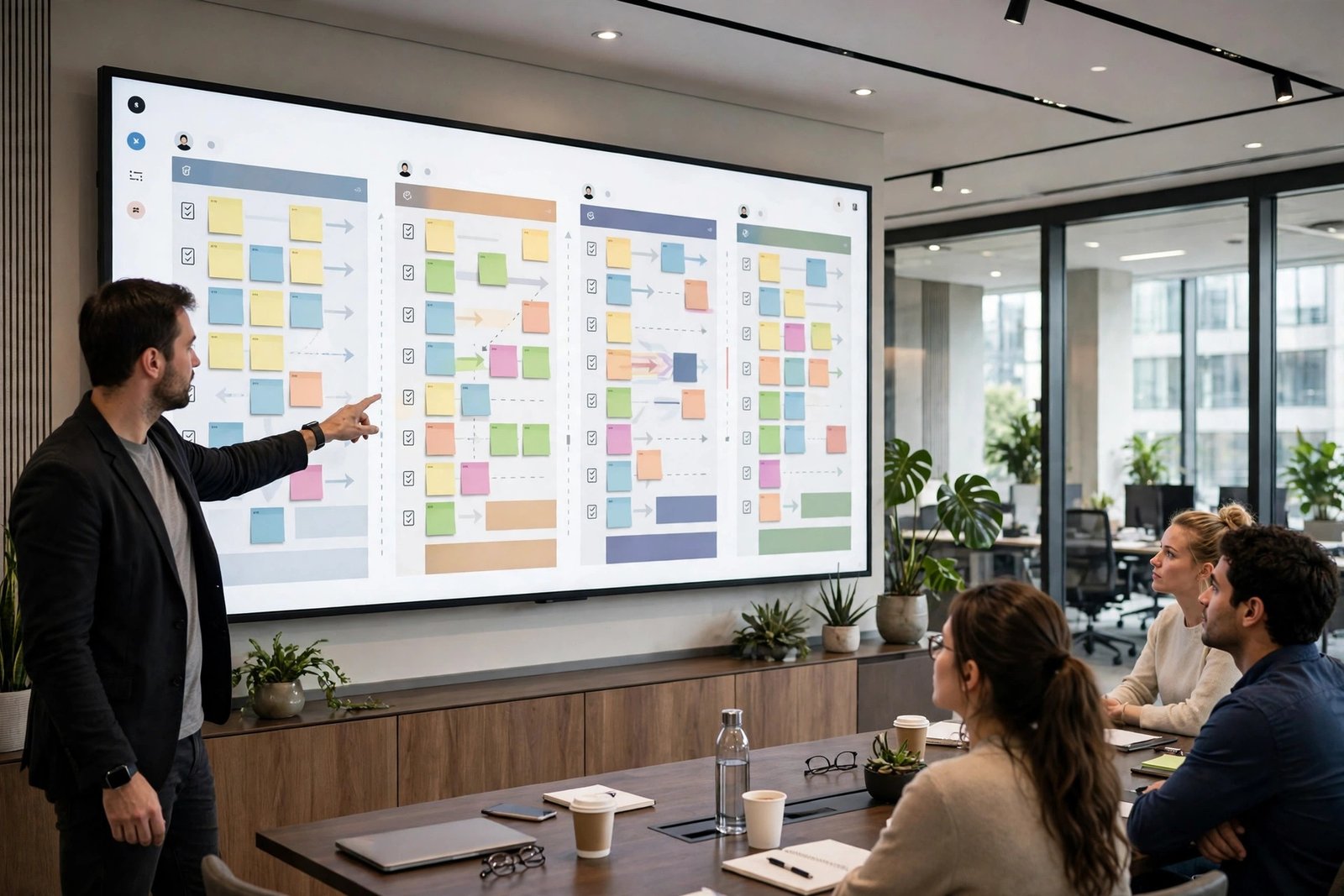
Learn one project board well. Trello is the simplest to start with, Asana suits many teams, and Jira suits software teams. Build a practice project in your chosen tool, with tasks, deadlines, and a simple timeline, so you can show it in an interview. Also learn to run a video meeting well: share your screen, keep to the agenda, and send a short written summary after the call. These small habits are what make a remote project manager trusted.
Step 4: Build proof of remote-ready work
Proof is what turns a certificate into a hire. Employers want to see that you have planned real work and kept it on track, even if the project was small.
Start with a real project you can lead. It could be a volunteer project, a community event, a website build for a small business, or a process improvement at your current job. Write a short case note for it: what the goal was, what you planned, what went wrong, and what the result was. Keep it honest and specific, with dates and numbers where you can.
If you already manage projects in an office, ask to run one project with a remote team, or to manage part of a project from home for a few weeks. This gives you real remote experience to talk about. Keep a record of what you did differently when the team was remote, such as more written updates and shorter check-ins.
Put your proof on your CV and LinkedIn. Under each project, say what you managed, how big the team was, and what the result was. A line such as "Led a five person team to launch a new booking system in eight weeks" tells an employer far more than a list of certificates. Our guide on how to write a CV for remote jobs shows how to shape this.
Step 5: Find remote project manager jobs
Search where remote employers post, and check a small set of boards each day. FlexJobs is a paid board that screens listings by hand, which helps you avoid fake posts. We Work Remotely is a remote-only job board that lists live remote roles across fields. Also check LinkedIn with the remote filter, and the careers pages of companies that run remote teams.
Read each listing for the details that matter. Check whether the role is remote first or tied to one country, which time zones the team works in, and which method the team uses. A role that asks for Agile and Jira is different from one that asks for Waterfall and PRINCE2, so tailor your application to the method named in the advert.
Networking helps more in project management than in many fields, because employers hire people they trust to run their projects. Join a project management group online, take part in discussions, and let people know you are looking. A short message to a hiring manager that names one project you ran is worth more than fifty generic applications. See how to get hired for remote jobs on LinkedIn for how to do this well.
Step 6: Prepare for remote project manager interviews
Remote project manager interviews test how you think, not only what you know. Expect questions about real situations, such as a project that fell behind, a team member who missed a deadline, or a stakeholder who changed the plan halfway through.
Prepare three short stories from your past work, each with a clear shape: what the problem was, what you did, and what happened next. Use real examples, even if they are small. A story about fixing a one week delay on a small project is more useful than a vague claim about leadership.
Also expect questions about remote working itself. Be ready to explain how you keep a remote team updated, how you spot problems early without seeing people in person, and how you run a meeting across time zones. Prepare two questions of your own, such as how the team plans its week and how success is measured in the first three months. See how to pass a remote job interview for the wider steps.
How to run a remote project day to day
Once you have the job, your daily rhythm is what keeps the project on track. Most guides skip this part, but it is the heart of the role.
First, plan the day. Check the project board each morning, note what moved, what is blocked, and what needs your help today. Write the top three priorities down, and share them with the team in one short message.
Second, communicate in writing. Send a short daily update that says what is done, what is next, and what is blocked. Keep it under five lines. Clear written updates replace the office habit of walking over to someone's desk, and they build trust with a remote team.
Third, track progress honestly. Update the board when things change, and do not hide delays. A small delay reported early is easy to fix, while a hidden delay becomes a crisis.
Fourth, solve problems quickly. When a task is blocked, find out why, agree on the next step, and set a time to check again. Do not wait for the weekly meeting to raise a problem that needs action today.
Fifth, review the week. Hold a short retrospective, which is a meeting where the team says what went well and what to change. Keep it to thirty minutes, write down one change to try next week, and follow through on it. This simple rhythm of plan, communicate, track, solve, and review is what makes remote projects work.

What it costs and how long it takes
| Item | Typical cost note | Typical time note |
|---|---|---|
| CAPM or PRINCE2 Foundation course | Paid course, prices vary by provider | A few weeks to a few months of study |
| PMP exam | Paid exam, plus a preparation course | Months of study, plus experience hours |
| Scrum Master course | Paid course, often two days plus an exam | A few weeks in total |
| Project board practice | Free tiers exist for Trello, Asana, and Jira | One weekend to build a practice project |
| Job board access | Free on most boards, FlexJobs charges a subscription | Ongoing while you search |
| Home office setup | A quiet space, good internet, and a second screen if you can | One day to set up |
A realistic timeline is three to six months to gain a first certification and build a small portfolio of projects, then one to three months of searching for a first remote role. If you already manage projects in an office, the move to remote can be faster, because you already have the core experience.
Example only: what the median pay figure means
Example only: these numbers are not a promise and not typical for a beginner. The US Bureau of Labor Statistics reports a median annual wage of 102,320 USD in May 2025 for project management specialists. That figure covers all project management specialists in the United States, remote or not, and in all industries. To see what it means per month, divide 102,320 USD by 12, which equals 8,526.67 USD per month. To see it per week, divide 102,320 USD by 52, which equals 1,967.69 USD per week. Check the maths again: 102,320 divided by 12 is 8,526.67, and 102,320 divided by 52 is 1,967.69. The Bureau also projects employment to grow 7 percent from 2025 to 2035, with about 76,500 openings per year. Read the Bureau of Labor Statistics profile for project management specialists for the full detail. Pay varies widely by industry, experience, and country, so check the range in each listing before you judge, and read how to negotiate salary for a remote job before you discuss pay.
Common mistakes
- Studying for a certificate without leading a single real project to prove you can use it.
- Applying for every project manager role at once instead of picking one industry and one method.
- Writing long status updates that nobody reads, instead of short updates that state what is done and what is blocked.
- Hiding delays from the team and hoping they fix themselves.
- Running long video meetings with no agenda and no written summary afterwards.
- Listing tools you have never used, which a practical question in the interview will expose.
- Ignoring time zones when you plan meetings and deadlines for a remote team.
- Treating remote work as office work on a laptop, instead of changing how you communicate and track progress.
Risks and scams to watch for
Project manager job scams exist, and they often target people who are keen to work from home. A fake recruiter may offer a well paid remote role, send a convincing contract, and then ask you to pay for equipment, training, or a background check. A real employer will never ask you to pay to be hired, and will never ask for bank details or passwords before an interview.
Check every company before you apply. Look for a real website, real staff on LinkedIn, and real reviews. Check that emails come from the company domain, not a free email service. If a recruiter contacts you first, ask which company they represent and check the role on the company's own careers page. The US Federal Trade Commission explains how job scams work and how to report them, and our guide on how to spot online job scams lists the warning signs. If a listing feels wrong, read how to tell a legitimate online job from a scam listing before you share any personal detail.
Frequently asked questions
Can you work as a project manager remotely?
Yes, many project managers work remotely, because the work is mostly planning, writing, and video meetings. IT, software, marketing, and finance teams hire remote project managers most often. Roles that need you on a physical site, such as construction, are harder to do fully remotely.
What qualifications do you need to be a remote project manager?
Employers usually ask for a certification such as CAPM, PMP, PRINCE2, or a Scrum Master credential, plus real project experience. Beginners often start with CAPM or PRINCE2 Foundation, while PMP suits experienced managers. Check the adverts for the roles you want, because the right credential depends on the industry and the method the team uses.
Do you need PMP for remote project manager jobs?
No, not always. PMP is the best known credential and it helps, but many roles accept CAPM, PRINCE2, or a Scrum Master credential, especially for junior and mid level posts. What matters most is proof that you have run real projects.
How much do remote project managers earn?
Pay varies widely by industry, experience, and country, so no single figure applies to everyone. The US Bureau of Labor Statistics reports a median of 102,320 USD per year in May 2025 for project management specialists, which covers all industries and both remote and office roles. Beginners usually earn less than the median, and remote pay depends on the employer and the country rules that apply.
How do I become a project manager with no experience?
Lead a small real project first, such as a volunteer project, a community event, or a process improvement at work. Write a short case note about what you planned, what went wrong, and what the result was. Add a first certification such as CAPM or PRINCE2 Foundation, and apply for junior or coordinator roles that lead to full project manager posts.
What tools do remote project managers use?
Most remote teams use a project board such as Jira, Asana, or Trello, a chat tool such as Slack or Microsoft Teams, video calls on Zoom or Teams, and shared documents on Google Drive or OneDrive. Learn one tool from each group, and be ready to show a practice project in your chosen board during the interview.
Conclusion
Working as a remote project manager takes two things: proof that you can run a real project, and daily habits that keep a remote team on track. Pick one industry and one method, gain a first certification, build proof from real work, and search where remote employers actually post.
Next, read how to work as a virtual assistant, how to learn digital marketing online, and how to learn data analysis online. Then browse all online jobs guides to plan your next step.
Reader note: pay figures come from the US Bureau of Labor Statistics and cover project management specialists generally, not remote roles only. Certification rules and exam fees change, so check the issuing body's live page before you choose or pay. Tax and employment rules differ by country, so check your local rules and a qualified accountant. Earning results vary; nothing on this site is financial advice.