How to Work as a Remote Bookkeeper in 2026
Learning how to work as a remote bookkeeper is one of the most realistic remote starts in 2026, because small businesses always need someone to keep their books in order, and the work can be done entirely from home. A bookkeeper records a business's money: what came in, what went out, what is owed, and what is due. You do not need a degree, you do not need to be an accountant, and the main certification is free. What you do need is care with numbers, a methodical way of working, and the patience to build proof before you have a client.
This guide is for beginners who are good with numbers and want flexible remote work, including career changers with no finance background. You will learn what the work involves, how it differs from accounting, how to get certified free, how to build proof, how to set up safely, which work model to pick, and how to find your first clients.
In this guide
- What a remote bookkeeper actually does, and what AI changed
- Bookkeeper vs accountant
- Step 1: Get certified free
- Step 2: Build proof before you have a client
- Step 3: Set up your home office and tools
- Step 4: Choose your work model
- Step 5: Find your first clients
- A realistic first 90 days
- What it costs and what to expect
- Pricing your work
- Common mistakes
- Risks and scams to watch for
- Frequently asked questions
What a remote bookkeeper actually does, and what AI changed
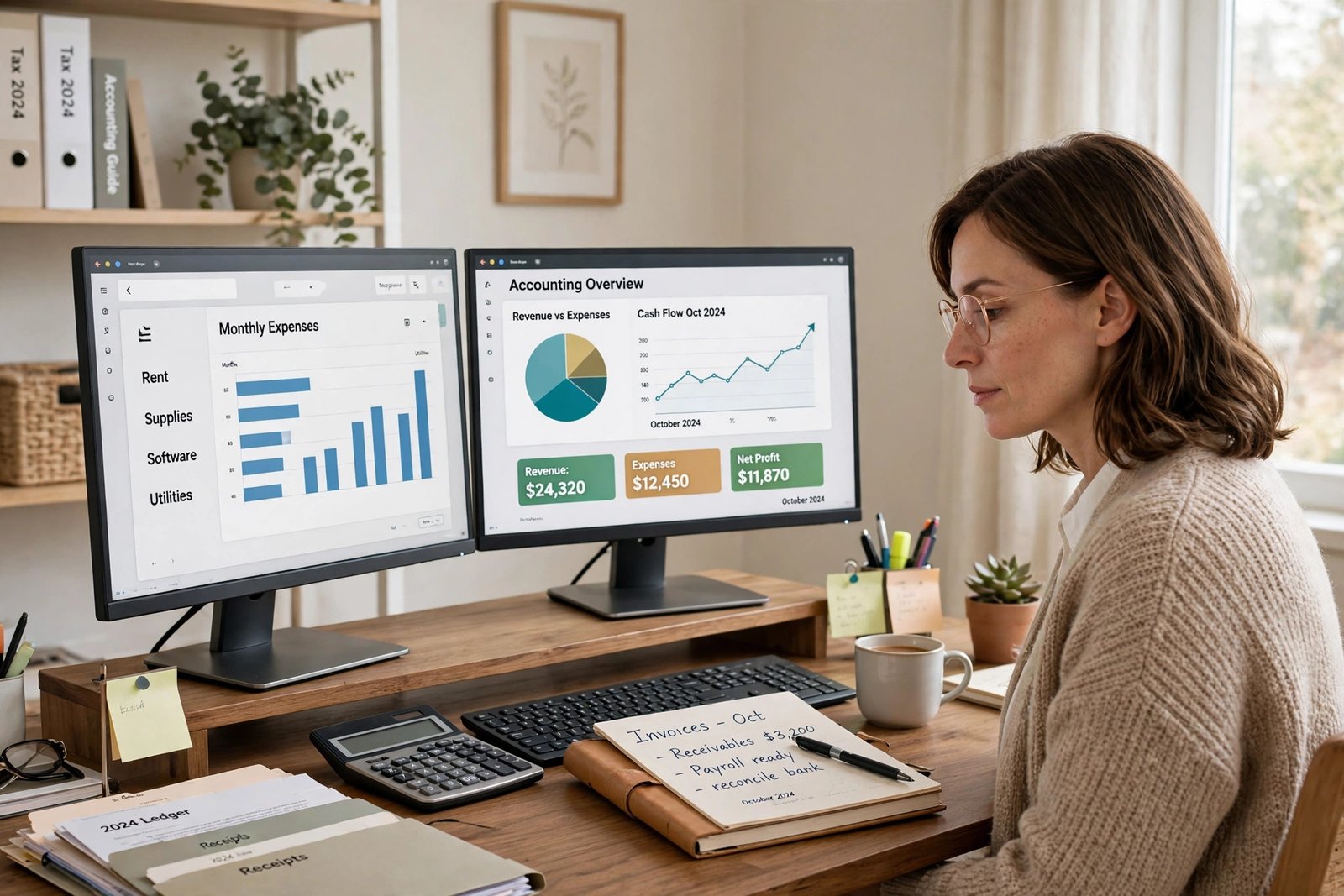
A remote bookkeeper keeps a small business's financial records accurate and up to date, from home. The daily work is categorising transactions, which means labelling each bank transaction as income, an expense, or a transfer, matching bank transactions to invoices and receipts, and reconciling the bank account, which means checking that the books match the bank statement to the last penny, with a zero difference.
The monthly work is a month-end close, which is the routine of finishing a month's books: reconciling all accounts, checking for missing transactions, and preparing a short monthly packet for the client. The packet usually holds a profit and loss statement, which shows income minus expenses, a balance sheet, which shows what the business owns and owes, and a cash flow statement, which shows money in and out. The client uses that packet to see how the business is doing, and to give to their accountant at tax time.
AI changed the routine, but it did not remove the job. AI tools now match many transactions automatically, and they suggest categories for bank feeds, which are the automatic imports of bank transactions into the accounting software. What still needs a human is judgement: deciding whether a payment is a business expense or a personal one, spotting a duplicate, fixing a miscategorised transaction, and explaining the numbers to a client who does not speak finance. The bookkeepers who do well in 2026 are the ones who check the AI output and explain it, not the ones who type the fastest.
Bookkeeper vs accountant
Beginners often mix up bookkeeping and accounting, and the difference matters, because it decides what you are allowed to do and what you should not do.
| Bookkeeper | Accountant | |
|---|---|---|
| Main job | Record daily transactions and keep the books accurate | Use the books to give advice, plan tax, and file returns |
| Qualifications needed | No degree needed; free software certification helps | A degree and professional qualification are usually needed |
| Typical work | Categorise, match, reconcile, prepare monthly reports | Tax returns, financial planning, audits, business advice |
| Who hires them | Small businesses, for monthly bookkeeping | Small businesses, for tax and advice, often yearly |
A bookkeeper should not file tax returns, give tax advice, or audit a business, because those jobs need a qualified accountant and, in many countries, a licence. If a client asks you to do tax work, say plainly that it is outside your scope, and refer them to their accountant. That honesty protects you and the client.
Step 1: Get certified free
The best first step is the QuickBooks ProAdvisor certification, which is free. Intuit, the company behind QuickBooks, runs the ProAdvisor programme for accountants and bookkeepers, and its programme page confirms that it includes training and certifications in its ProAdvisor Academy, with badges you can show on your profile, and that the programme has Level 1 and Level 2 certifications for QuickBooks Online. Training and certification are free through a free QuickBooks Online Accountant account, with annual recertification to stay current. Check the QuickBooks ProAdvisor programme page for the current course names and requirements, because they change.
Xero, the other main cloud accounting software, also offers a free Advisor certification, and learning both QuickBooks and Xero makes you more hireable, because different clients use different software. Pick QuickBooks first, because it is the most widely used by small businesses in the United States, then add Xero when you have your first client or two.
Set aside 15 to 25 hours for the QuickBooks training, spread over two to three weeks. Work through the modules in order, take notes on the parts you find hard, and do the practice questions before you sit the exam. If you fail, read the feedback, study the weak areas, and retake it. A failed first attempt is common, and it does not mean you cannot do the work.
Step 2: Build proof before you have a client
You cannot show client work you do not have, so build proof with practice jobs. The most useful practice job is to reconcile three months of a small business's books for free, in exchange for a testimonial. Ask a friend, a family member, or a local shop owner if you can tidy their books. Use the practice job to learn the real workflow: connect the bank feed, categorise transactions, match receipts, reconcile to a zero difference, and prepare a short monthly report.
If no one will let you touch their real books, use a dummy company, which is a practice business inside the accounting software, with fake transactions. QuickBooks Online Accountant includes a demo company you can practise on. Reconcile three months of it, fix the mistakes the demo contains, and write a short report on what you found.
Write down what you did, in plain words, and keep it as a case note. For example: "Reconciled three months of a cafe's books, found 12 uncategorised transactions and one duplicate payment, corrected them, and prepared a profit and loss statement for the owner." That note, plus a testimonial from the owner, is stronger proof than a certificate alone.
Step 3: Set up your home office and tools
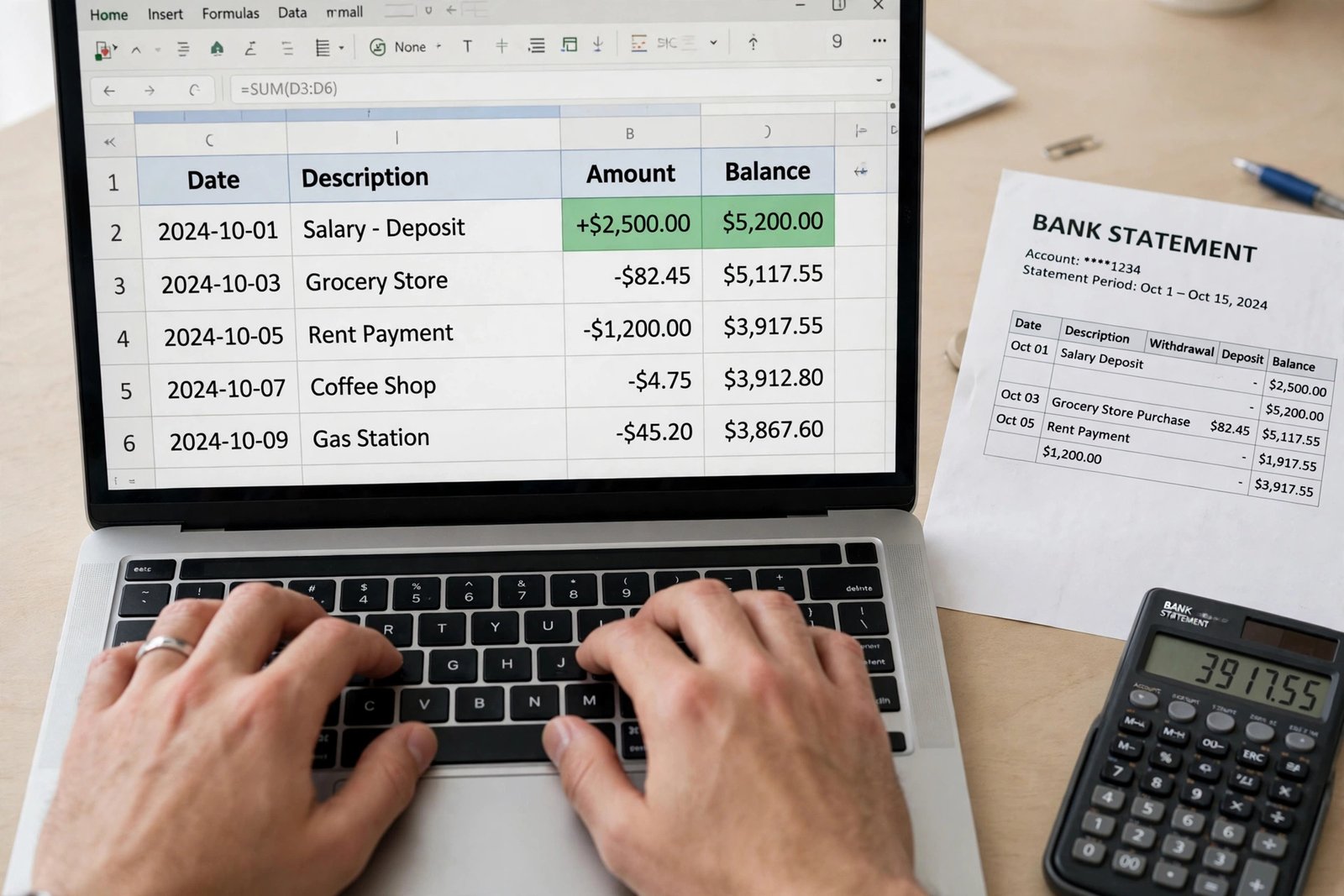
Your setup matters more in bookkeeping than in most remote work, because you handle other people's money records. Security comes first. Use a password manager, turn on two-factor authentication on every account, and keep your computer's disk encrypted. Never ask a client for their bank login details. A real bookkeeper works with view-only bank access, which lets you see transactions but not move money, or with accountant-level access inside the accounting software, which the client grants you themselves.
Your tools are simple. You need QuickBooks Online and Xero, or at least one of them, a receipt capture app such as Dext or Hubdoc, which turns photos of receipts into data, a spreadsheet for checks, and a secure place to store client documents, organised by client, by tax year, and by document type. A second monitor helps, because you can keep the bank statement on one screen and the books on the other, but one screen is enough to start.
Keep your own records too. Note every client, every fee, and every hour, in one spreadsheet, from day one. That record is what you need for your own tax return, and it is also how you learn which clients pay well and which take too much time.
Step 4: Choose your work model
There are three ways to work as a remote bookkeeper, and the right one depends on how much risk you want and how fast you want to start.
| Work model | How it works | Best for | Watch out for |
|---|---|---|---|
| Employee | Hired by one company, fixed hours, fixed pay | Steady income and the simplest start | Less flexibility, and the employer sets your hours |
| Subcontractor | Work for a bookkeeping firm, on their clients, paid hourly or per client | Steady work without finding your own clients | The firm sets the rate and the rules |
| Freelance, solo practice | Find your own clients, set your own rates | Highest control and the best long-term income | You must find clients, and income is uneven at first |
Employees work for firms such as Bench, Pilot, and Bookkeeper360, which hire remote bookkeepers to serve their clients. Subcontractors work through firms or through platforms such as Belay, Boldly, and Accountingfly, which match bookkeepers with clients. Freelancers find their own clients, and they earn the most per hour once they have a full list, but they also spend time on sales and admin.
Most beginners start as an employee or a subcontractor, learn the workflow on real clients, and move to freelance work after a year or two. That route gives you income while you learn, and it gives you references for your own practice later.
Step 5: Find your first clients
Finding clients is the hardest part, and it works best when you go where small businesses already look for help. Start with the ProAdvisor directory, which is Intuit's public list of certified ProAdvisors, and make sure your profile is complete, with your services, your location, and your niches listed. Clients search that directory when they need a bookkeeper, and a complete profile gets found.
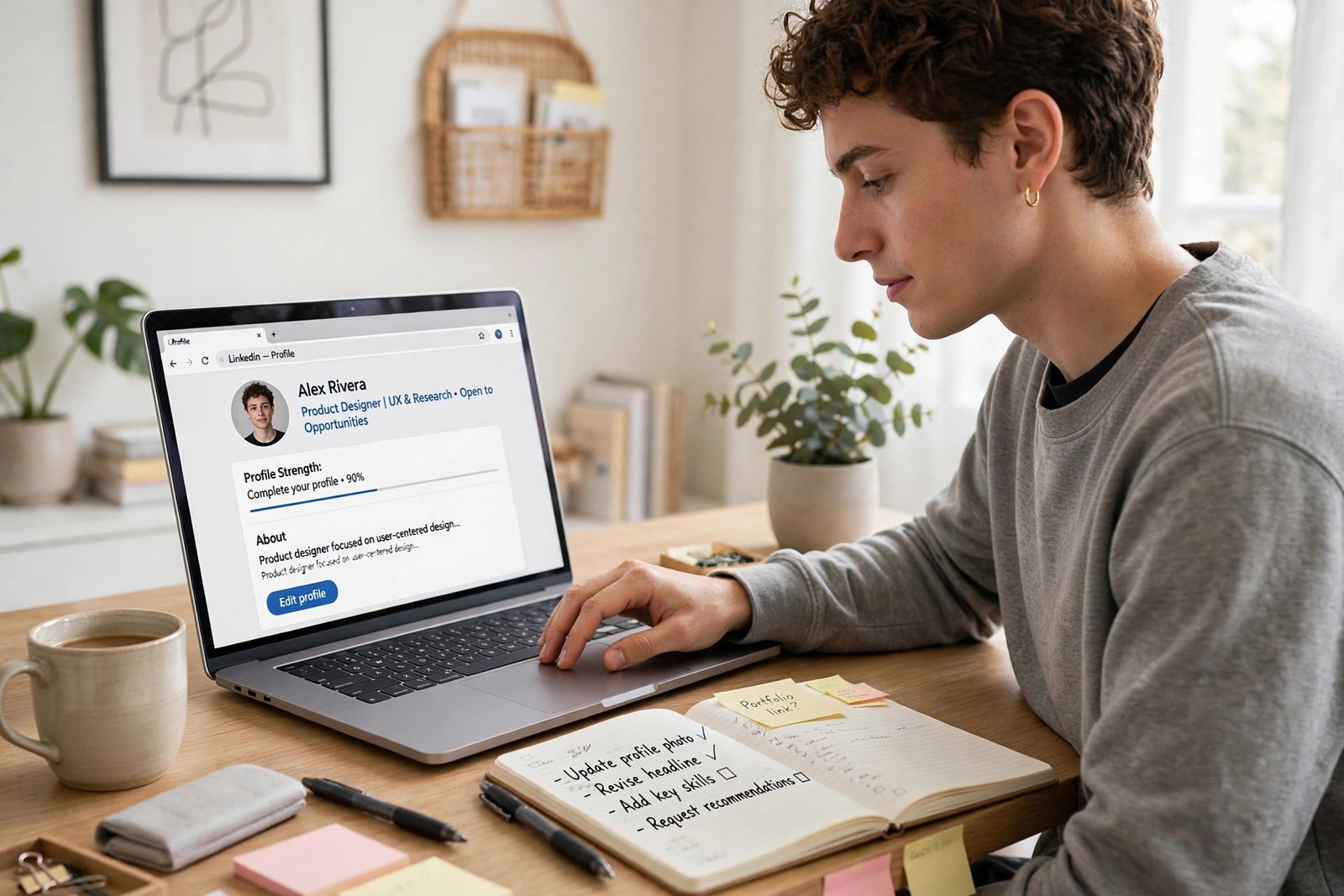
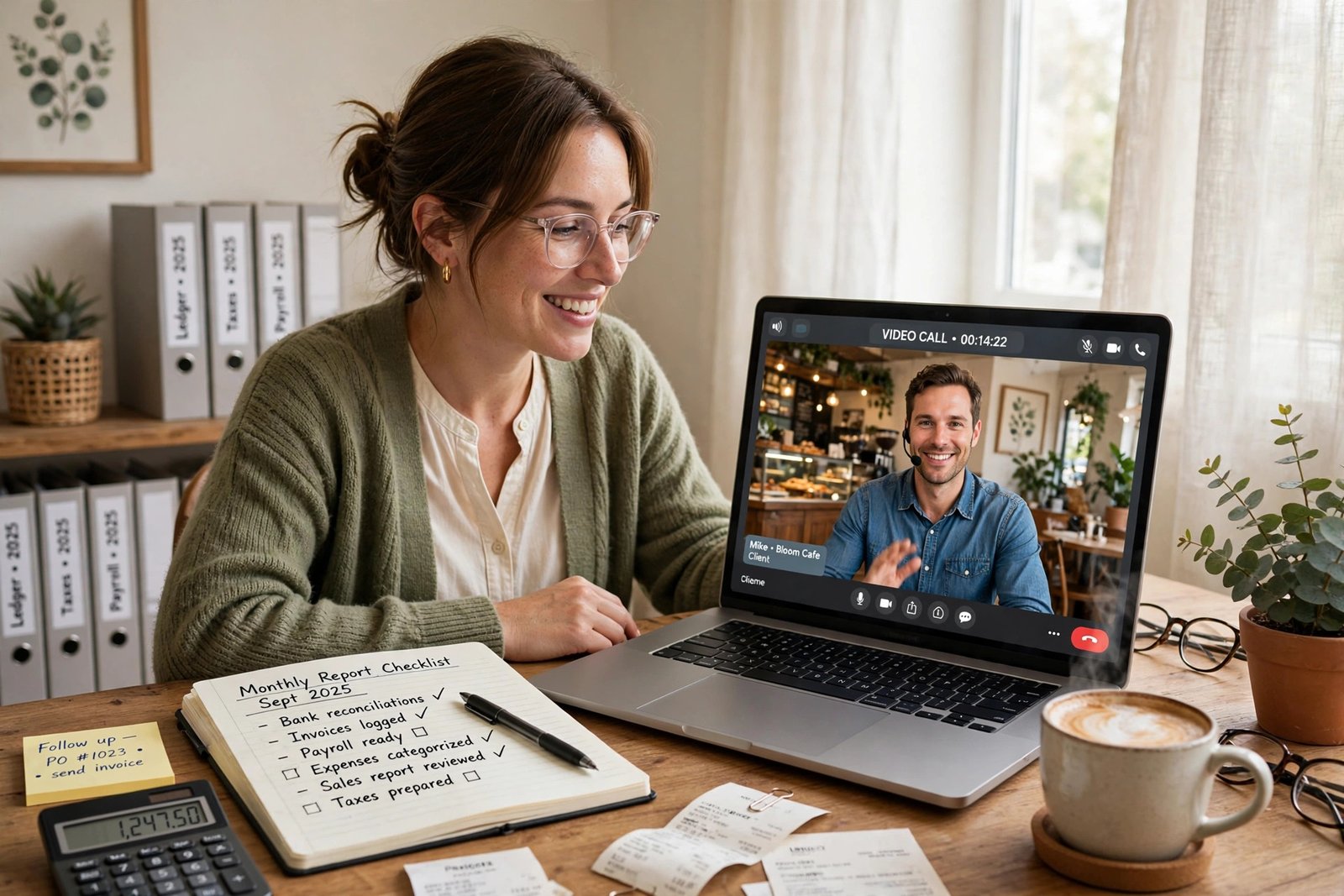
Next, use LinkedIn. Post once a week about a real bookkeeping problem and how you fixed it, such as why a bank reconciliation does not balance, or what to do with a missing receipt. Do not copy other people's posts. Write about what you actually did, and end with a question. When you message a local accountancy firm, offer to take their overflow work, which is the bookkeeping they cannot fit in themselves, and attach your case note. For the LinkedIn method in full, read how to get hired for remote jobs on LinkedIn.
Upwork is a third route. Search for listings with fewer than 15 proposals, because those have less competition, and apply with a short proposal that names the client's problem and links to your case note. A fourth route is local networking: tell every small business owner you know that you do bookkeeping, and ask them to refer you. Most freelance bookkeepers get their first clients through a referral, not through a job board.
For your first three clients, price a little below your target rate, and say so plainly. The aim is testimonials and proof, not maximum income. After three clients, raise your rate to your normal level, and do not keep undercharging.
A realistic first 90 days
| Period | Focus | What done looks like |
|---|---|---|
| Days 1 to 21 | Certification | QuickBooks ProAdvisor training finished, exam passed |
| Days 22 to 45 | Proof | One practice job finished, one testimonial, one case note written |
| Days 46 to 60 | Setup | Tools ready, ProAdvisor directory profile complete, LinkedIn updated |
| Days 61 to 90 | Clients | Three applications a week, first client or first subcontracting role |
Do not expect income in the first month. Most beginners earn their first bookkeeping income in the second or third month, once they have a certificate and a case note to show.
What it costs and what to expect
Starting costs are low. The QuickBooks ProAdvisor training and certification are free, and the Xero Advisor certification is free too. Your main costs are your time, a password manager, and possibly a receipt capture app, which may have a free tier. Do not pay for a bookkeeping course before you have tried the free certification, because the free route is the one employers recognise.
Pay varies, and the competitor guides in this set disagree on the figures, so this guide gives no pay figure as fact. What is clear is the shape: employees earn a steady hourly or monthly wage, subcontractors earn an hourly rate set by the firm, and freelancers earn the most per hour once they have clients, but their income is uneven at first. Check current listings and the rates on freelance platforms in your country before you set your price, and compare several sources, because a single blog figure can be out of date or unsourced.
Example only: these numbers are not typical results. Imagine you charge 25 dollars per hour as a freelancer, and you work 10 hours a week for two small clients. That is 250 dollars a week, or 1,000 dollars in a four-week month, before tax. If your tools cost 20 dollars a month, you keep 980 dollars before tax in that example. If each client needs a monthly close that takes five hours, your 10 hours a week covers both clients, with time left for admin. Real rates, hours, and tax will differ, so use your own figures.
Pricing your work
There are two ways to charge, and each suits a different job. Hourly pricing suits catch-up work, which is fixing months of messy books, because you do not know how long it will take until you see the mess. Monthly pricing suits regular maintenance, because the client pays a fixed fee each month for a set list of tasks, such as categorising transactions, reconciling accounts, and sending a monthly report.
For a new freelancer, monthly pricing is simpler once you know the client, because both sides know the price in advance. Start with an hourly rate for the first month, while you learn how long the work takes, then offer a monthly fee from the second month. Always agree the scope in writing, in an engagement letter, which is a short agreement that lists the services, the fee, and what is not included. Say plainly what you do not do, such as tax returns, payroll, and audits, because those need a qualified accountant.
Common mistakes
- Paying for an expensive bookkeeping course before trying the free ProAdvisor certification.
- Pricing at a high hourly rate with no testimonials, then getting no replies.
- Asking a client for their bank login, instead of using view-only access or accountant-level access.
- Taking on tax work you are not qualified for, instead of referring the client to an accountant.
- Copying the same LinkedIn message to every firm, instead of writing about a real problem you solved.
- Waiting to feel confident before applying, instead of applying while you learn.
Risks and scams to watch for
Watch for courses that promise to make you a certified bookkeeper in 90 days for a high fee, often 2,000 to 3,000 pounds or dollars. The main certification is free, so a course that charges thousands for it is selling you something you can get for nothing. Check what the course actually adds, such as mentoring or client introductions, before you pay anything.
Watch for fake clients. A "client" who sends you an oversized cheque and asks you to wire the surplus back is running a fake cheque scam, and the cheque will bounce. A "client" who asks you to process payments through your personal bank account is asking you to take part in fraud. A real client signs an engagement letter, gives you accountant-level access through the software, and pays by bank transfer or through a platform, never by sending you a cheque to split.
The Federal Trade Commission says honest employers will never ask you to pay to get a job, and will never ask you to deposit a cheque and send part of the money back. Read the FTC guidance on job scams before you take on a new client. For the full checklist, read how to spot online job scams.
Frequently asked questions
Do I need a degree to be a remote bookkeeper?
No, you do not need a degree to do basic bookkeeping. You need care with numbers, a methodical way of working, and a software certification such as QuickBooks ProAdvisor, which is free. You do need a qualified accountant for tax returns and audits, and you should not do that work yourself.
Do I need a CPA to do bookkeeping?
No. A CPA, which is a Certified Public Accountant, is a qualified accountant, and you do not need to be one to keep a small business's books. Bookkeeping and accounting are different jobs, and the bookkeeper's job is to record transactions accurately, not to give tax advice or file returns.
How long does QuickBooks certification take?
Allow 15 to 25 hours of study, spread over two to three weeks. The training and the exam are free through a QuickBooks Online Accountant account, and you need to recertify each year to stay current. Check the ProAdvisor programme page for the current course names and requirements.
How much do remote bookkeepers earn?
There is no reliable typical figure, because pay varies by work model, country, and experience. Employees earn a steady wage, subcontractors earn a rate set by the firm, and freelancers earn the most per hour once they have clients. Check current listings in your country before you set your price.
How do I get my first bookkeeping client?
Build proof first with a practice job, then list yourself in the ProAdvisor directory, post about real bookkeeping problems on LinkedIn, and contact local accountancy firms for overflow work. Price a little below your target rate for your first three clients, in exchange for testimonials, then raise your rate.
Is remote bookkeeping still worth starting in 2026?
Yes, if you focus on the parts AI cannot do: judging messy transactions, fixing errors, and explaining the numbers to a client. Pure data entry is shrinking, but small businesses still need a careful person to keep their books right and to tell them what the numbers mean.
Conclusion: certify free, build proof, then find clients
Working as a remote bookkeeper in 2026 is a realistic route into flexible remote work, if you start with the free certification and build proof before you chase clients. Get your QuickBooks ProAdvisor certification, finish one practice job, set up securely with view-only access, and pick the work model that fits your risk appetite. Then find clients through the ProAdvisor directory, LinkedIn, and local firms, and price your first three clients fairly in exchange for testimonials.
Your next step is to open the ProAdvisor programme page today and start the first training module. Then read how to get hired for remote jobs on LinkedIn, how to write a CV for remote jobs, and how to spot online job scams before you apply or take on a client. You can also browse all our guides in the online jobs category.
Note for the reader: tax, employment, and licensing rules differ by country, so check your local rules and talk to a qualified accountant where needed. Earning results vary; nothing on this site is financial advice.