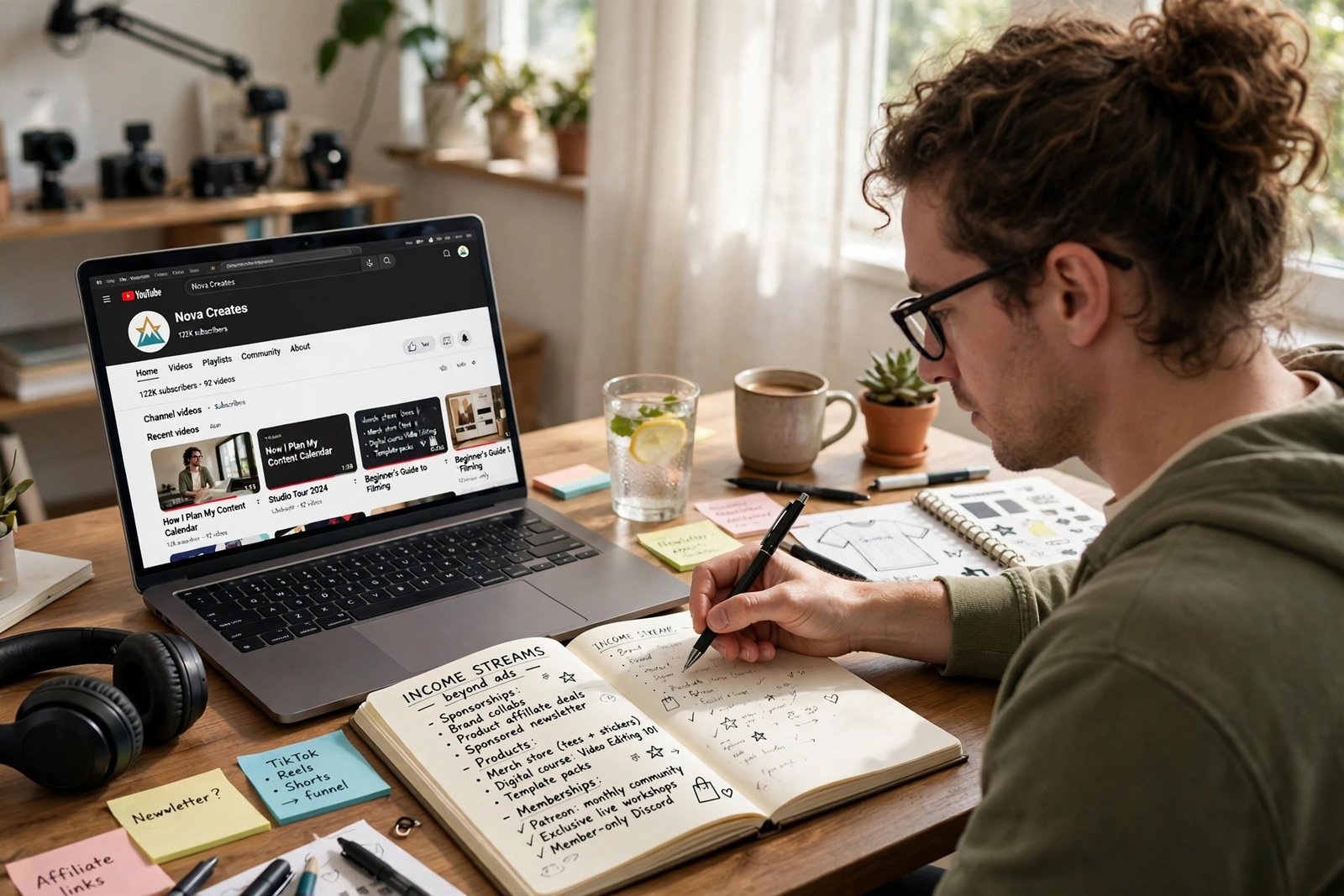
Ads pay little at small scale, and nothing before a channel qualifies for the Partner Program. That does not mean a small channel cannot earn. First income usually comes from other streams: a viewer buying through your link, a brand paying for a mention, a viewer buying a small product, or a supporter paying monthly. No single stream is reliable on its own at small scale, so this guide builds a stack: several small streams, added in stages, each matched to your audience. This guide covers non-ad income only. Ad revenue, Partner Program tiers, and application steps are covered in the monetization guide, and this guide will only mention them where the boundary matters, such as the difference between fan funding inside YouTube and memberships outside it.
Why build a stack
Why a stack beats one stream is simple. Affiliate income varies by topic and season, sponsorships take time to win, product sales take testing, and support income takes months of loyalty to build. With one stream, a slow month becomes a zero month. With three streams, a slow month in one is softened by the others. The order matters too. Start with streams that need no minimum audience, add streams that need trust, and add streams that need an audience last.
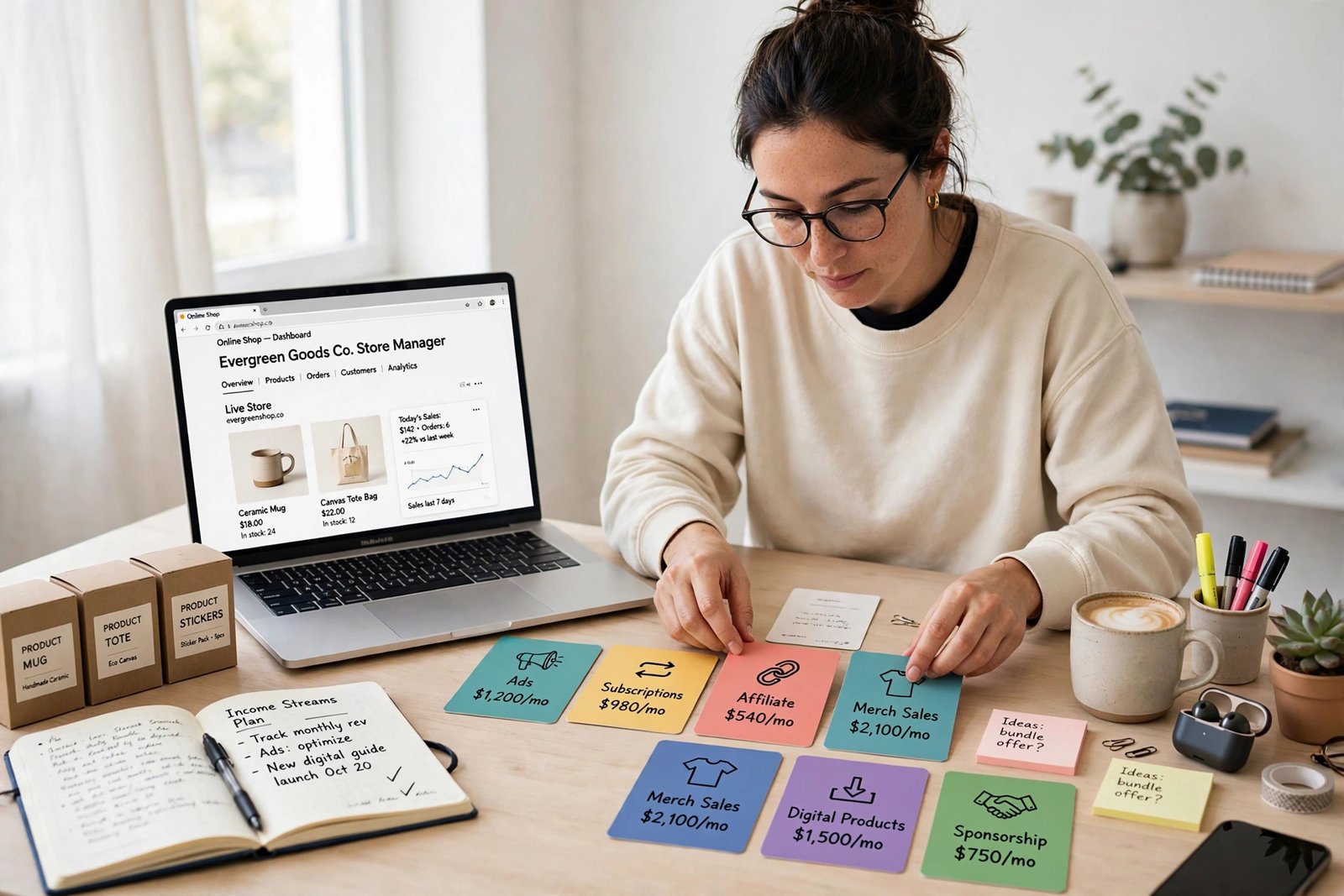
| Stream | Minimum audience | First earnings timing | What it needs | | Affiliate links | None, but viewers who buy | Days to weeks after links go live | Products you genuinely use, honest reviews, disclosure | | Sponsorships | Small but engaged, often hundreds to thousands of viewers per video | Weeks to months of pitching | A media kit, outreach, a clear deliverable, a contract | | Own digital products | Small, if the product solves one sharp problem | Weeks of building and testing | One small product, a sales page, a delivery method | | Own services | Small, if the service is clear | Days to weeks after an offer is made | One service, a booking method, capacity limits | | Fan funding on YouTube | Earlier-access Partner tier where available | After tier approval and setup | Eligible channel, membership perks or Super features | | Memberships off YouTube | None, but loyal viewers help greatly | Weeks after launch | A platform, regular extra content, community management | | Shopping and merch | Small for own store, tier rules for tagged products | Weeks after setup | Designs or products, a store, fulfilment or print on demand | | Lead generation and email list | None | Weeks to months | A free useful resource, an email tool, a later offer | | Licensing and UGC work | Small, if footage is usable | Weeks to months | Clean footage, clear rights, a portfolio |
Start with affiliate links
Affiliate income is the easiest stream to start, and to do badly. You recommend a product or tool you genuinely use, a viewer buys through your link, and you receive a commission set by the program. Start with products already in your videos, such as the microphone, tripod, software, or book you actually used, and add the link in the description with a clear affiliate statement. Do not recommend products you have not used, or hide links among unrelated products. Rates and cookie windows vary widely by program. One competitor guide reports Amazon Associates rates in a low single-digit to low double-digit percent range with a short cookie window, and direct programs higher with longer windows, but confirm each program's current terms rather than treating those figures as promises. Track which links get clicks and sales, and recommend only what your audience already asks about. For a related creator income model on short video, see How to Make Money as a UGC Creator.
Win sponsorships
Sponsorships feel out of reach for small channels, but small brands often prefer small channels with a clear audience over large channels with a vague one. A brand pays for access to your viewers, a demonstration they cannot make themselves, and trust you have already built. List ten brands whose products you already use and whose customers match your viewers. Then build a one-page media kit: viewer profile, recent views, comment quality, what you offer, and one strong past video. Outreach is a short, specific pitch: the brand, the video idea, why their product fits your viewers, the deliverable, and a simple next step, such as a short call. Brands pay for fit, audience quality, deliverables, usage rights, and exclusivity. One competitor guide reports nano sponsorships in a range around fifty to five hundred dollars per integration, but that range is illustrative and partly self-reported in that guide, not a rate card. Your first deals may sit below it, and that is normal. Get every deal in writing: deliverable, deadline, payment terms, revision limits, disclosure wording, and who owns the video. Never accept a deal asking you to hide sponsorship or make unsupported claims.

Sell products and services
Your own products and services earn more per buyer than affiliate links or sponsorships, because you keep most of the price. Start with the smallest viable product: one template, one checklist pack, one short guide, or one preset pack that solves the single problem your viewers ask about most. Price it for an easy decision, and deliver it, such as a download link after payment. A course comes later, after a small product proves viewers will pay you at all. Services work the same way: offer one clear service, such as a channel review or a coaching call, with a fixed scope, price, and booking limit. The honest reality is support time. Every product brings questions, refunds, and updates, and every service brings scheduling and delivery work. Price for that time, write a short refund policy before you launch, and keep a record of sales and costs. For the full course-building steps, read How to Create and Sell an Online Course.
Compare fan funding options
Fan funding has two versions, and the boundary between them matters. Inside YouTube, fan funding features such as channel memberships and Super features require Partner Program access, at the earlier-access tier or the full tier depending on the feature and your region, so they are not available to a brand-new channel. Outside YouTube, membership platforms need no YouTube threshold, but you must bring the audience, manage the community, and deliver extra content, such as bonus videos or templates. Neither version works without loyalty, and loyalty comes from months of useful free videos. Test demand first: if viewers already ask for more detail, templates, or feedback, a small paid tier with one clear extra benefit, such as a monthly live session, is a fair start. If nobody asks, a membership will struggle. Keep the free channel strong, since a membership that drains it will shrink the audience it depends on.
Sell through Shopping and merch
Shopping and merch follow a similar split. With your own store, you can sell at any size using print on demand, but you must handle designs, quality checks, questions, and returns, and margins after production, shipping, and fees are often thin. With tagged products inside YouTube, eligibility depends on Partner Program access and region, so check current Studio terms before promising viewers a shopping feature. Either way, sell products viewers already want: a design from a popular video, a tool you demonstrated, or an item tied to the channel promise. Avoid large stock before a design proves it can sell. Order one sample first, check print and fit, photograph it honestly, and only then promote it.
Build an email list
Lead generation and email lists are the quiet stream that makes the others work better. Offer one free, useful resource, such as a checklist or template, in exchange for an email address, using a reputable email tool and a clear privacy statement. Then send useful emails, not just sales messages, and offer a product or membership only when it fits the reader. An email list matters because YouTube controls video distribution, but you control email distribution, with an unsubscribe option on every message. Mention the free resource once, clearly, in videos where it helps, and link it in the description. Do not buy email lists or add viewers without consent. ## Add licensing later
Licensing and user-generated content work are the final streams in the stack. If your footage is clean, original, and usable by brands, such as demonstrations or location footage, you can list clips with stock platforms, or pitch brands for short videos for their marketing. Keep full rights unless a contract pays fairly for a transfer, state clearly what a buyer may do with a clip, and keep a portfolio of usable footage separate from channel videos. Licensing income is uneven and slow to start, but it can pay for work you already made.
Disclose every stream
Disclosure and honesty rules apply to every stream, and they are not optional extras. Disclose affiliate links in the video and description. Disclose sponsorships verbally and in writing, using paid promotion tools where offered, and never present a paid recommendation as an independent review. Disclose membership perks honestly, and deliver what you promised. Check your country's advertising rules and YouTube's policies in Studio as well. Costs and fees are part of the honest picture: affiliate programs, membership platforms, stores, and payment processors all take fees or percentages, payment timing varies, and refunds reduce net income. Keep a monthly record of income, fees, refunds, and time, so you can judge which stream pays for its effort. For the channel system behind these streams, read How to Grow a YouTube Channel in 2026, and for the ad income that may follow later, read How to Monetize a YouTube Channel in 2026.
Risks and limitations
Non-ad income carries real limits worth stating plainly. Results vary with experience, niche, audience, time, competition, and platform rules, and no stream in this guide guarantees income at any audience size. Affiliate rates and cookie windows change, sponsorship deals can fall through, products can fail to sell, memberships can churn, and licensing sales are irregular. Fees, refunds, payment delays, and support time reduce net income below headline figures, and tax duties differ by country, so keep records and check local official guidance. Disclosure failures can damage trust and breach rules, so when in doubt, disclose early. Finally, a revenue stack will not save a weak channel. Useful videos and a clear promise come first.
Frequently asked questions
Can I make money on YouTube without monetization?
Yes. Affiliate links, sponsorships, your own products and services, off-platform memberships, your own store, email list offers, and licensing need no Partner Program approval. Only YouTube's own fan funding and tagged Shopping features require Partner access, so check Studio for the current rules for those.
How do small YouTubers get sponsors?
By pitching brands that already fit their viewers, with a short media kit showing audience, recent views, and a clear video idea. Small brands often prefer a focused small channel over a large vague one. Start with ten brands you already use, pitch one clear deliverable, and get every deal in writing.
How does YouTube affiliate marketing work?
You share a trackable link to a product you genuinely use, a viewer buys through it, and the program pays you a commission set by its current terms. Disclose the link in video and description, recommend only products you trust, and confirm rates and cookie windows in each program's terms.
Should I use Patreon or channel memberships?
It depends on eligibility and control. Channel memberships keep supporters inside YouTube but require Partner access. An off-platform membership needs no YouTube threshold but requires you to bring the audience and manage the community yourself. Choose the one your viewers already ask for, and keep the free channel strong either way.
Do I need to disclose affiliate links and sponsorships?
Yes. Disclose affiliate links and paid sponsorships clearly, in the video and in the description, and use platform paid promotion tools where offered. Never present a paid recommendation as an independent review, and check your country's advertising rules as well as YouTube's policies.
Conclusion
A non-ad income stack is built in stages: affiliate links from products you already use, sponsorship pitches to fitting brands, one small product or service for a sharp problem, memberships when loyalty supports them, Shopping or merch with sample-checked quality, an email list, and licensing for footage you already own. Disclose every paid relationship, track fees and time honestly, and judge each stream by net income per hour. Your next step is to pick the stream that fits your channel today: add one affiliate link to a product already in your videos, or send one sponsorship pitch this week, and see the YouTube Earning category page for supporting guides.