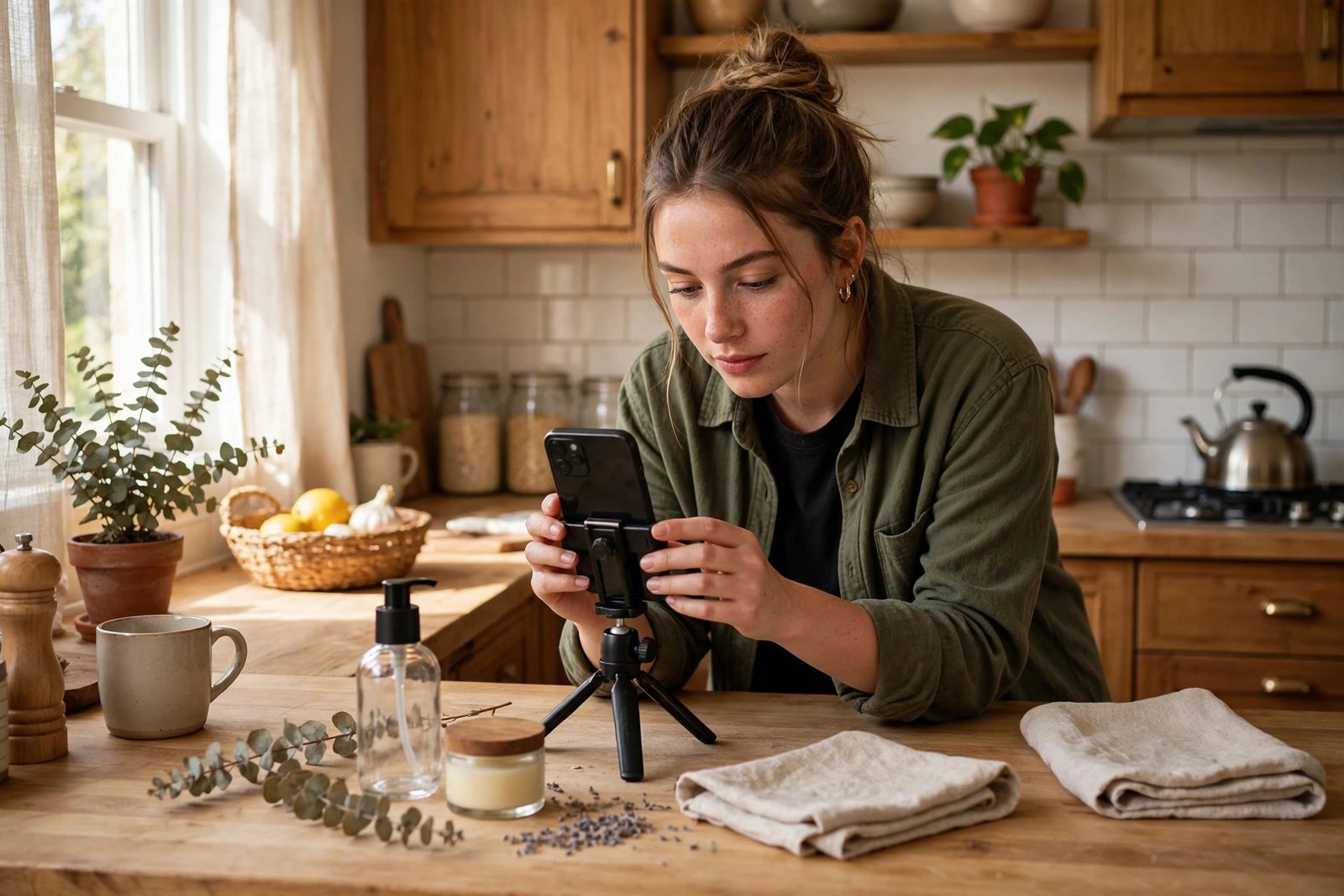
A UGC creator makes short, authentic looking videos and photos that brands use in their own advertising and social media. UGC stands for user generated content, but in this paid work the brand hires you to create it. You do not need followers, you do not need to post the content yourself, and you do not sell access to an audience. You sell finished content files, plus a licence for the brand to use them.
That distinction is the whole business, so state it plainly. UGC sells content files the brand publishes; no audience is sold and often nothing is posted by the creator. A sponsored post, covered in the companion guide to getting brand deals as a small creator, sells the opposite: a post on your own account to your own audience. The two jobs are priced differently, contracted differently, and pitched differently. Some creators do both, but they should charge for each separately and never confuse a brand about which one it is buying.
This article is a complete starter kit: what you sell, how to pick a niche, how to build a portfolio in a weekend, how to price work, where to find clients, how to pitch, how to protect yourself in writing, and how to turn one job into repeat work. Results vary with niche, portfolio quality, outreach volume, time, and market demand. Rates quoted here are reported ranges from creator guides, not guarantees, and they vary by deliverables, usage, and experience.
What a UGC creator actually sells
You sell two things together: the content and the licence. The content is the video or photo set itself, delivered as files. The licence is permission for the brand to use it, for a stated purpose, channel, and time period. Organic use on the brand's own social accounts costs less than paid advertising use, because ads reach far more people and generate direct sales. Longer use costs more than short use. Exclusivity, where you agree not to work with competitors for a period, costs more again, because it limits your other income.
Deliverables usually include the main video, hook variations, and sometimes raw footage or photos. Hook variations are short alternative openings for the same video, so the brand can test which opening performs best in ads. Revisions are changes after delivery, and they should be limited in number and scope in your agreement. Voiceover, captions, and editing style should be agreed before filming, not discovered after. A clear brief protects both sides: product, audience, key message, must include and must avoid points, format, length, deadline, and deliverables.
UGC versus influencer work, and when to do both
Influencer work, or a sponsored post, uses your audience. The brand pays for reach, trust, and engagement with people who follow you. UGC uses your skill. The brand pays for content it can run on its own channels, often to audiences you will never see. That is why UGC needs no following, while sponsored posts need an engaged audience to be worth buying.
| Feature | UGC work | Sponsored post |
|---|---|---|
| What the brand buys | Content files plus licence | A post to your audience |
| Followers needed | None | Engaged audience needed |
| Posted by | Usually the brand | You, on your account |
| Priced by | Deliverables, usage, exclusivity | Audience, engagement, deliverables, usage |
| Disclosure | Brand discloses its ad use | You disclose the paid partnership |
Pick a niche you can film convincingly
Pick one or two niches where you can film believable content with products you already own or can access cheaply. Good starter niches include skincare, food and kitchen products, home goods, fitness accessories, pet products, and simple tech accessories. The test is simple: can you show the product solving a real problem in your own home, in a way that looks natural? If filming feels forced, the niche is wrong for you, even if it pays well for others.
Faceless UGC is a real option if you prefer not to show your face. Formats include hands only demos, overhead cooking or crafting shots, voiceover over product footage, text on screen tutorials, and before and after sequences without a face on camera. Faceless work suits products where the result matters more than the person, such as kitchen tools, cleaning products, or craft supplies. Say clearly in your portfolio which formats you offer, so brands do not assume face to camera work you do not want to do.
Build a 3 video spec portfolio in a weekend
Spec videos are sample ads you film yourself, without a paying client, to prove you can do the work. Three strong spec videos beat ten weak ones. Pick three different formats: a problem and solution demo, a routine or day in the life integration, and a testimonial style review of a product you genuinely use. Each video should be short, usually 15 to 45 seconds for ad style content, with a clear hook in the first three seconds.

Write a simple script for each video before filming: hook, problem, product in use, benefit, and call to action. Film in natural light near a window, or with one affordable ring light, using your phone. Keep the background tidy and relevant to the product. Edit with captions, because many viewers watch without sound, and keep cuts tight. Export clean versions without watermarks, and host them on a simple portfolio page or a private playlist link you can share with brands.
Set your rate card
Rates vary widely, so build a rate card with ranges and rules, not a single fixed price. Reported ranges in creator guides for a single short UGC video from a beginner often fall in a broad band, with higher figures for experienced creators, complex shoots, or paid advertising usage. Treat those guides as reported ranges that vary by niche, deliverables, usage, and audience, and never present a range as a guaranteed income. Your own rate should reflect your time, skill, deliverables, and the licence, not only what a guide says.
| Item | How to price it |
|---|---|
| Single video | Base fee per video, by length and complexity |
| Bundle of 3 videos | Discounted per video, but higher total than one |
| Hook variations | Small add on per extra hook |
| Raw footage | Add on, because it gives the brand editing freedom |
| Organic usage | Included or low add on, time limited |
| Paid advertising usage | Separate fee, by duration (for example 3, 6, or 12 months) |
| Exclusivity | Separate fee, by competitor scope and duration |
| Extra revisions | Included up to 2 rounds, then charged per round |
| Rush turnaround | Add on for deadlines under 48 hours |
Where to find work
Rank your search by beginner fit. Direct outreach to small and mid sized brands is often the best starter route, because you choose brands that fit your niche and portfolio. UGC platforms and marketplaces come next: they list jobs and handle some matching, but competition is high and fees or terms vary, so read each platform's rules before joining. Freelance marketplaces can work for UGC services, but you compete on price with many sellers, so a strong portfolio matters more there. Agencies that place UGC creators can bring steady work later, once you have proof, but they usually take a cut or set rates.

Build a target list of 30 brands that sell products you can film well and that already use UGC style ads. Look at their social accounts and ads: do they run creator style videos? Do they work with small creators? Note the product, the ad style, and a contact route, such as a partnerships email or a creator application page. The companion guide to creating a freelance portfolio and the guide to setting freelance rates both help here, even though UGC is not freelancing in the usual sense: the portfolio and pricing logic are the same.
Send a pitch that gets replies
A good pitch is short, specific, and easy to reply to. Open with one sentence that proves you looked at the brand: name a product and a real observation about its ads or audience. Link your portfolio, and name the two or three videos most relevant to that brand. Propose one concrete idea, such as a problem and solution video for a named product, rather than offering generic content. End with a simple next step, such as a 15 minute call or a reply with a brief. Keep the whole pitch under 150 words.
Worked example: "Hello, I make UGC for home and kitchen brands. I noticed your pan ads focus on durability, and I filmed a spec video showing a weeknight dinner cooked start to finish in a similar pan. Here is my portfolio link, with that video first. I would love to film a problem and solution video for your pan range, with two hook variations, for organic and paid use. Would you like me to send a short concept and rate card?" That pitch is specific, short, and gives the brand something to say yes to.
Follow up once, after five to seven days, with a short polite note and one new idea or video link. If there is still no reply, move on and note it in your sheet. Chasing a brand three or four times rarely wins work and can harm your reputation. A no reply is data: either the brand, timing, or pitch needs adjusting, not more messages.
Protect yourself in writing
Never start filming on a verbal promise alone. A simple written agreement, even by email, should cover the brief, deliverables, deadline, revision rounds, payment amount and timing, usage channels and duration, exclusivity scope and duration, and what happens if the brand wants extra use later. State that extra usage requires an additional fee and written agreement. State who owns the raw footage. State the payment method and due date, such as payment within 14 days of final delivery, and whether a deposit is required for larger jobs.
From first job to repeat clients
Deliver early, communicate clearly, and make the brand's job easy. Confirm the brief in writing, send a short update before the deadline, and deliver files with clear names and a short note explaining each file. After delivery, ask for feedback and for permission to share the work in your portfolio, unless the agreement forbids it. A short testimonial from a real client, with permission, is worth more than any self written claim.
Frequently asked questions
Do you need followers to be a UGC creator?
No. Brands buy content files and a licence, not your audience. A portfolio of three strong spec videos matters far more than a follower count. This is the key difference from sponsored posts, where the brand buys access to your audience.
How much do UGC creators charge?
Rates vary by niche, deliverables, usage, exclusivity, and experience. Creator guides report broad ranges, but no range is a guarantee. Build a rate card that prices the video, bundle, usage, exclusivity, and revisions separately, and raise rates as proof grows.
What equipment do you need for UGC?
A modern phone, a small tripod, natural light or a ring light, and a quiet room cover most starter work. Add a microphone if you do voiceover heavy work. Brands hire for hooks, ideas, and believable delivery, not expensive cameras.
How do I get my first UGC client?
Build three spec videos, pick a niche you can film convincingly, list 30 fitting brands, and send five to ten short specific pitches a week with a portfolio link. Follow up once after five to seven days, track replies, and adjust the pitch from what the sheet shows.
Should I accept free products for UGC?
Only if you genuinely want the product and the job builds your portfolio in a new niche. Otherwise charge a fee. A reduced fee plus product can work for a first job in a new niche, with full rates from the second job.
Conclusion
UGC is one of the few creator incomes that starts without an audience, because the product is your skill, not your reach. Pick a niche you can film well, build three strong spec videos, price the video and the licence separately, and pitch specific brands every week. Your next step is the weekend portfolio: script three videos in different formats, film them with your phone, and publish a simple portfolio page with a contact link. That page, plus ten thoughtful pitches, is a stronger start than waiting for followers to arrive.