Growing a YouTube channel is a system, not a single trick. Channels that grow steadily do a small set of things in the same order every week: pick ideas viewers already want, publish on a schedule they can keep, turn one long video into Shorts, and review numbers and change one thing at a time. Channels that stall publish at random, chase unrelated trends, and change everything at once when a video underperforms. This guide covers the channel system only, and assumes you already have a channel set up with a few videos published. Setup, monetization, and single-video craft each have their own guides. If you have not set up yet, start with How to Start a YouTube Channel in 2026.
How YouTube decides
YouTube grows channels that satisfy viewers, and satisfaction shows up in a few signals you can actually read. First, appeal: when YouTube shows your video to new viewers, do they click? That is impressions and click-through rate, and it reflects your title, thumbnail, and topic. Second, engagement: do viewers watch for a meaningful part of the video, leave comments, and return for the next one? That is retention, returning viewers, and comment quality. Third, fit: does the video match what the title and thumbnail promised, and serve the same audience as your other videos? A misleading video loses viewers quickly, and YouTube learns not to show it widely. Improve one signal at a time, starting with the weakest one in your own analytics, using the diagnosis table later in this guide.
Build a thirty-idea list
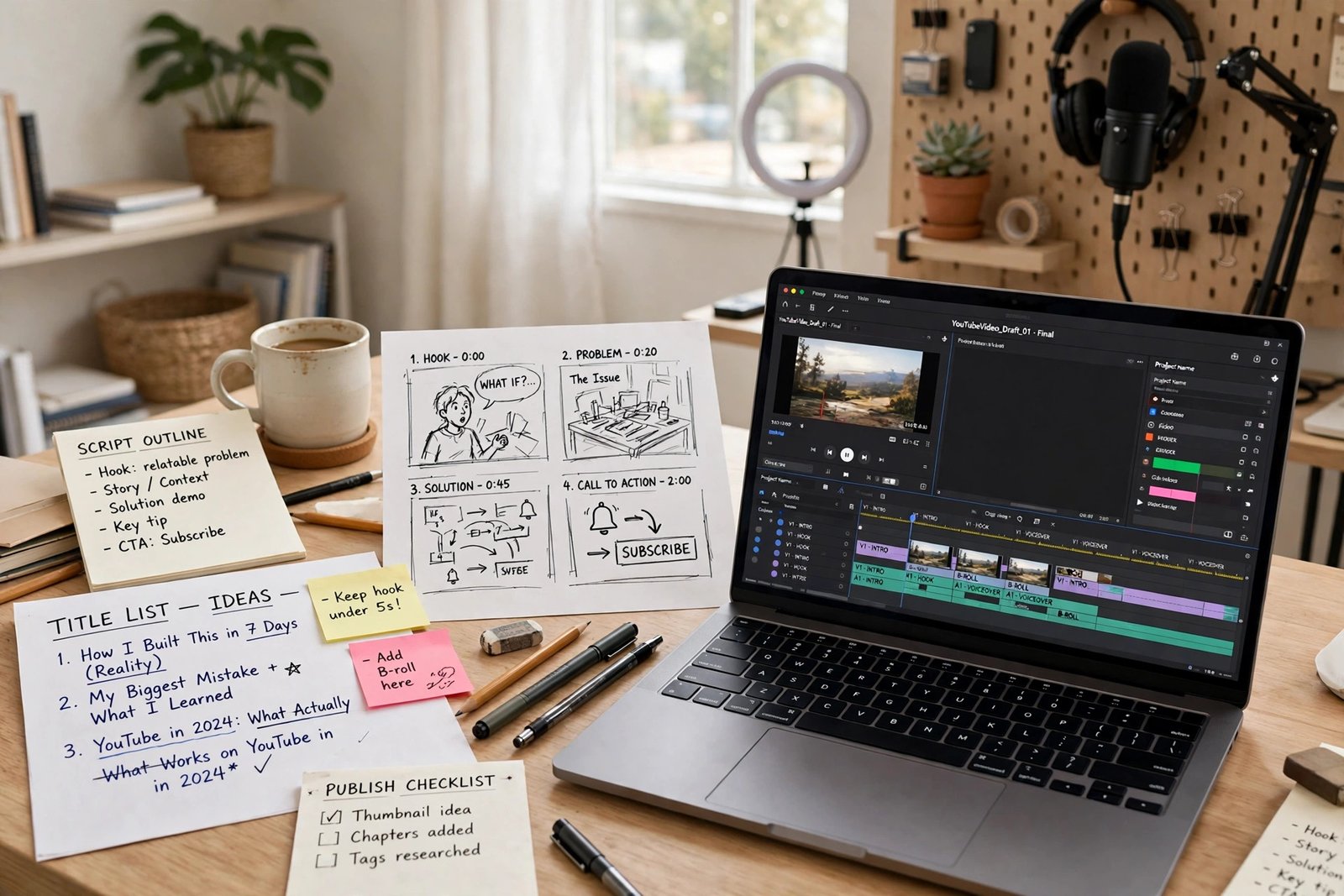
Growth starts before filming, with a narrow promise and a test of ideas. Your channel promise is the sentence from setup: this channel helps a specific viewer do a specific thing. Growth means proving that promise repeatedly, not widening it every week to chase a trend. Build a list of thirty video ideas that fit the promise, drawn from viewer questions in comments, search suggestions on YouTube, questions in communities your viewers use, and problems your earlier videos raised but did not fully answer. Score each idea simply: how strong is the viewer demand, how well does it fit the promise, and can you make it better than what already exists? Film the top ideas first. A thirty-idea list also protects you from running out of ideas after five videos and publishing whatever feels easy.
Follow a weekly loop
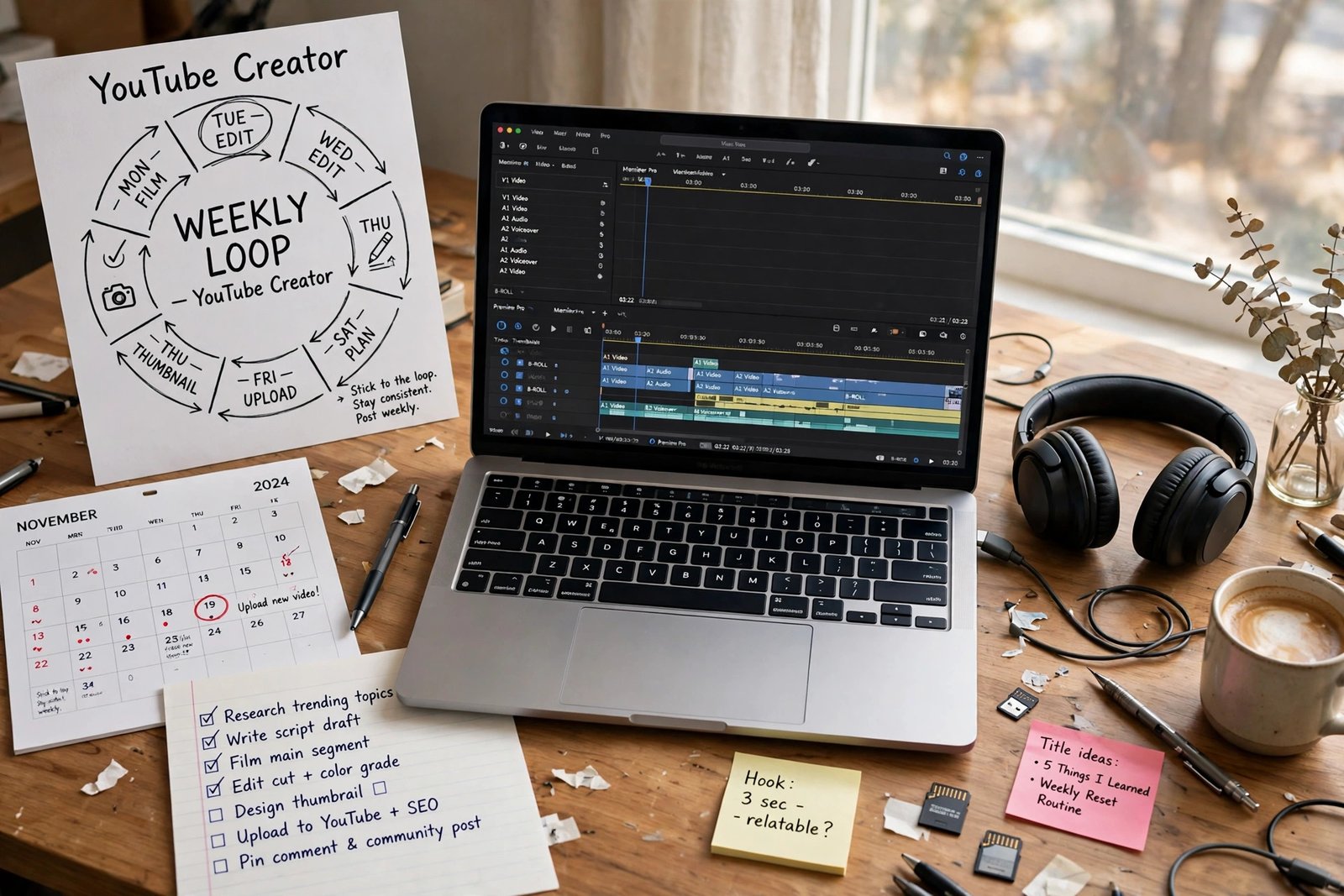
A realistic solo weekly loop beats an ambitious schedule. Several long videos a week is unrealistic for a solo beginner who also plans, films, edits, and publishes alone. Day one: research one idea and write a short outline with the promise, main points, and next video to recommend. Day two: film the long video in one session. Day three: edit for clarity, add captions, and cut two or three Shorts from its strongest moments. Day four: publish with a clear title and thumbnail, add it to the right playlist, and link one Short as a related video. Day five: reply to comments, note questions, and post one community update, such as a poll. One long video plus Shorts cut from it, every week, for three months, teaches you more than a burst of daily uploads followed by silence.
Use Shorts as a front door
Shorts are the front door of growing channels, but only if they lead somewhere. A Short that entertains a stranger and then ends does little for the channel. A Short that answers one sharp question, shows a clear result, and points to a full long video gives a new viewer a reason to subscribe and to watch longer content. Use Shorts in three ways. First, cut the strongest thirty to sixty seconds from each long video, with a complete mini-answer, not just a tease. Second, link that Short to the long video as a related video where YouTube offers that option, and mention the full video plainly in the Short itself. Third, make an occasional original Short answering a common beginner question in under a minute, linked to the long video covering it fully. Shorts are short vertical videos up to three minutes long, so keep the format tight and the first frame clear. Over a month, note which Shorts bring viewers who then watch a long video, and keep making that kind, even if other Shorts get more raw views.
Build series and playlists
Series and playlists turn one-time viewers into returning viewers. A series is a set of videos that follow one journey in order, such as a beginner course, a project built step by step, or a set of common problems solved one per video. A playlist groups those videos so a viewer can watch them in order without searching again. Name playlists by the viewer problem, not by internal labels. On your channel page, put your best series first, so a new visitor sees the promise and the first video at a glance. Between uploads, keep the channel alive without filler. Reply to comments with real answers, run a poll about the next topic, share a short community post with a useful tip, go live for a question session when you have enough viewers to make it worthwhile, or collaborate with a creator whose audience overlaps yours. Collaborations work best when both channels serve the same viewer with different strengths. Where eligible, Hype can boost good videos, not substitute for them. Treat every community action as a test: does it bring viewers back for the next video?
Review numbers weekly
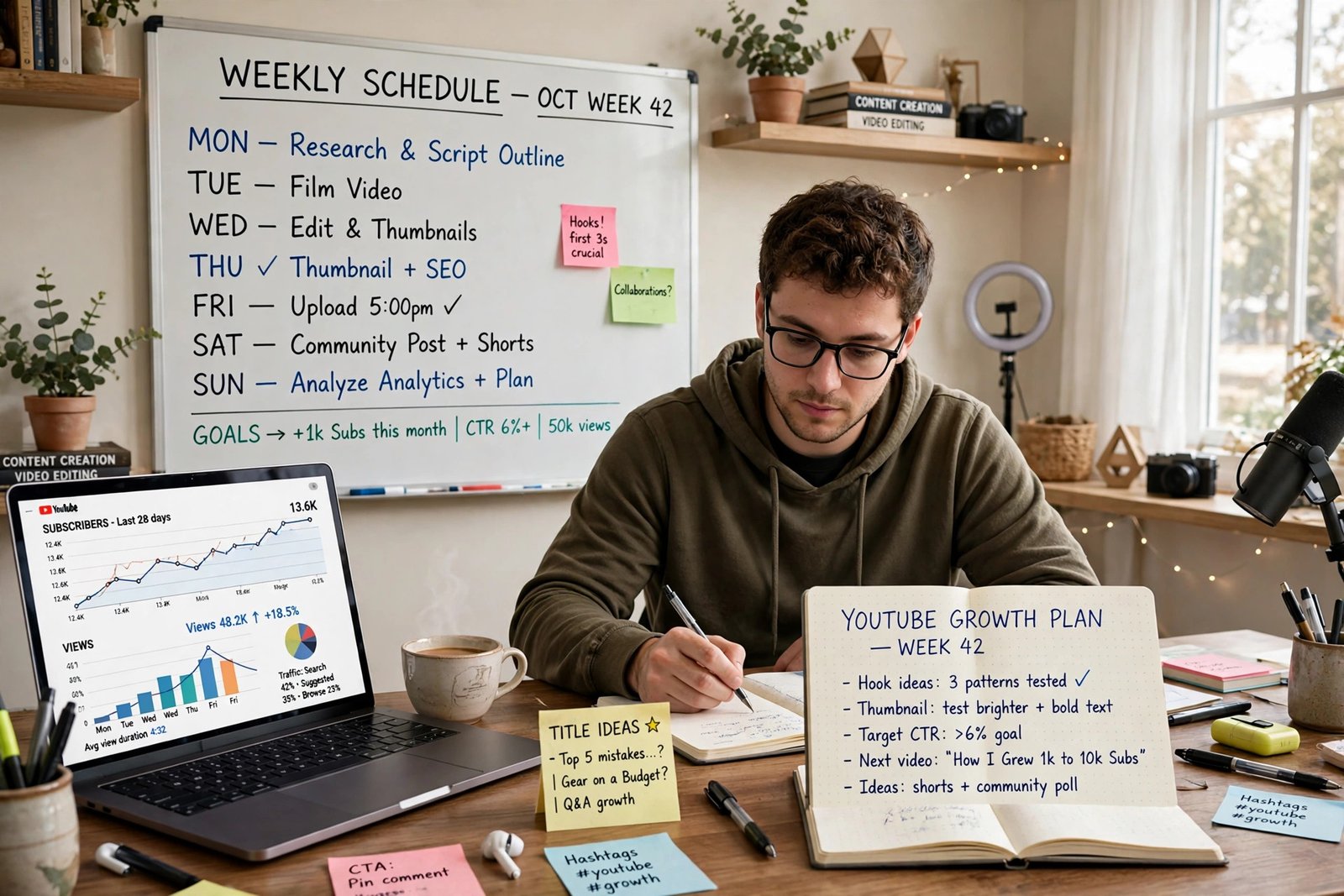
Numbers help only when each number drives a decision. Weekly, open Studio and write down seven numbers for your most recent long video and the channel: impressions, click-through rate, average view duration, retention at key moments, Shorts versus long-form views, returning viewers, and new subscribers from that video. Then ask one question per number. If impressions are low, the topic or packaging may not be reaching new viewers, so test a clearer title or a different idea from your list. If click-through rate is low but impressions are healthy, the title and thumbnail are not promising clearly enough. If viewers leave early, the opening or the structure needs work, which is single-video craft, covered in its own guide. If Shorts views are high but long-form views are flat, your Shorts are not converting, so improve the link and the reason to watch the full video. If returning viewers are falling, return to ideas closer to the promise. Change one thing per week based on the weakest number, then compare the next video. Changing titles, topics, thumbnails, and schedules all at once teaches you nothing.

Diagnose a flat channel
When a channel feels flat, diagnose it with this bottleneck table before you change strategy. Work down the rows in order, because fixing a later bottleneck while an earlier one is broken wastes effort.
| Symptom | Likely bottleneck | First fix to test | | Few impressions | Topic demand or audience fit | Pick a stronger idea from your list, closer to the channel promise | | Many impressions, few clicks | Title and thumbnail promise | Rewrite the title as a clear viewer outcome, simplify the thumbnail to one idea | | Clicks but early drop-off | Opening or structure | State the result sooner, cut the slow introduction, follow the outline order | | Good retention, few subscribers | No reason to return | End with the next video in the series, publish on a predictable day, use playlists | | Shorts views high, long views flat | Shorts not converting | Cut Shorts from long videos, link them as related videos, promise the full steps | | Returning viewers falling | Drift from the promise | Return to core ideas, pause unrelated trends for a month |
Then turn the diagnosis into a worked 90-day plan. Days 1 to 30: publish four long videos, one per week, each with two Shorts cut from it, and build the series playlist as you go. At day 30, run the weekly numbers review and write down your single weakest bottleneck. In days 31 to 60, publish four more long videos, each one testing a fix for that bottleneck, and keep the same schedule. At day 60, review again and check whether returning viewers and subscribers per video have moved, not just total views. Days 61 to 90: publish four more long videos, add one collaboration or live session if useful, and review the quarter: which ideas brought returning viewers, which Shorts converted, and which topics to repeat. Twelve long videos and about twenty-four Shorts in ninety days, all inside one promise, give you real data. For the craft of each individual video, read How to Make YouTube Videos That Get Views in 2026, and for the thresholds that growth eventually leads to, read How to Monetize a YouTube Channel in 2026.
Avoid growth shortcuts
What not to do matters as much as the loop. Do not buy views, subscribers, or engagement, and do not join sub-for-sub groups or view exchange schemes. Artificial traffic can distort your analytics, mislead you about what viewers want, and risk penalties under platform rules. Do not re-upload the same video repeatedly hoping for a different result, and do not copy another creator's titles, thumbnails, or scripts and expect their audience to follow you. Do not chase every trend outside your promise, because each off-topic video teaches YouTube to show your channel to the wrong audience. Judge a channel by twelve videos inside one promise, not by one video. The audience lessons in How to Earn Money from TikTok can help with format differences, but keep the YouTube system separate.
Risks and limitations
Growth has no guaranteed timeline, and that limit must be stated plainly. Results vary with experience, niche, audience, time, competition, and platform rules, and a channel in a crowded niche may grow slowly even with good videos. Study averages quoted by competitor guides, such as a vendor study of hundreds of thousands of videos, describe other channels in aggregate, not a promise for your channel, and they should never be used to set income or subscriber targets. Suggested upload frequencies from large studies assume teams a solo beginner does not have. Platform features, recommendation behaviour, and eligibility rules change, so check current guidance in YouTube Studio before building a long plan around one feature. Finally, growth metrics can mislead. A video with many views but no returning viewers has entertained strangers, not built a channel. Judge growth by returning viewers and subscribers per video over a quarter, not by a single viral day.
Frequently asked questions
How do I grow my YouTube channel?
Follow one promise, publish one good long video a week, cut Shorts from it that link back to the full video, organise videos into series and playlists, and review Studio numbers weekly to fix your weakest bottleneck. Growth comes from repeating that loop for a quarter, not from one tactic.
How often should I upload to grow?
As often as you can sustain without dropping quality. For most solo creators, one long video a week plus Shorts cut from it is realistic and repeatable. A schedule you keep for ninety days beats a daily burst you abandon after two weeks.
Do Shorts help a channel grow?
Yes, when they convert. Shorts bring new viewers in, but growth happens when those viewers watch a long video, return, and subscribe. Cut Shorts from long videos, link them as related videos, and check whether Shorts viewers go on to watch longer content.
Why is my YouTube channel not growing?
Use the bottleneck table: check impressions, click-through rate, early retention, subscriber conversion, Shorts conversion, and returning viewers in that order. Fix the first weak link before changing everything else, and judge the fix over several videos, not one.
How long does it take to grow a YouTube channel?
It varies widely by niche, consistency, and competition, and no honest guide can promise a date. A useful review point is ninety days of consistent weekly publishing inside one promise, because that gives enough videos to see which ideas and formats bring returning viewers.
Conclusion
A growing channel is a promise kept on schedule: thirty ideas, one long video a week, Shorts that lead to the full version, series and playlists for new visitors, community activity between uploads, and a weekly review that changes one thing at a time. Use the bottleneck table when growth stalls, run the ninety-day plan before judging the channel, and avoid shortcuts that inflate numbers without building an audience. Your next step is to write your thirty-idea list today, pick the strongest idea for this week, and publish the first video in the loop. Then review it in Studio after seven days, write down the weakest number, and let that one number choose your next fix.