How to Earn with Investing and Trading Affiliate Programs in 2026
Investing affiliate programs pay you when someone signs up for a brokerage account, a research tool, a robo-advisor, or a crypto exchange through your link. Some pay a one-time bounty when the new user funds an account. Others pay a share of the subscription or trading fees, and some of those payments repeat.
This guide compares the main investing affiliate programs, explains the difference between a one-time bounty and a recurring commission, and shows how to promote investing products honestly. It is written for finance bloggers, YouTubers and newsletter writers who already talk about money and markets.
Disclosure: this article discusses affiliate links. If you sign up for a product through a link in this article, EarnQuill may earn a commission at no extra cost to you. Read our full affiliate disclosure for details. Investing involves risk, and nothing in this guide is investment advice.
In this guide
- How investing affiliate programs work
- Investing affiliate programs compared
- Brokers and trading platforms
- Research tools and newsletters
- Robo-advisors and micro-investing
- Crypto exchanges
- Real estate and alternative assets
- How to choose the right program for your audience
- How to apply, step by step
- Example only: what the maths looks like
- What it costs and what to expect
- Common mistakes
- Risks and scams to watch for
- Frequently asked questions
How investing affiliate programs work
An investing affiliate program pays you for a referral that takes a real action. A broker usually pays when the new user opens and funds an account. A research tool usually pays when the new user buys a subscription. A crypto exchange usually pays a share of the trading fees the new user generates.
Three payment models exist. A CPA, which means cost per acquisition, is a one-time bounty paid when the new user completes the required action, such as funding an account. A revenue share is a percentage of the fees or subscription the new user pays, and it can repeat for as long as they stay subscribed.
Two more terms decide what you earn. The cookie is the tracking window, which is the number of days after the click during which a signup still counts as yours. The attribution window is the period the program uses to link a signup to your link. The payout threshold is the minimum balance you must reach before the network pays you.
Refunds and cancellations matter here more than in most niches. If a new user cancels during a free trial, or withdraws funds before the validation period ends, your commission can be reversed. Track approved commission separately from reported commission, as our guide on how to track affiliate earnings explains.
Investing affiliate programs compared
The table below shows the main programs that appear across the guides reviewed for this article. Figures are ranges reported by those guides in November 2026, and they disagree on several rates. Check the live rate on the program page or network listing before you apply.
| Program | Product type | Reported commission | Recurring or one-time | Reported cookie | Network reported |
|---|---|---|---|---|---|
| TradingView | Research tool | 30 percent of subscription | Recurring | 90 days | TradingView direct |
| Simply Wall St | Research tool | 55 percent of subscription | One-time | 90 days | Simply Wall St direct |
| Stock Rover | Research tool | 25 percent of subscription | Recurring | Not publicly disclosed | Stock Rover direct |
| Motley Fool | Newsletter and research | 100 to 600 dollars per subscription | One-time | Not publicly disclosed | Impact |
| Robinhood | Broker | Not publicly disclosed | One-time | Not publicly disclosed | Robinhood direct |
| eToro | Broker and trading platform | Varies by country and account type | One-time | 30 days | eToro Partners |
| Ally Invest | Broker | 20 to 50 dollars per funded account | One-time | 30 days | Ally direct |
| Betterment | Robo-advisor | Not publicly disclosed | One-time | Not publicly disclosed | Betterment direct |
| Acorns | Micro-investing | 5 to 10 dollars per funded account | One-time | 30 days | Impact |
| Coinbase | Crypto exchange | 50 percent of trading fees for 3 months | Recurring for 3 months | 30 days | Coinbase direct |
| Kraken | Crypto exchange | 20 percent of trading fees, capped at 1,000 dollars | Recurring with a cap | 30 days | Kraken direct |
| Binance | Crypto exchange | Up to 50 percent of trading fees | Recurring | 90 days | Binance direct |
| Fundrise | Real estate platform | Up to 500 dollars per funded account | One-time | 30 days | Fundrise direct |
The most reliable figures in this table come from ValuEdge, which checked official program documentation in September 2026. TradingView is reported at 30 percent recurring with a 90-day cookie, Simply Wall St at 55 percent one-time with a 90-day window, and Stock Rover at 25 percent recurring. Motley Fool is reported at 100 to 600 dollars per subscription, and the exact amount depends on the product level. Coinbase, Kraken and Binance figures come from a 2024 guide and have not been confirmed against current terms, so treat them as reported, not verified. Forex programs are not in this table, because the reported CPAs vary widely, the sources are old, and several of the brokers named are offshore or unregulated in major markets. A warning about old guides: some guides still list programs that no longer exist. TD Ameritrade was absorbed into Charles Schwab in 2024, Personal Capital became Empower in 2023, LendingClub left the investing business, and BitBond shut down. Do not apply to any of these.
Brokers and trading platforms
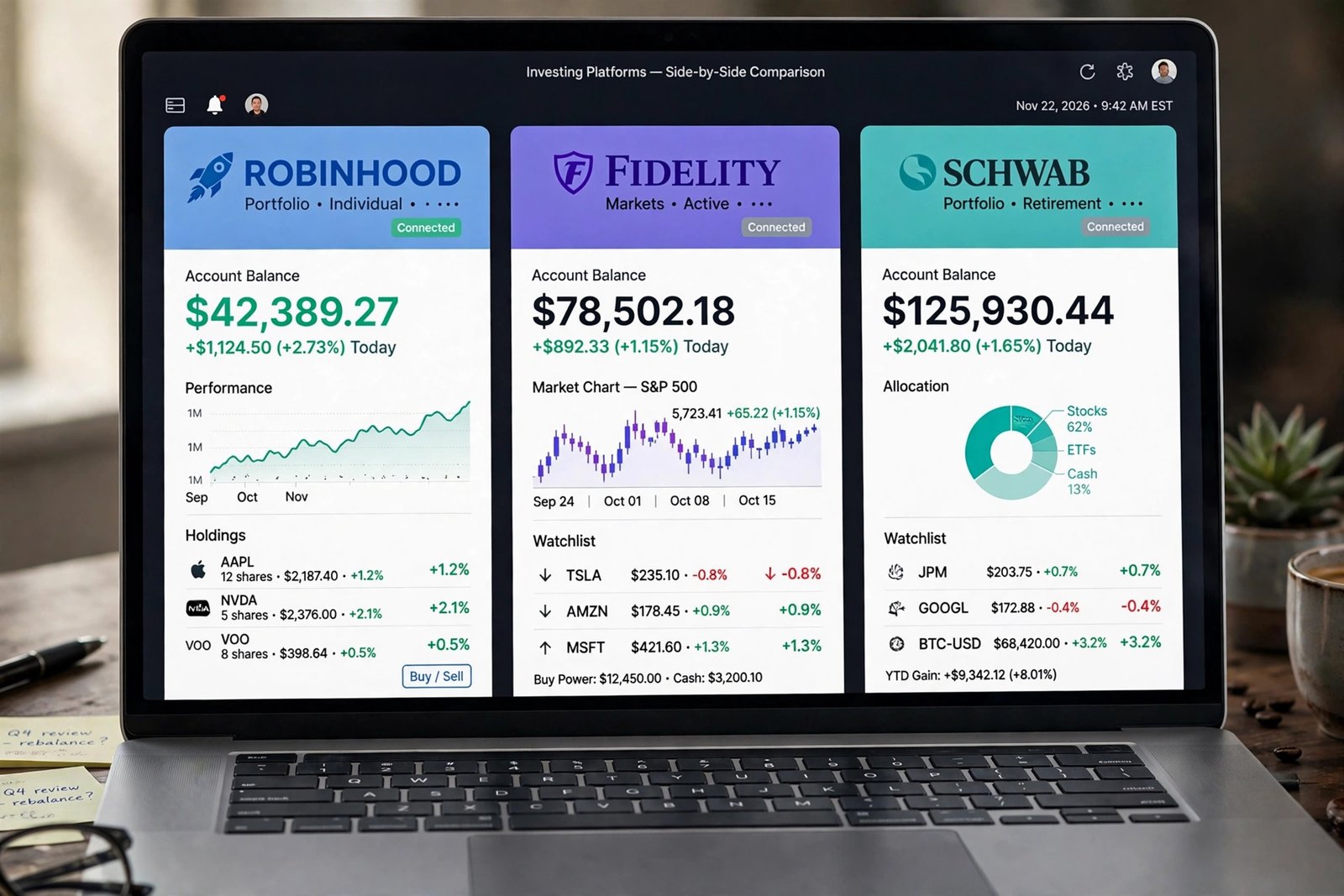
Brokers pay a one-time bounty when a new user opens and funds an account. Robinhood is the best known broker for beginners, but its affiliate terms are not publicly disclosed in the guides reviewed, so no rate is stated here.
eToro pays a CPA that varies by country and by account type, and it runs its program through eToro Partners. The rate is tiered, which means it rises with the number of funded accounts you refer. Ally Invest is reported at 20 to 50 dollars per funded account, which is low next to other brokers, but it suits readers who want a traditional US broker with banking attached.
Do not promote a broker you have not checked for your readers' country, because many brokers only accept customers from certain countries.
Research tools and newsletters
Research tools are the strongest part of this niche for content creators, because they pay recurring commissions and they suit an audience that already reads about stocks. TradingView is reported at 30 percent of the subscription, recurring, with a 90-day cookie. Simply Wall St is reported at 55 percent one-time with a 90-day window. Stock Rover is reported at 25 percent recurring.
Motley Fool pays a large one-time bounty, reported at 100 to 600 dollars per subscription depending on the product, and it runs through Impact.
Research tools convert best when you show your own workflow. A video or article that walks through how you screen for stocks tells readers what they get. Our guide on how to write affiliate product reviews explains how to do that honestly.
Robo-advisors and micro-investing
Robo-advisors manage a portfolio for the user, and micro-investing apps round up small purchases into investments. Both suit beginners, and both pay a small one-time bounty. Acorns is reported at 5 to 10 dollars per funded account through Impact.
These bounties are small, so they only work at volume. A site with 100,000 monthly visits can earn from Acorns, but a small site will earn almost nothing from a 5 dollar bounty. If your audience is small, research tools with recurring commissions are a better fit.
Crypto exchanges
Crypto exchanges pay a share of the trading fees a new user generates. Coinbase is reported at 50 percent of trading fees for the first 3 months, Kraken at 20 percent with a lifetime cap of 1,000 dollars, and Binance at up to 50 percent. All three figures come from a 2024 guide and have not been confirmed against current terms.
Crypto is the riskiest part of this niche. Never promise returns, never suggest that crypto is safe, and always say that trading crypto carries a risk of loss. Our guide to cryptocurrency affiliate programs covers the crypto niche in more depth.
Real estate and alternative assets
Fundrise and Groundfloor let readers invest in property with small amounts, and they pay a one-time bounty per funded account. Fundrise is reported at up to 500 dollars per funded account by an older guide, and Groundfloor at 25 to 100 dollars.
Real estate platforms suit an audience that already invests and wants to spread risk beyond stocks. They do not suit beginners, because the minimum investment and the lock-up period are both higher than a savings account.
How to choose the right program for your audience
Audience fit comes first, and the commission comes second. A reader who is learning to invest needs a research tool or a robo-advisor. A reader who trades every day needs a broker or an exchange.
Compare the payment model next. A recurring commission of 30 percent on a research tool can be worth more over two years than a one-time bounty of 100 dollars, because the same reader keeps paying. Then check the cookie and the attribution window, because a 90-day cookie beats a 30-day cookie when readers take weeks to decide.
Finally, check the country rules. A broker that does not serve your readers' country is useless to you. Our guide to finance affiliate programs covers the wider finance niche, and our guide to AI tools affiliate programs covers research and analysis tools in a related niche.
How to apply, step by step
Step 1: Build at least five useful pages before you apply. A broker guide, a research tool review, and a beginner investing guide are a good start. Programs in this niche check your content carefully, because investing is regulated.
Step 2: Join the network that runs the program you want. Motley Fool and Acorns run through Impact. eToro runs through eToro Partners. Many research tools run their own direct programs. The Impact site and the CJ Affiliate site both explain how publisher accounts work.
Step 3: Read the program terms before you apply. Look for the commission, the cookie, the payout threshold, the validation period, and the banned claims. Most investing programs ban promises of returns.
Step 4: Apply with honest information about your audience, your traffic, and your content. Do not inflate your numbers, because networks check.
Step 5: If you are accepted, add your disclosure near the top of each page that carries affiliate links, and add a second line that says the content is not investment advice.
Step 6: If you are rejected, ask what was missing, improve the site, and reapply in one to three months.
Example only: what the maths looks like
This example uses made up numbers. It shows the maths, not what you will earn. Example only.
Suppose a finance blog gets 5,000 visits a month on a research tool review. Suppose 2 percent of visitors click the affiliate link. That is 5,000 times 0.02, which is 100 clicks. Suppose 5 percent of those clickers buy a subscription. That is 100 times 0.05, which is 5 sales. Suppose the subscription costs 200 dollars a year and the program pays 30 percent recurring, which is 60 dollars per sale per year. That is 5 times 60, which is 300 dollars in the first year.
Now suppose all 5 readers renew in the second year. That is 5 times 60 again, which is another 300 dollars, with no new traffic needed. The recurring model pays less at first and more over time, but only if readers stay subscribed. Most new sites get far fewer than 5,000 visits a month, so their first months earn little or nothing. That is normal.

What it costs and what to expect
| Item | Typical cost | Notes |
|---|---|---|
| Domain and hosting | 50 to 150 dollars per year | Needed for a site you own |
| Network accounts | Free | Impact, CJ Affiliate and PartnerStack are free to join |
| Research tool subscriptions | 0 to 500 dollars per year | Useful if you review tools from real use |
| Content writing | Your time, or 50 to 200 dollars per article if you hire a writer | Reviews take the most time |
| First payout | One to three months after your first qualifying signup | Validation periods delay payment |
Expect a slow start and a strict approval process. Investing programs check your content more carefully than most niches. A realistic timeline is three to six months of steady content before the first payout, and longer before the income is regular.
You do not need a finance qualification to start, but you do need to read the terms of every product you promote. Fees, minimum deposits, and country availability change often.
Common mistakes
- Do not promise returns or suggest that an investment is safe, because no affiliate can promise that and regulators ban that claim.
- Do not promote a high CPA forex broker without a warning about leverage.
- Do not quote a headline rate as if every signup pays that rate, because the bounty depends on the country, the account type, and the product level.
- Do not ignore the validation period, because a signup that cancels during a trial earns you nothing.
- Do not promote a broker to readers in a country the broker does not serve, because those clicks are wasted.
Risks and scams to watch for
Investing affiliate marketing carries real risk, for you and for your readers. The US Federal Trade Commission requires a clear disclosure when you earn a commission from a recommendation, and the disclosure must be easy to notice. The FTC Endorsement Guides explain what counts as a clear disclosure. Put it near the top of the page, in plain words, before the first affiliate link.
Never present yourself as a financial adviser unless you are qualified and licensed to give advice in your readers' country. Say clearly that your content is education, not investment advice. Most programs ban claims such as "guaranteed returns" and "risk free". Read the program terms before you publish, and read them again when you update a page.
Watch for scams that target new affiliates. No real program charges you a fee to join, and no real program asks you to pay for a starter kit or a list of high paying programs before you can apply. Be careful with any site that promises a fixed monthly income from investing links, because no one can promise that.
Affiliate income is income, and you must report it under the tax rules of your country. Keep records of every payout, and check your local tax authority or a qualified accountant if you are unsure.
Frequently asked questions
What are the best investing affiliate programs?
For most creators, research tools such as TradingView, Simply Wall St and Stock Rover are the best fit, because they pay recurring commissions. Brokers such as eToro and Ally Invest suit an audience that is ready to open an account.
How much do investing affiliates earn?
Earnings vary widely. Research tools are reported to pay 25 to 55 percent of a subscription, brokers are reported to pay 20 to 200 dollars per funded account, and crypto exchanges are reported to pay a share of trading fees. Your actual earnings depend on your traffic and whether your programs pay once or repeat.
Do investing affiliate programs pay recurring commissions?
Some do. Research tools such as TradingView and Stock Rover are reported to pay a recurring share of the subscription, and crypto exchanges are reported to pay a share of trading fees for a set period. Brokers and robo-advisors usually pay a one-time bounty per funded account.
How do I join a trading affiliate program?
Build a site with several useful investing pages, add a clear disclosure and a line that says the content is not investment advice, then apply through the network or direct program that runs it. Investing programs check content carefully, so a thin site is often rejected. Improve the site and reapply in one to three months if you are refused.
Can beginners join investing affiliate programs?
Yes, but not every program. Research tools are the easiest entry point, because those programs accept smaller sites. Broker programs are stricter and often want traffic history. Start with one or two research tool programs, then apply to brokers.
Conclusion
Investing affiliate programs pay a mix of one-time bounties and recurring commissions, and the best program for you is the one that matches your readers and pays in a way that suits your content. Brokers pay more per signup but only once, and crypto exchanges pay a share of fees but carry higher risk. Check the live terms before you apply, never promise returns, and keep your disclosures clear.
To go further, read our guide to credit card affiliate programs if your readers also choose cards, and our guide to cryptocurrency affiliate programs, then browse the full Affiliate Marketing category for more guides.
How facts were checked: commission and cookie figures in this guide are ranges reported by ValuEdge, NichePursuits and Link Whisper in November 2026. ValuEdge checked official program documentation in September 2026 for the research tools. Other figures come from guides dated 2023 or 2024 and have not been confirmed against current terms. The CJ Affiliate, Impact and FTC pages linked here were opened and read on 2026-11-22. TD Ameritrade, Personal Capital as a brand, LendingClub investing and BitBond are not listed as live programs, because the research found they are dead, rebranded, or exited.
Note for the reader: investing products, fees and availability differ by country, and most programs in this guide are US focused. Check the program page for your country before you apply. Earning results vary; nothing on this site is financial advice.