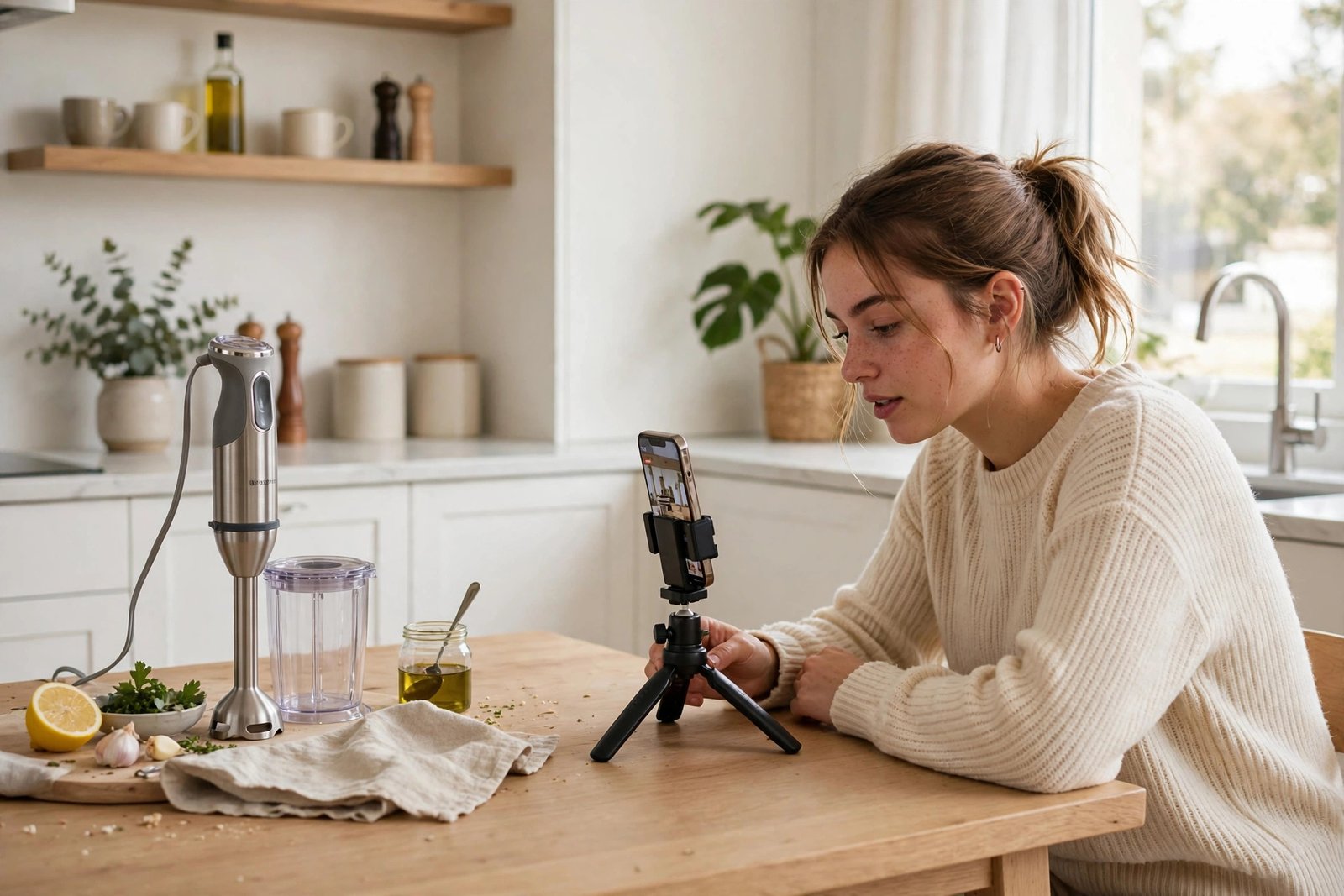
How to make money with TikTok affiliate marketing starts with a simple idea. You recommend a product in a short video, a viewer buys it through your link or product tag, and you earn a commission on the sale. You do not need to create a product, hold stock, or handle delivery. This guide shows you how the model works, what TikTok requires before you can join, how to pick products, and how to make videos that sell without sounding like adverts.
In this guide
- What TikTok affiliate marketing is
- Who can join TikTok Shop as an affiliate
- How to pick a niche and products
- How to make videos, LIVEs, and a showcase
- How and when you get paid
- Disclosure rules, costs, and common mistakes
- Frequently asked questions
What TikTok affiliate marketing is
Affiliate marketing means you earn a commission when someone buys through a link or product tag tied to you. The seller sets the rate, and it differs from product to product. On TikTok there are two main routes to that commission.
The first route runs through TikTok Shop. You join as an affiliate creator, browse products in the TikTok Shop marketplace, and tag them in your videos, photo posts, or LIVEs. A viewer taps the product tag and checks out without leaving TikTok. TikTok tracks the sale and pays you after delivery and the return window closes.
The second route uses affiliate links from a network or a brand, such as Amazon Associates, Awin, ShareASale, or Impact. You get a unique tracking link and place it in your bio, often through a landing page holding several offers. Captions carry no clickable links, so the bio link does most of the work here.
| Route | What you promote | Where the sale happens | Who pays you |
|---|---|---|---|
| TikTok Shop affiliate | Products listed in TikTok Shop | Inside the TikTok app | TikTok, after delivery and the return window |
| Affiliate network or brand programme | Anything sold online, including services and digital products | On the brand website | The network or brand, on its own schedule |
Both routes can run side by side. A beauty creator might tag TikTok Shop products in one video and link to a salon booking service in the next. Workout plans, subscription boxes, software, courses, and services are not sold through TikTok Shop, so affiliate links are the only way to earn from them. Our guide to how to earn money from TikTok covers the other income routes, so you can see where affiliate income fits.
Who can join TikTok Shop as an affiliate
TikTok Shop is not open to every account. The rules differ by country, and they change, so check the current policy before you plan around them. The requirements below come from TikTok Shop's own Creator Eligibility Policy, as it read in November 2026, for creators based in the United States.
To join as an affiliate creator in the US, you must be at least 18, be based in the United States, have at least 1,000 followers, and pass TikTok's identity verification. You must also have no record of revoked e-commerce permissions, and you must follow TikTok Shop policies, including the Content Policy and the Creator Code of Conduct. Identity verification is needed before you can withdraw commissions, so complete it early.
In the UK, the bar is lower, with the follower minimum at 500. Other markets set their own numbers, so check the policy for your country.
New affiliate creators with fewer than 5,000 followers start in the Affiliate Creator Pilot Program for at least 30 days. During the pilot, you can only promote products from shops with a Shop Performance Score of 95% or higher, and you are limited to 3 shoppable videos per day and 3 shoppable LIVEs per week. You graduate when you reach 5,000 followers and have spent at least 30 days in the programme.
If you do not yet meet the follower minimum, use the time to build your audience. Pick one niche, post consistently, and study which videos people watch to the end. Buying followers to hit the threshold breaks TikTok's rules and can cost you your e-commerce access for good.
Step 1: Pick one audience before you pick a product
The creators who last can say who their videos are for: new parents, home cooks, runners, skincare beginners. Products follow the audience. If you start from what pays the most, your content will feel like an advert and viewers will scroll past it.
Choose an audience you already understand. If you cook every day, home and kitchen products fit. If you run, fitness gear fits. Your own habits are a guide to what you can show honestly on camera, and honest demos are what sell on TikTok.
Then narrow the audience to one clear group and one clear problem. "People who like cooking" is too wide. "Busy parents who want a faster weeknight dinner" is a group you can speak to in every video. A narrow audience also helps TikTok show your videos to the right people.
Step 2: Join TikTok Shop as an affiliate
Once you meet the requirements, the application runs inside the app. Open your profile, go to TikTok Studio, then Monetization, then TikTok Shop for Creator, and tap Join now. TikTok checks your eligibility markers and asks you to confirm your age and complete identity verification. You will need a government-issued ID and a live selfie check, and your payout name must match your bank account name.
After approval, add your payout details and build your showcase. Browse the product marketplace, add items that fit your audience, and tag them in your videos and LIVEs. Your showcase also sits on your profile as a shoppable grid, so a viewer who finds your profile can browse what you recommend.
Step 3: Choose products that already sell
Product choice decides more of your income than follower count does. Look for solid ratings and reviews, a price that suits an impulse purchase, and a result you can show on camera. A product that has already sold well is more likely to sell again through your video.
Check three things before you commit to a product:
- Sales history. Has the listing sold before, and does it still have stock? A product that has never sold is unlikely to start with your video.
- Reviews and returns. Read the reviews. A product with a high return rate will cost you commissions, because returns cancel pending commission.
- Commission and price. A low price with a low rate can still pay well if it sells in volume, and a high price with a high rate pays more per sale but needs more trust. Work out what one sale is worth to you before you film.
Order the product yourself when you can, so you know what the buyer will get. Promoting a product you have never handled is how mismatched expectations and returns start. If buying everything is too costly, use TikTok Shop sample routes: free samples, where you request a product and post within 14 days of it arriving, and refundable samples, where you buy the product and get your money back once your posts drive the required number of sales.
Avoid the highest commission rate as your only filter. A 30% rate on a product nobody wants earns nothing. A modest rate on a product your audience already buys is worth far more.
Step 4: Make videos that show the product working
On TikTok, demonstration beats description. Shoppers want to see the product working, not hear a list of features. One video, one product, one reason to buy. Then repeat the pattern across different angles.
Formats that work well for affiliate content:
- The 15-second demo. Show the product doing the one thing it is bought for. Open on the problem, not on your face.
- Before and after. Works for cleaning, organising, skincare tools, and fitness gear. Keep it honest, because viewers spot edited results.
- Unboxing plus first impressions. Good for new arrivals. Say what you like and what you would change, since trust is your real product.
- LIVE demos. Answer questions in real time, show the item from every angle, and pin the product so viewers can buy without leaving the stream.
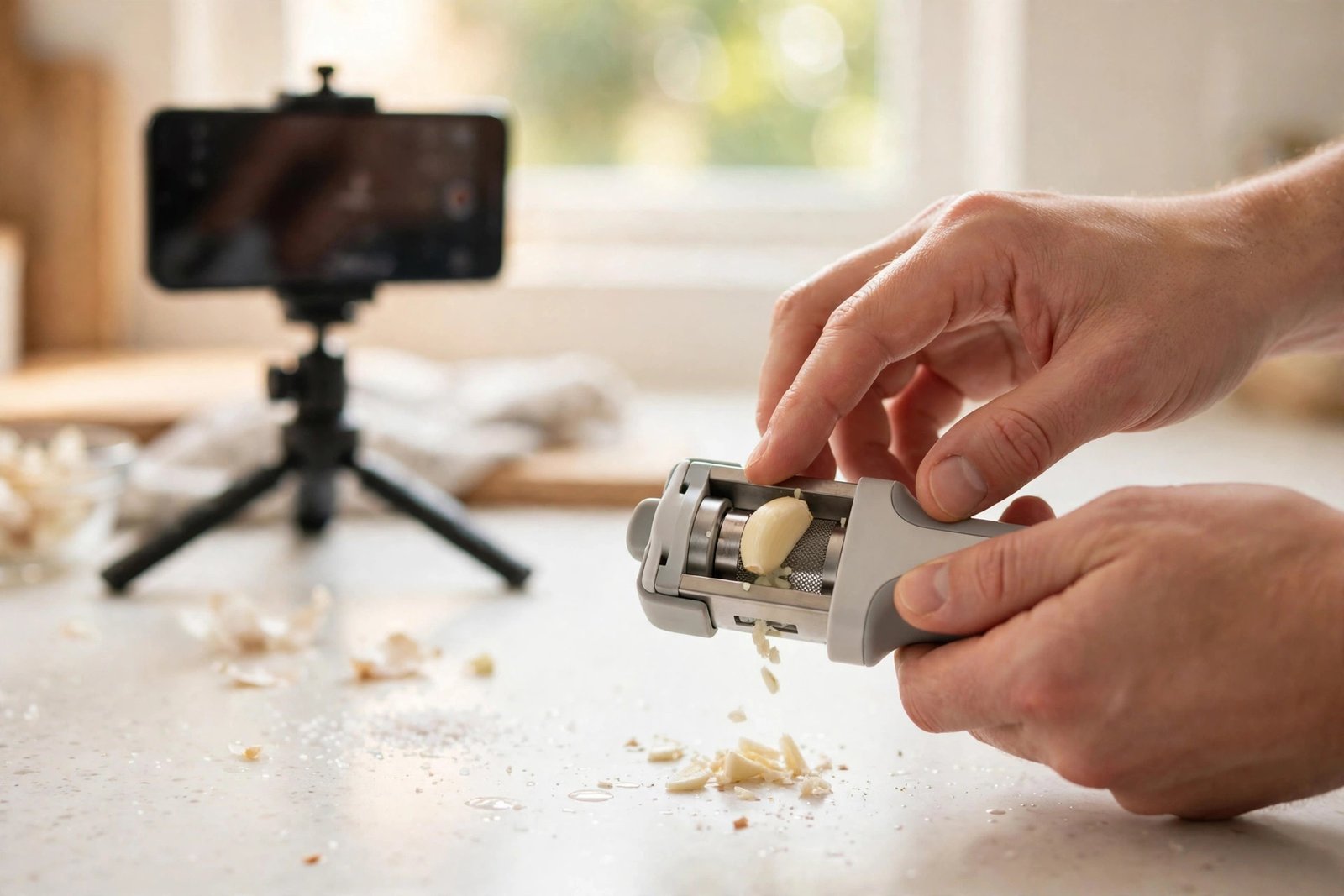
A pattern works across all four formats: a clear hook in the first two seconds, proof on screen, a single reason to buy, and a line pointing to the product tag. Keep the call to action soft and spoken, such as "I have linked it if you want to try it", rather than a hard sell. Viewers have a sharp radar for scripted endorsements, and TikTok shows hard-sell videos to fewer people.
You do not need to show your face. Hands-only demos, voiceovers over product footage, and screen recordings all work, and plenty of accounts earning through TikTok Shop never appear on camera. What matters is that the product is the star and the demo is real.
Step 5: Use LIVE, your showcase, and your bio link together
Each placement on TikTok does a different job, so use them together rather than relying on one.
TikTok Shop products attach directly to content. Tag them in a video and a product card appears over the footage. Pin one during a LIVE and viewers buy without leaving the stream. Your showcase sits on your profile as a shoppable grid for anyone who finds you later.
Affiliate links from a network live in your bio, because captions and comments carry no clickable links. TikTok gives you a single clickable slot, so send it straight to a product when you are pushing one thing, or to a landing page holding several offers when your videos cover a range. A pinned comment saying where the link sits catches viewers who watched without checking your profile.
Test the journey a viewer takes. Open your own profile in the app, tap the bio link, and follow it to checkout the way someone watching would. TikTok opens links in its own browser, so the journey looks different from a click on a desktop computer.
Step 6: Track what earns and cut what does not
Do not judge your work by views. Watch three numbers weekly: the click-through rate on your bio link or product tags, the conversion rate from your affiliate dashboard, and the commission that has actually settled. If views climb but clicks are flat, your hook works but your call to action or product fit is off. If clicks climb but sales do not, the product or its page is the problem, not your video.
Every week, list the videos that earned commission and the ones that got views but no sales. Keep the angle that sells and drop the rest. Repeat formats build faster than one-off videos, because viewers who know what is coming watch to the end. A weekly series or a regular haul gives your audience a reason to return.

How and when you get paid
There is no fixed rate in TikTok affiliate marketing. The seller sets the commission on each product, and TikTok lets sellers set rates between 1% and 80%. Many creators plan around a mid single-digit to 30% range, but that is a planning range, not a promise. A seller can change the rate on a product you already promote, so check the rate before you film.
Commissions are not final when the buyer taps Buy. They settle after delivery and the return window closes. A return inside that window cancels the pending commission, and a partial refund reduces it proportionally. Your dashboard shows estimated commission from the moment someone buys, but the settled figure arrives later and can be lower, so judge your results on paid commission, not on orders.
Example only: these numbers are not typical results. Say a kitchen gadget costs $25 and carries a 12% commission. Each completed sale earns you $3, so 100 completed sales in a month is $300 before returns. If a quarter of those orders are returned, the settled figure drops to about $225. Products people keep matter more than products that sell fast and come back.
For links outside TikTok Shop, the network pays on its own schedule once the brand confirms the sale and its returns window closes. A sale can count days after the click, which suits products people research before buying.
If you earn in the US, commissions are income. Keep records from day one and talk to a tax professional about self-employment tax and quarterly estimates. Rules differ by country, so check your local tax authority.
Disclosure rules you must follow
Affiliate links and promo codes count as branded content on TikTok, so switch on the commercial content disclosure toggle on every affiliate post. In the US, the FTC also expects a clear disclosure of the connection between you and the brand, and the FTC Endorsement Guides explain that it must be clear and conspicuous, which means easy to notice and hard to miss.
Put the disclosure where viewers will see it before they act. Say it out loud, put "ad" or "#ad" on screen early, and repeat it on LIVEs at intervals, since people join partway through. A label buried in a caption never gets seen. TikTok Shop content carries a system label as well, but your own disclosure still needs to be there.
What it costs and what to expect
Joining TikTok Shop as an affiliate costs nothing. There is no fee to apply, no monthly charge, and no listing fee. Your real costs are time and the products you buy for honest demos. A phone and natural light are enough to start.
| Stage | What happens | Typical timing |
|---|---|---|
| Setup | Meet the follower minimum, verify your identity, build your showcase | Days to weeks |
| First videos | Test 20 to 30 videos across a few products and formats | First month |
| First sales | A few orders from the videos that fit your audience | First to second month |
| Steady pattern | One or two products and formats that reliably earn | Two to three months |
Earnings vary more on TikTok than on most platforms. Some creators earn a few pounds or dollars in their first month while they work out what converts. Others build up to a few hundred a month once they focus on one or two products that already sell. No fixed monthly figure is realistic, and any video promising one is usually selling a course.
One thing works in your favour. A video that lands keeps earning, since products stay tagged and sales continue arriving months after you posted. That long tail is why a steady library of demo videos matters more than one viral hit.
Common mistakes
- Chasing the highest commission. A high rate on a product nobody wants earns nothing.
- Promoting products you have not handled. Returns come from mismatched expectations, and returns cancel commission.
- Skipping the disclosure toggle. It is required, and it also protects your account.
- Posting without a niche. Random content gives TikTok nothing to recommend.
- Promoting expensive, considered purchases. Software and financial products tend to underperform on an impulse-scroll platform. Cheap, visual, demonstrable products convert far better here.
Risks and scams to watch for
Be wary of anyone selling a guaranteed TikTok income system, a course that promises a fixed monthly figure, or a service that sells followers to hit the 1,000 follower threshold. Buying followers breaks TikTok's rules and can cost you your e-commerce access permanently.
Watch out for sellers who ask you to make false claims about a product, hide its downsides, or skip disclosure. If a product is poor quality, say so or do not promote it. Your audience's trust is the asset that earns, and one dishonest recommendation can cost you more than the commission was worth.
TikTok can also change its rules, rates, and limits, as it did with posting limits in May 2026 and performance scoring in August 2026. Treat TikTok as one income channel, not your whole business. A landing page, an email list, or a second platform gives you an audience you own if the rules change. Our guide to selling on TikTok Shop explains the seller side of the same platform, which helps you understand how sellers choose and pay affiliates.
Frequently asked questions
Do I need 1,000 followers to do affiliate marketing on TikTok?
Not for basic affiliate links in your bio. You can start with zero followers using a network link or a brand programme. The 1,000 follower rule applies only to TikTok Shop affiliate creators in the US. In the UK, the minimum is 500 followers.
How much can you make from TikTok affiliate marketing?
It varies widely. Some creators earn only a few dollars in their first month, while others build to a few hundred a month once they find products that fit their audience. Earnings depend on price, commission rate, posting volume, and conversion, and no fixed figure is realistic.
Can I do TikTok affiliate marketing without showing my face?
Yes. Hands-only demos, voiceovers over product footage, and screen recordings all work. No eligibility rule mentions appearing on camera. It can slightly limit the personal trust that drives clicks, but it works well for gadgets, tech, and beauty, where the product itself is the star.
Do I need a website to start?
No. The bio link, the Shop tab, and pinned comments replace what a website does for most beginners. A landing page helps later, when you want to hold several offers in one place or build an email list no platform update can take away.
What is the difference between TikTok affiliate marketing and TikTok Shop selling?
As an affiliate you promote other sellers' products and earn a commission on each sale, with no stock and no shipping to handle. As a seller you list your own products, set the prices, and handle fulfilment. The two roles can overlap, but they are different businesses.
How do I know which products to promote first?
Start with products you already use and can show on camera. Check the listing has sold before, read its reviews, and work out what one completed sale is worth. Test it in two or three video formats and keep the one that earns. Our guide to getting brand deals as a small creator shows how brands choose creators.
Conclusion
TikTok affiliate marketing works when you treat it as a testing process, not a lottery ticket. Pick one audience, join TikTok Shop as an affiliate or use network links for products the Shop does not stock, choose products that already sell, and make short demo videos that show the product working. Track settled commission, keep what earns, and disclose every commercial post. Start with one product you already use, film three demos of it this week, and see which one earns its first sale. If you want a second platform for the same skills, read our guide to how to earn money with Instagram affiliate marketing.