
How to make money with Facebook Groups works differently from most ways of earning on social media. Facebook does not pay group admins simply because a group is popular. There is no automatic ad revenue for groups. Instead, a group earns money because it gathers people who care about one topic in one place, and those people trust the admin. That trust converts into revenue through digital products, brand sponsorships, and paid membership tiers. This guide shows you how to build a group that earns, how to grow it, and how to monetise it without losing the community that makes it valuable.
In this guide
- How Facebook Group monetisation actually works
- How to choose a niche and set up a group for growth
- How to build an email list from day one
- A content rhythm that builds authority
- How to grow to critical mass, and the member numbers that matter
- The five main ways to earn, and which to start with
- Costs, honest timelines, risks, and common mistakes
- Frequently asked questions
How making money with a Facebook Group actually works
Facebook Groups remain one of the most underrated assets for online entrepreneurs, because they offer something rare: owned attention. Your posts actually reach your members without paying for ads, while TikTok and Instagram chase algorithm-dependent reach. Group members check the feed daily, ask questions, and trust recommendations from moderators who protect the room. That direct attention is what advertisers and buyers pay for.
The mechanics are straightforward once you understand the funnel. You build a free group around a specific topic, something you know well and something people actively search for solutions to. As the group grows, you become the trusted expert at the centre. Members see your helpful posts, your thoughtful responses, and your curated resources. Trust accumulates over time.
That trust converts into revenue through three primary channels. Digital products, such as courses, templates, ebooks, and workshops, solve specific problems your members face, and you have already validated demand by seeing which questions come up repeatedly. Sponsorships let brands pay to access your audience through dedicated posts, pinned recommendations, or exclusive offers. Paid membership gives your most engaged members a premium tier, either within Facebook or on an external platform, where they pay monthly for exclusive content, direct access to you, or advanced resources. Most successful group owners combine all three.
This is different from making money on Facebook generally. Our guide to how to make money on Facebook covers Pages, Reels, and the platform's creator tools, while this guide is only about Groups. Our guide to earning money with Facebook Reels covers the Reels route. Groups earn through the community itself, not through views.
Step 1: Choose a profitable niche, not just a popular one
The biggest mistake is picking a topic that is too broad or too passion-driven without commercial intent. "Dog lovers" is too wide. "Training rescue dogs with anxiety" is focused and monetisable. "Small business tips" attracts everyone and converts no one. "Etsy shop owners scaling past $10,000 a month" attracts buyers.
Look for niches where:
- People actively spend money solving problems.
- You have genuine expertise or experience.
- Competition exists, which proves demand, but is not overwhelming.
- Members share an identity, not just an interest.
Groups in B2B niches, professional development, and high-intent hobbies such as investing, real estate, or specialised skills typically earn the most. Those audiences have both disposable income and urgent problems they will pay to solve. Parenting, fitness, cooking, and local business niches can also work, as long as the members spend money on the topic.
Spend a week researching existing groups in your space before you start. Note what members complain about and which questions repeat. That research shapes the product you will eventually sell.
Step 2: Set up your group for growth
Create your group with a clear, keyword-rich name. "Shopify Store Owners: Growth Strategies and Support" beats "Sarah's Shopify Tips". The name should tell visitors exactly who the group is for and what they will get.
Write membership questions that filter for quality. Ask what members hope to get from the group, what their biggest challenge is, and whether they would like to receive your free resources. That last question is crucial. It gives you permission to build your email list from day one, and it tells you what each member needs.
Set clear rules focused on value, not restriction. Ban self-promotion spam, but encourage members to share wins and ask questions. Pin a welcome post that explains what makes this group different, and what members should do first. Decide early whether the group is public or private. Private groups can be monetised too, and advertisers often value them higher, because members in private groups show higher trust and engagement.
Step 3: Build your email list from day one
Your Facebook group is rented land. Meta can change algorithms, restrict reach, or close accounts. Your email list is insurance, and it is your highest-converting sales channel. Every day without an email capture strategy is subscribers you will never recover.
Create a free resource that solves one specific problem your members face. A checklist, a template, or a short guide works better than a lengthy ebook nobody finishes. Mention it in your welcome post, in your pinned post, and occasionally in valuable discussion threads. Aim to move 20% to 30% of group members onto your email list within their first month.
Keep the list warm with one useful email a week. When you launch a product, that list is the audience most likely to buy, because they chose to hear from you outside Facebook.
Step 4: Establish a content rhythm that builds authority
Consistency beats intensity. Three valuable posts a week for a year outperforms daily posting for two months followed by burnout. Create a weekly content calendar:
- Monday: Educational post, such as a how-to, a tip, or a strategy.
- Wednesday: Engagement post, such as a question, a poll, or a discussion prompt.
- Friday: Resource or win celebration, such as a member spotlight, a useful tool, or weekend reading.
The educational posts do the heavy lifting for authority. They should be genuinely useful, the kind of content people screenshot and save. The engagement posts keep the group alive, and the Friday posts give members a reason to return.
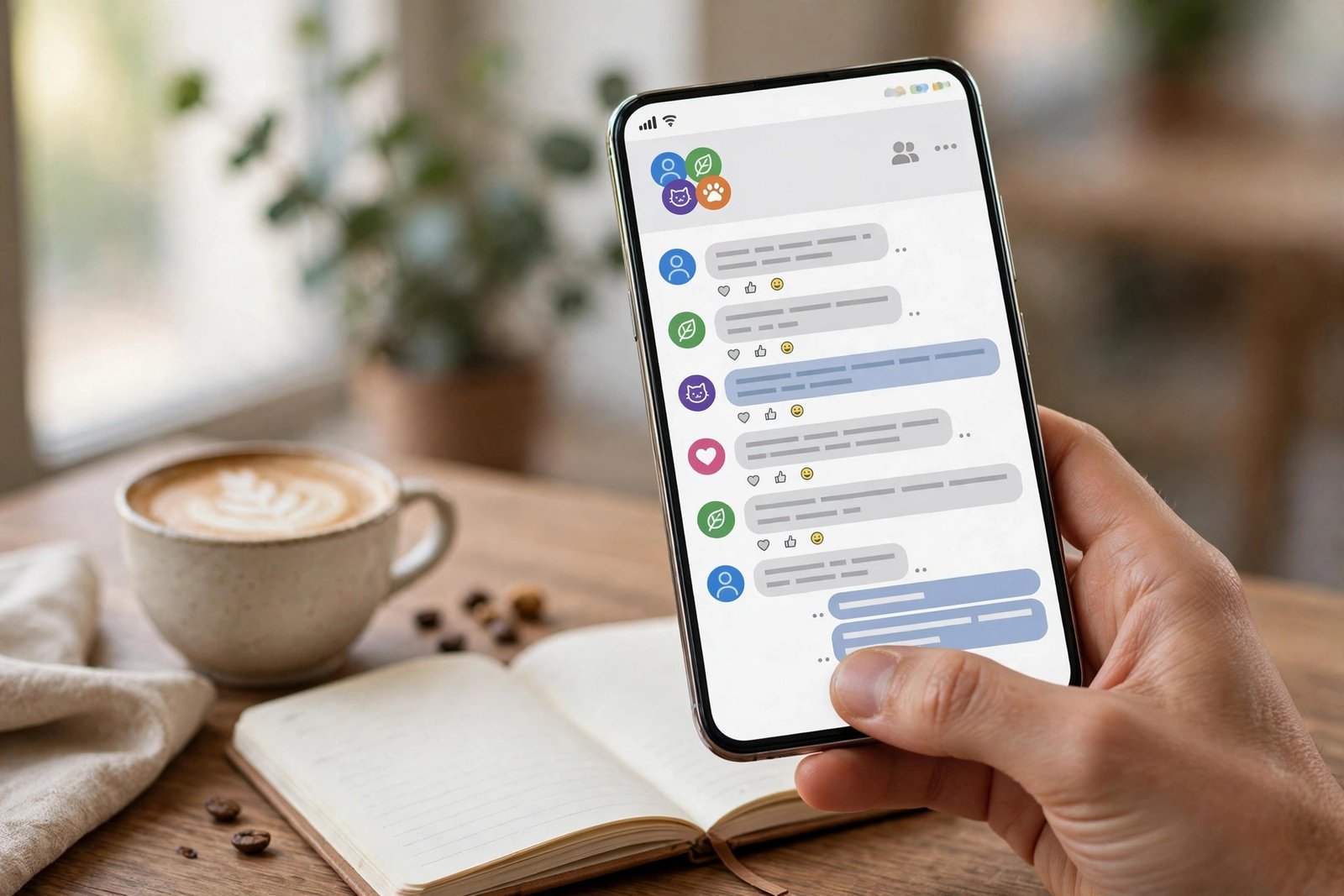
Follow the 80/20 rule: 80% pure value, 20% promotion at most. The moment members feel like prospects instead of people, engagement dies.
Step 5: Grow to critical mass
A group under 500 members feels dead. Your first goal is reaching the threshold where organic conversations happen without your constant involvement. Growth should accelerate once you hit 500 members, because Facebook's algorithm favours active groups and suggests them to people interested in your topic.
Ways to grow:
- Cross-promote in related, non-competing groups where allowed.
- Share group content on your personal profile and business page.
- Mention the group in podcast appearances, guest posts, and collaborations.
You can start monetising with as few as 500 highly engaged members through digital products or affiliate offers. For sponsorships, most brands look for groups with 2,000 to 5,000 or more active members, though engagement rate matters more than raw numbers. A 2,000-member group with 30% weekly engagement is worth more than a 20,000-member group where nobody posts.
The five main ways to earn
1. Direct brand sponsorships and pinned posts
Brand sponsorships offer the fastest way to earn from a Facebook group. A company pays you a fixed fee to publish a dedicated post introducing their product, sharing a resource, or offering a discount code to your members. Three placements are common: a standard feed post, a 24-hour pinned post in the Featured section, and an @everyone tag that sends a push notification. Pinned posts and @everyone tags command higher prices than standard posts.
Sponsorship pricing depends on your niche, member count, and post format. High-value B2B and finance niches command higher rates than general interest niches. As a rough guide, micro groups under 10,000 members often charge a few dollars per standard post, and larger groups charge more, with pinned posts and @everyone tags adding a premium. Always require sponsors to offer something of value to members, and disclose every sponsored post clearly with a tag such as #sponsored.
Finding sponsors manually through cold messages takes hours and brings payment risks. Dedicated marketplaces connect group admins with verified advertisers, manage pre-funded deposits, and guarantee payouts once your live post is verified. Or reach out directly to brands your members already use. Pitch specific collaboration ideas, not generic partnership opportunities.
2. Paid membership tiers and mastermind groups
If your group provides specialised advice in fields such as business, finance, or software, you can use your free Facebook group as an entry point for a private, paid subscription community. Admins use membership platforms to charge monthly or annual dues for weekly live coaching calls, direct teardowns, or exclusive directories.
Facebook has tested paid subgroups and subscriptions, but access is limited, so many admins sell membership on their own site and approve paying members into a private group. A paid tier of $19 to $97 a month offers exclusive weekly content, direct access to you through office hours or Q and A threads, and early access to products. Rather than trying to convert all free members to paid, focus on the 5% to 10% who are most engaged. Even converting 2% of a 3,000-member free group into $47 a month paid members generates $2,820 in monthly recurring revenue.
3. Curated affiliate marketing
With affiliate marketing, you share links to tools, books, or services relevant to your niche, and earn a percentage commission when a member buys. Only recommend products you personally use, disclose commercial links clearly with tags such as #affiliate, and share practical walkthroughs rather than raw product links. A recommendation answering a member's question fits the value-first culture groups depend on. In the US, the FTC requires clear disclosure, and the FTC Endorsement Guides explain what clear and conspicuous means. Keep recommendations rare and relevant.
4. Digital products and courses
Running a community shows you the exact questions and challenges members face every week. You can package practical solutions into ebooks, templates, workflow spreadsheets, or video workshops. Because you already understand your audience's common questions, you can create products that match their needs.
Create a product that solves one problem faster, easier, or more completely than your free content does. A mini-course priced at $47 to $197 converts better than a flagship course for a first offer, because it is lower risk for buyers and faster for you to create. Launch to your group first, because they are your warmest audience, then use your email list for the full promotional sequence. Our guide to how to sell digital products with Facebook ads can help you reach buyers beyond the group.
5. Lead generation for services
If your group serves professionals, founders, or business owners, community discussions naturally generate qualified client leads. By answering member questions with concrete solutions, you demonstrate competence. Members who need hands-on help will reach out to hire your agency, consulting practice, or freelancing services directly. This is often the highest-value route per member, because one client can be worth far more than one product sale.

How much can you earn, and how long does it take?
Most group owners see their first revenue between 3 and 6 months after launch, assuming consistent posting. Reaching $1,000 or more a month typically takes 6 to 12 months of focused effort and at least 1,000 engaged members.
| Stage | Timeline | Members | Expected monthly revenue |
|---|---|---|---|
| Launch and growth | Months 1 to 3 | 0 to 500 | $0 |
| First product | Months 4 to 6 | 500 to 1,500 | $200 to $800 |
| Sponsorships added | Months 7 to 9 | 1,500 to 3,000 | $800 to $2,500 |
| Paid tier launch | Months 10 to 12 | 3,000 to 5,000 | $2,500 to $5,000 |
| Mature group | Year 2 and beyond | 5,000 to 15,000 | $5,000 to $15,000 or more |
These numbers assume consistent effort of 5 to 10 hours a week on content, engagement, and product development, and they come from guides written by group owners, not from any verified income data. They are a planning guide, not a promise. Faster growth is possible with more time or an existing audience. Slower growth happens when you post inconsistently or skip the email list. Results vary with niche, effort, and demand, and many groups earn nothing at all.
Starting costs are low: a group is free to create, and your main costs are your time and any small ad spend for growth. A paid membership platform, an email tool, or a course platform adds cost later, once you have revenue.
Rules, moderation, and keeping member trust
The single most important rule of group monetisation is that the community must always feel like it benefits more from your group than you do. The moment members feel they are being sold to more than they are being served, they stop engaging. Low engagement kills reach. Low reach kills monetisation. The sequence is always community first, revenue second, not the other way around.
Four rules protect that trust. Cap sponsorship frequency at 1 or 2 paid posts a week at most, and keep 90% of your feed organic and conversational. Enforce strict niche fit, and only accept sponsors that solve genuine problems for your audience. Require sponsors to offer exclusive value, such as a unique discount or a useful guide. Disclose transparently with clean tags such as #sponsored. The FTC requires clear labelling of commercial partnerships.
Follow Meta's Community Standards, Commerce Policies, and Branded Content Policies. Facebook allows group monetisation as long as you follow its rules, but you cannot sell prohibited items, and paid membership groups must use Facebook's subscription feature or clearly disclose external payment arrangements. The Meta Community Standards set out what is and is not allowed on Facebook, Instagram, Messenger, and Threads. Check them before you run a promotion.
Moderation is part of the job. Approve new members carefully, remove spam quickly, and enforce your rules consistently. A group with no moderation fills with spam, and spam kills the trust that makes the group worth anything. Recruit a trusted member as a moderator once the group passes a few thousand members, so the work does not all fall on you.
Common mistakes
- Starting too broad, then struggling to monetise. A general group attracts everyone and converts no one.
- Treating the group as a sales channel instead of a community. Follow the 80/20 rule and introduce paid content gradually from the beginning, so it is always part of the culture rather than a sudden change.
- Ignoring email list building until it is too late. Start collecting emails from day one, even if your list is small.
- Burning out on content creation. Daily posting sounds ambitious until week three. Build sustainable systems: batch content, repurpose your best posts, and keep a simple weekly rhythm.
- Waiting too long to monetise. Some group owners spend two years building trust while earning nothing. If you have provided genuine value for 3 to 4 months and have 500 or more members, you have earned the right to sell something.
- Increasing promotional content suddenly. A sudden shift from pure value to heavy promotion makes members feel betrayed. Introduce monetisation gradually and keep the ratio steady.
- Judging readiness by size alone. A group of 500 genuinely engaged members who trust you is worth more than 20,000 who joined once and never came back.
Risks and scams to watch for
Be wary of anyone selling a guaranteed Facebook Group income system, a course that promises a fixed monthly figure, or a service that sells group members. Bought members do not engage, and they destroy the engagement rate that sponsors pay for. A group full of fake accounts is worth nothing.
Watch out for sponsors who ask you to hide the sponsorship, post misleading claims, or promote products that break Facebook's rules. If a sponsor's product does not fit your members, decline it, even if the fee is tempting. One off-topic promotion can cost you more trust than the fee was worth.
Facebook can also change its rules, limit group features, or close a group without warning. Groups have been shut down for rule breaches, and appeals do not always work. That is why the email list matters so much: it is the one asset Facebook cannot take away. Keep a backup of your member list where you can, and never build your whole business on a single group.
If you run a group for a service business, our guide to how to make money on LinkedIn can help you reach professional clients beyond Facebook, and our guide to how to make money on Threads covers a newer community platform with similar dynamics.
Frequently asked questions
How many members do you need to monetise a Facebook group?
You can start monetising with as few as 500 highly engaged members through digital products or affiliate offers. For sponsorships, most brands look for groups with 2,000 to 5,000 or more active members, though engagement rate matters more than raw numbers.
Is it against Facebook rules to make money from a group?
No. Facebook allows group monetisation as long as you follow its Commerce Policies and Community Standards. You cannot sell prohibited items, and paid membership groups must use Facebook's subscription feature or clearly disclose external payment arrangements. Always disclose sponsored and affiliate content clearly.
What type of Facebook group makes the most money?
Groups in B2B niches, professional development, and high-intent hobbies such as investing, real estate, or specialised skills typically earn the most. These audiences have both disposable income and urgent problems they will pay to solve.
How long does it take to make money from a Facebook group?
Most group owners see their first revenue between 3 and 6 months after launch, assuming consistent posting. Reaching $1,000 or more a month typically takes 6 to 12 months of focused effort and at least 1,000 engaged members. Groups that post inconsistently take far longer, or never earn at all.
Should I start a free or paid Facebook group?
Start with a free group to build trust and prove your value. Once you have 500 or more engaged members and understand their needs, you can launch a paid tier or a separate paid community. A free group that feeds a paid tier is the most common successful model.
Can a Facebook group be monetised if it is private?
Yes. Private Facebook groups can be monetised through direct sponsorships and paid memberships. Advertisers often value private, closed communities higher, because members in private groups show higher trust and engagement. You will need a way to verify admin ownership and collect payment outside Facebook.
Conclusion
Making money with Facebook Groups rewards patience and genuine value over quick tactics. Pick a narrow, commercial niche, set up the group for growth, build your email list from day one, and post three valuable pieces of content a week. Grow to 500 engaged members, launch a small digital product that solves the problem your members ask about most, add sponsorships once you pass 2,000 members, and open a paid tier for your most engaged 5% to 10%. Keep promotion to 20% of the feed at most, disclose every commercial post, and protect the trust that makes the group valuable. Start this week: choose your niche, create the group, and write your welcome post. Do that consistently for a year, and you will have an asset that generates revenue for years to come.