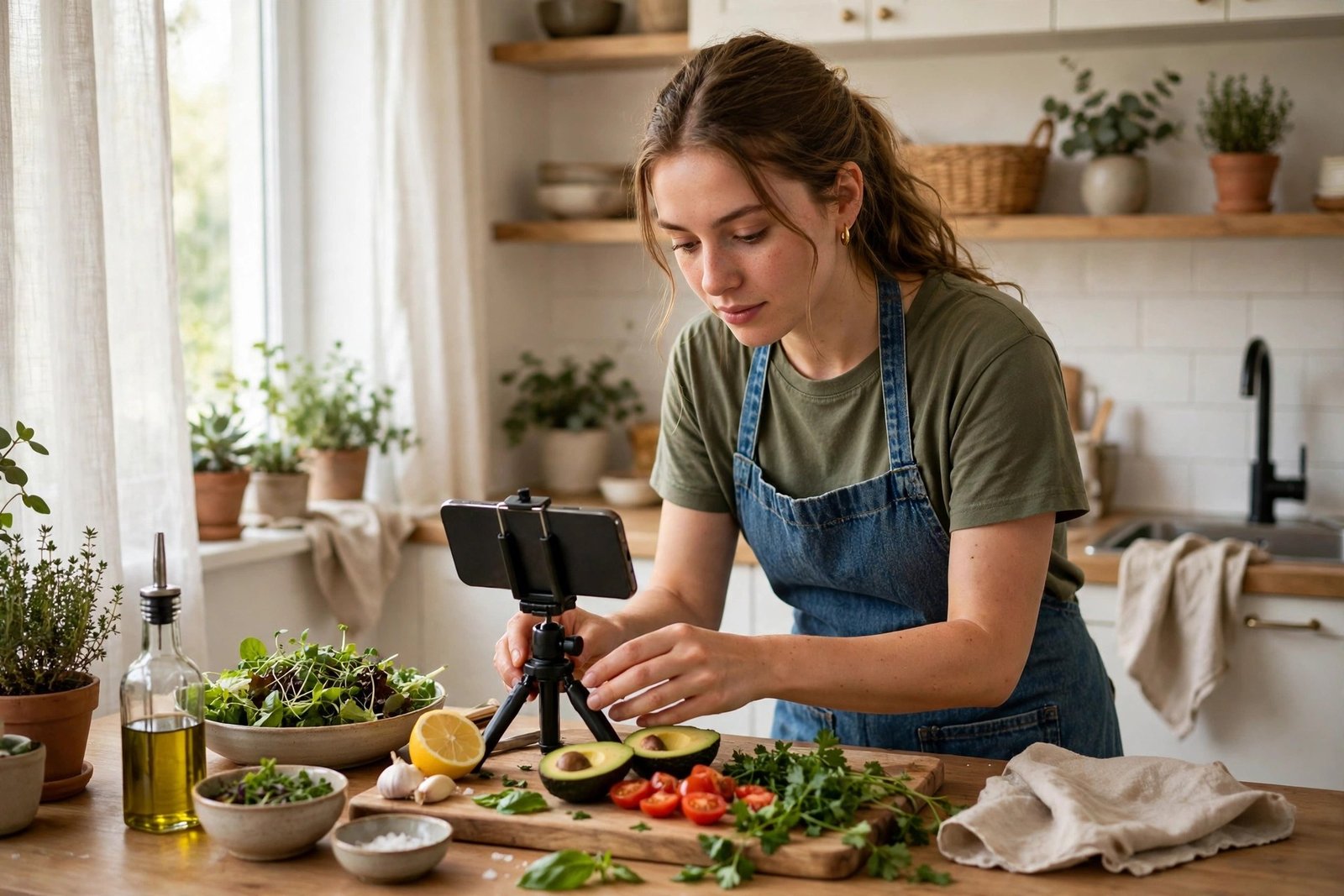
How to Grow Instagram Followers Organically in 2026
Organic growth means gaining followers without ads, bots, or bought followers. If you want to learn how to grow Instagram followers organically, start with a simple loop. A Reel reaches people who do not follow you yet. Your profile turns some of those visitors into followers. Stories and direct messages turn followers into repeat viewers. If any part of that loop is weak, growth stalls, even when your videos look good.
This guide explains that loop in plain terms. It covers how Instagram decides what to show, how to fix your profile, how to build a content system, and how to measure what actually grows followers. It does not promise a follower number or a timeline, because growth depends on your niche, your consistency, and how well your content fits strangers who see it for the first time.
In this guide
- How Instagram decides what to show in 2026
- A profile conversion audit
- A content system: Reels, carousels, Stories, and Collab posts
- Search friendly captions
- An engagement routine
- A sustainable weekly schedule and a 30 day plan
- How to measure growth
- What hurts growth
- Frequently asked questions
How Instagram decides what to show in 2026
Instagram tests new content with a small group of people first, including people who do not follow you. If those viewers watch, like, share, or send the post, Instagram may show it to a wider group. If they skip it quickly, the post may stop spreading. That is why the first seconds of a Reel matter so much, and why a post must make sense to a stranger, not only to your existing followers.
The research for this guide found ranking signals described in an opened, well sourced guide, with dates attached to Instagram statements. In January 2025, Instagram's head, Adam Mosseri, described watch time, likes, and sends as key signals, with sends weighing more with non-followers. In February 2025, Instagram changed ranking so each eligible Reel is shown to a small group of non-followers first, then widened on engagement. Those dates matter, because older advice about follower based reach no longer fits the current system.
Original content also matters. The opened guide described an April 2024 rule where only the original post is recommended, copies get a link back to the creator, and accounts that post other people's content ten or more times in 30 days without material change can become ineligible for recommendations. Visible watermarks from other apps can also make a post ineligible. In short, reposting other people's work is a poor growth plan, and it can actively harm your reach.
Two limits need care, because they roll out gradually and may not apply in the same way everywhere. First, a hashtag cap of five, down from 30, was described in the opened guide as something Instagram said it would gradually cut from December 2025. Write about it as a rollout, not as a settled universal rule, unless Instagram's current guidance confirms it for your account. Second, Reels up to three minutes were described as current in the same guide, but Reel length limits have changed before, so check Instagram's current creator guidance before you plan long Reels. Do not invent numeric weights for ranking signals, because Instagram has not published them.
A profile conversion audit
Discovery brings visitors. Your profile decides whether they follow. Run this audit before you post more content.
- Searchable name field: Put a plain search term in your name field, not just your brand name. For example, a vegan meal prep creator might use a name field that says vegan meal prep, so searchers can find the account by topic.
- One promise bio: Say who you help, what you post, and what happens next, in one or two short lines. Avoid vague words such as content creator with no topic.
- Three pinned posts: Pin your best introduction, your best useful post, and your best proof post, so a new visitor sees your range at once.
- Highlights: Keep a small set of Highlights that answer common questions, show your work, and show how to contact or book you.
- One call to action: Give visitors one clear next step, such as a link to a free guide, a booking page, or a product page. Too many links confuse visitors.
- Grid check: Instagram now shows tall rectangles in the grid, a change described as starting in January 2025 in the opened guide. Check that your key images still crop well in that shape.
If your profile fails this audit, fix it first. More Reels will only send more visitors to a profile that does not convert.

A content system: Reels, carousels, Stories, and Collab posts
Reels for discovery
Reels are your main discovery tool, because they reach non-followers. Use one idea per Reel, and state it in the first one to two seconds. A clear hook, such as a question, a mistake, or a before and after result, helps a stranger decide to keep watching. Add on-screen text and captions, because many people watch without sound at first. End with a simple follow call to action only when the Reel has already given value, such as a tip, a demonstration, or a clear result.
Trial Reels are a useful test tool. They let you test a Reel on non-followers first, and check the result after about 24 hours, according to the opened guides. Use Trial Reels to test new topics, hooks, and formats without risking your main feed. If a Trial Reel earns profile visits and follows, publish it to your main feed and make more in that style. If it earns views with no follows, the topic or the profile may need work, not more volume.
Carousels for saves and shares
Carousels are multi image posts that users swipe through. They work well for saves, because a useful carousel becomes a reference that people keep. A step by step guide, a checklist, a before and after set, or a short lesson all suit carousels. Put the main promise on the first slide, one clear point per slide, and a simple summary on the last slide. A carousel that only repeats the caption wastes the format.
Stories for retention
Stories keep followers warm between feed posts. Use Stories most days, but keep them simple. Polls, question stickers, behind the scenes clips, and short updates all help followers feel close to you. Stories also give you direct feedback, because replies and poll answers show what followers actually care about. Do not use Stories only for sales links, or followers will start skipping them.
Collab posts for borrowed audiences
A Collab post appears on two accounts at once, so both audiences can see it. Collab posts suit creators in the same niche with a similar audience size, such as two beginner cooks, or a fitness coach and a meal prep creator. Agree the topic, the caption, and the call to action in advance, and choose a topic that helps both audiences. One strong Collab post can bring more relevant followers than many solo posts, because the new audience already trusts the other creator.

Search friendly captions
Instagram is also a search tool, so captions help people find you. Put the main keyword in the first line, in natural words, not as a pile of tags. Write a clear description that explains what the post shows, who it is for, and what the viewer will learn. Use three to five specific hashtags that match the topic, rather than many broad tags that match nothing. Add custom alt text where Instagram offers it, so the post is more accessible and easier to understand. Add a location tag where it is relevant, such as a local market, a gym, or a city guide.
Here is a simple contrast. A weak caption says only a short phrase and many broad tags, with no topic, no audience, and no benefit. A strong caption starts with the topic in plain words, such as a 15 minute home workout for beginners with no equipment, then explains the steps, then adds a few specific tags. The strong caption helps search, helps strangers, and helps accessibility at the same time.
An engagement routine
Engagement means real conversation, not generic comments. Reply to comments in the first hour where you can, because early replies keep a conversation alive. Leave thoughtful comments on posts in your niche, with a real observation or question, not just praise. Go live from time to time to answer questions and meet followers in real time. Use polls and question stickers in Stories to learn what followers want next.
Spend about 15 minutes a day on engagement, as suggested in an opened guide, and keep it focused on your niche. That routine builds relationships that later turn into Collab posts, shares, and recommendations. It also teaches you what your audience actually asks about, which gives you your next post ideas.
A sustainable weekly schedule and a 30 day plan
A schedule you can keep beats a schedule you quit in week two. The opened guides suggest a steady pattern, such as three Reels, one to two carousels, and Stories on most days each week. Adjust that pattern to your time, but keep it steady for at least 90 days before you judge it. Growth usually takes months, not days, and early weeks often look slow.
| Day | Main task |
|---|---|
| Monday | Publish a Reel, reply to comments, and note profile visits |
| Tuesday | Publish a carousel, and engage with niche accounts for 15 minutes |
| Wednesday | Publish a Reel or a Trial Reel, and check which post earned follows |
| Thursday | Stories with a poll or question, and reply to direct messages |
| Friday | Publish a Reel or a carousel, and plan next week's topics from comments |
| Saturday | One Collab post or live session, when you have a partner or a topic |
| Sunday | Weekly review: keep what converted visits to follows, and drop what only collected likes |
A 30 day plan follows the same logic. Week 1: fix your profile, publish your first three Reels, and set up Highlights. Week 2: add carousels, test one Trial Reel, and start the daily engagement routine. Week 3: try one Collab post, review your Insights, and make more of the format that earned follows. Week 4: repeat the winners, plan the next month, and set a simple goal, such as improving follows per post, not chasing a total follower number.
How to measure growth
Watch these numbers in Insights, not just follower count.
- Non-follower reach: new people are seeing your posts.
- Shares and saves: viewers value the post enough to keep or send it.
- Profile visits: the post made strangers curious about you.
- Follows per post: the post turned visitors into followers.
- View rate and average watch time: viewers actually watched, rather than skipping at once.
Review these numbers once a week. Ask one question for each post: did it turn visits into follows? If a post earned many views but no follows, check the profile audit, the hook, and the call to action. If a post earned follows, make more posts in that style, for that audience, with that hook structure. That weekly review is the system that turns posting into growth.
What hurts growth
- Buying followers, views, or engagement. Bought followers do not watch, comment, or buy, and they harm your reach because your engagement rate falls.
- Using bots, engagement pods, or unofficial tools that ask for your password. These can breach Instagram rules and put your account at risk.
- Reposting other people's content, or posting clips with visible watermarks from other apps.
- Posting irregularly, then disappearing for weeks, so followers forget why they followed.
- Chasing trends that do not fit your niche, which brings visitors who never follow or return.
- Writing vague bios, pinning weak posts, or linking to a page that does not match your content.
For monetisation once growth starts, do not turn this growth guide into a second Instagram money guide. Keep growth and earning separate. When you are ready to earn, see how to make money on Instagram with a small account, how to make money as a UGC creator, and how to get brand deals as a small creator.
Frequently asked questions
How often should I post on Instagram?
A steady few posts a week, with Stories on most days, is a realistic pattern for most beginners. Three Reels and one to two carousels a week, as suggested above, gives you enough tests without burnout. Consistency matters more than daily posting, because a schedule you quit helps no one.
How many hashtags should I use?
Use three to five specific hashtags that match the topic, rather than many broad tags. The research found a possible cap of five described as a gradual rollout from December 2025, so check Instagram's current guidance for your account. Hashtags help search, but they are not a reach hack on their own.
What is a Trial Reel?
A Trial Reel is a Reel tested on non-followers first, so you can check its result after about 24 hours before you publish it to your main feed. Use Trial Reels to test new topics and hooks. If a Trial Reel earns profile visits and follows, publish it widely and make more in that style.
How long does organic growth take?
Expect months, not days. Early posts test your profile, your hooks, and your topics, and most early posts will not go viral. Growth builds when a few posts consistently turn visits into follows, and you repeat those winners. Do not buy followers to speed this up, because bought followers harm your reach and your trust.
Can a small account reach non-followers?
Yes. The February 2025 ranking change described in the research means eligible Reels are shown to a small group of non-followers first, then widened on engagement. Distribution is engagement based, not follower based, so a small account with a strong hook and original content can reach new people. That is why profile conversion matters so much for small accounts.
Should I use comment to direct message automation?
Only with official Meta approved tools, and only with a clear, honest promise. Give the free item as promised, keep the steps simple, and do not use follow gating without checking current policy first. Automation that annoys users or breaches rules will cost you more followers than it gains.
Conclusion
Organic growth is a loop, not a trick. Make original Reels that strangers understand in seconds, fix your profile so visitors follow, use Stories to keep followers warm, and review your Insights each week. Repeat the posts that turn visits into follows, and drop the posts that only collect likes. That loop, kept steady for 90 days, builds real followers who actually watch, reply, and return.
Your next step this week is simple. Run the profile audit, publish three Reels with clear hooks, and check follows per post after seven days. Then read how to make money on Instagram with a small account, how to turn a small social media following into income, and how to make money on Facebook in 2026, and browse all guides in the Social Media Earning category. Earning results vary, and nothing on this site is financial advice.