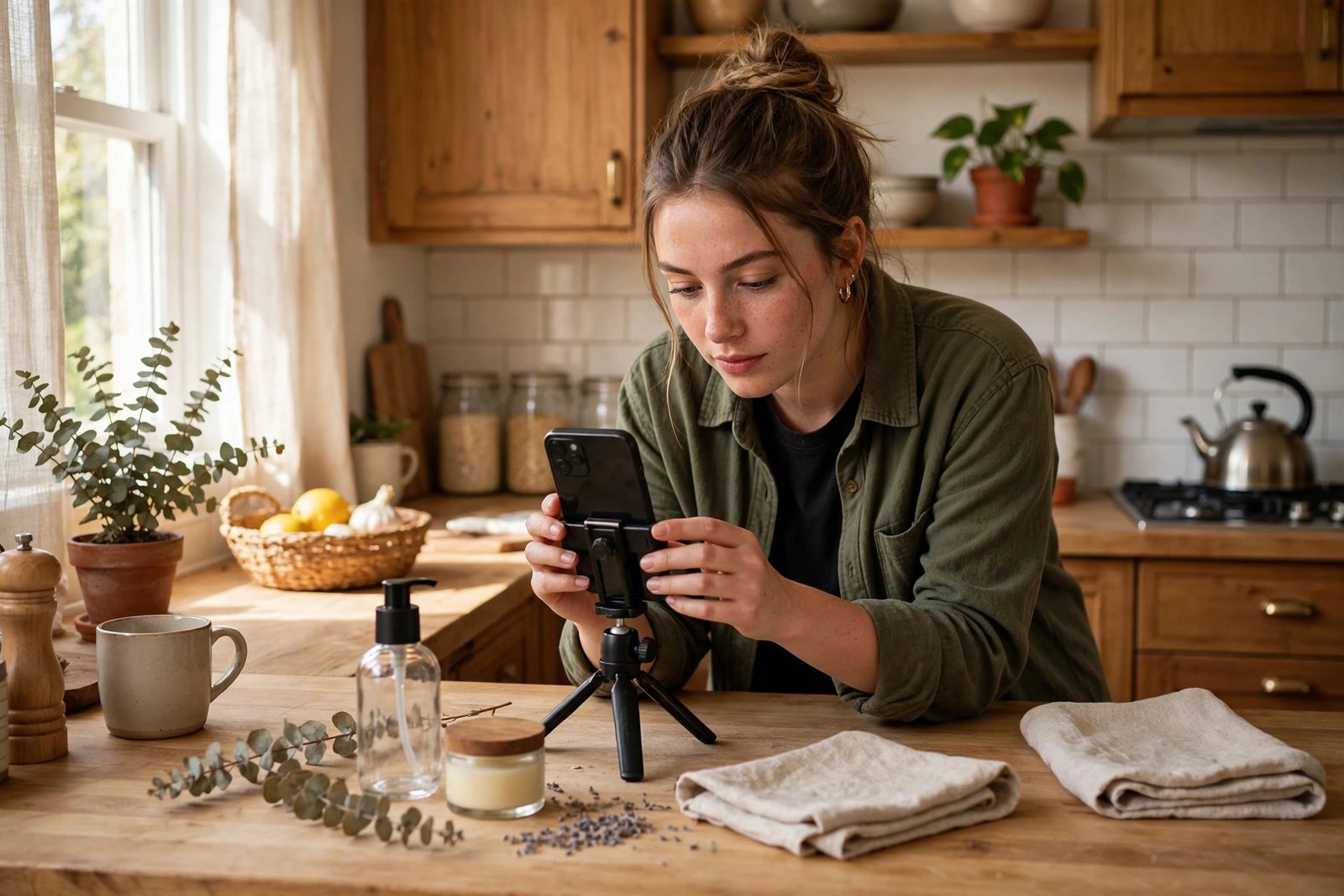
You do not need a huge following to earn from social media. You need a clear niche, an audience that trusts you, and one offer that solves a real problem for that audience. A creator with 2,000 engaged followers in a focused niche can earn more than a creator with 50,000 followers who post about everything and sell nothing clearly. Follower count is a vanity number. What matters is how many people pay attention, reply, click, and buy.
This article is the cross-platform decision guide for small creators. It helps you audit your audience, compare the main income models, and pick your first stream. It does not teach one model in depth. For platform-specific detail, read the companion guides on Instagram for small accounts and TikTok earning routes. If you decide to sell sponsored posts, the deal process is covered in the guide to getting brand deals as a small creator. If you would rather sell content files than audience access, read the guide to making money as a UGC creator.
Results vary widely. Income depends on your niche, audience size and trust, content quality, time, competition, and platform rules, which change often. Treat every figure in this guide as a planning aid, not a promise. Check current thresholds and payout rules in each platform dashboard before you commit to a route.
What a small following is actually worth
A following is worth what it can do, not how large it looks. Three signals matter more than headcount. First, engagement: do people comment with real questions, save posts, share them, and reply to Stories? Second, intent: are followers asking how to buy, where to find something, or how you did something? Third, fit: does your content serve one group with one kind of problem? A fitness creator whose followers ask about home workout plans has a clearer income path than a general lifestyle account with ten times the followers.
Engagement rate is a useful check. Divide recent interactions (likes, comments, saves, shares) by follower count for a set of posts, and look at the pattern rather than one viral post. A small account with steady comments is healthier than a larger account with silent likes. Brands and buyers notice this too. When a brand asks for screenshots, they usually want recent engagement and audience location, not just a follower total.
Trust is the real asset. Followers buy because they believe your recommendation comes from experience, not from whoever paid most recently. That trust takes months to build and one careless promotion to damage. Keep that in mind for every model below. The fastest way to lose income is to promote products you would not use, hide affiliate links, or post offers that have nothing to do with your niche.
Audit your audience in 30 minutes
Before you pick an income stream, spend 30 minutes on a simple audit. Open your analytics and your last 20 posts. Write down your top five posts by saves and comments, not just likes. Saves signal value. Comments signal questions. Then read the comments and direct messages from the last month and list the ten most common questions. Those questions are your market research, free and specific to your audience.

Next, sort your followers into rough groups. Who are they, what problem brought them to you, and what have they already asked to buy or learn? A cooking creator might find beginners asking for weekly meal plans, busy parents asking for 20 minute dinners, and a smaller group asking about kitchen tools. Each group points to a different offer. Finally, check where your audience already spends attention. If most engagement comes from short video, a written course may be a harder first sell than a short video series or a live session. If your audience reads long captions and saves carousels, a guide or template may fit better.
The six income models compared
Most small creator income falls into six models. Platform payouts pay you from a program run by the platform itself, such as creator funds, gifts, or subscriptions. Brand deals pay you to post about a brand to your own audience. Affiliate income pays a commission when a follower buys through your link. Own products means selling something you made, such as a template, guide, preset pack, or course. Services means selling your skill directly, such as coaching, editing, design, or management. Membership means charging a recurring fee for ongoing content or community access.
| Model | Needs an audience? | Speed to first income | Main risk |
|---|---|---|---|
| Platform payouts | Yes, and often a threshold | Slow, threshold dependent | Rules and rates change |
| Brand deals | Small but engaged audience | Medium, needs outreach | Over promotion damages trust |
| Affiliate income | Small audience with buyer intent | Fast to start, slow to scale | Low commission per sale |
| Own products | Small audience with a clear problem | Slow to build, then scalable | Building before testing demand |
| Services | Audience helps, portfolio matters more | Fastest for skilled creators | Time for money ceiling |
| Membership | Loyal core audience | Slow to build | Churn if value drops |
No model is best in general. Platform payouts depend on eligibility and views. Brand deals depend on outreach and fit. Affiliate income depends on trust and traffic. Own products depend on demand you have tested. Services depend on skill and availability. Membership depends on loyalty and consistent value. Your audit should point to the model that matches what your audience already asks for. If they ask for your help directly, services fit. If they ask for your recommendations, affiliate fits. If they ask for your system, a product fits.
Choose your first stream: a simple decision guide
Pick one stream first, even if you later stack more. Start with three questions. What does your audience already ask for? What can you deliver well in the next 30 days? What can you test without spending much money? The overlap of those three answers is your first stream.
Use this simple rule. If you have a skill people already ask you to perform, start with services. You can earn before you have any product, and each client teaches you what your audience will pay for. If you have strong recommendations and buyer intent but no service to sell, start with affiliate links for products you genuinely use, and disclose them clearly. If followers repeatedly ask for your method, template, or plan, start with one small product, not a large course. A single template or short guide is faster to finish, easier to price, and simpler to improve from buyer feedback.
Avoid starting with membership. It sounds attractive because income recurs, but it needs a loyal core and steady output before it pays. It works better as a second stream, after you have proven that people will pay you once. Also avoid starting with three streams at once. Each stream needs its own content, links, and follow up. Spreading thin usually means none of them gets enough attention to work. Pick one, prove it with real sales or bookings, then add a second.
Build the conversion path
Content alone rarely earns. You need a short path from a post to an offer. Think of it in four steps: content, capture, offer, follow up. Content earns attention by solving a small problem in public. Capture moves interested people to a place you own, usually an email list, because platform reach can fall without warning. Offer presents one clear product, service, or recommendation. Follow up answers questions and reminds people who showed interest but did not buy.
Your link in bio should serve this path, not list ten random links. One link to a simple landing page is enough: a short description of who you help, one free resource in exchange for an email address, and one paid offer. A free resource could be a checklist, a template, or a short video lesson. It should be genuinely useful on its own, not just a sales page in disguise. People join lists that help them, and they leave lists that only sell.
A realistic first 30 days
Set a modest goal for the first month: one working income stream, not a full business. Week one is the audit and the choice of stream, plus setting up the basics: a clear bio, a link page, and payout or payment details. Week two is content built around the top audience questions, with each post pointing to the free resource or offer. Week three is the first offer push: a launch post, a Story sequence answering common questions, and direct replies to interested followers. Week four is review: what sold, what got questions, what to fix, and what to repeat.

Watch the promotion ratio. If every post becomes a sales post, engagement usually falls and trust erodes. A practical rule is to keep most content free and useful, with offers woven in naturally: teach the method in public, then mention the template, service, or link that makes it easier. When you add a stream, announce it once clearly, explain who it is for, and then return to normal helpful content. Your audience should feel helped first and sold to second.
Mistakes that kill trust
The most common mistake is over promotion. Posting affiliate links or sponsored content daily trains followers to scroll past you. The second mistake is off-niche offers. A budgeting creator promoting unrelated gadgets confuses the audience about what the account stands for. The third mistake is hidden affiliate links. Always disclose when a link earns you a commission, in the post or caption where the link appears, and follow platform disclosure tools where available.
Other mistakes are quieter but costly. Buying followers destroys engagement rates and can put your account at risk. Copying another creator's content destroys credibility faster than slow growth ever will. Promising income results you cannot guarantee misleads followers and can breach platform and advertising rules. Finally, ignoring tax and record keeping creates trouble later. Keep records of income, fees, and expenses from the first payment, and check local tax rules for self employed income in your country. This guide is not tax advice, but good records make professional advice cheaper and easier.
Frequently asked questions
How many followers do you need to make money?
There is no single number. Some creators earn with a few hundred followers through services or a niche product, while others with large followings earn little because their audience has no buyer intent. Focus on engagement, questions, and fit. If followers regularly ask for help, recommendations, or a product, you have enough audience to test a first stream.
What is the best first way to monetize a small account?
The best first stream is the one your audit points to. Services suit skilled creators, affiliate links suit trusted recommenders, and a small product suits creators whose audience asks for a method or template. Platform payouts usually come later, because they depend on thresholds and views.
Should I start with affiliate links or my own product?
Start with affiliate links if you want fast setup and low risk, and if you already recommend products you use. Start with your own product if followers ask for your system and you can build a small version in a few weeks. Test demand first: if a free checklist on the topic gets strong downloads, a paid version has a better chance.
How do I move followers to an email list?
Offer one genuinely useful free resource, such as a checklist or template, in exchange for an email address. Mention it in content that solves the same problem, link it in your bio, and deliver it immediately. Send useful emails, not only sales messages, or subscribers will leave as fast as they joined.
How long does it take to earn from a small following?
It varies widely. A skilled creator offering services can book a first client within weeks. Affiliate income and products usually take longer, because they need repeated content and trust. Judge progress by clicks, inquiries, and signups in the first month, not only by sales, and adjust the offer from what those numbers show.
Conclusion
A small following is not a waiting room for real income. It is a starting point, if the audience is focused, engaged, and served with one clear offer. Audit your audience, pick one stream that fits what they already ask for, build a short path from content to offer, and review the numbers weekly. Your next step is the 30 minute audit: list your top posts, top ten questions, and the one result your ideal follower wants. That page decides your first stream better than any list of twelve methods ever will.