How to Start a Voiceover Side Hustle in 2026
A voiceover side hustle lets you earn extra money by recording your own voice for videos, training courses, adverts, phone systems, and audiobooks, from a quiet space at home. You do not need to appear on camera, and you do not need a studio to begin. You need a decent microphone, a quiet room, clear reading skills, and the patience to audition many times before steady work arrives. This guide shows you how to set up, make demos, and find your first clients with your human voice.
In this guide
- What voiceover work involves
- Step 1: Pick your first voiceover niche
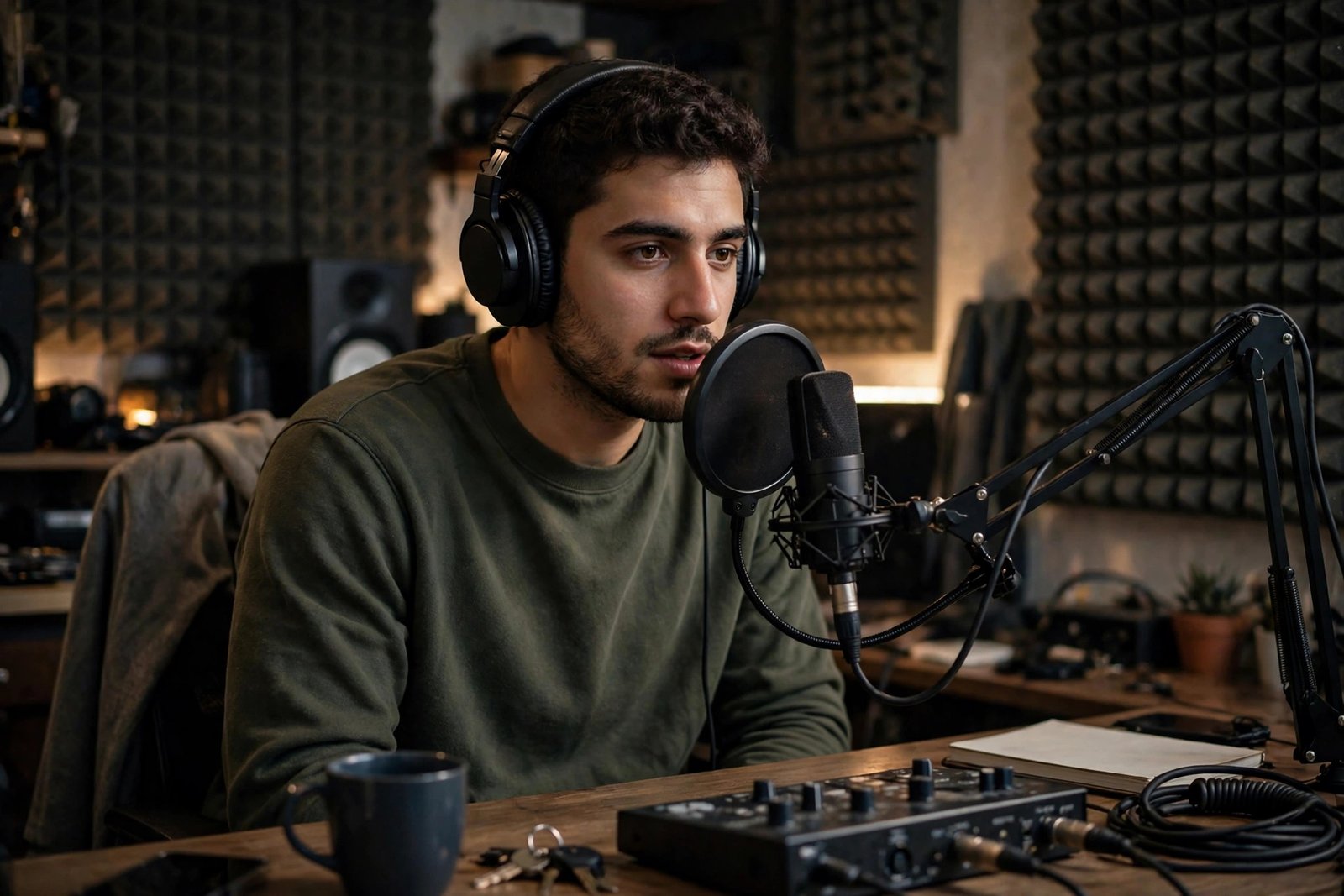
- Step 2: Set up a simple home recording space
- Step 3: Practise reading and learn basic editing
- Step 4: Record your first demos
- Step 5: Find work on platforms and by outreach
- Step 6: Price jobs and agree usage rights
- What it costs and what to expect
- Common mistakes
- Risks and scams to watch for
- Frequently asked questions
- Conclusion
What voiceover work involves
Voiceover means you record spoken audio that plays over video or stands alone as audio. Clients send you a script, you record and edit clean audio, and you deliver files in the format they ask for, often WAV or MP3. Common work includes corporate training narration, explainer videos, adverts, e-learning courses, phone messages, YouTube narration, and audiobook narration.
This guide is about recording with your own voice. It is different from selling AI generated voices. If you want the AI route, with its own tools and licence questions, read our guide on how to sell AI voiceover services instead. Human voice work still suits clients who want warmth, character, and a real person who can take direction.
Voiceover is audition based work. You will record many short auditions for every job you book, especially at the start. Treat auditions as practice and as your main marketing, because clients hire the voice they hear in the audition.
Step 1: Pick your first voiceover niche
Start with one niche that fits your natural voice. Corporate narration and e-learning suit clear, friendly, neutral reads and have steady volume from companies that make training content. Commercial work pays well per minute but is highly competitive. Audiobook narration needs stamina and consistent character voices over many hours.
Pick the niche you can record well today, not the niche with the highest advertised rates. A strong corporate demo beats a weak commercial demo every time. You can add a second niche once you have reviews and repeat clients.
Step 2: Set up a simple home recording space
Room sound matters more than an expensive microphone. Record in the quietest space you have, such as a closet full of clothes, a small room with soft furnishings, or a corner treated with blankets. Hard walls and empty rooms create echo that clients reject.
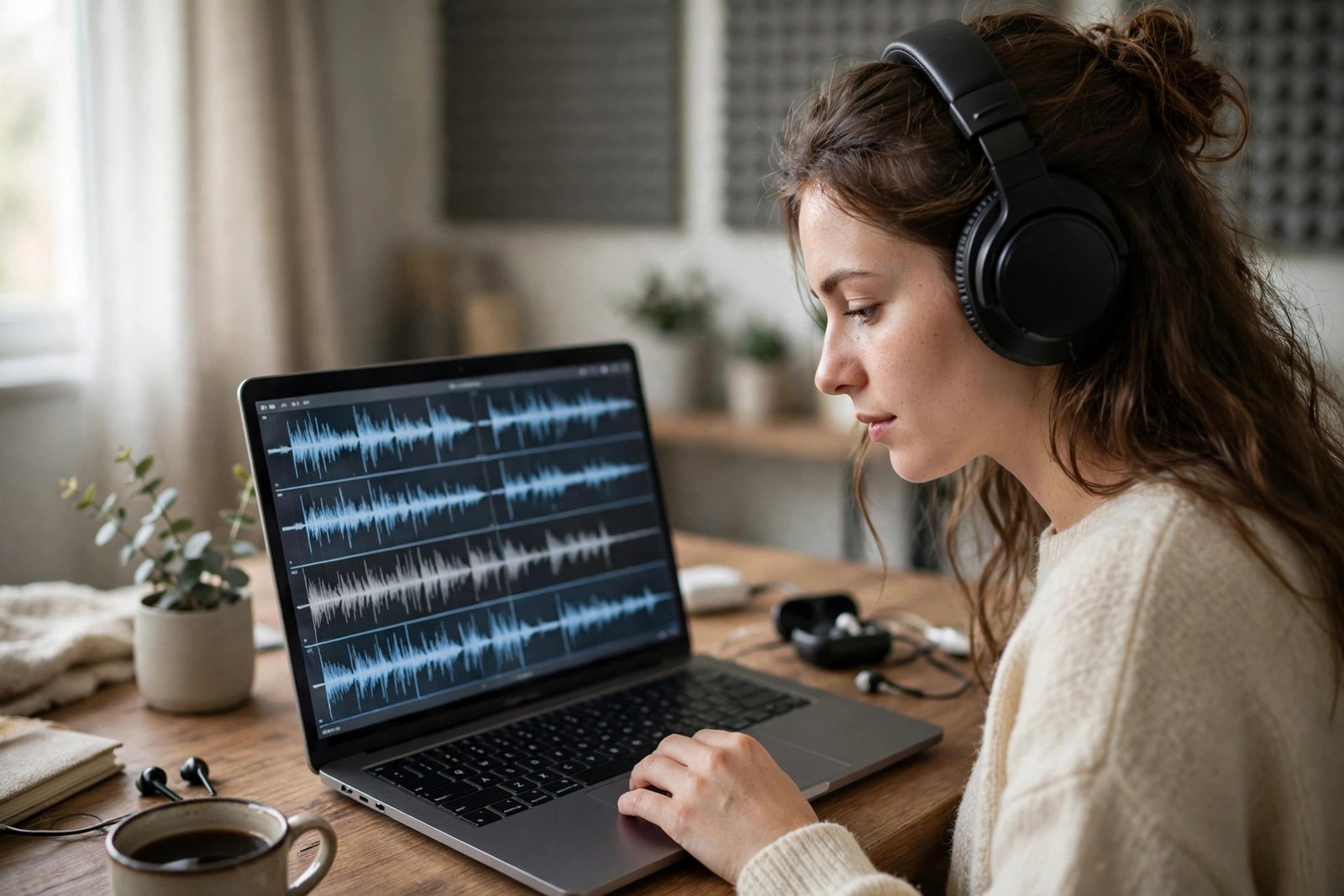
You need four basics. First, a microphone that connects to your computer, either a USB microphone or an XLR microphone with an audio interface. Second, closed headphones so you can hear noise and clicks. Third, free recording software such as Audacity. Fourth, a pop filter or careful microphone placement to reduce harsh sounds.
| Item | Starter choice | Why it matters |
|---|---|---|
| Microphone | USB condenser microphone, or XLR microphone with interface | Clear voice capture is your product |
| Headphones | Closed back wired headphones | Lets you hear echo, hum, and clicks |
| Recording space | Closet with clothes, or blankets hung in a U shape | Reduces echo more than gear upgrades |
| Software | Free audio editor to start | Recording, trimming, and basic noise clean up |
Test your space before you buy more gear. Record one minute of speech, listen on headphones, and fix echo, fan noise, and traffic noise first. Check current prices on official retailer or maker pages before you buy, because prices change. As of November 2026, confirm the exact model price and return terms on the seller page rather than trusting a guide figure.
Step 3: Practise reading and learn basic editing
Practise reading aloud every day for fifteen minutes. Read adverts, training scripts, and book passages. Record yourself, listen back, and mark where you rush, mumble, or sound flat. Clear pacing and natural emphasis matter more than a deep or unusual voice.
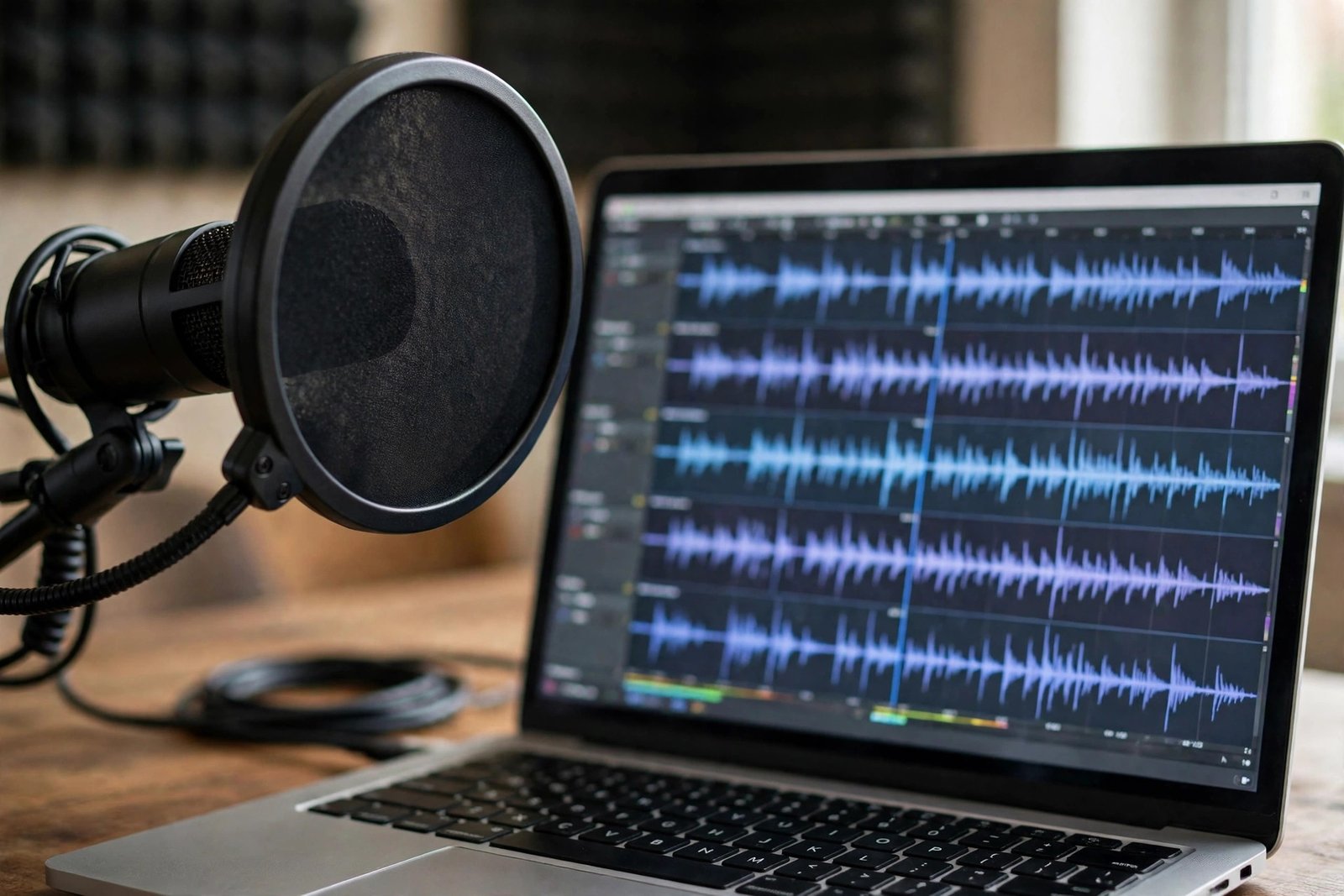
Learn four editing skills. Trim silence at the start and end of files. Remove loud breaths and mouth clicks where they distract. Reduce steady background noise gently. Set a consistent volume level across files. Keep edits light, because heavy processing sounds unnatural and clients notice.
Warm up before recording. Hum, read a page aloud, and drink water. Record in short takes and keep the best one. Mark up the script first with pauses and key words so your read sounds planned, not stumbled.
Step 4: Record your first demos
A demo is a short sample, usually sixty to ninety seconds, that shows your voice in one niche. Clients will not hire you without one. Make one demo per niche, with three or four short clips that sound like real client work.
For a corporate demo, record a training module opening, an explainer video section, a product walkthrough, and an internal announcement. Keep audio quality the same across clips. Write your own short scripts or use practice scripts you have permission to use. Never present practice work as a real client credit.
Do not pay a large fee for professional demo production at the very start. Record your own demo, get market feedback from auditions and small jobs, and invest in coaching or production later when you know your niche and your level.
Step 5: Find work on platforms and by outreach
You have three main routes to first work. Freelance marketplaces let you post a gig and collect reviews quickly. Casting platforms list auditions, often for a subscription fee. Direct outreach to companies that make training and video content can bring better rates and repeat work.
| Route | How it works | Watch out for |
|---|---|---|
| Freelance marketplace gig | You post a voiceover gig, buyers order short scripts | Low starting rates, platform fees, check current terms |
| Casting platform | You audition for listed jobs, often with a paid membership | Subscription cost before any income, check official pricing |
| Audiobook exchange such as ACX | You audition for books, paid per finished hour or royalty share | Long books take many hours, read contract terms in full |
| Direct outreach | You pitch companies and agencies with your demo | Slow replies, needs a clear short pitch |
Platform fees and membership prices change often. Check the official pricing and terms pages before you pay or post. As of November 2026, confirm the current seller fee, payout method, and usage rules on the platform site itself. Our guide on how to make money on Fiverr explains gig setup in general terms, and our guide on how to start freelancing covers proposals and client care.
For direct outreach, contact instructional design agencies, e-learning firms, video production companies, and software firms that publish training videos. Send a short message with your demo link, your niche, your turnaround time, and your starting rate. Follow up once, politely, then move on.
Step 6: Price jobs and agree usage rights
Price by the job, not only by the hour. Consider script length, recording and editing time, revisions included, deadline, and where the audio will be used. A short internal training clip and a national advert are different products, even at the same length.
Agree usage rights in writing before you record. State where the client may use the audio, for how long, and whether paid advertising is included. State clearly that voice cloning, AI training, and digital replica use are not included unless you agree them separately in writing for extra pay. This protects your voice and your future work.
Worked example
Example only: these numbers are not typical results.
Imagine you record a corporate training narration of 2,000 words. You charge a flat fee of 180 US dollars for recording, basic editing, and one revision round, for internal training use only.
- Flat fee: 180 US dollars
- Recording time: 1 hour
- Editing and delivery time: 1 hour
- Total time: 2 hours
- Gross pay per hour of your time: 180 divided by 2, which is 90 US dollars
Now subtract costs for the month. Say you complete 4 such jobs in a month, pay 30 US dollars for software and platform fees, and set aside 25 percent of gross pay for tax as a rough planning figure.
- Monthly gross pay: 4 times 180, which is 720 US dollars
- Monthly costs: 30 US dollars
- Amount left before tax: 720 minus 30, which is 690 US dollars
- Tax set aside at 25 percent of 720: 180 US dollars
- Amount left after costs and tax set aside: 690 minus 180, which is 510 US dollars
This example ignores unpaid audition time, which can be large at the start. Your real hourly rate will be lower until auditions turn into steady bookings. Recalculate with your own fees, your own costs, and your own country tax rules.
What it costs and what to expect
Startup costs can stay modest if you already own a computer. A starter microphone, headphones, and basic room treatment are the main costs. Casting subscriptions and coaching are optional and should wait until your demo and recordings are ready.
Expect a slow first months. You may audition many times before your first booking, and early jobs often pay small amounts while you build reviews. Steady income usually needs repeat corporate clients or a strong marketplace profile, and that takes months of consistent auditions and outreach.
Side income is taxable in most countries. Keep records of fees, platform charges, and equipment costs. United States readers can check the IRS Gig Economy Tax Center for official guidance on reporting side income. Rules differ by country, so check your local tax authority or a qualified accountant.
Common mistakes
- New voice actors often buy expensive gear before fixing room echo. Treat the room first, because clients reject echo faster than they reject a modest microphone.
- Many beginners record one long demo that tries to cover every style. Make short, focused demos, one per niche, so clients hear exactly what they need.
- Beginners often price only for recording time and forget editing and revisions. Include editing, file delivery, and one revision round in every quote.
- Some voice actors accept unlimited usage rights for a small fee. Agree media, term, and advertising use in writing before you record.
- New freelancers stop auditioning after a few rejections. Audition volume is the job at the start, so set a weekly audition target and keep it.
Risks and scams to watch for
Watch for clients who ask you to record a full script as a free audition, then vanish. Auditions should be short samples. For paid work, use platform payment protection or agree a deposit for direct clients.
Be careful with coaching and demo packages that promise guaranteed work for a large upfront fee. No coach can guarantee bookings. The Federal Trade Commission warns that honest employers never ask you to pay to get a job, and its guidance on job scams is worth reading before you pay for any course or listing.
Protect your voice rights. Read every contract for voice cloning and AI training clauses. Never sign away replica rights as part of a small narration fee. If a client wants those rights, treat it as a separate negotiation with separate pay, or decline.
Frequently asked questions
Do I need acting experience to start voiceover work?
No, you do not need formal acting experience to start, but you do need clear reading, good pacing, and the ability to take direction. Corporate and e-learning work suits natural, friendly reads. Practise daily and record yourself to build control.
What microphone should I buy first?
Buy a well reviewed USB condenser microphone, or an XLR microphone with a basic audio interface if you plan to upgrade later. Fix room echo first, because a good microphone in a bad room still sounds poor. Check current prices and return terms on the official seller page before you buy.
Where can beginners find voiceover work?
Beginners often start with a freelance marketplace gig to collect reviews, then add casting platforms and direct outreach to training and video companies. Audiobook exchanges suit narrators who enjoy long form reading. Check each platform official fees and terms before you join or pay.
How much should I charge for voiceover work?
Charge by script length, time, revisions, deadline, and usage rights. Internal training use costs less than paid advertising or broadcast use. State your fee, revision limit, and usage terms in writing before you record.
How long before I get my first voiceover job?
It can take weeks of auditions before your first booking, and months before work feels steady. Early booking rates are low for most beginners. Set a weekly audition target and treat every audition as practice.
Can clients use my recordings to train AI voices?
Only if you agree to it in writing. Your normal narration fee should not include voice cloning, AI training, or digital replica rights. State this clearly in every agreement, and negotiate those rights separately or decline them.
Conclusion
Pick one niche, fix your room sound, practise reading daily, and record a short focused demo. Post a marketplace gig, audition on casting platforms, and pitch training and video companies directly. Price for usage as well as time, protect your voice rights in writing, and keep auditioning through the slow first months.
If you are weighing this against other options, read our guide on how to choose the right side hustle. If you prefer employed part time work, read our guide on how to find part time online jobs. You can also browse more ideas in our side hustles category.
Earning results vary; nothing on this site is financial advice.