How to Make Money on Fiverr in 2026
Learning how to make money on Fiverr starts with one honest fact. Joining is easy, but getting your first order takes real work. Fiverr is a marketplace where you list a fixed-price service, called a gig, and buyers come to you. You do not bid for jobs. You build a shop window, wait for buyers to find it, and earn their trust one order at a time. This guide shows you how to pick a service you can deliver well, set up a gig that sells, price it so you keep a fair share, and get those first orders without cutting corners.
In this guide
- How Fiverr works for sellers
- What it costs: the fee, the clearing period, and withdrawals
- Step 1: Pick one service you can deliver well
- Step 2: Set up your seller profile
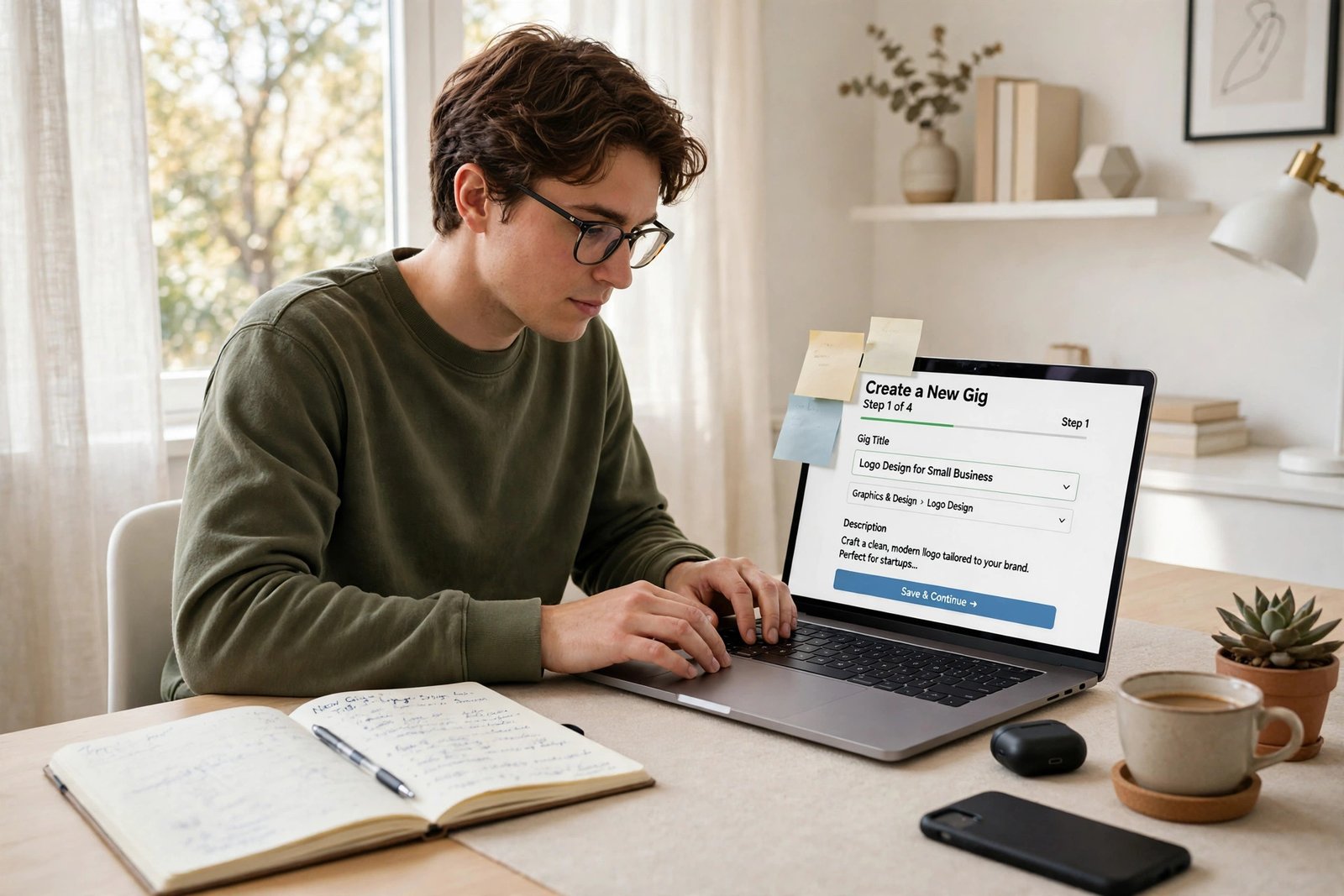
- Step 3: Create your first gig
- Step 4: Price your three packages
- Step 5: Get your first orders
- Seller levels explained
- What affects your gig ranking
- Buyer requests and custom offers
- Scams to watch for
- When an order goes wrong
- What it costs to make money on Fiverr, and what to expect
- Common mistakes
- Frequently asked questions
How Fiverr works for sellers
Fiverr turns your skill into a product. You create a gig that describes one service, a price, and a delivery time. A buyer searches for that service, reads your gig, and places an order. You deliver the work through Fiverr, the buyer can ask for revisions, and then the order is marked complete. Fiverr holds the money until the order is complete, then starts a clearing period before you can withdraw it.
This is different from Upwork, where clients post jobs and freelancers bid with proposals. On Fiverr, buyers come to you. That is the main advantage, and also the main problem for beginners: nobody finds you until your gig starts to rank. If you prefer bidding for jobs instead, read our guide on how to make money on Upwork.
What it costs: the fee, the clearing period, and withdrawals
Fiverr charges sellers a flat fee on every order. The rule is simple, and you should build your prices around it from day one.
| Item | What happens | Figure, November 2026 |
|---|---|---|
| Fiverr fee | Fiverr keeps a share of every order, including gig extras and tips | 20 percent, so you keep 80 percent |
| Clearing period | Time your earnings wait before you can withdraw them | 14 days for most sellers, 7 days for higher levels |
| Early Payout | Eligible sellers can withdraw sooner for a small fee | 1 percent fee, where available |
| Withdrawal cap | Largest single withdrawal | 5,000 dollars per withdrawal |
The fee is confirmed on Fiverr's own Help Center page, Your earnings page, which states that you earn 80 percent of the purchase amount for every order you complete, including gig extras and tips. Fiverr also explains how Fiverr works for freelancers, including the 14-day clearing period and the shorter period for higher levels. Check the live fee pages before you set your prices, because fees can change.
Buyers pay a separate service fee on top of your price. That fee does not come out of your share, so do not subtract it from your earnings. What you need to plan for is the clearing period. If you finish an order on the first day of the month, you usually cannot withdraw that money until about two weeks later. Check the withdrawal options shown in your own account before you promise yourself a payout date.
Step 1: Pick one service you can deliver well
Start with skill, not with trends. The most common beginner mistake is to copy a gig that looks popular and hope for the best. A buyer can tell within one message whether you can do the work. Pick a service you have already done for real, even if only for yourself, a friend, or a small local client. Then narrow it down until it fits one sentence.
A narrow gig beats a broad gig. "I write blog posts" competes with thousands of sellers. "I write personal finance blog posts for small firms" competes with far fewer, and it tells the buyer exactly who you help. The same rule works in every category. A video editor can offer short-form video editing for coaches. A designer can offer logo design for food brands.
Ask yourself three questions before you commit. Can I deliver this to a good standard today, without learning it from scratch on a paying client? Can I finish it in the time I promise? Would I be happy to show the finished work in my portfolio? If the answer to any of these is no, pick a smaller service you can answer yes to, and grow from there.
Step 2: Set up your seller profile
Your profile is your shop front. Buyers check it before they order, and Fiverr asks you to verify your account before you can list a gig.
Use a clear photo of yourself, not a logo and not a stock image. Buyers trust a real face. Write a short description that says what you do, who you help, and what result you deliver. Keep it to a few plain sentences. Avoid grand claims about being the best or the fastest. Say what you do, and let your samples prove it.
Add portfolio samples before you publish your first gig. If you have no client work yet, make three sample pieces for imaginary clients in your niche. A writer can write three short posts for a made-up brand. A designer can make three logos for made-up firms. Label them clearly as samples. Buyers want to see what they will get, and a gig with no samples asks them to take a leap of faith. For a fuller method, read how to create a freelance portfolio.
Fill in your skills, languages, and education honestly. Do not list skills you cannot use.
Step 3: Create your first gig
One good gig beats five weak ones. New sellers can only create a small number of gigs, so make your first one count.
Write a title that states the result, not your job title. "I will write blog posts" is vague. "I will write a 1,000-word personal finance blog post that ranks and reads well" tells the buyer what they get. Use words buyers actually search for, such as the service, the format, and the audience.
Choose the right category and sub-category, because buyers filter by them. Add search tags that match how buyers describe the service. Keep the description under 1,200 characters. Open with the result, then say what is included, then say what you need from the buyer to start.
Add a gig FAQ that answers the questions buyers ask before they order, such as how long delivery takes, how many revisions are included, and what files you need. Add a requirements section that asks the buyer for everything you need on day one, so you never start an order waiting for missing files.

Use three clear gallery images, and make the first one your best. A clean image with a short title, a readable font, and one simple visual beats a busy collage. Look at what Top Rated sellers in your category do, and aim for that standard. For the wider picture of the platform, read our Fiverr review for beginners.
Step 4: Price your three packages
Every gig can have up to three packages: Basic, Standard, and Premium. Use all three. When buyers see three tiers, the middle one becomes the anchor, and most orders land on Standard. Basic gives price-sensitive buyers a low-risk way in. Premium makes Standard look reasonable by comparison.
Never start at 5 dollars. Low pricing does not win you more orders. It attracts difficult buyers who demand endless work, and it signals low quality to everyone else. A buyer choosing in seconds uses price as a guide to quality. Aim for a Basic price of 30 to 50 dollars at least, for a small but real piece of work.
Price by the value of the result, not by the hour. Basic should be small, not cheap. Standard should be the real offer, with the most useful scope. Premium should add something clearly worth the extra money, such as more pieces, faster delivery, or source files. Offer one to two revisions on Basic and two to three on Standard, and be explicit about what counts as a revision and what counts as a new request. Unlimited revisions sounds generous, but it attracts buyers who treat revisions as free extra work.
Example only: these numbers are not typical results. Imagine you offer blog writing. Your Basic package is 45 dollars for one 800-word post with two revisions and three-day delivery. Your Standard package is 95 dollars for one 1,500-word post with keyword research, three revisions, and two-day delivery. Your Premium package is 190 dollars for two 1,500-word posts with keyword research, three revisions, and priority delivery. Fiverr keeps 20 percent, so you keep 36 dollars on Basic, 76 dollars on Standard, and 152 dollars on Premium. The maths is simple: multiply each price by 0.8 to see what you keep. Recheck it yourself before you publish, and raise your prices as reviews build. For a deeper method, read how to set freelance rates.
Step 5: Get your first orders
The first orders are the slow part, and every seller faces the same problem. Reviews bring orders, and orders bring reviews. You break the cycle by bringing your own first buyers and by being easy to find.
Start with people you already know. If someone has already asked you to make something for them, ask them to order through Fiverr so you capture the review. Share your gig link where your buyers already spend time, such as LinkedIn, relevant Facebook groups, or forums that allow it. Direct traffic skips the search ranking problem that holds new gigs back. Reply fast, always. Fiverr rewards high response rates, and buyers choose sellers who answer quickly. Aim to reply within an hour when you can, especially in your first weeks.
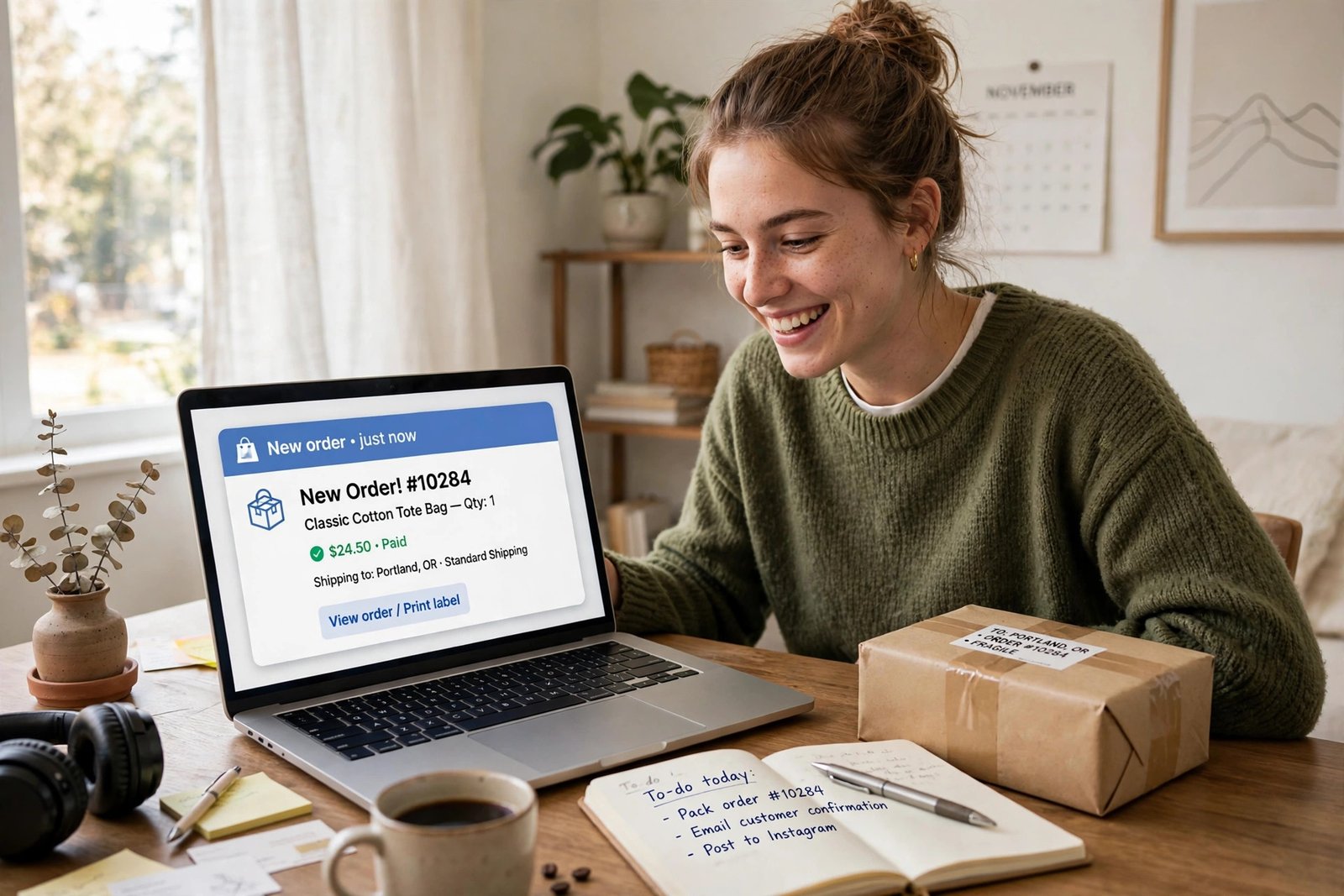
Answer buyer requests and send custom offers. Buyer requests are short job posts from buyers looking for a seller. Read each one fully, and only answer the ones you can do well. A custom offer lets you send a buyer a price for their exact project after they message you. Keep both short, specific, and honest about what you will deliver and when. Never buy reviews, and never ask a friend to leave a fake one. Fiverr detects fake reviews, and the damage to your account lasts far longer than the short boost.
Seller levels explained
Fiverr ranks sellers in levels, and your level affects how many gigs you can create and how much buyers trust you. Everyone starts as a new seller. As you complete orders on time, keep your ratings high, and reply quickly, you move up through Level 1, Level 2, and Top Rated. Fiverr Pro is a separate badge for sellers whose work has been checked by Fiverr.
| Level | What it means | What it unlocks |
|---|---|---|
| New seller | You are just starting, with no completed orders yet | A small number of gigs, standard clearing period |
| Level 1 | You have completed some orders with good ratings | More gigs, more extras, more storage |
| Level 2 | You have a steady record of on-time, well-rated work | Even more gigs, priority support, a shorter clearing period |
| Top Rated | You have a long record of excellent work and happy buyers | The most gigs, a 7-day clearing period, a Top Rated badge |
| Fiverr Pro | Fiverr has checked your skills and work | A Pro badge, access to Pro buyers, higher price expectations |
The exact thresholds for each level change over time, so check the current requirements on Fiverr's Help Center. What never changes is the pattern: complete orders, deliver on time, reply fast, and keep buyers happy. Levels follow good work.
What affects your gig ranking
Fiverr search decides which gigs buyers see first. Focus on the four factors you can control. Response rate matters most for new sellers. Answer every message quickly, even if the answer is that you cannot take the job. On-time delivery matters next. Never promise a delivery date you cannot meet, because a late order hurts your ranking more than a slow week. Reviews matter, and they compound. Each good review makes the next order more likely. Gig keywords matter too. Use the words buyers search for in your title, tags, and description, and keep them honest. A gig that promises video editing but delivers slideshows will earn bad reviews, and bad reviews undo good keywords.
Scams to watch for
Most buyers are honest, but scams exist on every marketplace. Watch for anyone who asks you to move the conversation off Fiverr, to WhatsApp, Telegram, or email, and pay you there. That breaks Fiverr's rules, and it removes the payment protection that keeps you safe. If a buyer asks for your contact details or offers to pay outside Fiverr, decline and report it. Watch for fake payment proofs, such as a screenshot of a cheque or a bank transfer that asks you to send money first. No real buyer asks a seller to pay to get work. Watch for anyone who asks you to pay for training, software, or a starter kit before you can start. Real clients pay you, not the other way round. Watch for jobs that ask for bank details, passwords, or identity documents early in the conversation. Fiverr verifies your identity itself, and a buyer never needs your bank details. If a message feels wrong, trust that feeling, stop the conversation, and report it. For a wider guide to spotting bad job posts, read how to spot online job scams.
When an order goes wrong
Orders go wrong sometimes, even for good sellers. What matters is how you handle it. If a buyer asks for a revision, read the request carefully and do it well. If the request is outside the original scope, say so politely, and offer a gig extra or a custom offer for the extra work. Do not argue in the order chat. Stay calm, restate what was agreed, and show what you have done. If a buyer asks to cancel, think before you agree, because cancellations hurt your seller metrics, including your completion rate. If the work is barely started and the buyer has changed their mind, a clean cancellation may be better than a bad review. If you have done most of the work, ask the buyer what would fix it, and try once more. If you cannot deliver on time, tell the buyer before the deadline, not after it, and offer a new date you can meet. If a dispute cannot be solved between you and the buyer, Fiverr's Resolution Center can help. Keep all messages inside Fiverr, because that is the record Fiverr uses to decide.
What it costs to make money on Fiverr, and what to expect
Starting on Fiverr costs nothing. There is no fee to join, no fee to create a gig, and no monthly charge. Your costs are your time, your tools, and the 20 percent fee on every order. You also wait 14 days after each completed order before you can withdraw the money, so your first payout arrives weeks after your first order.
Expect a slow first month. Most new sellers wait weeks for their first order, and that is normal. Your first month is for building the gig, collecting samples, and learning what buyers ask for. Your second and third months are for earning your first reviews and improving the gig from what you learn. Nobody can promise you a monthly income figure, because earnings depend on your skill, your niche, your prices, and how much time you give it.
Treat Fiverr as a small business, not a lottery ticket. The sellers who earn well set up their gigs carefully, picked a niche that is actually growing, priced themselves properly from the start, and stayed consistent long enough for the review cycle to work. For the tax side of freelance income, read freelance taxes for beginners, and remember that tax rules differ by country, so check your local rules or talk to a qualified accountant.
Common mistakes
- Pricing your first gig at 5 dollars, which attracts difficult buyers and signals low quality.
- Offering unlimited revisions, which invites buyers to treat revisions as free extra work.
- Creating five weak gigs instead of one strong gig, which spreads your effort too thin.
- Writing a generic title that no buyer searches for, such as "I will do anything you need".
- Replying slowly to messages, which hurts your response rate and your ranking.
- Starting work before the buyer places an order, which leaves you unpaid if they change their mind.
- Taking payment or conversation off Fiverr, which risks your account and removes your protection.
- Promising a delivery date you cannot meet, which leads to late delivery and bad reviews.
Frequently asked questions
How do beginners make money on Fiverr?
Beginners make money on Fiverr by picking one service they can deliver well, creating a single strong gig with three packages, and bringing their own first buyers while the gig builds search ranking. The first orders usually come from promotion outside Fiverr or from buyer requests, not from search. Reviews from those first orders then help the gig rank, which brings more orders over time.
How much does Fiverr take from sellers?
Fiverr takes a flat 20 percent of every order, including gig extras and tips, whatever your seller level. If a buyer pays 100 dollars, you keep 80 dollars. That figure is confirmed on Fiverr's Help Center. Build the 20 percent into your prices from the start, so your take-home pay matches your costs.
How long does it take to get paid on Fiverr?
Your earnings sit in a clearing period of 14 days after an order is marked complete for most sellers, and 7 days for higher levels such as Top Rated. After the clearing period ends, you can withdraw the money using the methods shown in your account. Eligible sellers can use Early Payout to withdraw sooner for a 1 percent fee. Plan for the delay, and do not count on Fiverr income to pay a bill in the same week you finish the work.
What sells best on Fiverr?
What sells best changes over time. In 2026, short-form and faceless video editing, applied AI work such as simple automations, and design and programming with a clear niche are in demand. Generic writing, plain translation, and simple AI prompt gigs have become harder to sell. The safest choice is a service you can deliver well in a niche with real buyers.
Can you make a full-time income on Fiverr?
Some sellers do earn a full-time income on Fiverr, but it takes time, consistent work, and a strong reputation. Most people start part-time, build reviews and repeat buyers, and grow from there. Expecting full-time income in your first month is unrealistic. Treat the first months as building a small business, and judge your progress by reviews and repeat orders, not by a monthly figure someone else promised.
Conclusion: build one good gig, then earn the next review
Making money on Fiverr comes down to a simple cycle. Pick one service you can deliver well, build a single strong gig with three honest packages, price it so you keep a fair share after the 20 percent fee, and bring your own first buyers while your gig earns its first reviews. Then answer fast, deliver on time, and let each good review make the next order easier.
Your next step is to open your Fiverr account and build that first gig. For the wider picture, read our Fiverr review for beginners, how to set freelance rates, and common freelancing mistakes. You can also browse all our guides in the earning platforms category.
Fees in this guide were checked on Fiverr's Help Center in November 2026. Check the live fee page before you set your prices, because fees can change. Earning results vary with skill, niche, pricing, demand, and time. Nothing on this site is financial advice.