How to Start a Print on Demand Business in 2026
Learning how to start a print on demand business is a good fit if you want to sell products online without buying stock first. You create a design, a customer orders a product with that design on it, and a supplier prints and ships that single item for you. You never hold boxes of t-shirts in your home, and you only pay the supplier after a customer has paid you. This guide covers the full business model: how it works, how to pick a niche, how to make designs that print well, how to choose a supplier and a sales channel, how to price for a real profit, and how to get your first sales.
In this guide
- How print on demand works
- Step 1: Pick a niche with a real audience
- Step 2: Choose your first products
- Step 3: Create designs that sell
- Step 4: Choose a supplier
- Step 5: Choose where to sell
- Step 6: Price for a real profit
- Step 7: List products properly
- Step 8: Get the first sales
- Handling orders, returns, and unhappy customers
- What it costs and what to expect
- Common mistakes
- Frequently asked questions
How print on demand works
Print on demand means products are printed only after a customer orders them. The order flow has five steps. First, you upload your design to a supplier, such as Printful or Printify, and place it on a product, such as a t-shirt. Second, you connect the supplier to your store or marketplace listing. Third, a customer buys the product and pays you. Fourth, the supplier receives the order, prints it, and ships it to the customer. Fifth, you keep the difference between the price the customer paid and the supplier cost plus fees. This is different from dropshipping, where the supplier already has the product in stock and you sell an existing item made by someone else. It is also different from holding stock, where you buy 100 shirts up front and hope they sell. The main benefit is low risk: you can test many designs without spending money on stock. The main drawback is low margins, so you need many sales or higher prices to earn a useful income.
Step 1: Pick a niche with a real audience
A niche is a small group of people with a shared interest, and it is the most important choice you will make. Generic designs do not sell, because nobody searches for a plain shirt with a random slogan. A design that speaks to one group, such as nurses, new parents, or people who keep bees, has a reason to exist. Start with niches you know, because a nurse who sells to nurses understands the jokes, the language, and the frustrations of that group. Then test demand before you design anything: search Etsy for your niche, look at how many sellers list similar products and how many reviews the best sellers have, and check Google Trends. Avoid niches built on someone else's work, because fan art for films, games, and sports teams is risky, and the characters and logos belong to someone else.
Step 2: Choose your first products
Start with two or three products, not twenty. A small range lets you learn what sells, and it keeps your time focused. T-shirts are the best first product for most sellers, because they are popular, easy to design for, and easy to photograph with mockups. Add mugs and posters next, because they are cheap to make and they suit simple text designs.
| Product | Why it works | Watch out for |
|---|---|---|
| T-shirts | Most popular, many styles and colours | Sizing varies, and print quality differs by supplier |
| Mugs | Cheap to make, good for gifts | Break in shipping, and designs wrap oddly if not checked |
| Posters and wall art | High margin, simple designs work well | Framing is the buyer's problem, so size it clearly |
| Tote bags | Popular with eco-minded buyers | Small print area, so keep the design simple |
Match the product to the niche. A funny quote works on a mug, a detailed illustration works on a poster, and a bold slogan works on a t-shirt. Do not put the same design on every product without checking how it looks, because a design that fills a t-shirt may look tiny on a mug. Check the print area for every size before you list it.
Step 3: Create designs that sell
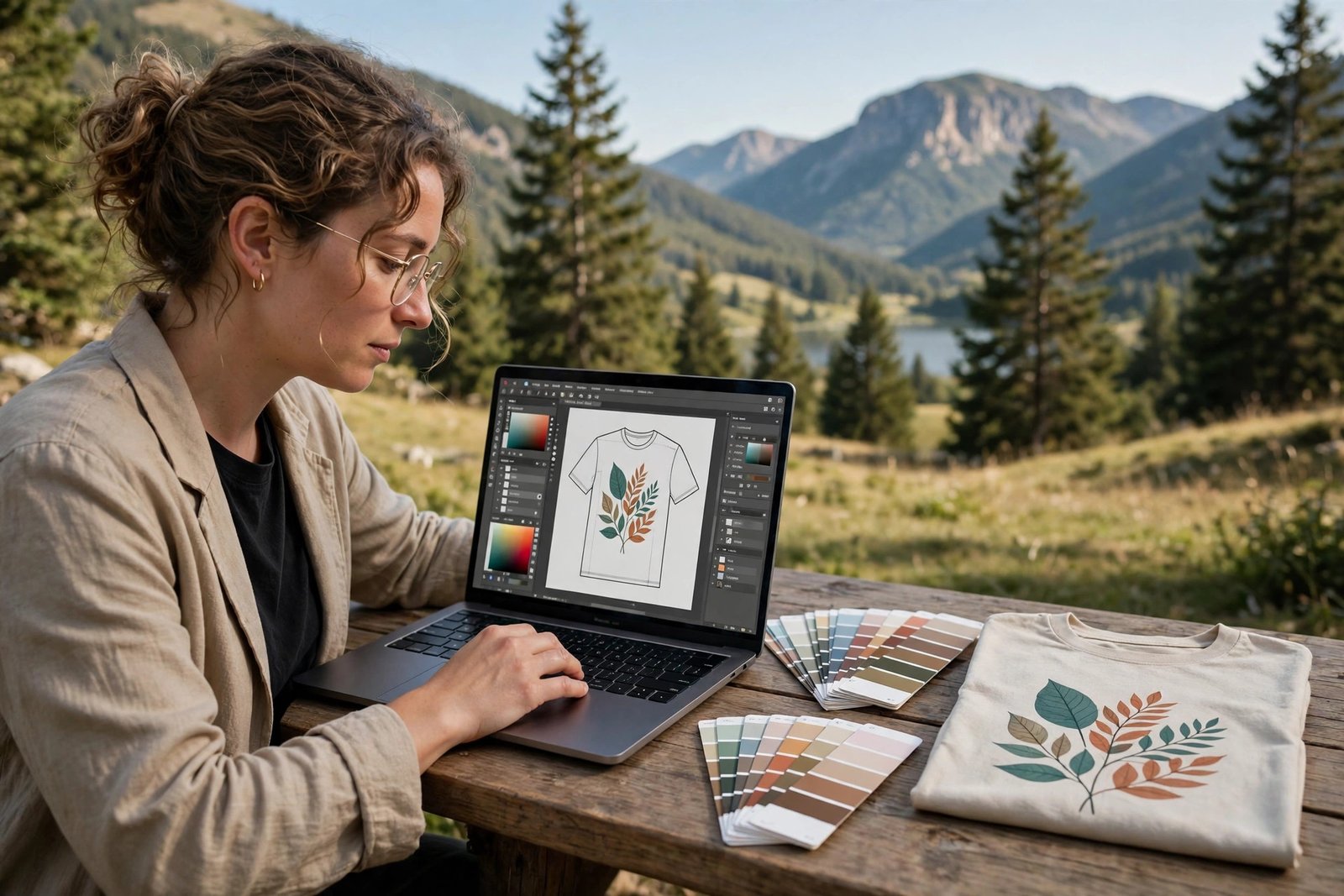
Good print on demand designs are simple. A short phrase in a clear font, or one clean image, sells better than a busy design with ten elements, because the buyer must understand the design in two seconds. Save your design as a PNG file with a transparent background, at 300 DPI, which means 300 dots per inch and gives a sharp print. A low resolution file, such as a small image taken from the web, will print blurry, and the buyer will ask for a refund. Make the design at the full print size the supplier asks for, usually around 4,500 pixels wide for a t-shirt. Use design tools you can already use: Canva is enough for simple text designs, and it has a free plan. If you use AI tools to make designs, check the commercial use rules for the tool and the plan you pay for, because some free plans do not allow commercial use. If you want the AI workflow in detail, read how to start AI print on demand.
Copyright and trademark risk is the biggest legal risk in this business. Do not use brand logos, celebrity names, film quotes, song lyrics, or sports team names without permission, and do not copy a design you saw on another store, even if you redraw it. Before you list a design with a phrase on it, check the phrase in the USPTO trademark database, known as TESS, to see whether someone has registered it. A listing that uses a trademarked phrase can be removed, and repeated removals can close your shop. If you are unsure, do not list it.
Step 4: Choose a supplier
The supplier prints your product, packs it, and ships it. Their quality, speed, and price decide whether your customers are happy, so choose carefully. The four main suppliers are Printful, Printify, Gelato, and Amazon Merch on Demand.
| Supplier | How it works | Strengths | Drawbacks |
|---|---|---|---|
| Printful | You use its own products and printers, and it handles printing and shipping | Consistent quality, good branding options, free to start | Base prices can be higher than Printify |
| Printify | You pick from many print providers in different countries | Often cheaper, many providers to choose from | Quality varies by provider, so test before you sell |
| Gelato | A global network of local printers | Fast local shipping in many countries | Smaller product range than the others |
| Amazon Merch on Demand | You upload designs and Amazon sells them | Huge audience, no store needed | You must apply, and Amazon controls the listing |
Base prices change, so check the supplier's own pricing page before you set your prices. Printful's official pricing page says the service is free to use with no monthly fees, and that a Growth plan costs 24.99 dollars a month and becomes free once yearly sales reach 12,000 dollars. The base price covers the blank product, one print placement, and fulfilment, with shipping and taxes charged separately. You can read the full detail on Printful pricing. Printify works differently: it is a marketplace of print providers, and each provider sets its own base price and shipping cost, so compare providers for your product and your buyers' country. Order a sample before you list anything, because a sample shows you the real print quality, the real colours, and the real fit. Printful and Printify both reprint or refund items with production defects, such as a misprint or a damaged product, but that covers faults in how the item was made, not a buyer who ordered the wrong size.
Step 5: Choose where to sell
Where you sell decides who finds you and what fees you pay. Etsy gives you discovery: buyers search Etsy for gifts and niche products, so a new shop can get sales without running ads. The trade-off is fees and rules, because Etsy charges a listing fee, a transaction fee, and payment processing fees. Shopify gives you control: you own the store, the design, and the customer list, and you set your own rules. The trade-off is traffic, because nobody finds a new Shopify store on their own, so you must bring buyers through social media, search, or ads. Marketplaces such as Redbubble and Amazon Merch on Demand are a third route: they give you an audience with almost no setup, but they control the listing and take a larger share. Start with one channel, not all of them at once. Pick Etsy if you want buyers to find you, or Shopify if you want to build a brand and you already have an audience. For the Etsy route, read how to sell on Etsy.
Step 6: Price for a real profit
Pricing is where many new sellers lose money. They set a price that looks nice, such as 19.99 dollars, without adding up all the costs. Use a simple formula: price equals base cost plus all fees plus shipping you cover plus the profit you want. Example only: these numbers are made up and are not typical results. Imagine you sell a t-shirt on Etsy for 29 dollars.
| Cost | Example amount |
|---|---|
| Supplier base cost (shirt, print, fulfilment) | 13.00 dollars |
| Etsy listing fee | 0.20 dollars |
| Etsy transaction fee (6.5 percent of the order total) | 1.89 dollars |
| Payment processing fee (varies by country) | 1.00 dollars |
| Shipping paid to the supplier (example) | 4.00 dollars |
| Total example costs | 20.09 dollars |
| Example profit on a 29 dollar sale | 8.91 dollars |
Check the maths: 13.00 plus 0.20 plus 1.89 plus 1.00 plus 4.00 equals 20.09, and 29.00 minus 20.09 equals 8.91. The margin is about 31 percent. The Etsy fee figures are verified from Etsy's official help page, which says the listing fee is 0.20 dollars per listing, the transaction fee is 6.5 percent of the total order amount including postage, and Offsite Ads cost 15 percent or 12 percent once a shop has made at least 10,000 dollars in the past 365 days. Payment processing fees vary by country, so check Etsy's official fee page for your country. You can read the full detail on Etsy fees and taxes. Aim for a margin of 30 to 50 percent after all costs, not before them. Free shipping is a common trap: buyers like it, but the shipping cost comes out of your profit, so if you offer free shipping, raise the product price to cover it.
Step 7: List products properly
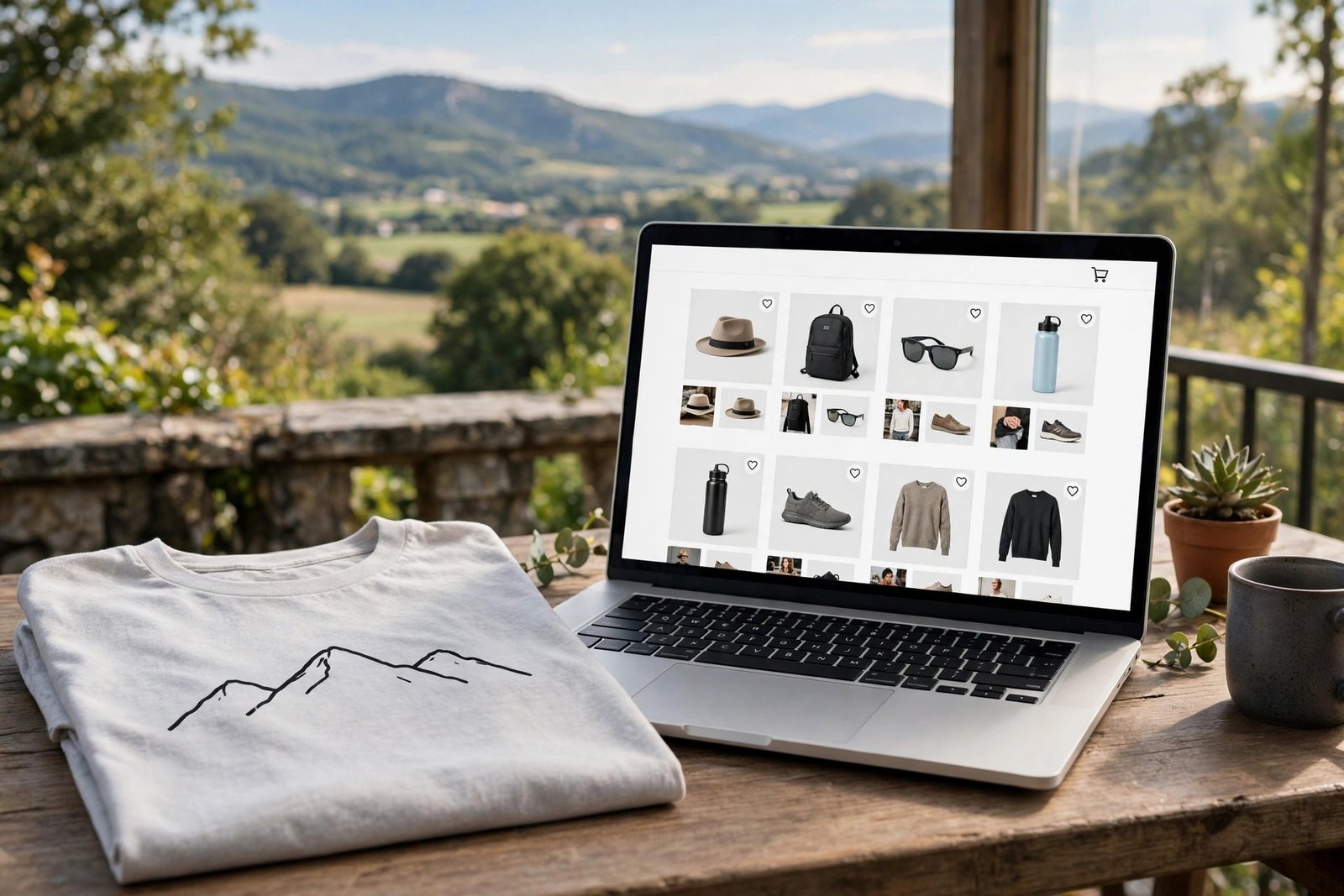
A good listing helps buyers find your product and trust it enough to buy. Start with the title: use real search terms a buyer would type, such as "funny nurse t-shirt" or "beekeeping mug gift", and put the most important words first. Etsy gives you 13 tags per listing, and you should use all of them, with phrases buyers actually search for, not single words. Use lifestyle mockups, which are photos that show the product being worn or used, not just flat images of the design. A t-shirt on a person looks more real than a design on a white background, and buyers can picture themselves wearing it. Write a clear description: say what the product is, what it is made of, how it fits, how to wash it, and how long shipping takes. If the shirt runs small, say so. Honest descriptions reduce returns. For more on setting prices that buyers accept, read how to price digital products.
Step 8: Get the first sales
Your first sales will not come from the listing alone. A new shop has no reviews, so you must bring the first buyers yourself. Short-form video is the most effective free method: film the product, show the design up close, and explain who it is for, in under 30 seconds. Post it where your niche spends time, such as TikTok, Instagram Reels, or Pinterest. Start an email list from day one: offer a small discount for signing up, and email new designs to the list. An email list is yours, and it keeps working when social media algorithms change. For the basics, read how to build an email list for a blog, which applies to a store list too. Small ad tests can help once you have a listing that already sells: spend a small amount, such as 5 dollars a day for a few days, on one product, and stop the ad if it brings no sales. Selling in bulk to local businesses is an optional extra route, but agree the price, the quantity, and the delivery date in writing, and take a deposit before you order, because the supplier will charge you whether or not the business pays.
Handling orders, returns, and unhappy customers
Most orders go well, but some will not, and how you handle them decides whether you keep the customer. Damaged or misprinted items are the most common problem. Ask the buyer for a photo, then contact the supplier with the order number and the photo. Printful and Printify both reprint or refund production defects, and the process usually takes 2 to 3 days. Tell the buyer what is happening and when to expect a replacement, because silence makes a small problem into a bad review. Wrong sizes are the buyer's mistake in most cases, unless the size guide was wrong: offer an exchange if you can, and explain the cost clearly. Late delivery is often a supplier or carrier delay, especially in November and December, when production times can stretch to 7 to 10 days. Warn buyers about longer waits during busy periods. Reply to every message within one working day, and stay polite even when the buyer is not.
What it costs and what to expect
Print on demand is cheap to start, because there is no stock to buy. The real costs are samples, tools, and your time. Example only: these numbers are made up and are not typical results.
| Cost | Example amount |
|---|---|
| Sample orders (3 products) | 60 dollars |
| Design tool (free plan or paid) | 0 to 15 dollars a month |
| Store or marketplace fees | 0 to 30 dollars a month |
| Small ad test | 50 dollars |
| Total example startup cost | About 110 to 155 dollars |
Expect a slow start. The first sale often takes weeks, not days, because a new shop has no reviews and no ranking. Steady income, if it comes at all, usually takes months of adding designs, improving listings, and promoting the shop. Some sellers never reach a useful income, because the niche is too competitive or the designs do not stand out. Print on demand is not passive income: each design needs work to create, list, and promote. Results vary with your niche, your design skill, your prices, and how much time you spend on it. Do not trust guides that quote one seller's income as typical. Plan for the seasons too: demand for gifts rises sharply in the last three months of the year, and production and shipping times stretch, so order samples early and list gift designs by October.
Common mistakes
- Skipping the sample order, then finding out the print quality is poor after customers complain.
- Selling generic designs with no clear niche, so nobody has a reason to choose yours.
- Pricing too low, so fees and shipping eat the whole profit.
- Using copyrighted art, brand logos, or trademarked phrases, then losing the listing or the shop.
- Uploading low resolution files that print blurry.
- Listing the same products on every channel at once, instead of learning one channel well.
- Offering free shipping without raising the price to cover it.
- Ignoring customer messages, which turns small problems into bad reviews.
Frequently asked questions
How do I start a print on demand business?
Pick a niche with a real audience, choose two or three products, make simple designs at 300 DPI, pick a supplier, and list the products on one sales channel. Order a sample first, price for a margin of 30 to 50 percent after all costs, and promote the shop yourself to get the first sales.
How much does it cost to start print on demand?
You can start for about 110 to 155 dollars using the example in this guide, mostly for samples and a small ad test. There is no stock to buy, so the main cost is your time. Keep costs low until you have sales, and do not pay for expensive tools before you need them.
Is print on demand profitable in 2026?
It can be, but the profit per item is small, so you need many sales or higher prices. A shirt that sells for 29 dollars might leave about 9 dollars of profit after all costs, using the example in this guide. Whether that adds up to a useful income depends on how many designs you list and how well you promote them. Results vary, and many sellers earn little.
What is the best print on demand platform for beginners?
Printful suits beginners who want consistent quality and a simple setup, while Printify suits sellers who want to compare providers and find a lower base price. Gelato suits sellers with buyers in many countries. There is no single best choice, so compare base prices and shipping for your products, and order a sample before you commit.
Do I need design experience for print on demand?
No, but you need simple designs that print well. Short text designs made in Canva can sell, and you can learn the basics of design as you go. If you cannot design, you can hire a designer for a few designs, but check that you own the rights to what they make.
How long does print on demand shipping take?
It depends on the supplier, the product, and where the buyer lives. Production usually takes 2 to 7 business days, plus shipping time, and both can stretch to 7 to 10 days in the busy season. Check the supplier's production time for your product, and tell buyers the expected delivery time before they order.
Conclusion: start small, test with samples, price for profit
Starting a print on demand business comes down to four moves: pick a niche you understand, make simple designs that print well, choose a supplier you have tested with a sample, and price for a real margin after every fee. Do not list generic designs everywhere at once, do not use art you do not own, and do not trust income stories from strangers. Your next step is to pick one niche and check it on Etsy and Google Trends today. When you are ready to build the wider business, read how to start an online business for beginners, study the online business models explained, and learn how to get your first customers for an online business. You can also browse all the guides in the online business category.
Note for the reader: tax and business rules differ by country, so check your local rules. Earning results vary; nothing on this site is financial advice.