How to Earn Money on 99designs in 2026
Learning how to earn money on 99designs means understanding one hard truth first: most of the work you do on this platform will not be paid. 99designs is a design marketplace built around contests, where many designers submit work and only one wins the prize. If you can accept that and use contests to build a reputation that leads to direct paid projects, it can be a real source of design income.
This guide is for graphic designers, logo designers, brand designers and web designers who want clients without doing their own marketing. You will learn how the two earning models work, what the fees are, how to win more contests, how to move to direct projects, and how to work out whether the maths makes sense for you.
In this guide
- What 99designs is and who it suits
- How earning on 99designs works
- Step 1: Apply and pass the portfolio review
- Step 2: Understand designer levels and contest tiers
- Step 3: Win contests with a clear method
- Step 4: Move to one to one projects
- Step 5: Build repeat clients and raise your income
- Worked example: what a month of contests really pays
- What it costs and what to expect
- Common mistakes
- Risks and scams to watch for
- Frequently asked questions
What 99designs is and who it suits
99designs is an online design marketplace that connects freelance designers with businesses that need creative work. It was founded in 2008 in Melbourne, Australia, and it was acquired by Vista, formerly Vistaprint, in 2020.
The platform offers two ways to work. In a design contest, a client posts a brief and a prize, many designers submit concepts, the client gives feedback, and one winner is paid. In a one to one project, a client hires a specific designer directly, based on their portfolio and reviews, and pays for the work with no competition.
99designs suits you if you are a skilled designer who enjoys competition, you can produce strong concepts fast, and you are patient enough to treat unpaid entries as an investment in your reputation. It does not suit you if you are a beginner with no portfolio, if you need predictable weekly income, or if the idea of unpaid spec work angers you. Spec work means work done on speculation, with payment only if you win, and on 99designs it is the core of the contest model. If that does not sit right with you, read how to make money on Fiverr, where every order is paid, or how to learn graphic design online to build your skills first.
How earning on 99designs works
Signing up is free, and entering contests costs nothing. You only pay when you earn, through a platform fee and, for new clients, an introduction fee. Both figures below were verified on the official 99designs designers page in November 2026.
The platform fee depends on your designer level. Top Level designers pay 5 percent, Mid Level designers pay 10 percent, and Entry Level designers pay 15 percent. When you start working with a new client, 99designs also charges a 100 US dollar introduction fee, spread out over the client's first 500 US dollars of charges, to cover the cost of matching you. Payment is made in three business days or less once you reach Top Level. More than 1,500 contests are open every day, according to the same official page.
Contest prizes vary by project type and tier. The ranges below are reported by guides, not published by 99designs.
| Project type | Bronze | Silver | Gold | Platinum |
|---|---|---|---|---|
| Logo | 299 US dollars | 499 US dollars | 799 US dollars | 1,299 US dollars and above |
| Brand identity | 599 US dollars | 999 US dollars | 1,499 US dollars | 2,499 US dollars and above |
| Web design | 599 US dollars | 999 US dollars | 1,499 US dollars | 2,499 US dollars and above |
| Packaging | 399 US dollars | 699 US dollars | 1,099 US dollars | 1,799 US dollars and above |
Your effective earnings are always less than the listed prize, because the platform fee comes off it, and the introduction fee applies to new clients. A 299 US dollar Bronze logo win at Entry Level, with a 15 percent fee, pays 254.15 US dollars before the introduction fee. The same win at Top Level, with a 5 percent fee, pays 284.05 US dollars. That gap is one more reason to climb the levels.
For one to one projects, you negotiate the price directly, 99designs secures payment upfront, and you are paid for the work with no competition.
Step 1: Apply and pass the portfolio review
Getting started on 99designs is not as simple as creating an account and entering contests. There is a review process, and understanding it saves you time.
First, create your account on 99designs with your email address. Then complete your profile with your details, your location, a bio, and the design categories you want to work in. Take time over the bio, because clients read it and a clear, personal bio makes a real difference.
Next, upload your portfolio. This is the most important step. 99designs reviews your portfolio before you can enter contests, and the review can take a few days. The platform is selective, and not everyone is accepted. If your work does not meet its quality standard, your application may be rejected, and you can reapply later with better work.
Curate 10 to 15 of your best pieces, with a focus on your specialism. If you have no professional client work yet, create excellent mockup projects, and show range within your specialism.
Once approved, you are assigned a designer level based on the quality of your portfolio. That level affects which contests you can enter and how much you can earn, which is covered in the next step.
Step 2: Understand designer levels and contest tiers
Designer levels are the ladder you climb on 99designs. Your level is set when you join and reviewed regularly on portfolio quality, win rate, client satisfaction, and professionalism. Higher levels unlock higher paying contests, better visibility in search, and more invitations to one to one projects.
Guides disagree on how many levels there are, so we describe the system without asserting a count. What is consistent across guides is the shape of it: new designers start at Entry Level with access to Bronze and Silver contests, designers with a solid record move to Mid Level with access to Gold, and the best designers reach Top Level with access to all tiers including Platinum. The platform fee also falls as you climb, from 15 percent at Entry Level to 5 percent at Top Level, as verified on the official page.
Contest tiers work the same way: higher tiers cost the client more and attract stronger designers. Bronze logo contests can attract 50 to 150 entries, while Platinum contests are limited to Top Level designers and typically attract 20 to 50.
Finally, prioritise guaranteed contests, where the client has committed to picking a winner. In a non-guaranteed contest the client can walk away and pay nobody.
Step 3: Win contests with a clear method
Winning contests consistently is the key to earning on 99designs, and top earners follow a clear method rather than relying on talent alone.
Read the brief like your income depends on it. Note the client's industry, style preferences, colours to avoid, and any examples they link to. Designers who miss a clear instruction in the brief are eliminated before their work is even judged.
Submit early. Contests usually run for 3 to 7 days, and early submissions get feedback while there is still time to change the design. A designer who submits on day one, gets a two star rating and a comment, then revises twice, beats a designer who submits a perfect concept on the last day with no chance to adjust.
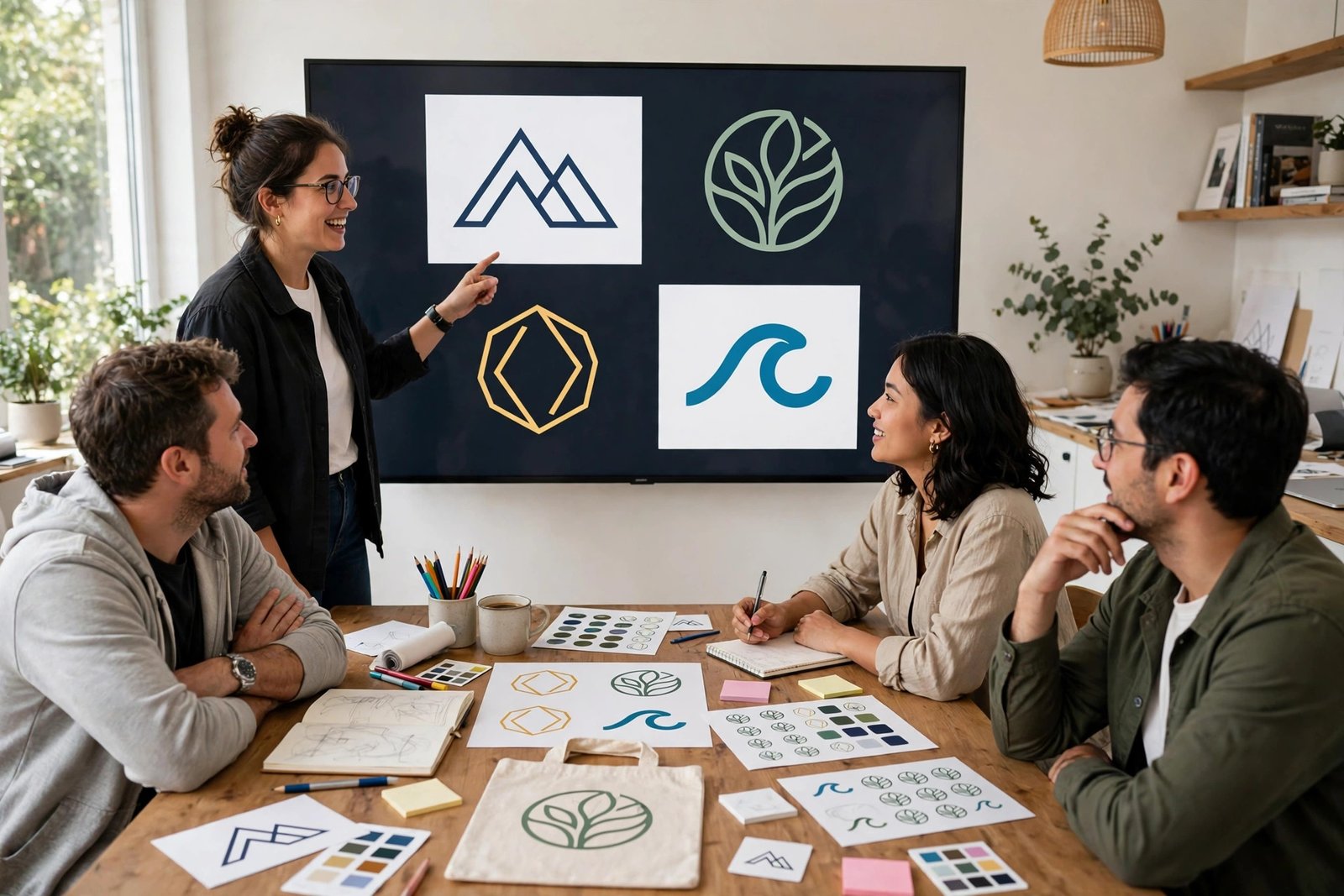
Present your work like a professional. Use realistic mockups that show the logo on a sign, a business card, or an app screen, so the client can picture it in use. A flat logo on a white background is harder to judge than the same logo on a shop front. Respond to feedback quickly and politely, and ask a clear question if the feedback is vague.
Step 4: Move to one to one projects
Contests are the entrance, not the destination. One to one projects are where the stable money is, because you are hired directly, you negotiate the price, and you are paid for the work with no competition.
You earn invitations to direct projects with wins, high ratings, completed contests, and a cohesive portfolio. Complete every contest you enter, even if you do not win, because your completion record is visible.
| Model | Who is paid | Competition | Best for |
|---|---|---|---|
| Design contest | Only the winner | Many designers | Building reputation |
| One to one project | Every project | None | Steady income |
After a contest win, follow up with the client. Ask whether they need stationery, a brand style guide, social media templates, or packaging. Upselling an existing client is far easier than winning a new contest, and a client who trusts you after a win is the best source of direct work you will ever find.
Step 5: Build repeat clients and raise your income
The designers who earn well on 99designs do three things that beginners skip. First, they specialise. A designer who focuses on logo and brand identity for food businesses, or on packaging for cosmetics, builds a recognisable style and wins more often in that niche than a generalist who enters every contest.
Third, they build a personal brand beyond the platform, with the same colours, tone and bio across their profiles, and case studies that show their process.
Worked example: what a month of contests really pays
Example only: these numbers are not typical results. They show how the maths works, so you can test your own figures.
Imagine an Entry Level designer who enters 12 Bronze logo contests in a month, spending 4 hours on each entry. That is 48 hours of work. She wins 1 contest at 299 US dollars. The platform fee at Entry Level is 15 percent, which is 44.85 US dollars, leaving 254.15 US dollars. The client is new, so the 100 US dollar introduction fee also applies, spread over the client's first 500 US dollars of charges. Even before that fee, her hourly rate across 48 hours is 254.15 divided by 48, which is about 5.30 US dollars an hour. After the introduction fee is spread across her first projects with that client, the real figure is lower still.
Now imagine the same designer wins 2 of 12 contests. The prize total is 598 US dollars, the platform fee is 89.70 US dollars, and the net before introduction fees is 508.30 US dollars for 48 hours, or about 10.59 US dollars an hour. The lesson is clear: your win rate and your level decide everything, and contests only pay when you win often or move to direct work.
Recheck: 12 times 4 is 48. 15 percent of 299 is 44.85, and 299 minus 44.85 is 254.15. 254.15 divided by 48 is 5.30. 299 times 2 is 598, 15 percent of 598 is 89.70, 598 minus 89.70 is 508.30, and 508.30 divided by 48 is 10.59. The maths checks out.
What it costs and what to expect
Joining 99designs is free, and entering contests costs nothing. The costs arrive when you win: a platform fee of 5 to 15 percent depending on your level, and a 100 US dollar introduction fee per new client, spread over their first 500 US dollars of charges. Your other costs are your design software and the hours spent on entries that do not win.
Expect a slow and uneven start. Guides report new designers earning 300 to 800 US dollars a month initially, while experienced designers with regular clients and one to one projects can earn far more. Those figures are the guides' own estimates, not a promise.
Results vary with your skill, your win rate, your level, your niche, and how fast you move to direct projects. Treat 99designs as one income stream inside a wider freelance business, not as your only source of work, until direct projects become regular.
Common mistakes
- Entering non-guaranteed contests, where the client can walk away and pay nobody.
- Submitting on the last day, with no time to act on feedback.
- Ignoring the brief and designing what you like instead of what the client asked for.
- Presenting a flat logo with no mockup, so the client cannot picture it in use.
- Entering every contest instead of specialising in one or two categories.
- Copying another designer's entry, which can end your account.
- Quoting one to one projects without a written scope and revision limit.
- Using fully AI generated entries, which 99designs discourages, instead of using AI only for ideas.
Risks and scams to watch for
The biggest risk on 99designs is not a scam, it is the contest model itself. Most of your work will be unpaid, and that is by design. Go in with your eyes open, track your hours, and set a limit on how many unpaid entries you will do each week. If your win rate stays low after three months, change your niche or your method, or move your effort to paid work elsewhere.
Watch for clients who ask you to work off the platform. Direct payments outside 99designs remove your payment protection and can void your account protections. If a client wants to work with you directly, use a one to one project through the platform, where payment is secured upfront.
You keep full copyright of unsold work, according to 99designs, but once a client picks your design and pays, the rights transfer to them, so do not reuse a winning design.
Frequently asked questions
Can you make money on 99designs?
Yes, but not from every hour you work. You earn by winning contests or by being hired for one to one projects. Contest prizes for logos start at 299 US dollars, and direct projects pay a negotiated fee. Most designers earn less than the headline figures suggest, because most entries are unpaid.
How much do 99designs contests pay?
Logo contests pay 299 US dollars at Bronze level up to 1,299 US dollars and above at Platinum, according to guides. Brand identity and web design contests pay more. Your net pay is less than the prize, because the platform fee of 5 to 15 percent and the 100 US dollar introduction fee for new clients come off first.
Is 99designs worth it for beginners?
It can be, if you have real design skill and a portfolio that passes the review. Beginners should focus on small guaranteed contests and treat entries as portfolio building.
What is the 99designs platform fee?
The platform fee is 5 percent for Top Level designers, 10 percent for Mid Level, and 15 percent for Entry Level, verified on the official 99designs designers page in November 2026. A 100 US dollar introduction fee also applies per new client, spread over their first 500 US dollars of charges.
How do you get paid on 99designs?
Payment is by bank account or PayPal, according to guides. 99designs pays designers in three business days or less once they reach Top Level, according to the official page. For contests, the prize is released when the client picks a winner. For one to one projects, payment is secured upfront and released when the project is finished.
Can I work on 99designs part time?
Yes. Contests run for 3 to 7 days, so you can enter contests that fit your availability and batch your entries into productive periods. Direct projects offer more control over scheduling, which is one more reason to build towards them.
Conclusion
To earn money on 99designs, pass the portfolio review, learn the levels and tiers, enter guaranteed contests in one specialism, submit early with strong mockups, respond to feedback fast, and use every win to move towards one to one projects and repeat clients. The contest model means much of your work goes unpaid, so track your win rate and your hourly earnings honestly, and judge the platform by your own numbers, not by its headline prizes.
Next, read how to learn graphic design online, how to learn web design for beginners, and how to sell on Etsy. Browse all our guides in earning platforms.
Reader note: platform fees, prize ranges, payout timing and tax rules differ by country and change often. The 5, 10 and 15 percent platform fees, the 100 US dollar introduction fee and the three business day payment were verified on the official 99designs designers page in November 2026. Prize ranges and earnings estimates are reported by guides. Check the current terms before you enter a contest, and check your local tax authority or a qualified accountant about declaring freelance income. Earning results vary; nothing on this site is financial advice.