
How to Earn Money on Malt in 2026
Learning how to earn money on Malt is different from learning Upwork or Fiverr, because on Malt you do not chase jobs. Clients find you. Malt is a European freelance marketplace where companies search for experts, send them project proposals, and hire them for assignments. Your job is to build a profile that clients want to contact, respond fast, and deliver work that earns repeat assignments. This guide explains how Malt works in 2026, what it costs, how you get paid, and who it suits best.
In this guide
- What Malt is, and how to earn money on Malt
- Who Malt suits best
- Step 1: Create a profile that wins proposals
- Step 2: Handle proposals, quotes and assignments
- How and when you get paid
- Fees in full: the current 5% rule
- A second income route: the Business Referral Programme
- Insurance, invoicing and admin tools
- How to earn money on Malt with your first assignment
- What it costs and what to expect
- Common mistakes
- Risks and scams to watch for
- Frequently asked questions
- Conclusion
What Malt is, and how to earn money on Malt
Malt is a freelance marketplace with a European focus. It was founded in France in 2013, and its main markets are France, Spain, Belgium, the Netherlands, and the United Kingdom. Companies use Malt to find freelancers for business projects, often called missions or assignments, in roles such as software development, data science, product management, and UX design.
The key difference from Upwork and Fiverr is the direction of contact. On Upwork, freelancers apply for posted jobs. On Fiverr, freelancers list services and wait for buyers. On Malt, clients search the platform and contact freelancers directly with a project proposal. You cannot apply for jobs in the usual sense, because there is no job board. That changes the whole game. Your profile is your application, and your response speed matters more than your proposal writing, because the client has already chosen you.
Malt handles more business admin than most marketplaces. It generates quotes and invoices, provides professional indemnity insurance on projects, and offers Fast Payment, which pays eligible freelancers within 10 days after the client validates the work. The trade off is that Malt is built for registered freelancers and businesses, not casual side earners. You need a proper legal status to invoice clients, and the rules differ by country.
Who Malt suits best
Malt suits experienced freelancers with a clear skill and a record of work, especially in tech, data, design, product, and consulting. It suits people who already have a legal freelance status, such as a registered sole trader or a small company, and who can invoice in euros, US dollars, or pounds. It suits freelancers based in Europe, or willing to work with European clients in European time zones. If you have a niche skill that companies need for a few weeks or months, Malt can bring you high value assignments without constant prospecting.
Malt suits beginners less well. New freelancers with no reviews and no work history find it hard to stand out, because clients choose who to contact. It also suits people outside Europe less well. This guide could not confirm the full list of countries where freelancers can register, or whether freelancers outside Europe can join, so check the Malt signup page for your country before you invest time in a profile. If you are a beginner, or based outside Europe, a general marketplace may give you faster first work. Our guide to making money on Upwork explains proposal based work, and our guide to starting freelancing covers the basics.
| Freelancer type | How well Malt fits | Why |
|---|---|---|
| Experienced developer or data expert | Strong fit | High demand and high day rates |
| UX designer or product manager | Strong fit | Common Malt assignments |
| Beginner with no portfolio | Weak fit | Clients choose experts with proof |
| Freelancer outside Europe | Uncertain | Country eligibility could not be confirmed |
Step 1: Create a profile that wins proposals
Your Malt profile is the only thing a client sees before deciding to contact you, so build it with care. Start with a professional photo, because clients hire people they can picture working with. Write a 200 word description that says what you do, who you help, and what results you deliver. Use plain language and measurable achievements, and avoid vague claims.
Add your skills next. Malt profiles commonly list around 50 skills, and you should add every skill that genuinely applies to you, because clients search by skill. Include your tools, methods, and industries. Set your average daily rate, which is the price you charge for one day of work, and set your availability honestly. A rate that is too low can put clients off, while a rate that is too high will bring no contacts. Research what others with your skills charge, and set a rate you can defend in a call.
Add your work history, education, and certifications, and mention client reviews from other platforms, because Malt clients value proof. Keep your profile up to date.
Step 2: Handle proposals, quotes and assignments
When a client contacts you, Malt sends you a project proposal through the platform, and you will get a notification on the app if you have it installed. Read the proposal with care, then respond fast. Malt itself notes that shorter response times increase your odds of winning the project. Reply the same day where you can, and ask about the scope, the timeline, the team, the location or remote setup, and the budget.
If the project fits, discuss the details with the client and create a quote on Malt. The quote states your price, usually as a daily rate times the number of days, and the scope of the work. Malt shows the net amount you will receive after its fee, so you can see what you keep before you send it. Once the client accepts, the assignment starts, and you work directly with the client, on site, remote, or in a mix of both.
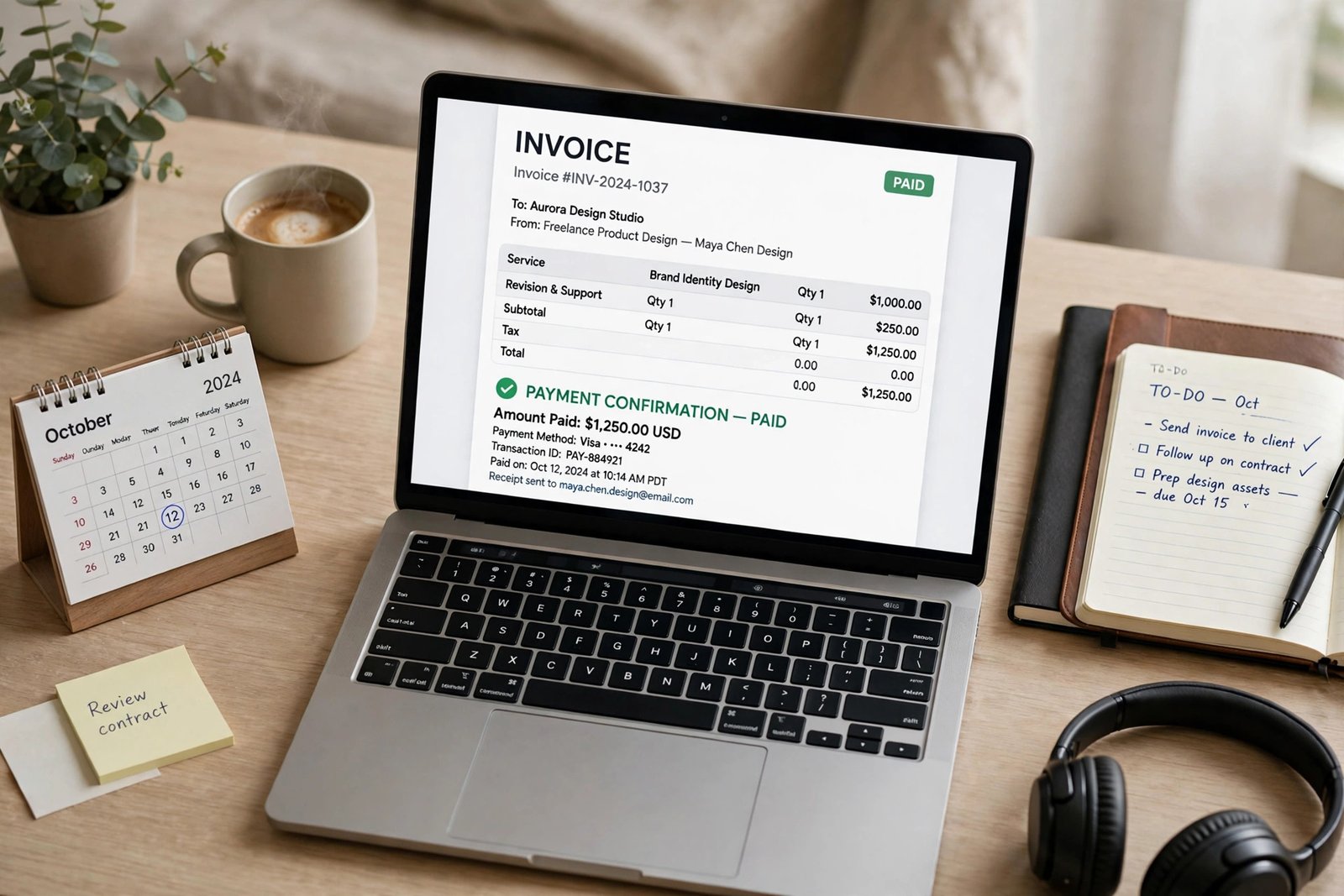
When the work is done, the client validates the completion of the project, and Malt generates the invoice. You do not need to chase the client for paperwork. Keep the client updated during the assignment, deliver what was agreed, and ask for feedback at the end. A good review makes your next proposal more likely, because clients read reviews before they contact a freelancer.

How and when you get paid
Malt pays freelancers through its Fast Payment system on eligible projects. Once the client validates that the project is complete, you are paid within 10 days. Malt states that more than 95% of freelancers are paid in less than 10 days. That is faster than the 30 to 60 day payment terms many companies use, and it is one reason freelancers use Malt.
Malt supports payment in euros, US dollars, and pounds, paid to your bank account. The exact timing can depend on your bank and your country. Malt's service fee is deducted before payment, and the net amount is shown when you create the quote.
Tax is your own responsibility. Malt's fee is a service expense, and it may be deductible depending on your company's legal status. Keep records of every assignment, quote, and invoice, and check your local tax rules, or ask a qualified accountant. Our guide to freelance taxes for beginners explains the basics.
Fees in full: the current 5% rule
Older guides about how to earn money on Malt are often wrong on fees, so this section uses only the current official figures. Malt's Help Centre page on freelancer service fees, checked on 2026-11-19, states that freelancer service fees are 5% excluding tax. For certain projects in France, Spain, and Belgium, the fee may be set at 10% excluding tax, then drop to 5% after 6 months on the assignment. The exact fee is shown on the quote creation page, and Malt shows the net amount you will receive.
Older guides, including one from Wise last verified in October 2025, still state 10% dropping to 5% as the general rule. That was the old schedule, and it no longer matches the Help Centre. Use the 5% figure when you plan your income, and check the quote page for the exact fee on each project.
The fee pays for Fast Payment, automatic quote and invoice generation, professional indemnity insurance, freelancer support that replies in less than 3 business hours, community events, and personalised matching guidance. Clients may also pay separate service fees, but those do not come out of your pay.
| Item | Amount as of November 2026 |
|---|---|
| Freelancer service fee, general rule | 5% excluding tax |
| Freelancer service fee, certain projects in France, Spain and Belgium | 10% excluding tax, then 5% after 6 months on the assignment |
| Payment timing on eligible projects | Within 10 days after client validation |
| Business Referral Programme | 5% of the referred project amount |
Client side plan fees were seen only in a search snippet, so this guide does not state them.
A second income route: the Business Referral Programme
Malt offers a second way to earn, separate from your own assignments. The Business Referral Programme pays you 5% of the project amount when you refer a project opportunity to Malt and the client works with a Malt freelancer. The project must be eligible, which generally means a non regulated intellectual service with a minimum budget of 3,000 euros, and the client must not have contacted Malt already.
This route suits freelancers with a strong network. If a contact needs a freelancer, and you are not the right person for the job, you can refer the project to Malt instead of turning it away. Malt gives guidance on how to pitch the platform to the client, including a sample message. One off projects are paid once the client has paid, long term projects are paid monthly, and extensions within 12 months still earn the referral payment. Treat it as a bonus rather than a main income.
Insurance, invoicing and admin tools
Every Malt project is automatically insured, which is a real benefit for freelancers. Malt's freelancers page states that projects are covered by Axa, or Markel in the United Kingdom, with insurance protection of up to 20 million euros. Professional indemnity insurance protects you if a client claims your work caused them a loss, and having it included saves you the cost of buying it yourself. Check the exact cover for your country and your type of work, because insurance terms differ.
The admin tools save time as well. Malt generates quotes and invoices automatically, lets you reuse past quotes as templates, and keeps your contracts in one place. That matters, because admin is unpaid time. Malt also runs a community with events and training, and offers partner deals on accounting, health insurance, and banking, though those vary by country. There is also a Super Malter programme for highly rated freelancers, but its current thresholds could not be confirmed, so this guide does not state them.
How to earn money on Malt with your first assignment
Winning a first assignment on Malt is the hardest step, because clients prefer freelancers with Malt reviews. Start by making your profile as strong as possible before you expect any contact. Use a niche where you can, because a specialist in one skill stands out more than a generalist who lists everything.
Respond to every proposal fast, even if the project is not right. A polite, fast reply builds your reputation with Malt, and a declined project today can lead to a better one tomorrow. When you get a call with a client, prepare well. Know their company, their problem, and how your past work relates to it. Quote a fair daily rate and explain what the client gets for it. After your first assignment, ask the client for a review, because that first review makes the second assignment much easier to win.
What it costs and what to expect
Learning how to earn money on Malt costs nothing. There is no subscription fee for freelancers, and you pay the service fee only when you are paid for a project. Your real costs are the time to build a profile, the cost of your legal freelance status, and your normal business costs such as software and tax advice.
Set honest expectations. Malt is not a fast income source for a new profile. It can take weeks or months before a client contacts you, and your first assignment may be short. Income grows as you collect reviews and repeat clients.
Worked example, example only: these numbers are not typical results. Imagine you win an assignment at 500 euros a day, for 20 days. The project value is 10,000 euros. At the general fee of 5% excluding tax, the fee is 500 euros, so you receive 9,500 euros before your own taxes and costs. If the project were one of the certain projects in France, Spain, or Belgium charged at 10%, the fee would be 1,000 euros in the first 6 months, so you would receive 9,000 euros. Always check the fee shown on the quote page, because that is the figure that applies to your project.
Common mistakes
- Listing too few skills, which keeps you out of client searches.
- Replying slowly to proposals, which loses projects to faster freelancers.
Risks and scams to watch for
The main risk in learning how to earn money on Malt is a slow start with no income while you wait for a first contact. That is a business risk, not a scam, but it matters if you need money soon. Keep another income channel open while your profile builds.
Watch for scams that use Malt's name. Malt clients contact you through the platform, so be wary of anyone who claims to be a Malt client but asks you to move to an outside chat app, asks for a fee to secure a project, or asks for your bank details before any work is agreed. Real Malt projects run through quotes and invoices on the platform. If you are unsure about a message, contact Malt support before you share personal details or start work. In the United States, you can report fraud to the Federal Trade Commission at ReportFraud.ftc.gov.
Frequently asked questions
How does Malt work for freelancers?
Malt matches clients with freelancers, and that match is how to earn money on Malt. You create a profile with your skills, rate, and availability, and clients search the platform and send project proposals to freelancers they want to hire. You discuss the project, create a quote, do the work, and Malt invoices the client and pays you through Fast Payment after validation.
What fees does Malt charge?
Malt charges freelancers a service fee of 5% excluding tax as a general rule, confirmed on its Help Centre page on 2026-11-19. For certain projects in France, Spain, and Belgium, the fee may be 10% excluding tax, then drop to 5% after 6 months on the assignment. The exact fee is shown when you create a quote.
How fast does Malt pay?
On eligible projects, Malt pays within 10 days after the client validates that the project is complete. Malt states that more than 95% of freelancers are paid in less than 10 days. Payment is available in euros, US dollars, and pounds.
Can anyone join Malt?
Malt is built for registered freelancers and businesses, mainly in Europe, and you need a proper legal status to invoice clients. The full list of countries could not be confirmed, and neither could eligibility for freelancers outside Europe, so check the Malt signup page for your country before you apply.
Is Malt only for France?
No, Malt is not only for France, although it started there and France is still a large market. Malt also operates in Spain, Belgium, Germany, the Netherlands, and the United Kingdom, among others, and clients come from many European countries.
Is Malt good for freelancers?
Malt is good for experienced freelancers who want clients to come to them, fast payment, insurance, and automated invoicing. It is less good for beginners with no reviews, for freelancers who need work this week, and for people outside its main European markets.
Conclusion
Learning how to earn money on Malt comes down to a simple method. Build a complete profile with real skills and a fair daily rate, respond fast when clients contact you, quote clearly with the 5% fee in mind, and deliver work that earns reviews and repeat assignments. Use the referral programme for projects you cannot take. Be patient, because the first contact can take weeks.
To compare other platforms, read our guide to making money on Upwork, which covers proposal based freelance work, and our guide to earning money on Toptal, which covers a vetted network for top freelancers. To sharpen the skills Malt clients pay for, our guide to working as a freelance UX designer shows what that role involves. You can browse all of them in the earning platforms category.
Earning results vary, and nothing on this site is financial advice. Fees, payment terms, and country eligibility can change, so check Malt's own Help Centre before you quote a client. Facts in this guide were checked against Malt's official Help Centre and freelancers page on 2026-11-19.