How to Sell Online Courses on Udemy in 2026
To sell online courses on Udemy, you pick a focused topic, check demand in the Marketplace Insights tool, record at least 30 minutes of video across 5 lectures, pass the quality review, and set a price. Udemy then lists your course in front of millions of learners. The catch is the revenue share: you keep 97 percent of sales you bring in yourself, but only 37 percent of sales Udemy brings in. This guide shows you how the maths works and how to plan around it.
In this guide
- How Udemy works for instructors
- Step 1: Pick a narrow topic with proven demand
- Step 2: Study the top courses and their reviews
- Step 3: Plan a short, focused course
- Step 4: Record and edit your lessons
- Step 5: Build the course landing page
- Step 6: Set the price and publish
- Step 7: Promote your course outside Udemy
- What it costs and what to expect
- Common mistakes
- Risks and scams to watch for
- Frequently asked questions
How Udemy works for instructors
Udemy is a marketplace for recorded video courses. You publish a course for free, and Udemy handles the hosting, the payments, the student accounts, and the marketing to its own audience. In May 2026 Udemy completed a merger with Coursera, and the combined company reaches more than 290 million learners. Udemy has said instructor terms did not change at the close of the merger, but it is worth watching instructor announcements, because a combined company may revisit payouts in future.
There is no fee to publish, no monthly cost, and no limit on how many courses you can list. Udemy earns its money from a share of each sale. That share depends on who brought the buyer, which is the single most important fact in this guide.
| How the student found your course | Your share of the sale | Udemy's share |
|---|---|---|
| Through your coupon or referral link | 97 percent | 3 percent |
| Through Udemy search, recommendations, or ads | 37 percent | 63 percent |
| Through a subscription, such as the Personal Plan or Udemy Business | A share of a 15 percent revenue pool, based on minutes watched | The rest of the pool |
Udemy set the 37 percent and 97 percent rates in May 2021, and its own teaching blog confirms them in its update on instructor business terms. The subscription pool share was cut in steps from 25 percent to 20 percent in 2024, then to 17.5 percent in 2025, and to 15 percent in January 2026. Udemy works out each share from the net amount, which is the price the student paid less taxes and any app store fee, and a 3 percent service and processing fee applies to web checkouts. If a student buys through the Udemy app on iOS or Android, Apple or Google takes 30 percent first, so your share is smaller again.
Step 1: Pick a narrow topic with proven demand
Do not start with a broad course. A focused 2 to 3 hour course on one skill sells better than a 20 hour course that tries to cover a whole subject. Pick one practical outcome a learner can reach, such as building a first budget spreadsheet, or editing a short video in a specific tool.
Open Udemy's Marketplace Insights tool from your instructor dashboard and search your topic. It shows student demand, the number of competing courses, and the median and top monthly revenue for the topic. Look for high demand with medium or low competition. If demand is strong but the search trend points down, look for a growing subtopic instead.
Also type your topic into the Udemy search bar and read the suggestions. They show what learners actually search for. If you need a broader grounding in course ideas first, read our guide on how to create and sell an online course, and if you want to think bigger, read our guide on how to start an online course business.
Step 2: Study the top courses and their reviews
Open the top three courses in your topic and compare their outlines, the number of sections, and the lecture lengths. Then read the three star reviews. They tend to name exactly what the course left out, such as outdated software, missing examples, or no downloadable files. Every gap you find is a selling point for your course.
Write down the real questions learners ask. Check the reviews, then type your topic into Google with question words such as what, how, and why in front of it. Keep the list, because it feeds your course outline and your landing page.
Step 3: Plan a short, focused course
Write down exactly what a student will be able to do after finishing your course, then leave out everything that does not serve that outcome. Break the outcome into sections, then break each section into short lectures. Keep most lectures between 2 and 7 minutes, which makes them easy to finish in one sitting and easy to update later.
Udemy's own quality checklist sets the minimums you must meet. A complete course has at least 30 minutes of video content, at least 5 separate lectures, valuable educational content, HD video at 720p or 1080p, and clear audio that is synced to the video and comes out of both channels. The landing page needs a high quality course image of at least 2048 by 1152 pixels, a title and subtitle with relevant keywords, a clear description, stated goals and audience, and a complete instructor bio with a photo. You can read the full list in Udemy's course quality checklist.
Add at least one quiz, assignment, or downloadable resource to each section, so students can check what they learned. A course with practice work gets better reviews than a course that only talks at the student.
Step 4: Record and edit your lessons
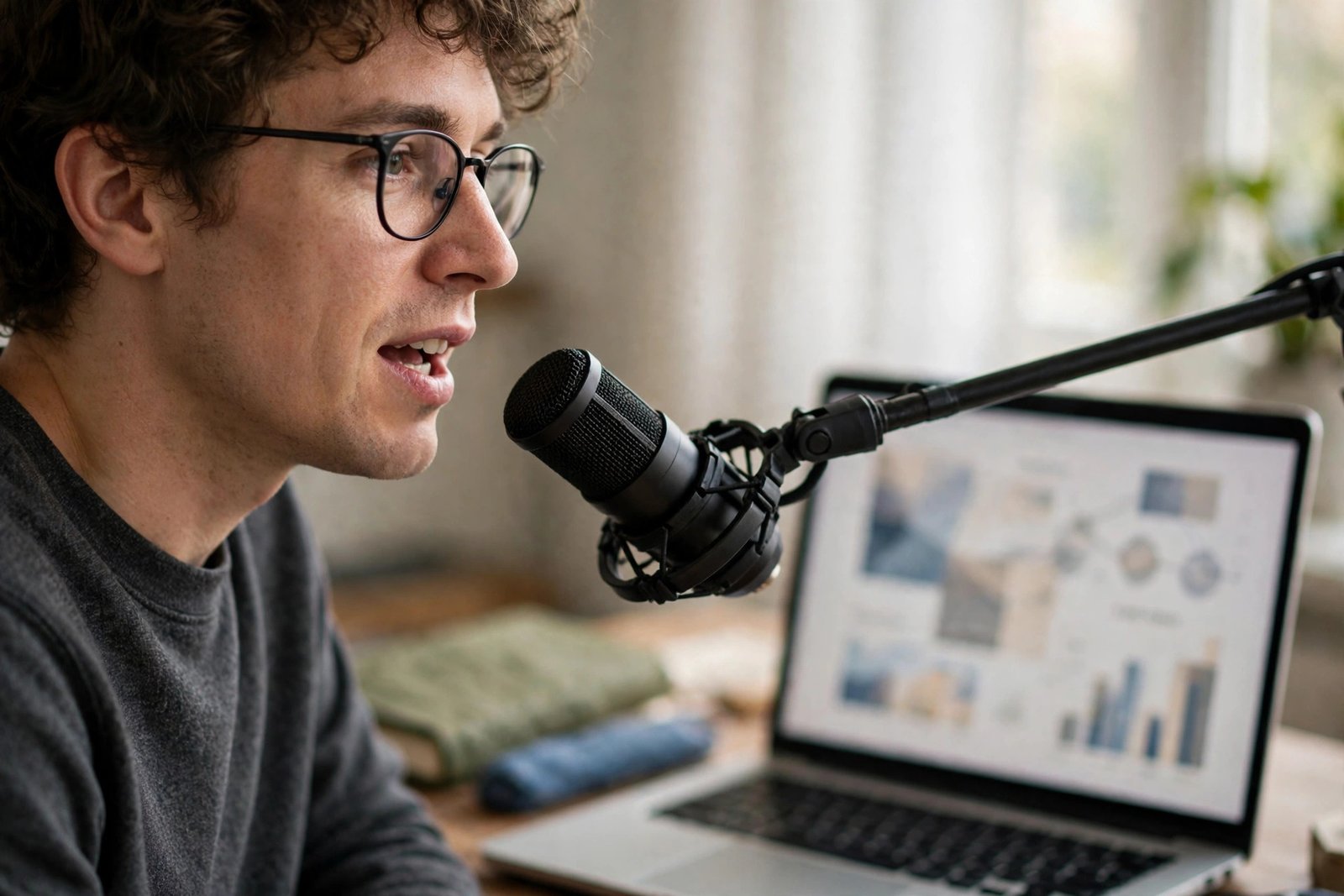
You do not need a studio. A quiet room, a decent USB microphone, and a webcam or phone that records in 1080p are enough to start. Record at 1080p even though Udemy accepts 720p, because learners watch on laptops and televisions, and sharp text on slides looks more professional.
Write a script or a detailed outline for every lecture before you record. Scripts cut retakes, keep lessons tight, and make captions more accurate. Read each script aloud once and time it, so you know how long the lecture will run.
Before you record the whole course, use Udemy's free Test Video service. Submit one sample lecture and get personal feedback on your audio and video quality. It is far easier to fix a buzzing microphone or a dark frame before you have recorded 40 lectures than after.
Edit out long pauses and retakes, and add a short introduction to each section. Keep the pace brisk. A student who gets bored in lecture two will ask for a refund, and refunds cost you the sale and damage the course rating.
Step 5: Build the course landing page
Your landing page is your sales page, so treat it like one. Write a title that names the skill and the outcome, not just the topic. A title such as "Build Your First Budget Spreadsheet in Excel" tells a buyer more than "Excel Course".
Write the description around specific outcomes. Say what the student will be able to do, who the course is for, and who it is not for. Add a short promo video of 1 to 2 minutes that shows your teaching style and sums up what makes the course different. Students decide in the first minute whether to trust you, so speak clearly and show the result, not just yourself talking.
Set the course goals in the intended learners section, because Udemy asks for them in the course builder and students read them before they buy. Use plain words and name the level, such as beginner, intermediate, or advanced.
Step 6: Set the price and publish
To charge for your course you need to become a Premium Instructor, which is free and takes about two business days to approve. Once approved, you can set a list price and join the Deals programme, which lets Udemy promote your course at a discount.
Most Udemy courses sell at a discount during sitewide sales, often around 12.99 US dollars, even when the list price is 49.99 US dollars or more. That is why the revenue table in this guide matters so much. Set a list price that works with your coupons and with Udemy's sales, and check how similar courses in your topic are priced before you decide. Udemy also sets a maximum list price, so check the current cap in your instructor dashboard before you publish.
Worked example
Example only: these numbers are not typical results.
Imagine your course has a list price of 49.99 US dollars. During a sitewide sale it sells for 12.99 US dollars. Here is what you keep from one sale, before the small processing fee Udemy applies on web checkouts.
- At full price through your own coupon link: 49.99 times 97 percent, which is about 48.49 US dollars.
- At full price through Udemy's marketplace: 49.99 times 37 percent, which is about 18.50 US dollars.
- At the discounted price through your own coupon link: 12.99 times 97 percent, which is about 12.60 US dollars.
- At the discounted price through Udemy's marketplace: 12.99 times 37 percent, which is about 4.81 US dollars.
Now imagine 50 students buy at the discounted price. Through your own coupon links you keep about 630 US dollars. Through Udemy's marketplace you keep about 240 US dollars. The same course, the same price, and a difference of about 390 US dollars, which is why bringing your own buyers is the whole strategy on Udemy.
Step 7: Promote your course outside Udemy
Do not publish and wait. Udemy's marketplace will send you some students, but the best paid students are the ones you bring yourself, because you keep 97 percent of their payments.
Share your coupon link on your email list, your social channels, and your blog. Make a short video that teaches one useful part of the course for free, then point viewers to the full course. Answer questions in communities where your learners already gather, and link to the course only when it genuinely helps. Our guides on how to sell digital products with email marketing and how to sell digital products with YouTube both apply directly to promoting a Udemy course.
Ask early students for honest reviews. A course with 20 real reviews sells far better than a course with none, even if the reviews are not all five stars. Never pay for reviews or offer a reward for a good rating, because Udemy bans it and it destroys trust with real students.
What it costs and what to expect
It costs nothing to publish a course on Udemy. Your costs are your time and your equipment. Expect to spend 20 to 40 hours planning, recording, and editing a focused 2 to 3 hour course, plus a few hours on the landing page and the launch. A basic USB microphone costs about 50 to 100 US dollars, and free editing tools are enough to start.
Expect a slow start. Most new courses sell a handful of copies in the first month, mostly during sitewide sales at discounted prices. Your income grows as reviews build, as Udemy's search starts to show your course, and as you send your own audience through your coupon links. A course can take 3 to 6 months to find its level, and many courses never earn much at all. That is normal, and it is why you should treat your first course as a test of the topic, not as a source of income you depend on.
You do not own the student relationship on Udemy. You cannot see student email addresses, and Udemy controls the price, the discounts, and the refund policy. That is the price of using a marketplace with millions of learners. If you later want full control, use Udemy as the entry product and sell your premium course, coaching, or membership from your own site.
Common mistakes
- Recording a long, broad course before checking whether anyone searches for the topic.
- Ignoring the revenue split and expecting to keep most of each sale, when marketplace sales only pay 37 percent.
- Publishing with quiet or echoing audio, which is the most common reason courses fail the quality review.
- Writing a vague course title that does not say what skill the student will learn.
- Setting a low list price and then watching sitewide discounts cut it to almost nothing.
- Leaving the course unpromoted and waiting for Udemy to send buyers on its own.
- Copying another instructor's outline, wording, or course image, which can get your course rejected.
- Forgetting that free courses are limited to 2 hours of video, and planning a long free course that cannot publish.
Risks and scams to watch for
The main risk on Udemy is not a scam, it is the platform itself. Udemy can change its revenue terms, its discount policy, and its search ranking, and instructors have no vote. The subscription share has already fallen from 25 percent to 15 percent since 2023, so do not build a business that depends on one Udemy payout rate staying the same.
Watch for people who offer to sell you fake Udemy reviews, fake enrolments, or a guaranteed bestseller ranking. These services break Udemy's rules, and Udemy can remove your course and close your instructor account. No one can guarantee a ranking, and paying for reviews puts your whole course at risk.
Also be careful of "Udemy course creation" services that charge large fees in advance and promise income. A real course takes your own knowledge and your own time, and no service can replace that. If someone contacts you claiming to be from Udemy and asks for your password or payment details, do not reply. Udemy will never ask for your password by email.
If you lose money to a scam, report it to your payment provider first. In the United States, you can also report fraud to the Federal Trade Commission, and the FTC explains how to report fraud on its consumer advice site. Readers elsewhere should use their own country's consumer protection body.
Frequently asked questions
How much do Udemy instructors earn per sale?
It depends on who brought the buyer. You keep 97 percent of the net sale amount when a student buys through your coupon or referral link, and 37 percent when Udemy's marketplace brings the sale. Subscription viewing pays from a shared pool equal to 15 percent of subscription revenue, based on minutes watched. The net amount is the price paid less taxes, app store fees, and a 3 percent processing fee on web checkouts.
How long does it take to publish a course on Udemy?
Plan for 3 to 6 weeks from idea to published course if you work on it part time. That covers research, planning, recording, editing, the landing page, and the quality review, which can take a few days. You can move faster with a short course, but rushing the recording usually means re-recording later, so allow time for one test video first.
Do I need to be an expert to teach on Udemy?
You need real knowledge and the ability to teach it clearly, but you do not need a formal qualification for most topics. Students judge you on whether they can follow your lessons and get the result you promised. Teach only what you have actually done, and say so plainly in your bio and your course description.
Can I sell the same course on Udemy and on my own site?
Yes, in most cases. Udemy does not usually demand exclusivity for standard courses, so you can sell the same course from your own website at your own price. Check the current instructor terms before you do this, because terms can change, and do not copy Udemy's own marketing text onto your own sales page.
What happens if my course fails the quality review?
Udemy sends your course back with specific feedback, and you can fix the problems and resubmit. The most common failures are audio quality, video quality below 720p, a course that is too short, and a landing page that does not match the content. Fix the exact points Udemy lists, and use the free Test Video service before you record the rest.
Does Udemy pay instructors every month?
Udemy pays instructors monthly for the previous month's sales, once your earnings pass the payout threshold. Set up your payout method and your tax information in your instructor profile before your first sale, so there is no delay. Payment methods and thresholds vary by country, so check the payout settings in your own dashboard.
Conclusion
To sell online courses on Udemy, pick one narrow skill with proven demand, study the top courses and their three star reviews, record at least 30 minutes of clear HD video, build a landing page that sells the outcome, and bring your own buyers through your coupon links so you keep 97 percent instead of 37 percent. Treat Udemy as a discovery channel and a low risk way to test a course idea, not as the only home for your teaching. To go deeper, read our guides on how to create and sell an online course, how to start an online course business, and how to sell digital products with email marketing. You can also browse all our guides in the digital products category.
Earning results vary; nothing on this site is financial advice.