
How to Invoice Freelance Clients and Get Paid in 2026
An invoice is a document that asks a client to pay you for work you have done, and it is the step that turns finished work into money in your account. Learning how to invoice as a freelancer means learning what to put on the invoice, when to send it, which payment terms to use, and what to do when payment is late. This guide walks through each step in order, with a sample invoice, a reminder schedule, and stage billing for larger projects. It keeps tax to a short pointer, because tax rules differ by country and our taxes guide covers them separately.
What an invoice is, and what it is not
An invoice is a formal request for payment after work is done or after a payment stage is reached. It differs from three nearby documents. A quote or estimate states a price before work starts, and it is not a payment request. A receipt confirms that payment has already arrived, so it comes after the invoice, not before it. A statement lists several invoices and payments over a period, usually for a client with ongoing work. Mixing these documents up confuses clients and slows payment, especially in larger companies where an accounts team checks each document against its own rules.
Before the first invoice: agree terms in writing
Invoicing works best when the terms were agreed before work started. Confirm the scope, the price, and the payment terms in your proposal or contract, so the invoice only repeats what the client already accepted. If you sign agreements electronically, the contracts and electronic signatures guide explains how electronic signatures work in the United States. Collect the client's correct billing details before you start, including their full legal name or business name, billing address, email for invoices, and any purchase order number their company requires. A purchase order number is a reference a company uses to approve spending, and an invoice without it may sit unapproved for weeks. Decide on deposits and milestones at this stage too. A deposit is a payment made before work begins, and a milestone is a payment tied to a stage of the work. If you agree these terms in writing first, the invoice becomes a routine step, not a negotiation. Our guide on freelance contracts explained covers the money clauses to agree before you begin.
Every field on an invoice, explained
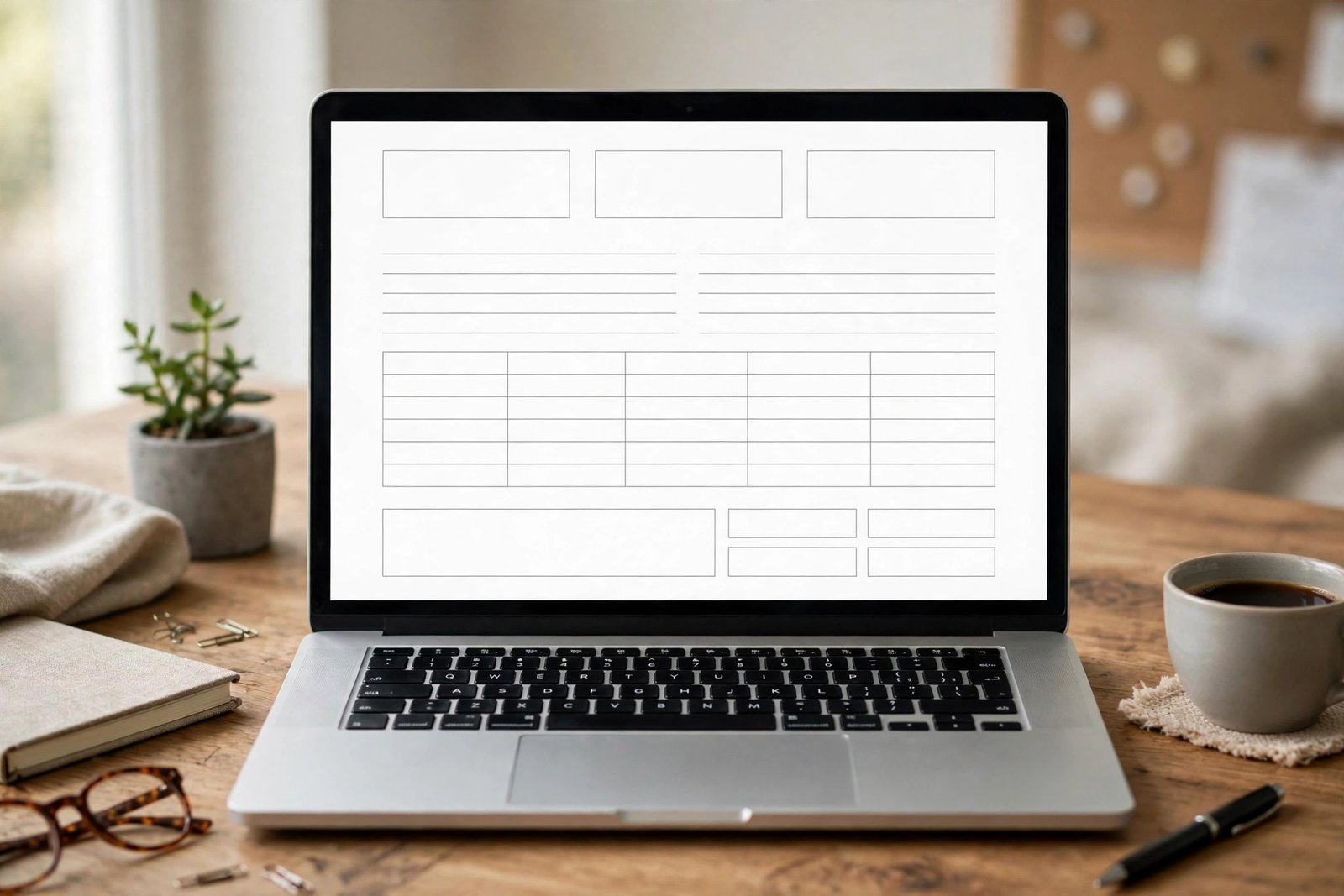
A complete invoice has a set of fields that the client's accounts team expects to see. Start with your name or business name, contact details, and logo if you have one. Add the client's full billing name, address, and invoice email. Give the invoice a unique number, and use numbers in sequence, such as 001, 002, and 003, so no invoice is lost or duplicated. Add the invoice date and an exact calendar due date, not only a term name. List each item of work on its own line, with a short description, the quantity, and the price. Add a subtotal, then a tax line only where tax applies in your case, then the total amount due. State the payment terms in plain words, and give complete payment instructions, such as a payment link or bank details. End with a short thank you line and your contact details for queries. A sample invoice line might read: four blog posts, delivered 12 October, at an agreed project fee, with the total shown clearly below the item list. Example only: these numbers are not typical results, and your own invoice lines should match your agreement.
When to send the invoice
Timing depends on how you charge. For fixed price work, send the invoice when the work is delivered, or at each milestone if the project is staged. For hourly work, invoice weekly or monthly, at a regular point the client can expect. For retainer work, invoice at the start of the month covered, because the client is paying for availability in that month. Send expenses with the next invoice, and attach receipts where the client expects them. The key habit is to invoice on the day work is delivered, not at the end of the month. Late invoices get paid late, because the client's payment run may have already passed. Set a weekly routine to check which work is ready to invoice, so nothing waits for your memory.
| Charging type | When to send the invoice |
|---|---|
| Fixed price project | On delivery, or at each agreed milestone |
| Hourly work | Weekly or monthly, on a regular day |
| Monthly retainer | At the start of the month covered |
| Deposit | On acceptance, before work begins |
| Expenses | With the next invoice, with receipts attached |
| Final balance | On delivery, showing amounts already paid |
Payment terms in plain language
Payment terms state how long the client has to pay after receiving the invoice. Due on receipt means the client should pay at once, and it suits small, fast jobs. Net 14 means payment within 14 days of the invoice date. Net 15 means payment within 15 days, and Net 30 means payment within 30 days. The term name alone is not enough, because people count days differently. Always add an exact calendar due date, such as due on 29 November 2026, so there is no doubt. Shorter terms, such as Net 14, are a practical choice for many freelancers, because they shorten the wait and flag problems sooner. Longer terms, such as Net 30, are common with larger companies, and you may need to accept them for corporate work. What matters most is that the term is written in the agreement, repeated on the invoice, and paired with an exact date.
Making payment easy
Clients pay faster when payment is simple. Offer a payment link where you can, because a link lets the client pay in a few clicks without copying bank details. Also offer bank transfer for clients who prefer it, and give the full details they need, including account name, number, and any reference code. Accept more than one payment method where practical, because a client whose preferred method is missing may delay. State the currency on the invoice, and say who pays transfer fees for cross border work, because a fee taken from your payment quietly cuts your fee. Match the name on the invoice to the name in the client's records, because a mismatch can send the invoice back for correction. For corporate clients, add the purchase order number and the name of the person who approved the work.
Stage billing: deposits, milestones, and final invoices
Stage billing splits a large project into smaller payments, which helps your cash flow and lowers your risk. Send a deposit invoice on acceptance, and state that work starts when the deposit arrives. Send a milestone invoice when each stage is delivered, and describe the stage clearly on the invoice. Send the final invoice on delivery, and show the amounts already paid as credits, with the balance due clearly stated. For example, a project with a deposit and one milestone might show a deposit credit and a milestone credit, then a final balance, so the client can see the full picture at a glance. Handle expenses by listing them separately from fees, with receipts attached. If you need to correct an invoice, send a corrected invoice with a new note explaining the change, or a credit note for the wrong amount, rather than quietly editing the original. A credit note is a document that cancels or reduces an earlier invoice, and it keeps your records clean.
Follow up schedule and polite wording
Most late payments are delays, not refusals, so follow up politely and on a schedule. Send a friendly reminder a few days before the due date, restating the amount, the due date, and the payment link. On the due date, send a short note if payment has not arrived, asking whether the invoice reached the right person. A few days after the due date, send a firmer note that asks for a payment date. A week or two later, send a final reminder that states the amount, the overdue days, and the next step you will take. Example only: a reminder might read, "Hello, invoice 014 for the agreed fee falls due on 29 November. Please let me know if you need anything from me to process it." That wording is firm without being rude, and it gives the client an easy next step. Track every reminder with its date, so you know the full history if the matter escalates.

When payment is still late
If polite reminders fail, check your contract for a pause clause, which lets you pause further work until payment arrives. Pausing work is often more effective than another email, because it stops the unpaid balance from growing. Send a formal written demand that states the amount, the due date, the contract clause, and a final date for payment. Keep copies of every message, invoice, and agreement, because a clear record matters if the dispute goes further. Local options after a formal demand depend on where you and the client live, and they may include mediation, a small claims process, or a debt recovery service. Check local rules before you escalate, because the right route differs by country. In the United Kingdom, the official guidance on late commercial payments explains interest and recovery rights for business to business debts.
Tracking and records
Good records turn invoicing from a chore into a routine. Keep one list of outstanding invoices, with the invoice number, client, amount, due date, and status. Review that list weekly, so no invoice drifts past its due date unnoticed. Keep a copy of every invoice with its contract and proposal, in one folder per client or project. Use sequential invoice numbers, and never reuse a number, because a reused number confuses both your records and the client's. Keep records for tax purposes too, but keep the tax detail in your tax system, not on the invoice. Our guide on freelance taxes for beginners explains the record habit that supports your tax return, and our rates guide on how to set freelance rates helps you price the work you invoice.
What it costs and what to expect
Expect some late payments, because they are a normal part of freelance life, and a clear follow up routine limits their damage.
Mistakes to avoid when invoicing
The most common invoicing mistakes are easy to fix. Sending the invoice late is the first, because it pushes payment back by the same delay. Using a vague due date, such as payment soon, is the second, because it gives the client no date to meet. Forgetting an invoice number, or reusing one, is the third, because it breaks your records. Making payment hard, by giving only bank details with no link or reference, is the fourth. Sending an invoice that does not match the agreement, in price or scope, is the fifth, because it invites a dispute. Forgetting the purchase order number for corporate clients is the sixth. Mixing tax detail into the invoice when it does not belong there is the seventh, and it confuses clients in other countries.
Risks and limitations
Invoicing does not guarantee payment. A client can dispute the work, delay approval, or run into their own cash problems, and no invoice format prevents that. Your protection comes from the combination of a signed agreement, a deposit, staged payments, and a follow up routine, not from the invoice alone. Currency movement can also affect cross border invoices, so state the currency and agree who bears transfer fees in advance. Tax rules add another limit: an invoice is not a tax return, and the tax line on an invoice does not settle your tax duty. Rules differ by country, so check your local tax authority or a qualified accountant for tax questions. If a client asks you to invoice in a misleading way, such as splitting one job to hide its value, refuse, because accurate records protect you in the long run.
Frequently asked questions
Can I invoice without a registered business
In many places, yes, you can invoice as an individual freelancer, but the rules differ by country. Check your local rules for registration, tax numbers, and any invoice details your country requires. When in doubt, ask your local tax authority or a qualified accountant before you send your first invoice.
How should I number my invoices
Use unique numbers in sequence, starting from 001 or a year based sequence such as 2026-001. Never reuse a number, and never skip a number without a note explaining why. Sequential numbers make your records easy to check and help clients find the right invoice quickly.
How often should I invoice
Invoice as soon as payment falls due under your agreement. For fixed price work, that means on delivery or at each milestone. For hourly work, invoice weekly or monthly on a regular day. For retainers, invoice at the start of the month covered. Regular invoicing keeps cash flow steady.
What is the difference between an invoice and a receipt
An invoice asks for payment, while a receipt confirms that payment has arrived. Send the invoice when payment falls due, and send a receipt only after payment, when the client asks for one. Keeping the two documents separate avoids confusion in the client's accounts.
What is the first step if a client does not pay
Send a polite written reminder that restates the amount, the due date, and the payment link, and ask whether the invoice reached the right person. Most delays are administrative, and a short polite message resolves them. If reminders fail, check your contract for a pause clause, then send a firmer written demand.
Conclusion: invoice promptly, follow up politely, track everything
Getting paid starts before the invoice, with terms agreed in writing and correct billing details collected. Send a complete invoice on the day payment falls due, give an exact calendar due date, make payment easy, and follow up on a polite schedule. Track every outstanding invoice weekly, and keep copies with your contracts. Your next step is to build your invoice template from the field list in this guide, then use it for your next project. For the agreement behind the invoice, read freelance contracts explained, and browse all our guides on the freelancing category page.