Selling AI art online works when you sell a finished product to a clear buyer, not when you upload dozens of raw generations and wait. Buyers pay for wall art that fits their room, a print that arrives cleanly, a prompt pack that saves them time, or a custom piece made for their brief. This guide shows you how to pick a buyer, make files that print well, set up a listing buyers trust, and price your work so fees do not eat your profit.
The short answer: what actually sells
Four income routes work for AI art, and each suits a different seller. Digital downloads on a marketplace such as Etsy suit sellers who want low fulfilment effort. Print on demand suits sellers who want physical products without holding stock. Prompt packs and templates suit sellers who can teach a repeatable style. Commissions suit sellers who enjoy working to a brief. Pick one route to start. Stock libraries and NFTs are worth skipping at first: stock acceptance for AI work is strict and slow, and NFT demand is unreliable for beginners.
Before you generate anything, pick a buyer, not a style. A cohesive collection for one buyer, such as botanical prints for calm bedrooms, nursery animal prints, or minimalist pet portraits, will outsell a mixed shop of unrelated images every time. Our AI print on demand guide covers the physical product route in detail if that is the route you choose.
Before you generate anything: pick a buyer
Spend one evening testing a niche before you build a collection. Search the marketplace for your idea and read the bestseller listings: what sizes do they offer, what words do they use in titles, and how many sales or reviews do they show? Check image search and social trends for the same style, and look for gaps, such as a colour palette or a room type that is under-served. A niche test that fails saves you weeks of generating art nobody searches for.
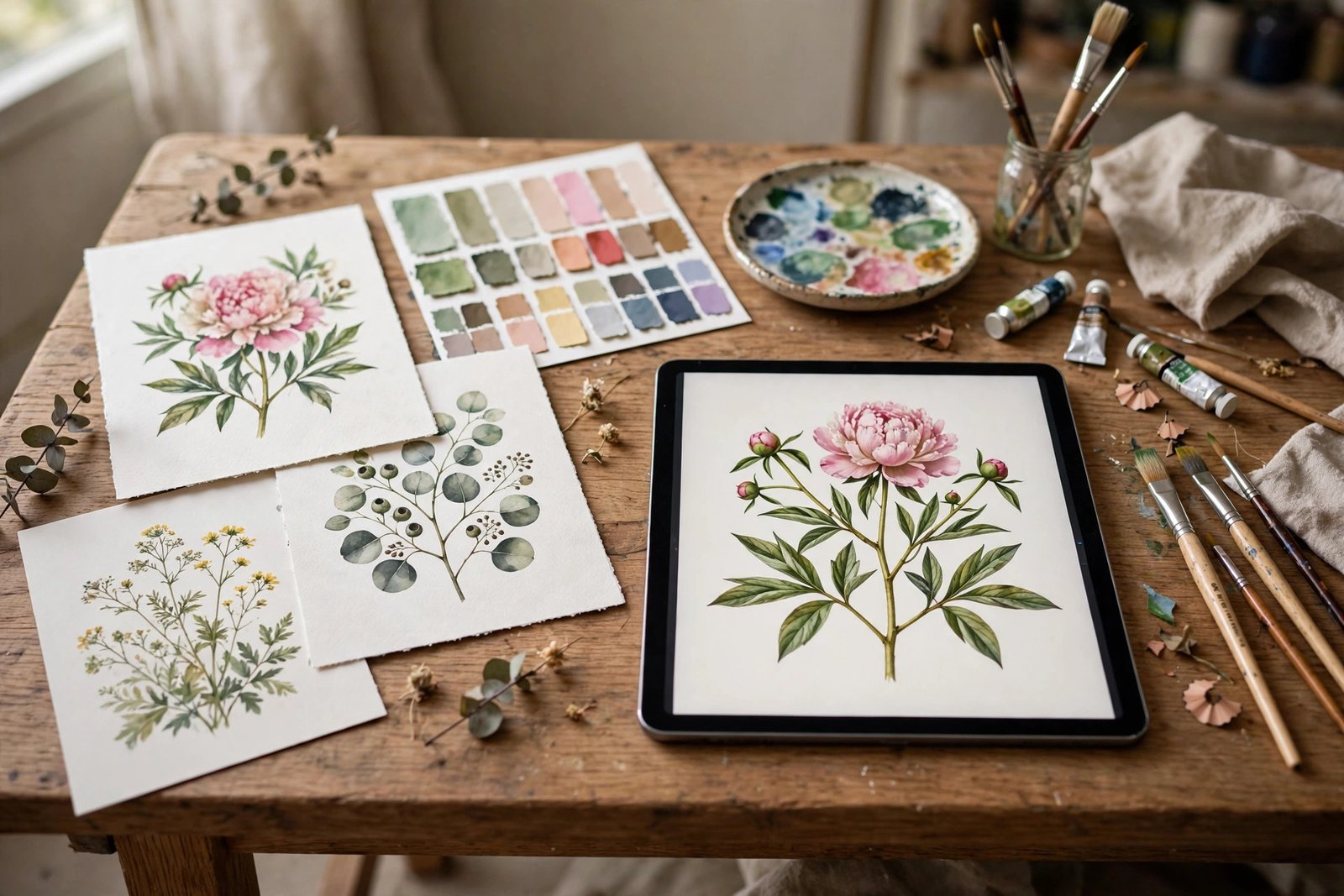
Good beginner niches have a clear buyer, gift potential, and a reason to buy now, such as a new home, a nursery, or a birthday. Avoid niches built on real people, brands, trademarked characters, or a living artist's distinctive style. Those listings get removed, and they put your shop at risk. Build one collection with a consistent style anchor: the same palette, the same line quality, and the same mood across 20 to 40 listings, rather than 40 unrelated images.
Make art that prints cleanly and sells twice
A design that looks sharp on a phone screen can print blurry. That is the most common beginner failure in AI art, and it is easy to prevent with a short file check.
| Print size | Pixels needed at 300 DPI | Common use |
|---|---|---|
| 5 by 7 inches | 1500 by 2100 | Small desk print |
| 8 by 10 inches | 2400 by 3000 | Standard wall print |
| 12 by 18 inches | 3600 by 5400 | Large wall print |
| 18 by 24 inches | 5400 by 7200 | Statement poster |
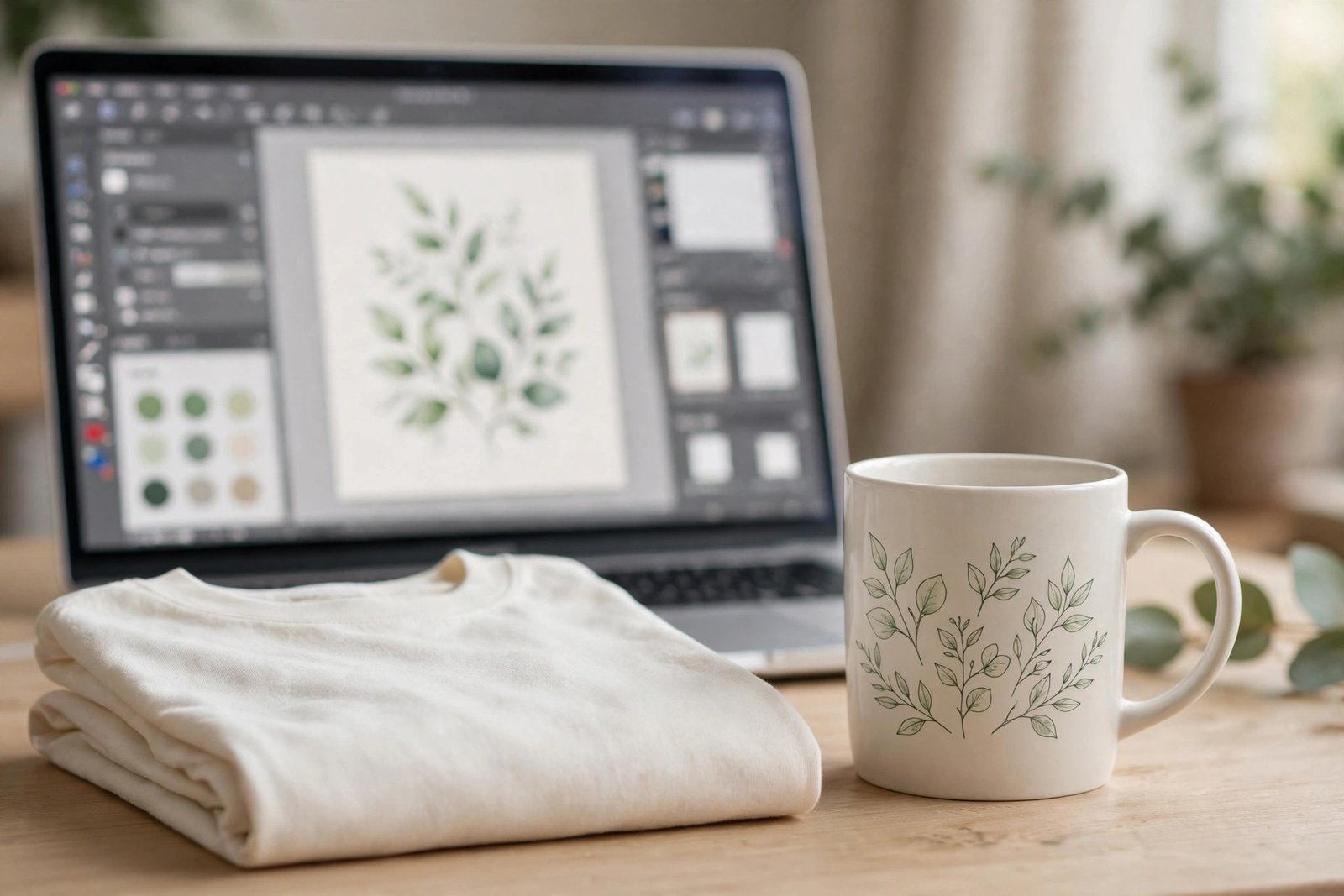
Use 300 DPI for print, work in the colour mode your printer asks for, and export a transparent PNG for merch and a high resolution JPEG or PDF for wall prints, depending on the product. Add bleed and safe margins where the print provider requires them, and upscale a small generation before you list it, never after a buyer complains. Reject a file if it has garbled text, extra limbs or distorted faces, muddy colours, visible artefacts, or a background that will not cut cleanly for merch. Printful's help article on DPI, resolution, and actual print file size explains the sizing rule in plain terms, and its guide to preparing a print file covers the file checks for printed products.
Choose your first channel, and only one
Etsy suits digital downloads and print on demand because buyers already search there for wall art and gifts. You pay listing and transaction fees, and you must follow Etsy's rules on AI disclosure and on naming a production partner for print on demand orders. Check the current Etsy policy pages before you open a shop, because fees and disclosure wording change.
A print on demand provider such as Printful or Printify prints and ships physical products for you, and Printify's print on demand overview explains the basic model: you pay production and shipping costs when an order is placed, and you keep the margin above that. Gumroad or Payhip suit prompt packs and templates, where you deliver a file directly. Commissions can come through a marketplace profile, social media, or your own site, but they need clear briefs and revision limits or they will eat your time.
Set up your Etsy shop step by step
A strong listing follows a simple formula. Title: lead with what the buyer searched for, then the style, then the size or format. For example, a title that names the subject, the style, and the use will be found more easily than a clever title that names none of them. Tags should use the words buyers actually type, including the subject, the room, the style, and the occasion. Categories and attributes help the marketplace show your listing to the right searches, so fill them in fully instead of leaving them blank.
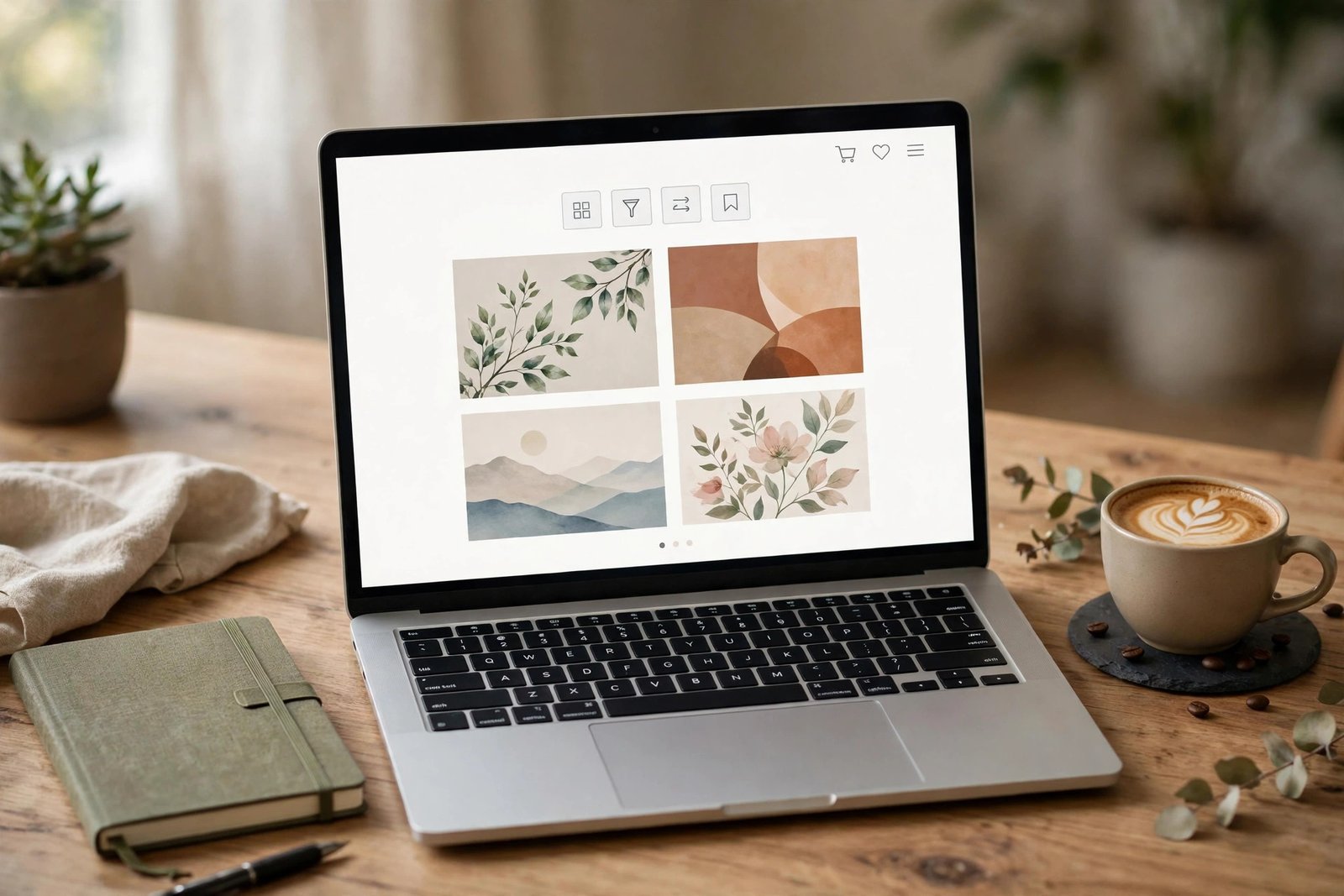
Your description should answer buyer questions in order: what they get, which sizes and files are included, how to print a digital download, what licence they are buying, and a plain disclosure that the art was created with AI assistance and edited by you. Licence wording matters: personal use means the buyer can print it for their own home, while commercial use means they can use it in a product or business, and it should cost more. Mockups sell the room, not the file, so show the print framed on a wall at a realistic size, with a plain lifestyle shot alongside it, rather than only showing the flat digital file.
Pricing that survives fees
Price after fees, not before them. For a digital download, start from the price you want to keep, then add the marketplace listing fee, transaction fee, and payment processing fee. For a print on demand product, add the print cost and shipping as well, then check the margin that remains. If the margin is only a few coins after all fees, raise the price or choose a cheaper product, rather than hoping volume will fix a broken margin.
Bundles and sets raise the average order value: a set of three matching prints usually sells better than three single listings, and a prompt pack with a clear theme sells better than a random bundle. Raise prices when listings sell steadily and reviews are good. When listings get views but no sales, fix the mockup, the title, or the price, in that order, rather than adding more listings in the same style.
Getting seen without an audience
New shops get seen through search first, not through social media. Use search friendly titles and tags, publish a cohesive set of listings, and let the marketplace learn who buys from you. Pinterest works well for wall art because buyers save room ideas there, so pin each listing with a room mockup and a clear description. Short videos showing a print on a wall, or a before and after of a room, can help, but they are a supplement to search, not a replacement for it.
Follow a simple 30 day launch plan. Week 1: validate a niche and build a style anchor. Week 2: make 10 to 15 print ready files and check them at full size. Week 3: publish your first listings with full titles, tags, descriptions, and mockups. Week 4: review views, saves, and sales, fix the weakest listings, and plan the next set. Judge a listing by its data: views with no saves usually mean the mockup or the niche is wrong, while saves with no sales usually mean the price, the sizes, or the licence is the problem.
Rules that protect your shop
Disclose AI use where the platform requires it, and do it plainly in the listing, not hidden in small print. On copyright, the plain position in the United States is that purely AI generated output is generally not copyrightable, while substantial human editing may support a claim on the edited work. That is a general guide, not legal advice, and rules differ by country, so check the position where you sell before you promise buyers exclusive rights.
Check the commercial use terms of your AI tool before you sell anything made with it, and watch for free plan traps: some free plans allow personal use only, or require attribution. Never sell images of real people, brands, trademarked characters, or a living artist's style. If a listing is removed, read the reason, fix the cause, and do not relist the same image unchanged.
Troubleshooting: when sales do not come
Low views usually mean the title, tags, or niche need work, or the shop is too new for the marketplace to trust it yet. Saves without sales usually mean the price or the file offer needs fixing. A listing removed or suppressed usually points to a policy issue: a trademarked term, a misleading claim, or a missing disclosure. A refund request is best handled quickly and politely, with a replacement file or a reprint through your print provider where the fault is real. Copycat listings are frustrating, but the best response is usually to keep improving your own listings and to report clear copies through the platform's process, rather than spending your selling time arguing with imitators.
Realistic income and next steps
Most beginners earn little in the first 90 days while the shop builds listings, reviews, and search trust. Results vary with niche, design quality, price, competition, and effort, and a shop with 10 listings will not behave like a shop with 100. When one collection starts selling, add a second channel or your own store only after the first channel works. Your first week action list is simple: validate one niche, build a style anchor, make five print ready files, and publish your first three listings properly. If you want a physical product route, read our AI print on demand guide next, and if you want to sell services instead of products, read our guide to offering AI services as a freelancer. You can browse all of our AI earning guides for the full collection.
Frequently asked questions
Can I legally sell AI art?
In most cases you can sell AI assisted art, but you must follow the AI tool's commercial use terms, disclose AI use where required, and avoid real people, brands, and trademarked characters. Pure AI output is generally not copyrightable in the United States, so do not promise buyers exclusive copyright you may not hold.
Do I need to disclose AI use?
Yes, where the platform requires it, and it is good practice everywhere else. A plain line in the listing, such as that the art was created with AI assistance and edited by the seller, protects you and the buyer.
Can I copyright AI art?
Generally, purely AI generated output is not copyrightable in the United States, while substantial human modification may support a claim on the derivative work. This is general information, not legal advice, and rules differ by country.
Which platform is best for beginners?
Etsy is usually the best first channel for digital downloads and print on demand because buyers already search there. Gumroad or Payhip suit prompt packs. Choose one channel first and learn it properly.
How much does it cost to start?
Startup costs are low: an AI tool subscription if you choose a paid plan, listing fees per marketplace listing, and a sample order if you sell physical products. Check current fees on the platform before you price anything.
How long until the first sale?
It varies widely. A new shop with a cohesive collection and good search titles may see a first sale within weeks, while a scattered shop may take months. Steady listing quality and search optimisation matter more than listing count alone.