
Finding freelance clients is a skill, not luck. The freelancers with steady work do the same thing every week: they stay visible to people who already know them, and they reach out to people who need help right now. This guide explains nine proven ways to find freelance clients, in the order that works best for most beginners, plus a simple system to keep track of it all.
Before you look for clients: get the basics ready
Clients check you before they reply. Before you send a single message, make sure these three things exist:
- One clear offer. One sentence that says who you help and what you deliver, for example "I edit short videos for fitness coaches."
- Three samples. A small freelance portfolio that proves you can do the work, even if the samples are practice projects.
- A way to contact you. An email address or a simple contact form that you actually check every day.
Without these, every channel below works worse. With them, even a short message can win work.
1. Start with people who already know you
Your first client is most likely someone who has seen your work before: a former manager, a colleague, a local business owner, or a friend who runs a small business. They already trust you, so you skip the hardest part of selling.
Write a short, personal message to ten people. Say what you offer, who it is for, and ask if they know anyone who needs it. Do not send a mass message or a generic broadcast. One personal note each, mentioning something specific about them.
Former employers are worth a message too. Offer to take on a small overflow task or a one-off project. Many companies prefer hiring a known freelancer over recruiting someone new.
2. Ask for referrals
A happy client is the cheapest source of new clients. When a client praises your work at handover, ask one question: "Do you know anyone else who might need help like this?" Most clients are glad to introduce you, but almost none do it without being asked.
Make it easy for them. Send a short paragraph they can forward, describing what you do and who you help. Offer the same courtesy in return: if you meet someone who needs a service you do not offer, pass them to a freelancer you trust.
Referrals compound. One good client who introduces you to two more is worth more than fifty cold emails.
3. Use marketplaces the smart way
Marketplaces like Upwork and Fiverr bring clients to you, but they are crowded. Use them selectively instead of applying to everything.
- Pick small, well-described jobs. A job with a clear task, a realistic budget, and a client who has hired before is worth your time. Vague jobs with no budget usually are not.
- Write the first two lines about the client. Name their problem and your solution before you talk about yourself. Most proposals open with "I am a freelancer with five years of experience" and get skipped.
- Attach one relevant sample. One sample that matches the job beats five unrelated ones.
- Apply consistently. Five thoughtful applications a week beats fifty copied ones.
Check the platform's current fees and payment rules before you price work, because they change. Upwork's own guide to getting clients as a freelancer explains how proposals and profiles work on its platform.
4. Use LinkedIn strategically
LinkedIn works for freelancers because clients search there when they need help, and because your posts reach people who already know you.
- Rewrite your headline around the client's outcome, for example "Landing pages for dental clinics" instead of "Freelance designer".
- Post once a week about your work: a finished project, a problem you solved, or a short tip in your niche. Keep it practical, not promotional.
- Comment on posts by founders and hiring managers in your niche. A useful comment is remembered; a sales pitch is ignored.
- When someone engages with your posts, send a short message. You are starting a conversation, not closing a sale.
5. Send cold outreach that gets replies
Cold outreach means contacting a business that has not asked for help. It works when the message is specific, short, and about them.
A message that gets replies has four parts:
- One specific observation about their business ("Your booking page still shows last month's schedule").
- One sentence about what you can do ("I help small clinics clean up pages like that").
- One small proof, such as a link to a sample or a one-line result.
- One easy next step ("Want me to send a quick example of how I would fix it?").
Send ten of these a week to businesses that fit your niche, not a hundred generic emails. Track every reply. If nobody answers after twenty messages, the problem is usually the offer or the targeting, not the volume.
6. Find buying intent in public posts
Some clients announce that they need help in public: hiring threads, community posts, and "looking for" messages on Reddit, X, Facebook groups, and niche forums. These leads are warm because the client is already looking.
Look for posts with a clear task, a budget or rate range, a deadline, and contact instructions. Avoid posts that promise "unlimited earning potential", ask you to pay to start, or refuse to explain the work.
Score each lead before you pitch it. Give one point for each of these:
| Lead check | Point if true |
|---|---|
| The task is clearly described | 1 |
| A budget or rate range is stated | 1 |
| The deadline is realistic | 1 |
| Contact instructions are clear | 1 |
| You can show a relevant sample within a day | 1 |
Pitch leads that score four or five. Save three-point leads for later. Skip the rest. A short guide to lead sources for beginners is the Sidequestboard article How to Find Freelance Clients With No Experience, which explains Reddit hiring communities and beginner marketplace projects in detail.
7. Look for local businesses
Local businesses are often overlooked by freelancers who only look online, and they are easier to understand. Walk through your area, or search online maps, for businesses with a visible problem you can fix: a restaurant with an outdated menu, a clinic with an unclear services page, a shop with no social media posts for months.
Lead with one small, helpful observation and one simple offer. Do not send a message listing everything wrong with their business. One fix, clearly explained, is enough to start a conversation. Local clients also tend to pay on time and refer you to other local businesses.
8. Partner with other freelancers and agencies
You do not have to find every client yourself. Partner with freelancers whose services complement yours: a web developer pairs with a designer, a writer pairs with an SEO specialist, a video editor pairs with a social media manager. When one of you wins a project that needs the other's skill, you both earn.
Small agencies are another source. Many agencies hire freelancers for overflow work, and they pay faster than individual clients because they already have budgets. Introduce yourself with a short message, your portfolio, and the type of work you want.
Shopify's guide to getting clients as a freelancer covers partnerships, referrals, and owned channels in more depth.
9. Build inbound: content and an email list
Inbound means clients come to you. It is slow to start and powerful later. Publish useful content about your niche once or twice a month: a short guide, a before-and-after case study, or a practical tip. Share it where your clients spend time.
Keep an email list of past clients, warm leads, and people who asked about your work. Send a short update once a month: what you are working on, one useful tip, and whether you have availability. When a past client needs help again, your email is the reminder that brings them back.

A weekly routine that finds clients
Consistency beats intensity. A routine you can keep for months will find more clients than a frantic week of outreach followed by silence.
| Day | Task | Target |
|---|---|---|
| Monday | Find new leads from marketplaces, communities, and local searches | 10 leads |
| Tuesday | Score the leads and pick the best five | 5 strong leads |
| Wednesday | Send personal pitches to the best leads | 5 pitches |
| Thursday | Follow up on last week's pitches, once each | All open leads |
| Friday | Post about your work and update your portfolio | 1 post, 1 improvement |
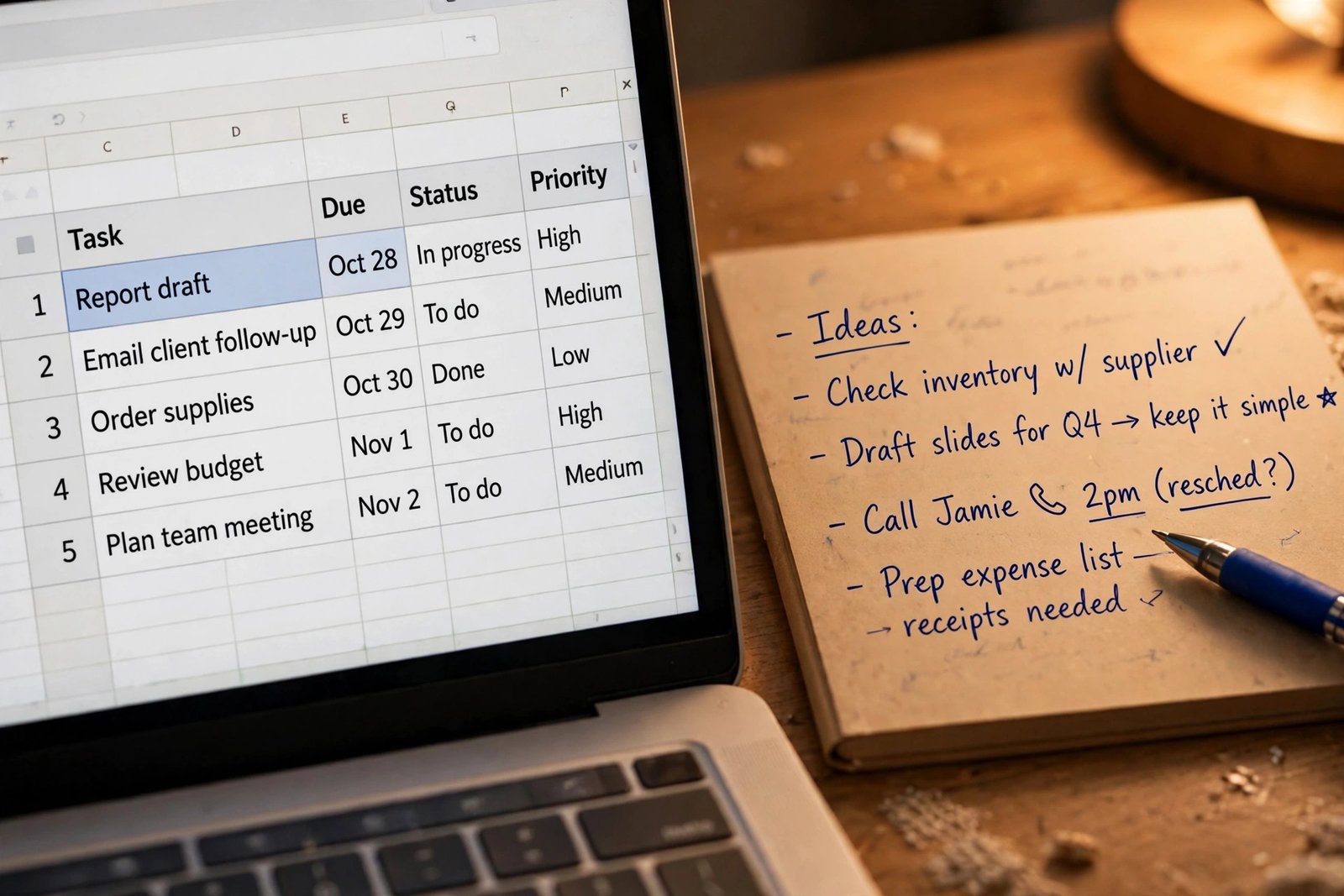
Track everything in a simple spreadsheet: date, source, client, service needed, lead score, pitch sent, follow-up date, outcome. After a month you will see which channels actually bring replies, and you can spend more time there.
How to follow up without being annoying
Most freelancers never follow up, and most clients are simply busy. One polite follow-up a week after your first message is expected, not rude. Keep it to two sentences: remind them what you offered and ask if the timing is better now. If there is still no reply after a second follow-up, move on. Never send five messages to the same person.
Frequently asked questions
How do I find freelance clients with no experience?
Start with people who know you, then apply for small marketplace jobs with clear descriptions. Build three honest sample projects first, so every pitch includes proof. Public hiring posts and local businesses are good early sources because they judge the sample, not your resume.
How many clients do I need?
It depends on your rates and your costs. Three to five steady clients often provide more stability than twenty one-off jobs, because repeat clients need less selling and pay faster. Aim for a mix: a few regular clients plus a small flow of new ones.
Should I work for free to get my first client?
A small, clearly limited sample or a discounted first project can be reasonable. Open-ended free work is not. If a client asks for unpaid custom work before hiring, that is a warning sign. Offer a small paid trial instead.
How long does it take to find clients?
Expect weeks of consistent outreach before the first replies, and longer before steady work. If you send five personal pitches a week and keep your portfolio updated, most beginners see results within one to three months.
What is the best way to find clients as a freelancer?
There is no single best way. The freelancers with the steadiest work combine two or three channels: their network, one marketplace, and direct outreach or LinkedIn. Relying on one channel alone leaves you exposed when it goes quiet.
Conclusion
Finding clients is a weekly habit, not a one-time effort. Start with the people who already know you, add one marketplace and one outreach channel, score your leads, and follow up once. Keep a simple tracker so you learn what works. If you have not set up your proof yet, read our guide to creating a freelance portfolio first, then come back and start with ten personal messages this week.